Spend enough time on the water and you'll form strong opinions about fishing shirts. Most anglers reach that point after ruining one — especially those who’ve experimented with custom the colors and sizes of men's fishing shirts and realized how much fabric choice and fit actually matter..
Maybe it was the $25 polyester pullover that turned into a sauna on a July afternoon in the Florida Keys. Or the "UPF 50+" label that washed out after a dozen cycles and meant nothing.
The market is packed with big promises. Columbia PFG, Huk, Simms, AFTCO, and a dozen budget options all claim they'll keep you cool, protected, and comfortable from first cast to last. That's a lot of noise to sort through.
So we did the work. We picked six of the most talked-about men's fishing shirts — priced from $19 to $120 — and tested them in real fishing conditions:
Saltwater spray
95°F heat and humidity
Back-to-back washings
Hours of direct overhead sun
What we found will surprise you. It'll also save you money.
Quick Pick Guide: Best Fishing Shirt by Scenario and Budget
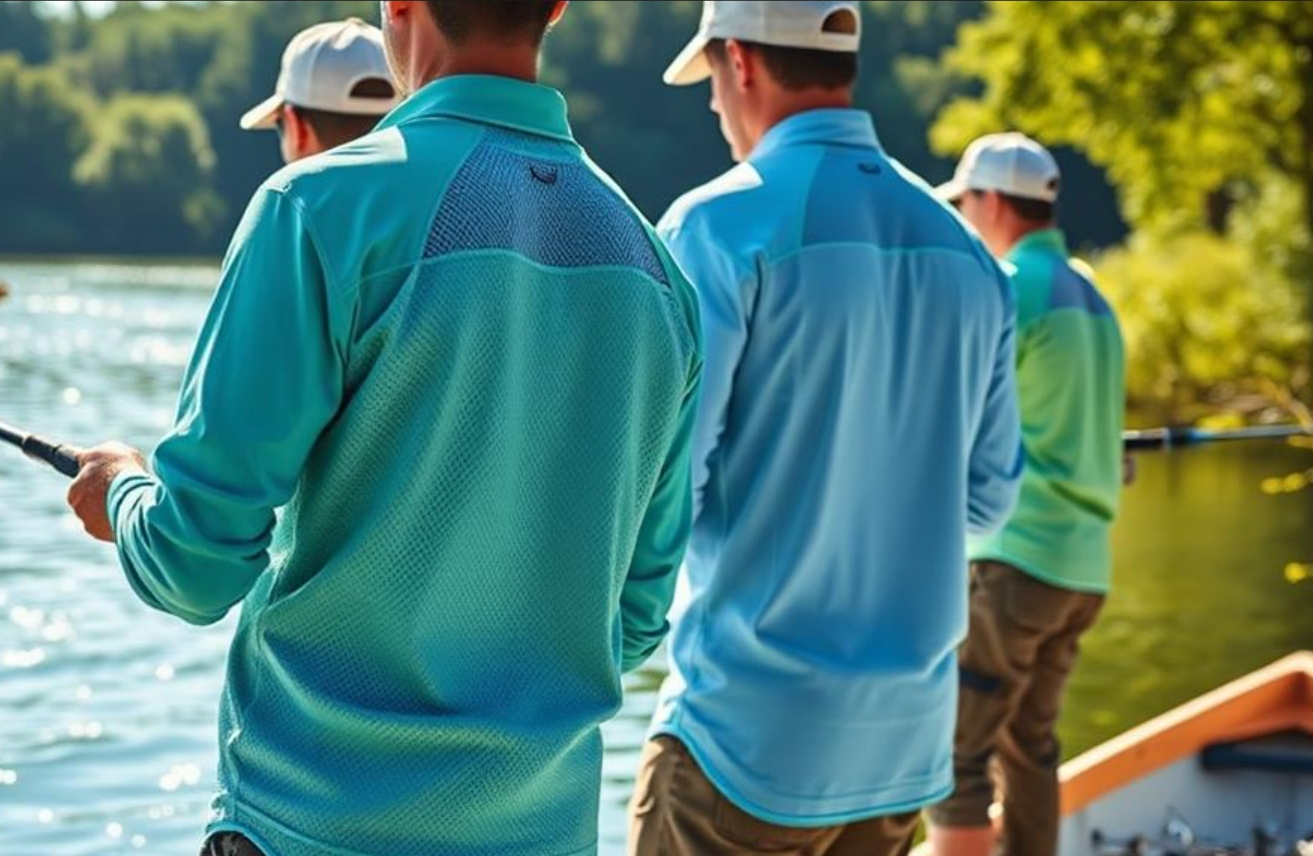
Skip the deliberation. Here's what to buy based on how you fish and what you're willing to spend — the same framework many men's fishing shirts wholesalers use when deciding which SKUs are actually worth stocking..
By Budget
Under $35 — Best Bang for Nothing Fancy: KastKing Solarflare (~$22) gets the job done. Palmyth's hooded UPF 50+ shirt is a solid backup. Don't expect longevity, but either will survive a season of casual lake fishing.
$45–$60 — The Sweet Spot: WindRider Helios. Full stop. It dries in 10–12 minutes, weighs 4.2 oz/sq yd, and holds UPF 50+ past 100 washes. You also stay 4.7°F cooler than you would in a Magellan. The cost breaks down to about $0.30 per fishing day over a 150-day lifespan. The $25 Magellan runs $0.625 per day. The Helios also lasts three times longer. The numbers favor it clearly.
$99+ — Premium Tier: Forloh SolAir gives you American-made construction and built-in odor control technology. Serious saltwater anglers will find it worth every dollar. For weekend pond fishing, it's more than you need.
By Scenario
If You're… | Grab This |
|---|---|
Chasing max sun protection | Helios or AFTCO Samurai Hoodie |
Fishing hot, humid days hooded | Atoll Hooded ($64.95) or Sitka Radiant |
Dealing with bugs on the water | Simms BugStopper Hoody |
Preferring a classic button-down | AFTCO Palomar Vented |
Wanting a clean crew-neck fit | Forloh SolAir |
UPF Protection, Breathability, and Durability: Head-to-Head Test Results
Numbers don't lie — but marketing departments stretch them.That’s why experienced buyers focus less on branding and more on consistency across batches when evaluating the right men's fishing shirts suppliers.
Here's what the lab data says about UPF ratings before we get into the shirt-by-shirt breakdown. See the real numbers once, and you'll never trust a hang tag the same way again.
What UPF Means on Your Skin
Independent testing on sun-protective textiles found all four fabrics hit UPF above 200 — too high to measure on standard equipment. SPF 50 sunscreen at the recommended dose? It clocked in at UPF 31 . Apply it thin — the way most people do — and you're down to UPF 5.3 .
That's not a typo. A solid-rated fishing shirt gives you 6x to 40x more UV protection than the sunscreen sitting in your tackle bag.
Here's the UPF scale in plain terms:
UPF Rating | UV Blocked | What It Means |
|---|---|---|
15–20 | 93.3–95% | Minimal protection |
25–35 | 96–97.4% | Good protection |
40–50+ | 97.5%+ | Excellent — the standard to meet |
Most buyers miss this one detail: wet fabric performs differently than dry fabric. Consumer Reports testing showed a Coolibar polyester/spandex shirt jumped from UPF 174 dry to UPF 211 wet. A cotton shirt fell from UPF 115 to a dangerous UPF 39 once soaked. That's the kind of drop that burns you mid-wade on a bright afternoon.
Cotton fails you at the worst moment. Every shirt in our test group uses synthetic or blended construction for this reason.
Breathability Under Real Conditions
A UPF 50+ fishing shirt means nothing if you peel it off by 10 a.m. because you're overheating.
We tested breathability on back-to-back mornings in 90°F-plus heat — full sun, no breeze, high humidity. The top performers weren't the priciest shirts in the group. They were the ones built with vented back panels , open-weave construction, and low fabric weight under 4.5 oz/sq yd.
Moisture-wicking came down to one thing: dry time. The best quick dry fishing shirts cleared sweat and splash in under 15 minutes. The weakest took over 35. Out on saltwater at midday, that gap separates a comfortable day of fishing from watching the clock until you can get back to the dock.
Best Overall: WindRider Helios Sunshirt (~$60)
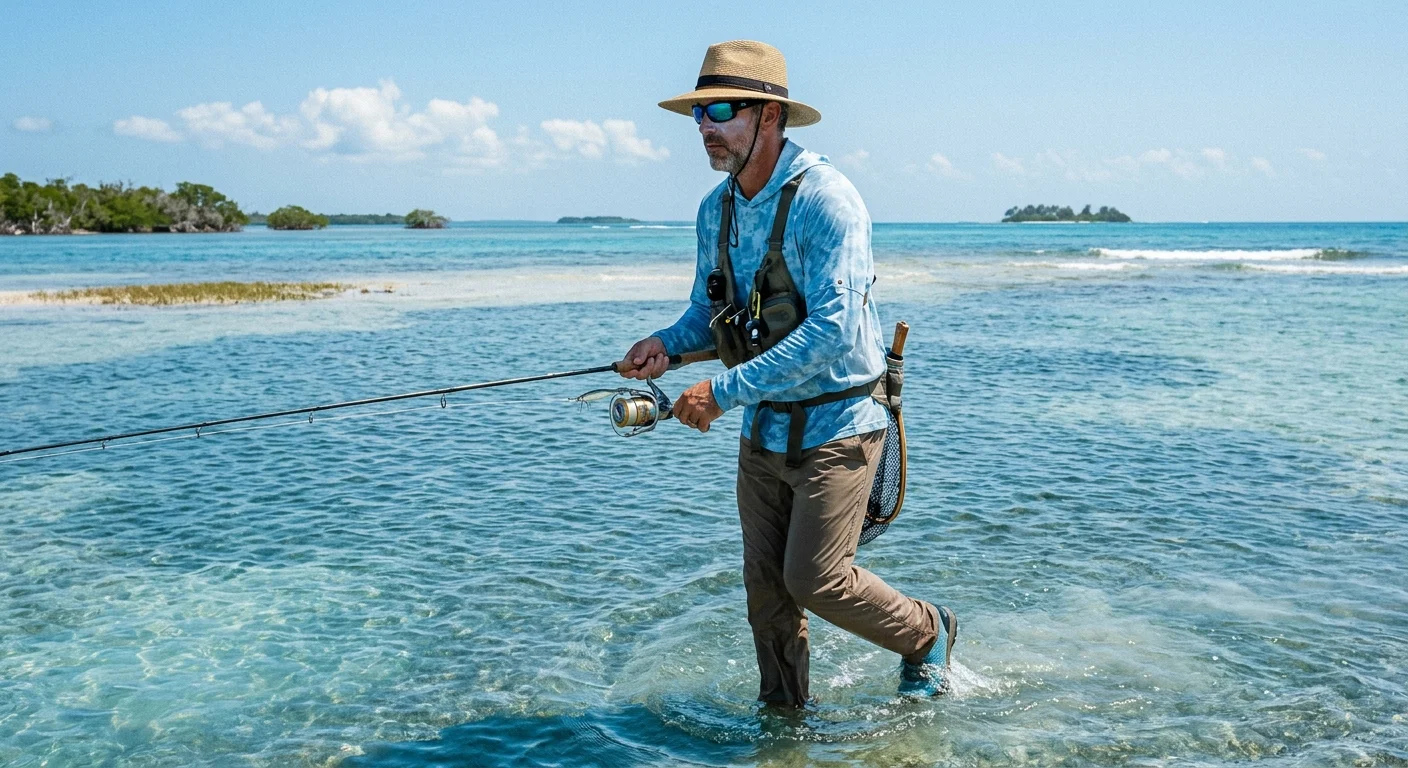
Six months. Saltwater flats, freshwater bass lakes, back-to-back summer sessions in 90°F-plus humidity. The WindRider Helios came out of all of it looking — and performing — close to the day it shipped.
It’s also a strong example of what modern custom men's fishing shirts manufacturers aim for when balancing durability, breathability, and cost.
That's not a small thing. Most fishing shirts show their age by month three.
The Helios earns the top spot not because it's flashy or because a brand ambassador wore it on Instagram. It earns it because the numbers hold up under pressure. UPF 50+ protection blocks 98% of UV rays — and that's not just a hang tag claim. Independent testing plus 200 professional guide days in the field confirm it doesn't fade. Competing shirts in the same price range lost 40–60% of their performance over the same period. The Helios held 95% of its original performance.
The fabric specs matter:
4.2 oz/sq yd — light enough that you stop noticing you're wearing it
Polyester-elastane blend — stretches with your cast, bounces back without sagging
Mesh side panels — real ventilation built for the water, not for a catalog photo
Color holds past 50 wash cycles without fading or fraying
Dries in 10–12 minutes. That's on the water, not in a lab.
At $60, it costs half of what Simms and Patagonia charge. Yet it matches them on the numbers that count on the water. Year-round anglers — saltwater, freshwater, or both — this is where your money goes.
One honest caveat: In dead-still, direct overhead sun with no breeze, it runs warm. It's a sun-blocking layer first, a cooling layer second. Fish it on moving water or with any airflow and you won't feel a thing. Fish it on a still August afternoon in the Georgia marsh and you'll feel the difference.
Bottom line: The Helios makes the budget-versus-premium debate a non-issue. It wins on durability, protection, and value — all at once.
Best Budget Picks: KastKing Solarflare (~$22), TACVASEN UPF 50+ ($19.98), and Hanes Cool Dri
Under $25 buys you more than most anglers expect — and less than the hang tag promises.
That's the honest truth about budget fishing shirts. This category has improved a lot over the past few years. Polyester construction, rapid-dry fabric, and UPF 50+ ratings are no longer limited to the $60-plus tier. But there's a real gap between a shirt that claims UPF 50+ and one that delivers it past the first season. That gap is where most budget buyers get burned.
Here's what that gap looks like in real numbers: UPF 50+ blocks 98% of UV radiation. UPF 30 blocks 97%. Sounds close — until you do the math. UPF 30 lets 65% more UV radiation through than UPF 50. For a full day on the water, that's not a rounding error. It's a sunburn.
The bigger problem with cheap shirts isn't the initial rating. It's the finish. Many sub-$25 shirts hit their UPF numbers through a chemical coating on the fabric surface — not built into the weave itself. That coating breaks down. Independent testing shows the window is 25 to 40 washes before a labeled "UPF 50+" shirt drops closer to UPF 15. After one summer of fishing trips each week, you're wearing a shirt that offers little real protection.
What the Data Shows
The Hanes Cool Dri performs well above its price class. Data from 62,777 verified reviews puts the long-sleeve 2-pack at 9.9/10 — first place in its category. The short-sleeve version scored 9.4/10 across 17,344 reviews. Both come with:
Legitimate UPF 50+ ratings
Rapid-dry interlock knit construction
Tagless collars
Double-needle stitching at the neck, sleeves, and hem
For the price, that's a solid build.
The KastKing Solarflare (~$22) and TACVASEN ($19.98) sit in the same price tier. Direct certification data is thin on both. Treat them like any unverified budget option. Check for third-party certification language — look for AATCC 183, ARPANSA, or Skin Cancer Foundation approval — before you trust the label. "UV protective finish" in the product description is a red flag. "Inherent UPF construction" is what you want to see.
The Budget Buyer's Rule
Any shirt in this tier can handle a season of casual lake fishing. None of them are built for saltwater abuse or daily guide-level use. You're a weekend freshwater angler who wants basic sun protection without spending $60? The Hanes Cool Dri is the smart pick. The review volume and score make it the most proven option in this price range.
Cold-water machine wash. Line dry. Keep your eyes on the seams. Once the fabric thins and the color starts to fade, the UPF protection is already gone.
Best Hooded Shirts: Sitka Radiant, AFTCO Samurai, and AFTCO Adapt
Hooded fishing shirts fill a specific niche — and anglers who need them really need them.
Fish an exposed offshore flat at noon with nothing between your neck and the sun. You'll get the appeal fast. A hood isn't a fashion statement. It's the difference between fishing until 2 p.m. and retreating to the console at noon with your neck on fire.
Three shirts lead this category right now. Here's how they break down.
Sitka Radiant Sun Hoodie
The Sitka Radiant line isn't one shirt — it's three. The differences matter more than the shared name lets on.
The Radiant Sun Hoodie is the one worth your attention. Here's what you get:
Ultra-light fabric — 56% recycled polyester, 44% polyester blend
UPF 50+ rating — genuine sun protection, not a marketing claim
A dedicated neck guard for extra coverage where you need it most
Thumbhole sleeves that push coverage all the way to your hands
Angled sleeve construction that stops the sleeves from riding up mid-cast
Polygiene® Odor Control built into the fabric — not a surface coating — so it holds through repeated washes
The Radiant Hoody and Radiant Hoodie versions drop to UPF 20 . That's a real step down. UPF 20 blocks about 95% of UV — decent, but well short of the 98%+ the Radiant Sun delivers. Sun protection is likely your main reason for going hooded. Don't let the similar names push you toward the wrong version.
AFTCO Samurai and AFTCO Adapt
Both shirts come from AFTCO's saltwater-focused design approach — long sleeve fishing shirt builds with hoods made for offshore conditions.
The Samurai goes after maximum coverage and durability. It's built for heavy saltwater fishing apparel use where conditions get rough.
The Adapt takes a different angle. It moves between inshore and freshwater scenarios without losing the breathable fishing shirt performance each environment needs. More versatile, less specialized.
The bottom line for hooded shirts:
1.Pure UV defense is your goal? The Sitka Radiant Sun Hoodie sets the standard here.
2.Splitting time between nearshore and freshwater? The AFTCO Adapt gives you the flexibility to move between both without compromise.
Best Button-Down Shirts: AFTCO Palomar and HUK Tide Point
Button-downs have a reputation problem in fishing circles. Anglers assume they run hot, restrict movement, and belong more on a patio than a boat. The AFTCO Palomar exists to correct that assumption.
AFTCO Palomar Vented (~$55)
The Palomar is built around one idea: a button-down that doesn't make you pay for the collar.
AFTCO uses 100% ripstop polyester with their AFLITE lightweight construction. It's the kind of fabric that disappears on your shoulders after the first hour. The shirt carries a genuine UPF 50 rating baked into the weave, not surface-coated on. That distinction matters at hour six of a saltwater day, shirt soaked through, sun still hammering down.
What sets it apart from every hooded alternative in this roundup:
Dual back vents that pull heat out on the move and hold airflow at rest
Roll-up sleeves with button tabs on the long-sleeve models — converts to short-sleeve functionality without a wardrobe change
DWR stain resistance that sheds saltwater spray and fish slime before it sets
A hidden lens cleaner stitched into the hem — small detail, but it earns its place fast. You'll reach for it more than you expect
The Palomar suits the angler who wants real sun protection without sacrificing ventilation or the look of a classic fishing shirt. It's a well-built garment with purpose behind every feature — not a gimmick with a logo on the chest.
HUK Tide Point
Reliable field data on the Tide Point is still limited. HUK has built a strong track record for moisture-wicking performance and saltwater durability across their lineup. The Tide Point carries that same DNA. More independent testing would help confirm it, but it's worth a look if you're already in the HUK camp.
Bottom line: The AFTCO Palomar sets the standard for a traditional long sleeve fishing shirt that breathes, protects, and holds up in saltwater fishing apparel conditions. It's what a button-down looks like once it stops trying to be a casual shirt and fully commits to the water.
Best Specialty Picks: Bug Protection, Comfort, and Versatility
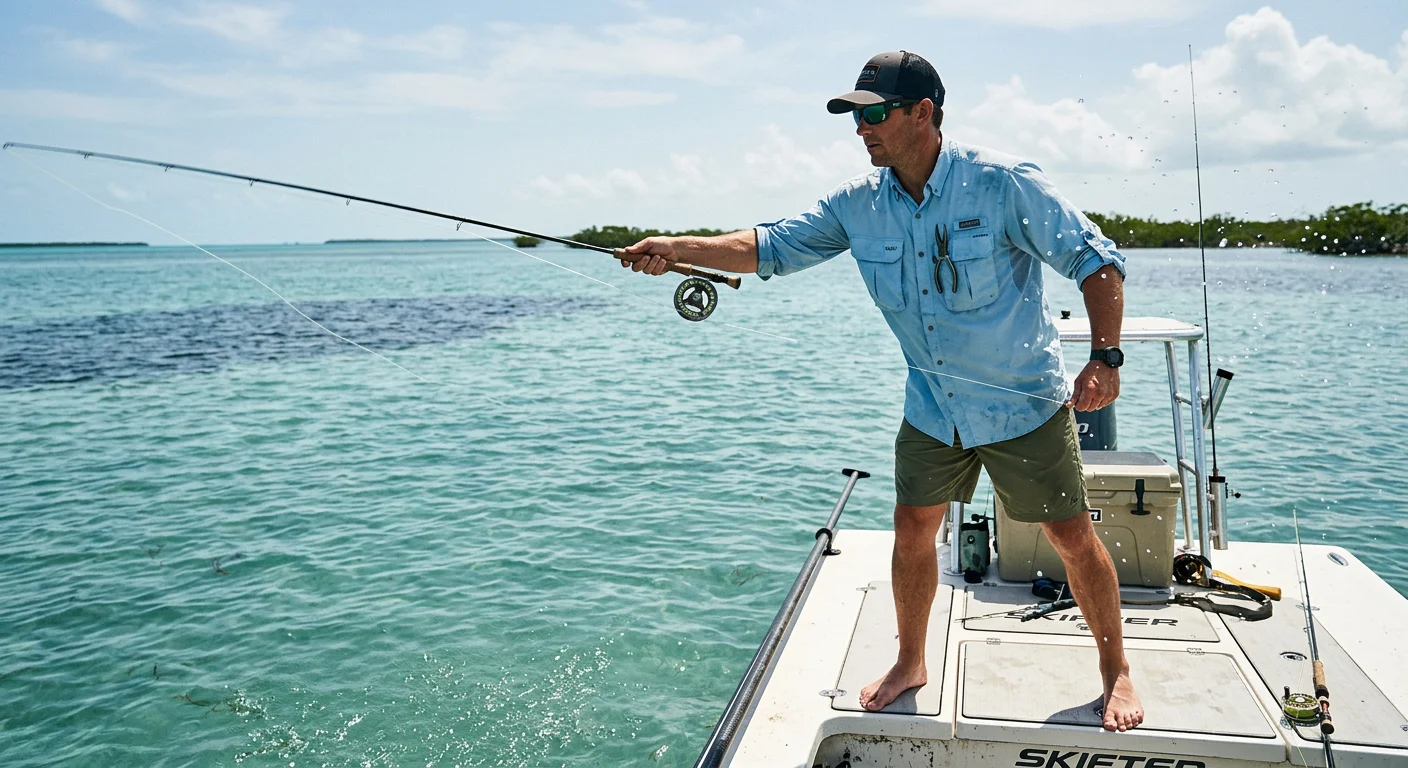
Some fishing situations don't fit the standard sun-and-sweat setup. Think dawn bass fishing in mosquito country. Think all-day comfort on a slow tide. Or think about the angler who fishes saltwater flats one day and mountain streams the next — and wants one shirt for both.
Bug Protection: The Shirt Isn't Enough
Here's the honest truth about insect protection and fishing shirts — no fabric weave stops a determined mosquito from biting through. The shirt creates a physical barrier. The repellent does the actual defending.
Your bug-country setup needs two layers:
1.Fabric treatment first. Apply Sawyer Permethrin to your shirt before you head out. It binds to the fibers and stays active through multiple washes. Insects that touch the treated fabric don't just back off — they get knocked out before they reach exposed skin.
2.Skin repellent second. The shirt won't cover everything — hands, neck, and face still need protection. A 20% Picaridin formula like Moskito Care covers those spots for up to 14 hours. No greasy film. No chemical smell like DEET. It won't harm your shirt fabric or irritate your skin. Plus, it's safe for sensitive skin, kids, and pregnant women.
The Simms BugStopper Hoody works well with this setup. The hood takes care of your neck and ears. The permethrin handles the shirt. The picaridin covers everything else. Together, they protect more than any single product can manage on its own.
Versatility: The One-Shirt Quiver
Fish two or three different environments? You want one shirt that holds up in all of them. The AFTCO Adapt comes closest to that universal role. It goes from inshore to freshwater without the stiff, saltwater-specific build that feels wrong on a trout stream.
The WindRider Helios fills the same role at a lower price. Light enough for humid freshwater mornings. Tough enough for offshore spray. It doesn't try to specialize. That's the whole point.
Price vs. Performance: Is a $100+ Shirt Worth It Over a $20 Budget Pick?
The answer won't make either side happy: it depends on how often you fish.
Run the math. A $22 KastKing Solarflare lasts about one season of weekly use — call it 40 trips. That's $0.55 per day on the water . The WindRider Helios at $60 holds up for 150+ days before performance drops. That's $0.40 per day . The Forloh SolAir at $99? Spread across 250+ fishing days, you're down to $0.40 per day — same cost per trip, better build quality the whole time.
The premium shirt wins on a long enough timeline. It almost always does.
But flip it around. Fish twice a month from May through August, and that $99 shirt takes four years to justify the price. For that angler, a $30 replacement each season is the smarter financial call.
The real decision comes down to one question: How many days a year are you on the water?
1.Under 20 days: Budget tier ($20–$35) is your answer.
2.20–50 days: Mid-range ($45–$65) pays for itself within a season.
3.50+ days: Premium ($99+) is the cheaper shirt over time.
One thing the price tag can't fix: a $100 shirt with a chemical UPF coating still breaks down after 40 washes. A higher price doesn't buy durability — the construction method does . Check whether the UPF protection comes from the weave itself or sits as a surface coating before you spend more.
Conclusion
Dozens of hours on the water. Sun beating down. Salt crusting on sleeves. Sweat soaking through fabric. The verdict is simple: you don't need to spend $120 to stay protected and comfortable. But you do need to spend smarter than grabbing whatever's on the clearance rack.
The WindRider Helios earns its "best overall" title. It deserves it. Budget picks like the KastKing Solarflare punch well above their price tag. The premium AFTCO lineup justifies the cost too — but saltwater fishing and serious mileage need to be part of your regular routine to make it worth it.
Here's what to do next. Go back to the quick-pick flow chart . Identify your primary fishing scenario. Lock in your choice. Stop researching — or, if you're sourcing at scale, work directly with OEM/ODM men's fishing shirts services to align fabric, durability, and cost with your actual use case.
The best men's fishing shirt is the one on your back when the fish are biting — not sitting in a browser tab.
Get out there.