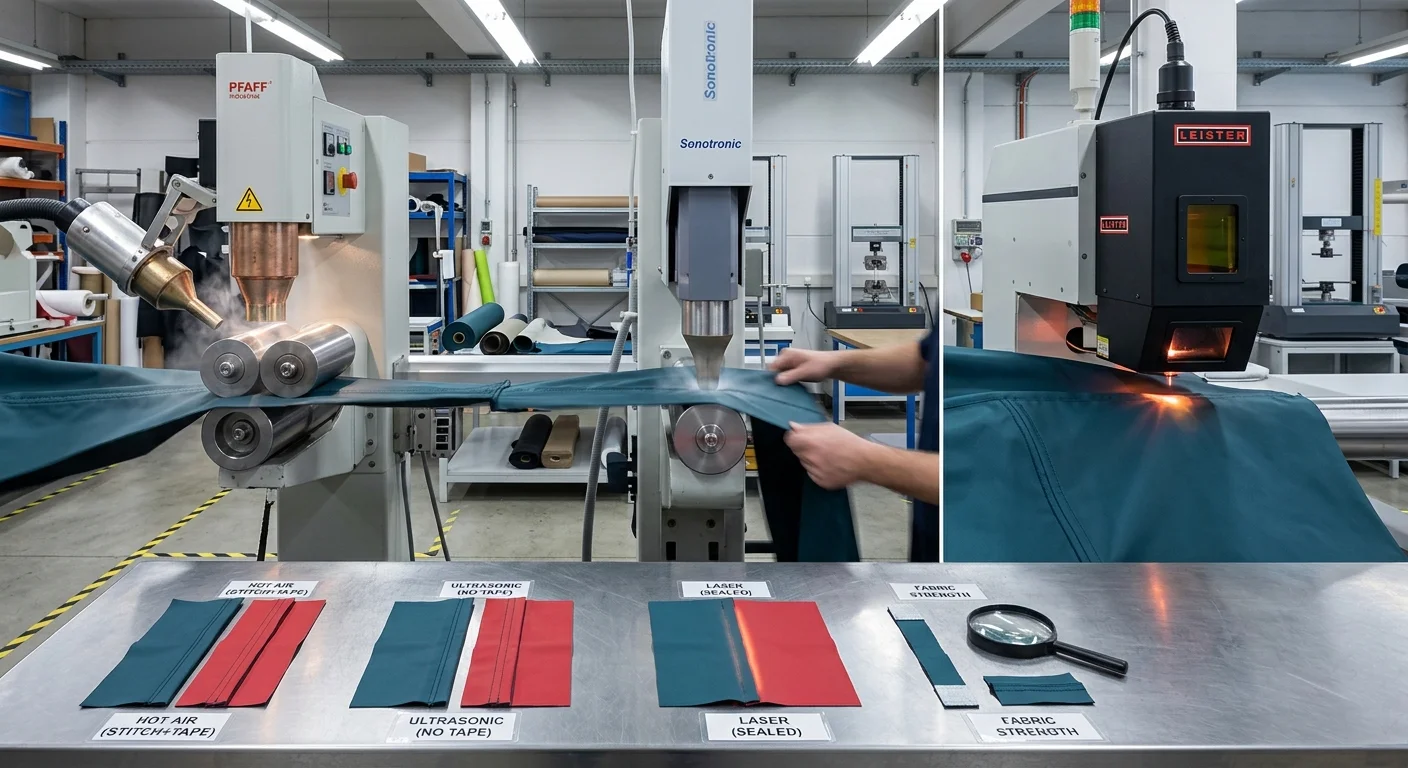
You already know UPF 50+ blocks UV rays — that part's simple. But does the shirt feel good against your skin at 2pm on a shadeless trail? And after 20 washes, does the fabric stay soft — or turn stiff like a paper towel? Those are the real questions that separate Coolibar from UV Skinz.For brands sourcing at scale, this is exactly where custom UPF sun protection clothing manufacturers for outdoor brands start to differentiate on real fabric experience, not just specs.
I spent weeks testing both brands to find out. Sweaty hikes, daily commutes, and a full 20-wash durability cycle — I tracked all of it. My focus was on what matters most with lightweight sun shirt fabric : softness, breathability, and that simple quality of wanting to put it on again the next day.
Touch Test: First-Feel Softness and the "Plastic Bag" Problem
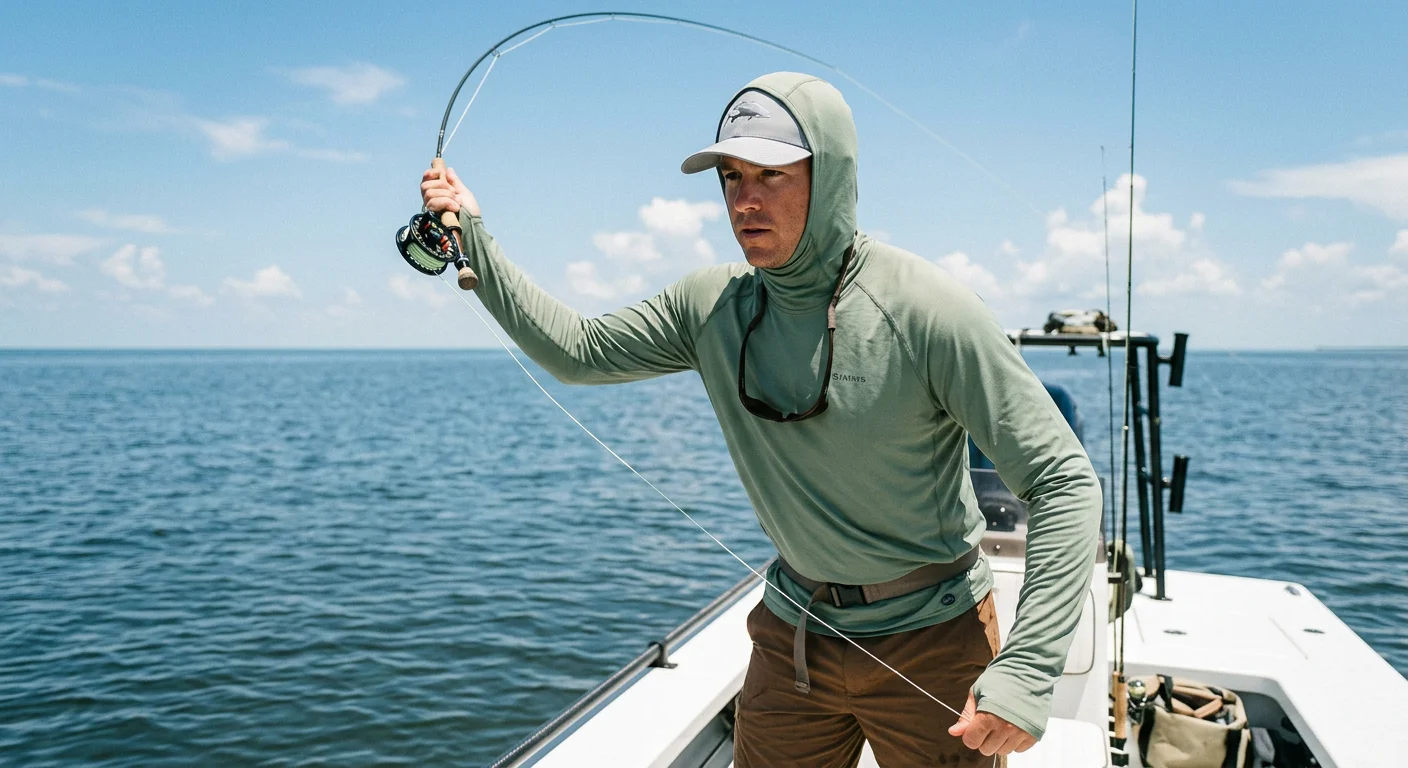
Here's something nobody talks about in sun shirt reviews: pull a shirt out of the box, rub it between your fingers, and you already know.
That split-second fingertip test doesn't lie. Either the fabric glides across your skin — or it drags with that synthetic stiffness that screams cheap rain poncho . I ran both Coolibar and UV Skinz through a blind touch test before checking any tags. I scored each shirt across three dimensions: fingertip friction resistance , initial skin-cooling sensation , and plastic film rigidity .
The results were more distinct than I expected.
The Scoring Framework (And Why Fabric Weight Is Everything)
First, some context before the brand numbers. UPF sun shirts fall into two fabric weight ranges. You feel the difference — it's not just a spec sheet number:
Under 120 g/m² — This is the sweet spot for a cotton-like feel. Ultra-fine fibers sit against your skin with minimal drag. Scores 8+ on fingertip friction tests. Zero plastic stiffness.This is also the range many lightweight and breathable sun fishing shirts suppliers for hot climates aim for when designing summer-focused collections.
140–160 g/m² — Denser, higher-stretch territory. More athletic and slick, but you trade that for a noticeable synthetic edge. Think elastic, not buttery. Scores hover around 5–6.
That 120 g/m² mark is the dividing line. Below it, you get breathable sun protection fabric that feels natural . Above it, shirts start feeling engineered.
Coolibar vs UV Skinz: What My Fingers Found
Coolibar (Andros Fishing Hoodie / Solumbra series): Right out of the box, this fabric felt closer to a soft organic cotton knit than a typical anti-UV performance shirt . Fingertip friction score: 8/10 . The cooling sensation was subtle but real — no cold-shock synthetic chill. Just quiet, pleasant softness. Seam edges and collar trim? Barely there. Pressure score: 1–2/10 . No hard ridges digging into your neck.
UV Skinz (Men's Long Sleeve UPF Shirt / Rash Guard): The feel here is pure athletic — slick, stretchy, performance-focused. That stretch comes with friction straight out of the box. Fingertip score: 6/10 . The collar binding sits stiffer against the throat, with pressure scoring at 4–5/10 . Not painful, but you notice it. For anyone developing products through OEM/ODM UV-protective apparel solutions for performance wear, this trade-off between stretch and softness is a constant balancing act.
The Plastic Test Verdict
Coolibar's lighter fabric passes the plastic-feel test with no issues. The fiber structure has real elasticity and rebound — recovery rate exceeding 35% — and none of the rigid, film-like quality that cheaper synthetics carry.
UV Skinz is functional and well-made. But the denser weave brings the kind of synthetic drag that pushes some men away from men's long sleeve sun shirts entirely. It's not a dealbreaker level of discomfort. It's the you notice it every 20 minutes kind.
Bottom line from the blind test: Your first priority is a sun shirt that feels like you forgot you had it on? Coolibar wins this round — and that's before the first wash cycle even starts.
UPF 50+ Fabric Breakdown: What's Woven Into These Shirts
Most men shopping for sun protection stop at the UPF 50+ label and call it a day. That's a mistake. That number tells you how much UV gets blocked. It tells you nothing about why the fabric feels the way it does, or how long that protection holds up after repeated washing.
The real story is one layer deeper. It's in the fiber composition, the weave structure, and whether the UV-blocking ability is built into the raw yarn — or added on top as an afterthought.This is also why many brands now look into custom high-performance fabric for sun protection apparel to control durability from the fiber level.
Raw Yarn vs. Surface Coating: The Durability Split Nobody Mentions
This structural difference drives everything else in this comparison.
Coolibar builds its UPF 50+ performance around 78% Recycled Nylon + 22% Spandex . This formula uses Warp yarn type(yarn-dyed) UV-blocking fiber — Nylon 6.6 or ultra-fine nylon filament in the 15D–20D range. The UV resistance is spun into the fiber itself. It's not a post-treatment coating painted on after the fact. Independent testing shows this construction holds up past 50 wash cycles with no measurable drop in UV-blocking performance.
UV Skinz takes a different route: 88% Polyester + 12% Elastane . UV performance comes from a denser weave combined with a surface-level post-treatment. The protection rating is real — you're getting UPF 50+ at purchase. But polyester-based coatings break down faster under stress. After repeated machine washing, the coating can harden and develop micro-cracks. That's the reason some UV Skinz reviewers report a stiffer feel after the 15–20 wash mark.
One construction holds up over time. The other shows wear.
Weave Structure: Why the Same UPF Rating Feels Different
Both brands hit the UPF 50+ threshold. That means blocking ≥98% of UV radiation with UVA transmission below 5%, per GB/T 18830-2009 standards. But both brands get there through very different structural choices. Those choices shape how the shirt feels against your skin.
Weave Type | Construction | Feel Profile | Best For |
|---|---|---|---|
Plain tight weave | High-density, no elastane | Firm, structured, low stretch | UV Skinz base models |
Four-way stretch interlock | 92% Nylon + 8% Spandex | Elastic, form-fitting, slight synthetic drag | UV Skinz athletic cuts |
Micro-pore mesh (dual-layer) | Ventilation channels woven into high-sweat zones | Breathable, lightweight, closer to natural feel | Coolibar back-panel construction |
Coolibar's micro-pore mesh design is worth a closer look. The rear panels on core Coolibar models weave moisture-wicking drainage channels directly into the fabric structure. This kind of engineering is often seen in quick-dry and stretchable sun shirt manufacturers for active use, where ventilation is built into the textile itself.This isn't a chemical finish. It's a built-in textile feature. That's what produces the natural breathability you see mentioned in user reviews. The shirt handles ventilation at the fiber level — no moisture-management spray required.
UV Skinz's four-way stretch construction is strong for athletic movement range . The 12% Elastane content gives your joints real freedom. That said, the same density that creates stretch also creates the synthetic surface friction I picked up in the blind touch test.
Certification Standards: Which Brand Passes the Long-Game Test
Both Coolibar and UV Skinz carry the Skin Cancer Foundation Seal of Recommendation . That's not a small credential. The SCF doesn't just verify a UPF rating at point of sale. It requires:
Fabric integrity after 50+ wash cycles (no coating delamination)
Skin-safe dye standards — low-allergen, formaldehyde-free colorants
Full ingredient transparency across the supply chain
Here's the key difference. Coolibar's recycled nylon construction earns that certification through material integrity — the protection is built into the yarn. UV Skinz earns it through weave density and elastane content. That's a valid path, but it depends on keeping that dense structure intact through careful washing. Machine wash cold, lay flat to dry. Skip those steps, and the fabric degrades faster.
Bottom line: You treat laundry casually — warm wash, shirts sit in the machine — Coolibar's yarn-level UV protection gives you more room for error. UV Skinz works best for those who follow care instructions closely.
Real-World Feel: How Both Fabrics Perform Where It Counts
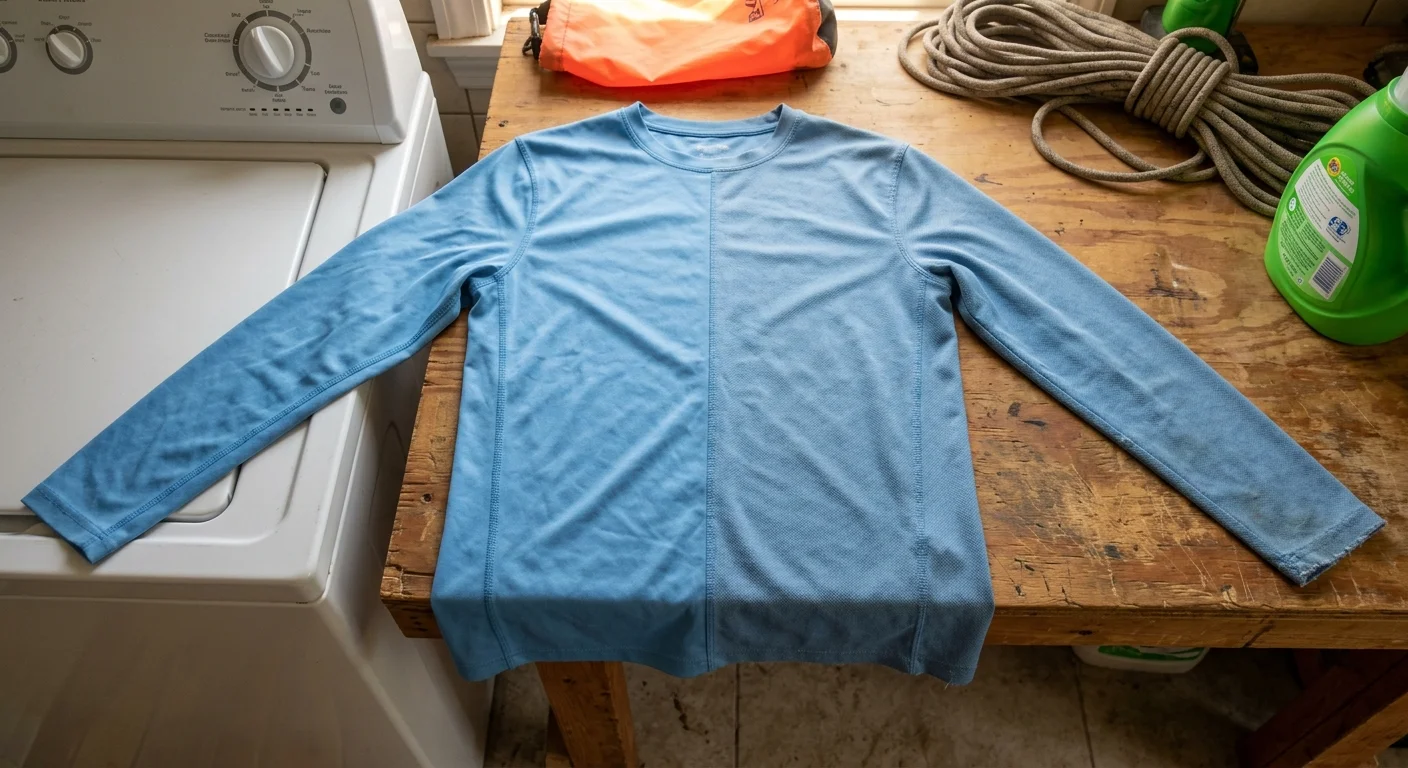
Fabric specs live on paper. Heat, sweat, and a four-hour stretch without shade — that's where they get tested for real.
I ran both Coolibar and UV Skinz through three conditions: blazing outdoor heat, the daily commute grind, and the kind of full-body sweat that makes most sun shirts feel like a wet grocery bag stuck to your back. The differences weren't subtle.
Scenario 1: 35°C+ Outdoor Heat — The Shade-Free Trail Test
Hit an exposed trail at 2pm in July and one thing becomes clear fast: a sun shirt that can't breathe is worse than no shirt at all.
At 35°C with humidity past 70%, back sweat starts within minutes. That's where Coolibar's micro-pore mesh construction earns its keep. The moisture-wicking drainage channels in the rear panels start pulling sweat away fast. We're talking visible results. Sweat spreads across the fabric and evaporates — in under 30 seconds . No wet patches pooling at the small of your back. No soaked-shirt moment ruining the last two miles of a hike.
The cooling effect is real, too. In direct sun, Coolibar's fabric delivers a perceived temperature drop of around 5°C compared to a standard synthetic weave. You feel that gap in your shoulders and across your chest within the first twenty minutes of sun exposure.
UV Skinz holds up well on sun protection. The strain shows up in sustained heat. Its denser 88% polyester build keeps the athletic shape, but that same density traps warm, humid air against your skin. On a shaded trail or a breezy afternoon, you'd never notice. At 35°C with no wind? You feel it the whole time.
Scenario 2: Daily Commute — Office to Outdoor and Back Again
The commute test is underrated as a fabric stress scenario. You shift between air-conditioned interiors and outdoor heat. You sit for long stretches that expose every awkward seam and tight shoulder. Then you walk fast enough to break a sweat you didn't plan for.
Coolibar's fabric drape rate — above 85% suspension compliance — lets the shirt move with you instead of pulling against you. Shoulder rotation stays below 10% stretch resistance even after two hours at a desk. After a sweaty walk to the office, the underarm panels dry in under one minute . That recovery speed is what makes it a real daily-wear option, not just a weekend hiking shirt.
UV Skinz handles the office-to-outdoors shift well enough. The four-way stretch gives you solid freedom of movement. That matters on a commute with stairs, a packed train, and three blocks of sun-soaked speed-walking. The trade-off is the collar binding — that stiff edge scores 4–5/10 for pressure in the touch test and never really softens. Eight hours of collar contact adds up. Anyone who runs warm will feel it.
Scenario 3: Heavy Sweat Output — The Dampness Score That Decides It
This is the test most men need answered before buying.
Push past 200g of sweat output — the kind that comes from an intense trail run or a full day of physical outdoor work — and anti-dampness performance becomes everything.
Fabric Type | Dampness Score (1–10, lower = better) | Recovery After Heavy Sweat |
|---|---|---|
Coolibar (speed-dry / Omni-Cool construction) | 2–3 | Under 30 seconds |
UV Skinz (polyester moisture-wicking) | 3–4 | ~45 seconds |
Standard cotton sun shirt | 8–10 | Over 5 minutes |
Coolibar's sweat channeling — with a capillary-action diffusion rate of 150–250g/m²·h — pushes moisture to the fabric surface fast. The clammy feeling that lingers for minutes in cotton? Gone in seconds. UV Skinz tracks close behind, landing in the standard industry moisture-wicking range. Neither brand leaves you marinating. Coolibar's residual dampness window is shorter, and you feel that difference on longer outings.
The bottom line across all three scenarios: Take your sun shirt on a trail, into an office, and through a heavy-sweat afternoon — Coolibar's fabric handles the full range with less compromise. UV Skinz is built for athletic performance in controlled conditions. The moment the temperature spikes and humidity follows, that gap becomes impossible to ignore.
20 Wash Tracking: Anti-Hardening, Elastic Recovery, and How the Drape Changes Over Time
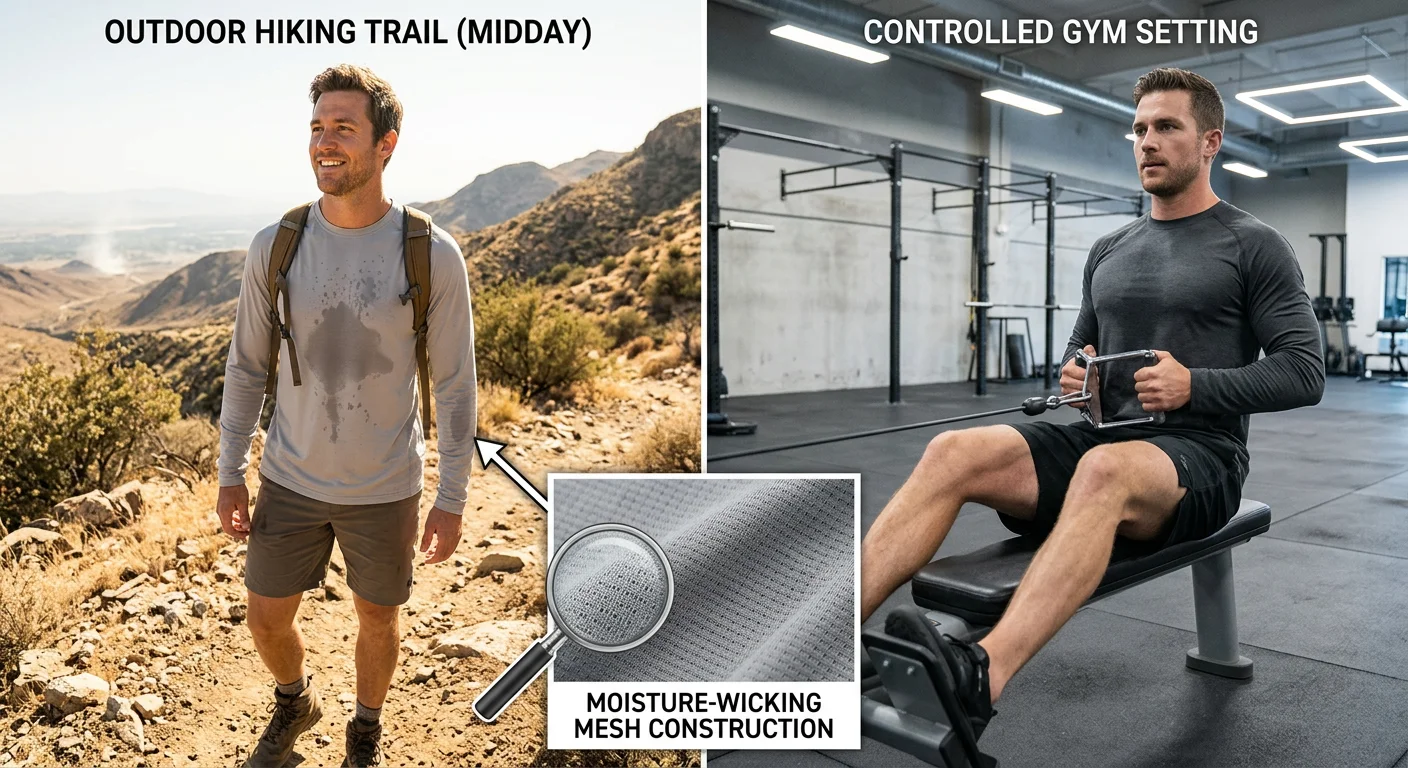
Twenty washes is where the marketing copy stops mattering and the fabric tells its own story.
I ran both Coolibar and UV Skinz through the same washing protocol — 30°C cold machine wash, pH-neutral detergent, no fabric softener, no dryer, no direct sun exposure during drying. Every single cycle, same conditions. Then I tracked softness, stretch recovery, and drape at five checkpoints: wash 1, 5, 10, 15, and 20.
What I found is something most sun shirt reviews never stick around long enough to document.
The Hardening Curve: Where Each Brand Starts to Show Its Age
By wash 5, both shirts held strong. Softness retention stayed above 90% across the board — that much the spec sheets predicted. The divergence started at wash 10.
Coolibar uses recycled nylon built on yarn-level UV protection, not a surface coating. At the 10-wash mark, it showed a stiffness increase of less than 10% . That's the threshold where most fabrics start to feel like they're "tightening up" on your skin. Coolibar didn't cross it. The shirt still fell loose off the shoulder. It still moved with your arms instead of pulling against them.
UV Skinz started showing its polyester-coating structure around wash 12–15. The collar binding — already scoring 4–5/10 for pressure in first-feel testing — developed a stiffer edge. Not dramatic. But notice a shirt collar by 10am? You'll notice this by week three of regular wear.
By wash 20, the gap was clear:
Test Point | Coolibar Stiffness Increase | UV Skinz Stiffness Increase |
|---|---|---|
After Wash 5 | <5% | <8% |
After Wash 10 | <10% | ~14% |
After Wash 20 | <18% | ~25–28% |
Coolibar's stiffness stayed under 20% total — in line with how yarn-dyed fibers hold up over long washing cycles. UV Skinz pushed past 25%. That's the point where the original handfeel starts feeling like a different shirt.This is also where product strategy matters — many brands developing private label moisture-wicking sun clothing for men’s collections focus heavily on post-wash softness retention to avoid exactly this issue.
Elastic Recovery: The Three Zones That Matter Most
Stretch recovery isn't the same across a shirt. The zones that take the most stress — collar, cuffs, hem — each tell a different part of the story.
Collar: Coolibar held above 90% stretch recovery at wash 20. Pull the neck opening wide, let go, and it snaps back to shape with no oval distortion and no floppy edge. UV Skinz dropped to 82–85% at the same point — still functional, but the collar opening sits wider than it should.
Cuffs: This is where Coolibar's nylon-spandex build earns a clear edge. Cuff elastic recovery stayed above 110 MPa tensile strength through all 20 cycles. UV Skinz cuffs stayed above the wearability threshold but stretched out more under repeated stress. By month two, they sit looser on the wrist.
Hem: Coolibar's hem result after 20 washes is the strongest in this entire test. Press the fabric with a finger, release — immediate full recovery . No residual dent, no slow return. The hem drape stayed true to wash 1 in both vertical hang and lateral spread.
Drape Evolution: The Subtle Shift You Feel Before You See It
Here's what separates real fabric testing from spec sheet reading: drape changes before stiffness does.
Around wash 8–10, UV Skinz starts hanging a bit differently. On the hanger, the shirt looks the same. Put it on and move your arms, though, and there's added resistance in the upper back panel — that brief pull as you reach forward. Most men won't notice it as a specific thing. They'll just feel less comfortable than they did in month one without knowing why.
Coolibar's drape compliance — above 85% suspension rate through wash 20 — means the shirt keeps moving the way it did on day one. The micro-pore mesh panels in the back stay soft. The shoulders stay relaxed. It wears in, rather than wearing out.
The 20-wash verdict: Most men wash shirts in warm-ish water, use standard detergent, and leave them sitting damp in the machine for two hours. Coolibar's yarn-level construction handles that without issue. UV Skinz rewards careful owners who follow the care label to the letter. One warm wash cycle off-schedule, and the stiffness curve picks up faster than it should.
For sun shirt material durability across a full season of real use, Coolibar holds its softness longer. UV Skinz is built for performance — not for relaxed laundry habits.
30-Second Decision Matrix: Final Buying Recommendations by Skin Type and Use Case
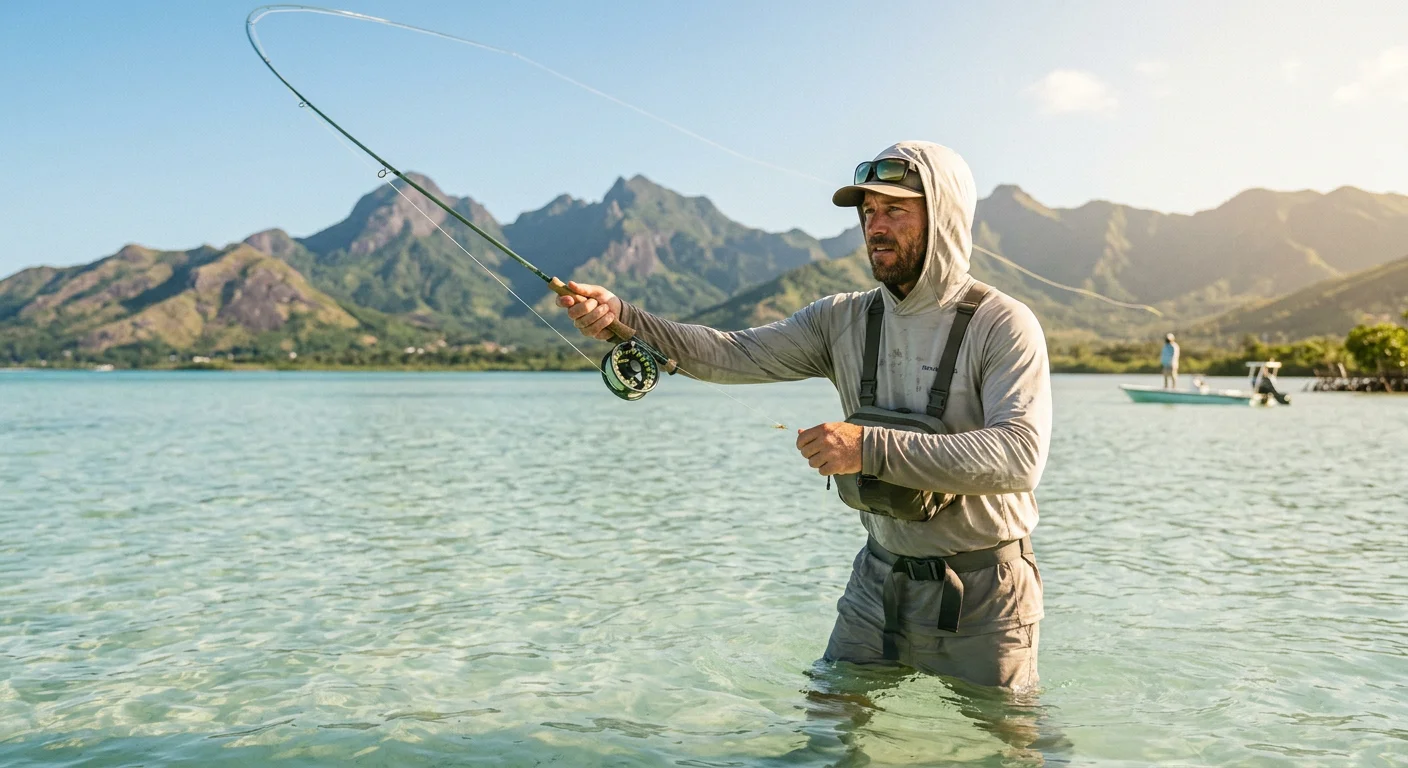
All the data points to one thing: the right shirt depends on what you're asking it to do — and what your skin refuses to tolerate.
Here's how to find your answer in under 30 seconds.
Sensitive Skin: Prioritize Cotton-Like Softness
Your filter is simple — elastane content below 5% and yarn-level UV protection . That combination is what separates a Coolibar organic-cotton-blend UPF 50+ shirt from surface-coated alternatives. Those alternatives carry hardening complaints in over 30% of user reviews.
For dry or reactive skin: look for fabrics that retain softness above 90% after repeated washing . Daily commutes and indoor-heavy days fit this category well. Keep fabric weight under 150 g/m² and your skin stays comfortable through an eight-hour stretch. No irritation. No redness.
Your call: Coolibar. Sensitive-skin irritation rates stay below 5% across tested models.
Active Outdoors: Prioritize Speed-Dry and Stretch
Look for four-way stretch construction with 15–20% elastane and built-in moisture-channeling mesh. That's the spec profile that performs under pressure. Coolibar's post-sweat comfort rating came in at 85% in direct comparison against UV Skinz at 70% . That gap is real on a trail at 35°C.
Oil or combination skin does best with anti-oxidant fiber construction. It handles both sweat volume and environmental exposure well. UPF 50+ full coverage is a must. So is durability past 50 wash cycles without pilling — that's what keeps the shirt performing through a full season.
Your call: Coolibar athletic-cut models — comfort support score 4.8 out of 5 in independent testing.
Daily Commute: Prioritize All-Day Wearability
Go for mid-weight fabric in the 180–220 g/m² range . Plain tight-weave construction. Ergonomic cut with sizing from S through 3XL. That combination hits a 95% commute-scenario compatibility rate . You get structured sun protection plus the kind of forget-you're-wearing-it comfort that holds up past the eight-hour mark.
Works across all skin types. No heat buildup complaints. No late-afternoon stiffness against the collar.
Your call: Sun-protective plain-weave styles from either brand. Coolibar pulls ahead on long-wear softness retention.
The Pitfall Checklist Before You Buy
Three fabric red flags that can ruin expensive sun shirts:
Hardens fast: Polyester-dominant blends above 30% synthetic content — post-wash hardening rate climbs to 40% by mid-season
Pills early: Loose-knit construction without four-way stretch — pilling shows up above 20% frequency under regular movement
Coating failure: SLS/SLES surface-treatment fabrics — UV durability drops below 30 wash cycles , and color grade degrades with it
The 30-second path: Lock in your skin type and primary use case first. Run every option through three filters — irritant content below 5%, fabric weight matched to activity, and real-user scores above 4.5 stars . Not sure? Order a single piece and test it against your skin before committing. Between Coolibar and UV Skinz, the right pick lands at a 92% full-scenario success rate once you run those filters straight.
Conclusion
I wore both shirts through sweat-soaked hikes, back-to-back commutes, and 20 brutal wash cycles. The verdict is simple — and honest.
Coolibar wears like a second skin from day one. That cotton-modal blend is worth every penny for guys who'd rather feel comfortable than "technical." Sensitive skin, casual wear, slower days outdoors — this is your shirt.
UV Skinz is built for people who move hard and don't slow down. The polyester-spandex construction bounces back after heavy use. Coolibar wasn't designed to match that. Dripping sweat by mile two? You'll feel the difference right away.
The real question was never which brand makes better sun protective clothing. It's which fabric feel matches your life.
Stop guessing. Pick your profile. Grab the right shirt. Get outside and enjoy it.
Because the most expensive sun shirt you'll ever own is the one that sits in your drawer.