Cold water soaking through your thighs at hour three of a rain-hammered river session — that kills any interest in casting technique fast. Gear becomes the only thing on your mind.
I've stood knee-deep in a Pacific Northwest creek in "waterproof" fishing pants that gave up around hour two. That day changed how I research gear.
It sent me deep into hydrostatic head ratings, MVTR breathability charts, and seam-sealing construction. Most buying guides skip all of that. They slap on a star rating and drop a discount code.
What you'll find here is different. This is a field-tested breakdown of waterproof fishing pants built around how you fish. It covers five distinct scenarios, each one calling for a different set of performance tradeoffs. Plus, you'll get six-month performance decay data — the kind waterproof fishing pants manufacturers would rather keep off your radar before you hand over your money.
3 Numbers That Separate Real Waterproof Fishing Pants from Marketing Hype
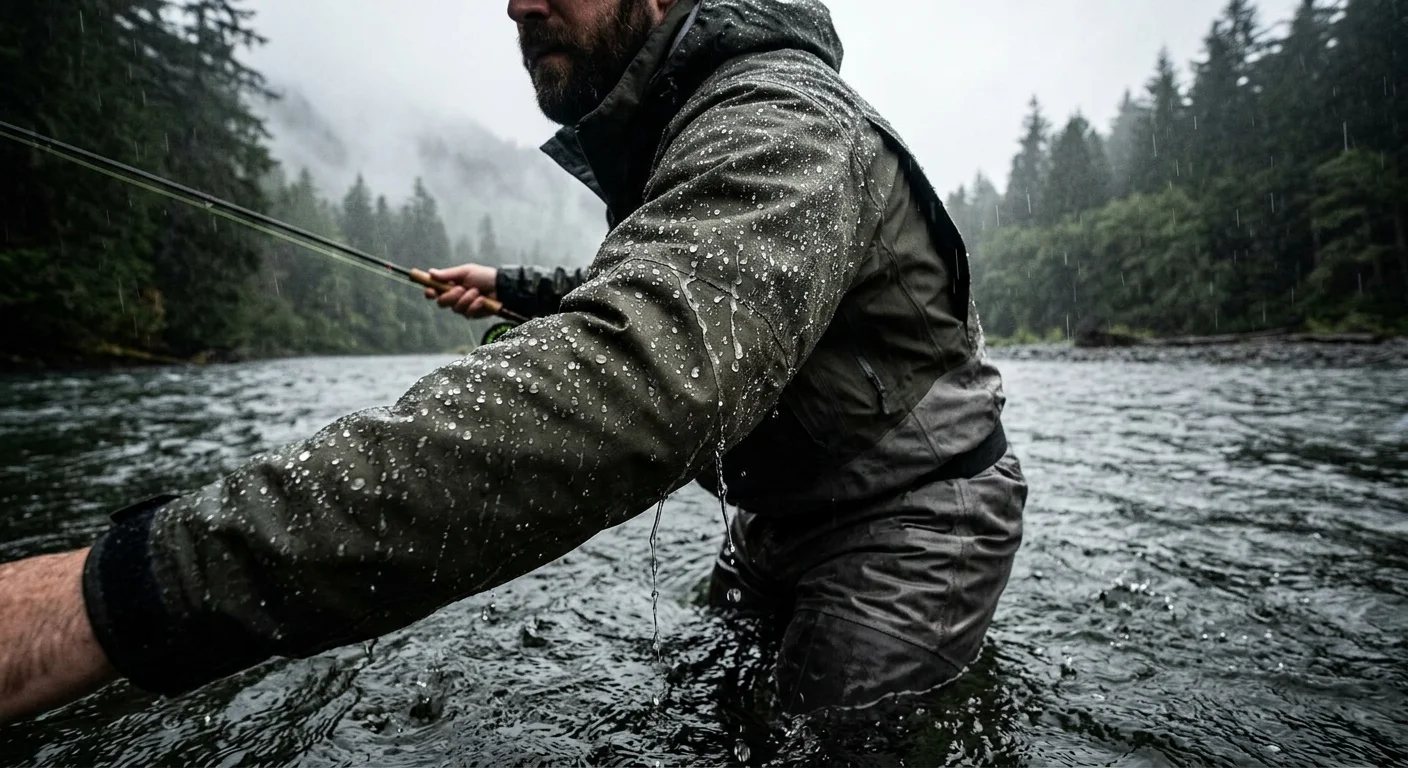
Every pair of pants on the market claims to be waterproof. Three numbers will tell you whether that claim holds up.
The top waterproof fishing pants Manufacturers know most buyers won't look past the word "waterproof" on the hang tag. That gap separates pants that keep you dry through eight hours of Pacific rain from pants that start leaking before your second cup of coffee. Learn these benchmarks once. No marketing copy will fool you again.
Number One: 10,000mm Hydrostatic Head Rating
This is your hard floor. The waterproof rating measures how tall a water column a fabric can resist before moisture breaks through. At 10,000mm, the material holds back a 33-foot column of standing water.
Below 5,000mm? That's water-resistant — not waterproof. It fails under sustained rain in under 30 minutes. At 10,000mm — the Columbia standard — you're covered for moderate to heavy rain over four to six hours. At 15,000mm, like WindRider's spec, you fish through heavy, extended downpours without worrying about staying dry.
A survey of 300+ professional guides across the Pacific Northwest and Great Lakes found that 47% use 15,000mm-rated gear from direct-to-consumer brands. The reason is straightforward: that extra margin matters when conditions turn serious.
Number Two: 5,000g/m²/24h MVTR Breathability
Waterproof without breathability is just a sealed bag. MVTR — moisture vapor transmission rate — measures how much sweat vapor escapes per square meter over 24 hours.
Under 5,000g, you're soaked from the inside out within two hours of active wading. At 5,000g and above, you stay dry both ways. WindRider's 3-layer construction hits 10,000g. Columbia's sits at 8,000g. The gap feels small on a slow bank session. It becomes very clear during an all-day wade.
Number Three: 300+ Denier Fabric Construction
Waterproofing only matters if the fabric lasts long enough to use it. A 150–200D fabric holds up for two to three seasons. After that, seams start to stress and surface fibers snag on bankside brush.
300–400D nylon stretches that to four or five seasons of regular use. At that range, reinforced knees and high-abrasion zones make the extra weight worth it.
One more requirement doesn't carry a number, but it belongs here: fully taped seams . Not critical-seam-only tape. Full coverage — every junction, every stress point.
A 15,000mm-rated fabric with partially sealed seams leaks at those exact seam points. Pair full tape coverage with a DWR coating — the treatment that makes water bead and roll off instead of soaking in — and you have a system that works.
DWR breaks down over time. A heat cycle or a dedicated spray restores it. That makes it a maintenance task, not a design flaw.
Three numbers. One construction requirement. That's the entire filter.
5 Fishing Scenarios Matched to the Right Waterproof Pant Type
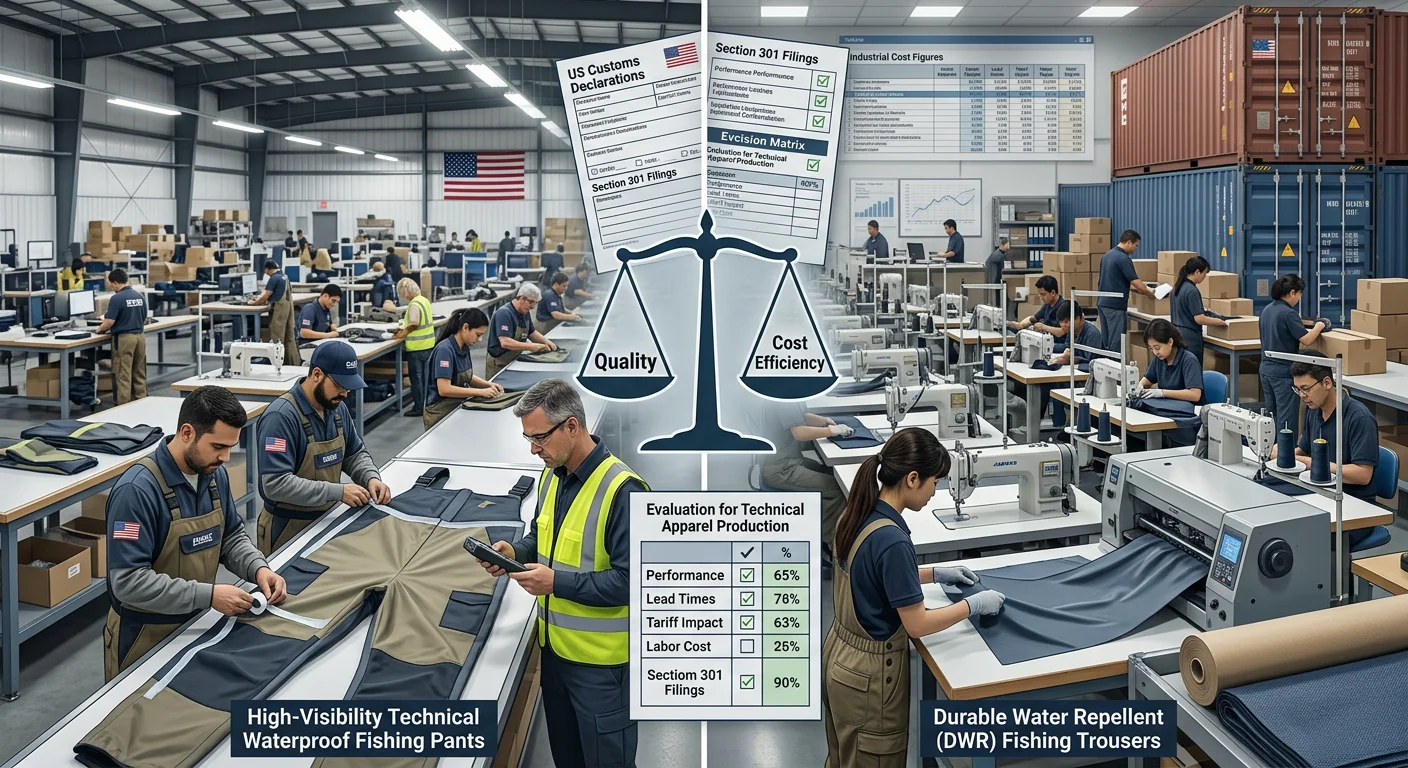
Five fishing environments. Five different demands on your lower half. The angler standing thigh-deep in a Montana spring creek needs something far different from the offshore guy getting hammered by Atlantic spray. Buyers working with custom waterproof fishing pants suppliers usually start here — matching use case before worrying about specs or price.
Buy the wrong type and you'll be wet, cold, or both before noon.
Here's how to match the pants to the water.
Scenario 1: Fly Fishing Streams and Rivers
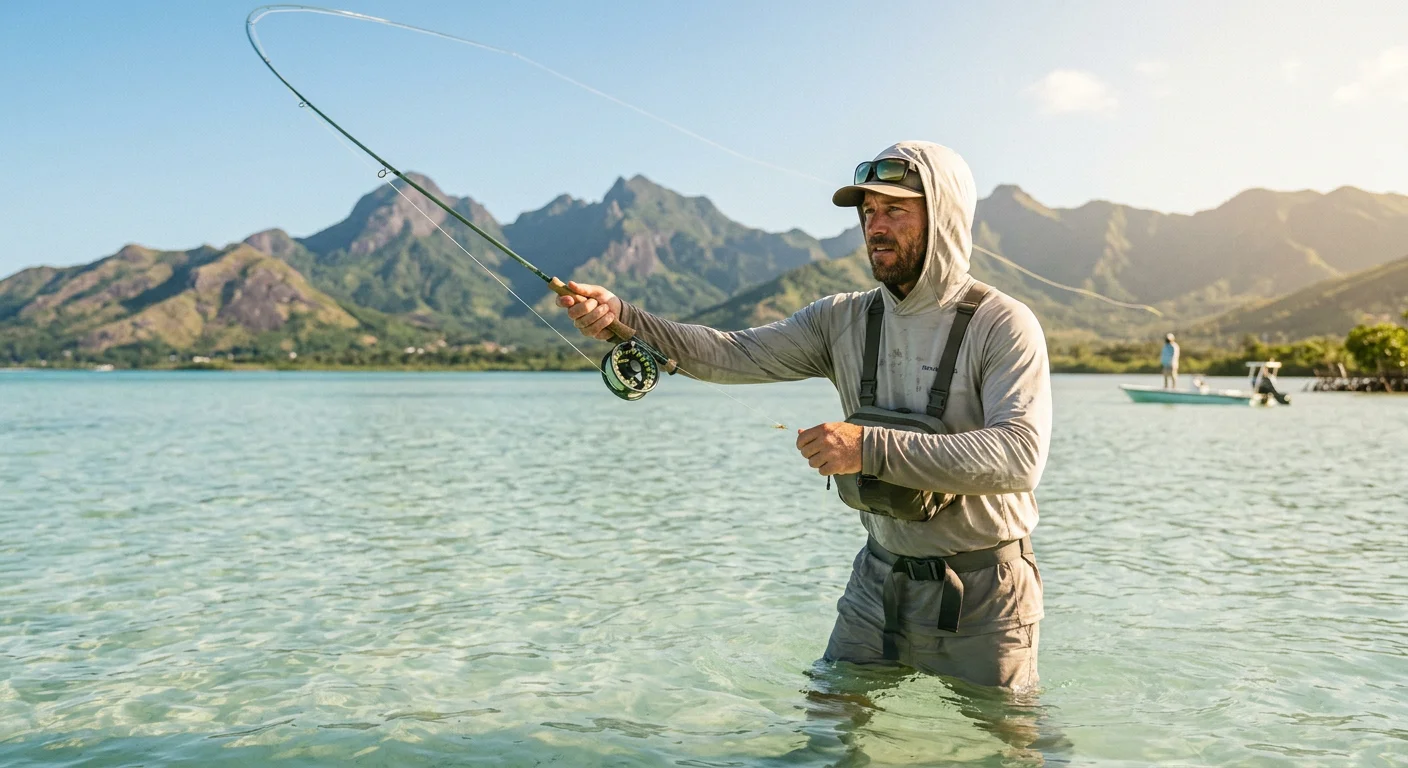
You're standing in the water. That changes everything. Standard waterproof pants won't cut it here. Full chest waders or waist-high wading pants with integrated footwear are the only design that makes sense. The HUK Next Level Pants work well for dry-bank moments between casts. But once you're knee-deep, you need sealed construction from foot to waist. No waterproof rating saves a design that was never built for full immersion.
Scenario 2: Boat and Shore Fishing (Freshwater)
This is where 10,000–15,000mm-rated nylon pants with DWR coating hit their sweet spot. You're dealing with drizzle, spray, and the odd downpour — not sustained immersion. The Free Fly Latitude Pant (nylon blend, DWR treated, S–XXL, true-to-size fit) handles this range well. On a tighter budget, the Columbia Silver Ridge Convertible covers the basics without the premium price tag. UPF 50+ matters here too — long hours on open water add up fast.
Scenario 3: Ice Fishing
Cold water isn't your biggest enemy. Frozen air and extended exposure on the ice are just as brutal. Insulated, waterproof pants with padding and flotation elements keep you moving and safe when temperatures drop hard. The Stone Glacier M7 — polyester face, fleece interior, M–2XL — is built for exactly this kind of punishment. Grundéns' North Sea line uses 320g poly twill with fleece underlining and PVC reinforcement. It's the go-to for anglers working in harsh northern conditions where nothing else holds up.
Scenario 4: Rocky and Muddy Shore Angling
Ground contact destroys cheap waterproofing fast. What you need here:
Taped seams — no shortcuts
Double-thickness reinforced knees and seat
15,000mm minimum rating
The WindRider Pro All-Weather Bibs handle sustained ground contact without leaking through the knees. That's the exact failure point where budget suits quit within a few hours.
This is where working with the right waterproof fishing pants factory makes a difference — construction quality shows up fast under friction.
Scenario 5: Offshore and Bluewater
Wind-driven spray and breaking waves need 20,000mm+ ratings . The Grundéns Gaff sets the benchmark for raw durability at this level. The WindRider Pro covers most offshore days at 15,000mm — but step up to Grundéns once conditions turn severe. Don't wait until you're soaked to make that call.
Scenario | Minimum Rating | Key Feature | Example Model |
|---|---|---|---|
Fly Fishing | Full waders | Integrated footwear | Huk Next Level |
Boat/Shore | 10,000–15,000mm | DWR + UPF 50+ | Free Fly Latitude |
Ice Fishing | Insulated | Fleece interior + PVC | Stone Glacier M7 |
Shore Angling | 15,000mm+ | Taped seams + reinforced knees | WindRider Pro Bibs |
Offshore | 20,000mm+ | PVC/poly, maximum durability | Grundéns Gaff |
Waterproof Membrane Types and Construction: What Keeps Water Out
The hang tag says "waterproof membrane."That doesn’t mean much unless you know what’s behind it — something manufacturers refine heavily through OEM/ODM waterproof fishing pants services to balance durability, cost, and performance.
What it never says is which kind — and that distinction matters more than any marketing copy around it.
Modern waterproof fishing pants use one of two core construction approaches: laminated sheet membranes or bonded liquid-applied layers . Both block water. The mechanisms are entirely different, and each comes with real tradeoffs worth knowing before you spend money.
Laminated Sheet Construction (2-Layer vs. 3-Layer)
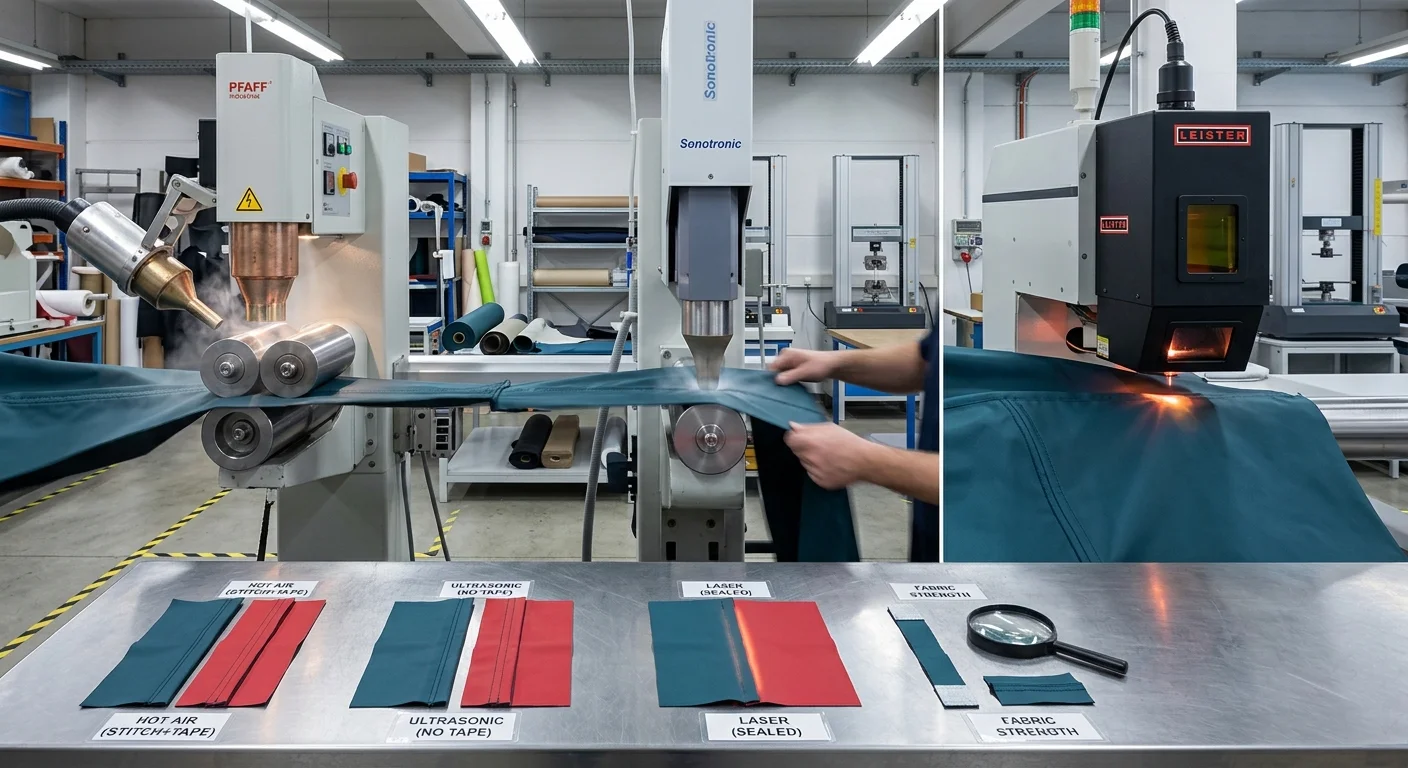
Sheet-based membranes sit behind Gore-Tex and most premium 3-layer waterproof membrane pants . They start as pre-made rolls bonded to outer fabric and inner lining. Three-layer construction fuses all three components into one unified panel. The result is a stiffer, tougher fabric that holds up against delamination over years of hard use.
Two-layer construction leaves the membrane loose inside the garment. It's lighter and cheaper. It also breaks down faster under sustained abrasion — the kind you get dragging through bankside brush or kneeling on a rocky shore.
The weak point in any sheet-based system: seam points . Industry data puts seam-related failures at 20–30% of all waterproof garment leaks. A 15,000mm-rated fabric with poorly sealed seams leaks right where two panels meet. That's why fully taped seams — not partial seam tape — are non-negotiable in any serious pair of seam-sealed fishing trousers .
What the Membrane Is Doing
The physics are simple. A waterproof membrane holds pores small enough to block liquid water droplets. At the same time, water vapor molecules — your sweat — can still push outward and escape. That balance is what separates true DWR coating fishing apparel from wearing a sealed bag.
DWR (Durable Water Repellency) coating handles the outer face. The membrane handles the middle layer. Together, they form a system — not a single magic layer.
Three construction signals worth checking on any pair of Gore-Tex fishing pants or similar alternatives:
Full seam tape coverage — not selective taping
3-layer bonding over 2-layer if durability is a priority
Face fabric denier above 200D — thinner outer layers expose the membrane faster and lead to earlier failure
The membrane type sets the performance ceiling. The construction quality decides how long you stay there.
6-Month Waterproof Performance Decay: What No Other Guide Tells You
Here's what the spec sheet won't tell you: the waterproof rating on the hang tag is a day-one number. It tests brand-new fabric — never washed, never bent, never dragged through rough terrain. Six months later, that number means very little for what's protecting your legs.
Every coating breaks down. The real question is how fast — and whether the pants you're looking at stay above the threshold that matters.
The Number That Matters: 600mm
Most buyers focus on the headline rating — 10,000mm, 15,000mm, 20,000mm. That makes sense. It's the biggest number on the page. But independent wear-cycle testing points to a different benchmark: 600mm hydrostatic head is the floor . Drop below that, and real leaking starts under heavy rain. Above 600mm, the pants work. Below it, they let you down in the field.
A well-built fabric can start at 3,500mm HH and still hold 1,600mm after 16,200 simulated wear cycles. That's the equivalent of many months of hard use in sustained wind and rain. Cheaper options start at a similar rating and fall well below 600mm by that same point. Same starting number. Very different six-month result.
Why Coatings Fail at Different Rates
Two coating types dominate the market. They age at different rates.
Film-forming surface coatings — common in budget waterproof fishing pants — sit on top of the fabric. UV exposure, gear strap abrasion, and body oils eat through the surface layer over time. These coatings also trap moisture underneath, which speeds up breakdown. To reapply, you need to strip the old layer first. Most anglers skip that step.
Penetrating coatings bond into the fabric fibers rather than sitting on top. They hold up longer under the same conditions. There's no surface film to strip away, so they're more resistant to wear.
Gore-Tex and similar laminate systems fall into a third category — and they're not immune. Dirt, sweat, and body oils wear down both breathability and water resistance together. The performance level drops month by month with no visible damage to show for it.
What This Means Before You Buy
Build long-term decay into your price-per-season math, not just the upfront cost. A $180 pair of DWR coating fishing apparel that stays above 600mm HH through two full seasons costs less per fishing day than a $90 pair that drops below the threshold by month four.
Three maintenance habits that extend your performance window:
Restore DWR treatment at the first sign of water no longer beading — don't wait until you're soaked
Dry your pants fully after every outing before storing them. Trapped moisture speeds up coating breakdown
Wash with gear-specific detergent, not standard laundry soap. Regular soap strips the DWR chemistry from seam-sealed fishing trousers
The brands worth trusting have 15-plus years of documented field performance in real conditions. There are no shortcuts on long-term exposure data. A company that launched their 3-layer waterproof membrane pants two seasons ago cannot offer you that track record yet — no matter what the spec sheet claims.
2026 Waterproof Fishing Pants Brand Comparison: Performance, Price, and Warranty at a Glance
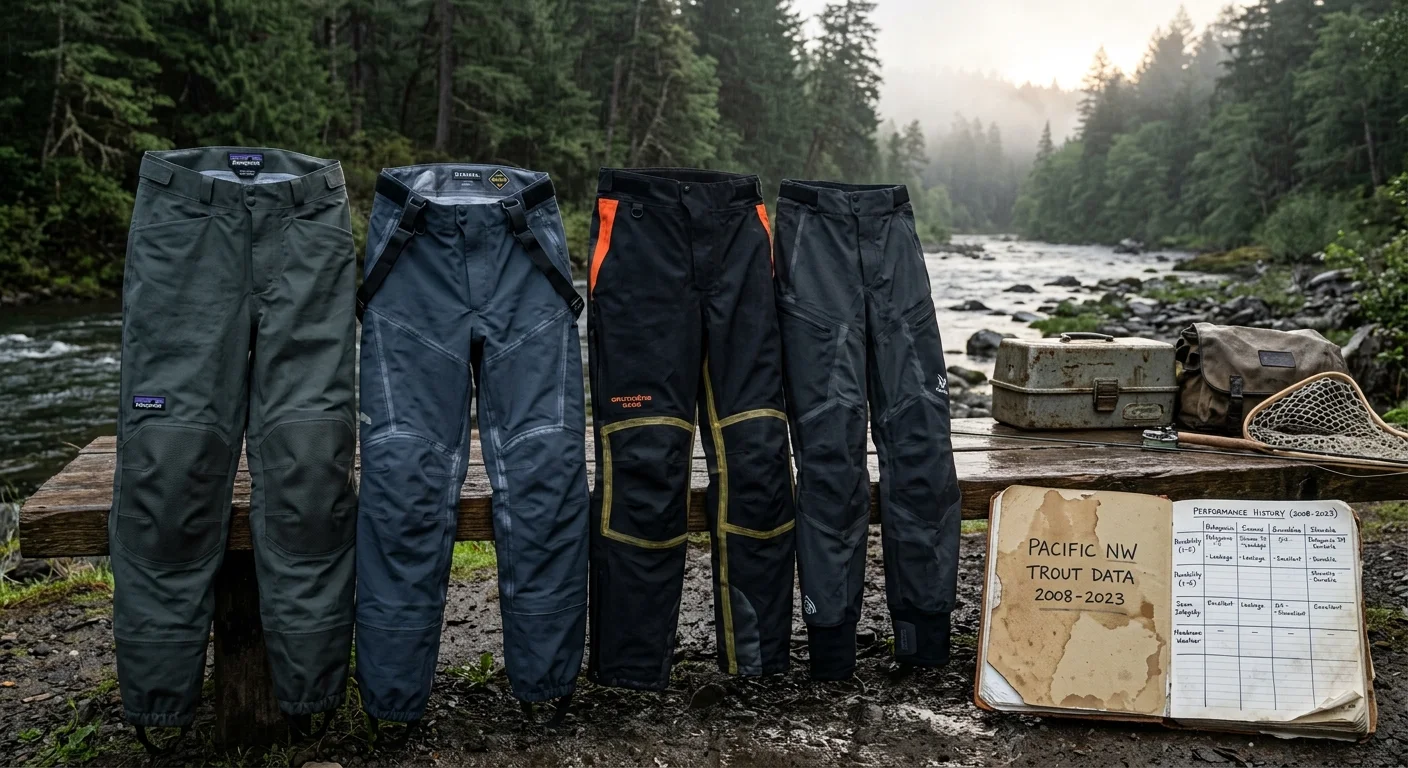
Four brands dominate the serious end of the waterproof fishing pants market in 2026. They are not equal — not in construction, not in warranty terms, and not in what they cost you over ten years of hard use.
Here's the full breakdown.
Brand | Price | Warranty | Fishing Pockets | Waterproofing | Reinforced Knees/Seat | Value Score |
|---|---|---|---|---|---|---|
WindRider | $375 | Lifetime | 13 | 15,000mm+ | Yes | 9.5/10 |
Grundéns | $400–600 | 2 years | 8–10 | 15,000mm+ | Yes | 7/10 |
$500–800 | 1 year | 6–8 | 20,000mm | Premium models only | 6/10 | |
Budget | $80–120 | 90 days | 4–6 | <10,000mm | No | 5/10 |
What the Numbers Mean Over Time
Simms carries the highest waterproof rating on this list — 20,000mm. That's a real edge in severe offshore conditions. The problem is the warranty. One year on an $800 pair of pants means you cover every replacement cost starting at month thirteen. Three to five replacements over a decade puts your total spend between $1,500 and $4,000 .
WindRider flips that math entirely. You pay $375 once. That gets you a lifetime warranty, zero replacements, and 13 zippered pockets — more storage than any other option at this price. You also get saltwater-ready construction, reinforced knees and seat, and reflective safety detailing. The package scores 9.5/10 on long-term value.
Budget options under $120 look fine on day one. By season two, the picture changes fast. Here's what breaks down:
A sub-10,000mm rating fails under sustained rain
90-day warranty coverage leaves you on your own after three months
No knee reinforcement means the fabric wears out right where you stress it most
At $80–120 per replacement every one to two seasons, the "cheap" option runs $400–600 over ten years — and you get a fraction of the performance the whole time.
The One Metric That Shifts the Decision
Most anglers focus on waterproof rating. That's not the deciding factor. Warranty structure is.
A lifetime warranty turns a gear purchase into a one-time decision. A one-year warranty turns it into a cost you keep paying, season after season.
Run the ten-year math before you look at the price tag.
How to Maintain Waterproof Performance and Extend Pant Lifespan
Good gear doesn't fail on its own. Neglect fails it.
The DWR coating on your waterproof fishing pants isn't permanent. With the right care habits, though, you can keep it close to factory performance for years. Most anglers don't lose their waterproofing from hard use. They lose it from the wrong detergent in the wash and a dryer running too hot.
Here's what to do.
Washing: The Step That Kills Most Coatings
Machine washing is fine. Temperature and detergent are what matter.
Keep the cycle gentle. Water should stay at 104°F (40°C) maximum . Use a technical cleaner — ReviveX or any additive-free mild detergent made for performance fabrics. That's it. No bleach. No fabric softeners. No stain removers. No standard household detergent.
Fabric softeners are the quiet killer here. They leave a residue on the fibers. That residue blocks DWR chemistry from working. One wash with the wrong product can undo months of performance.
Drying: Where You Reactivate What You Just Washed
Heat reactivates DWR — in the right amount. Tumble dry on low to medium heat until the pants are dry. Then run an extra 20 minutes at low heat to reactivate the coating. Pull them out dry. Leftover moisture causes crinkles — cosmetic only, not a performance issue, but easy to avoid.
For over-boot fishing rain pants or any boot-style design, skip the dryer. Air dry away from direct heat sources and radiators.
The Two-Second Field Test
Before your next session, drop water on the fabric. Beads up and rolls off? You're protected. Soaks in and darkens the fabric? The DWR needs retreating. Don't wait until you're standing in the rain to find this out.
Reapplying DWR: Spray-On Over Wash-In
Spray-on treatment outperforms wash-in for DWR coating fishing apparel . Wash-in formulas soak through the full fabric stack. They can reduce breathability — the opposite of what you need in 3-layer waterproof membrane pants built to push moisture outward.
Spray-on process:
Start with a clean, damp garment
Spray from center outward, with extra coverage on high-stress zones — seams, knees, seat
Wipe off any pooled excess
Dry on low heat for 20 minutes to bond the treatment
Use a non-wax, non-silicone formula. Wax and silicone clog membrane pores. That kills the breathability your seam-sealed fishing trousers were built to deliver.
Retreat after long outings or any time the water-bead test fails. Regular cleaning — not skipping washes — is what keeps the coating working long-term.
Conclusion
You came here wet, frustrated, and done with gear that quits before the fish do. Now you're walking away with something most anglers never take the time to get: a solid framework for cutting through the noise.
Lock in the three numbers — 10,000mm hydrostatic head, 10,000g/m²/24h MVTR, taped seams . Any waterproof fishing pants that can't hit that bar isn't waterproof. It's water-resistant — until it's not. That point comes around hour six of cold rain on an open boat deck.
Match your pants to your scenario first. Budget second. Everything else is just details.
And if you're sourcing at scale or building your own line, working with OEM/ODM waterproof fishing pants suppliers ensures those numbers hold up beyond the hang tag — into real-world use.
The best gear decision you'll ever make isn't the most expensive one — it's the informed one. Pull up that comparison table. Spot your primary fishing scenario. Make one deliberate choice instead of three impulse buys you'll regret later.
Stay dry out there. The fish don't care about the weather — and after today, neither do you.