You bought the breathable waders everyone recommended — and spent an entire November morning on the river shivering, teeth chattering the whole time. Or maybe it was the opposite. You wore your neoprene waders into a warm spring creek and came out looking like you'd just left a sauna.
Either way, you learned it the hard way. Wader choice matters more than most people admit. And most of the advice out there was written by men, for men, tested on bodies shaped nothing like yours.Many experienced buyers comparing products from different fishing waders manufacturers now pay closer attention to insulation systems and women-specific fit instead of relying only on brand reputation.
This guide is different. It covers real water temperature ranges, actual seasonal scenarios, and the fit realities tied to a woman's hip-to-waist ratio and torso length. Use it to figure out — in plain terms — which women's neoprene waders or breathable setup belongs on your body, and for which conditions.
How Neoprene and Breathable Membranes Trap and Release Heat
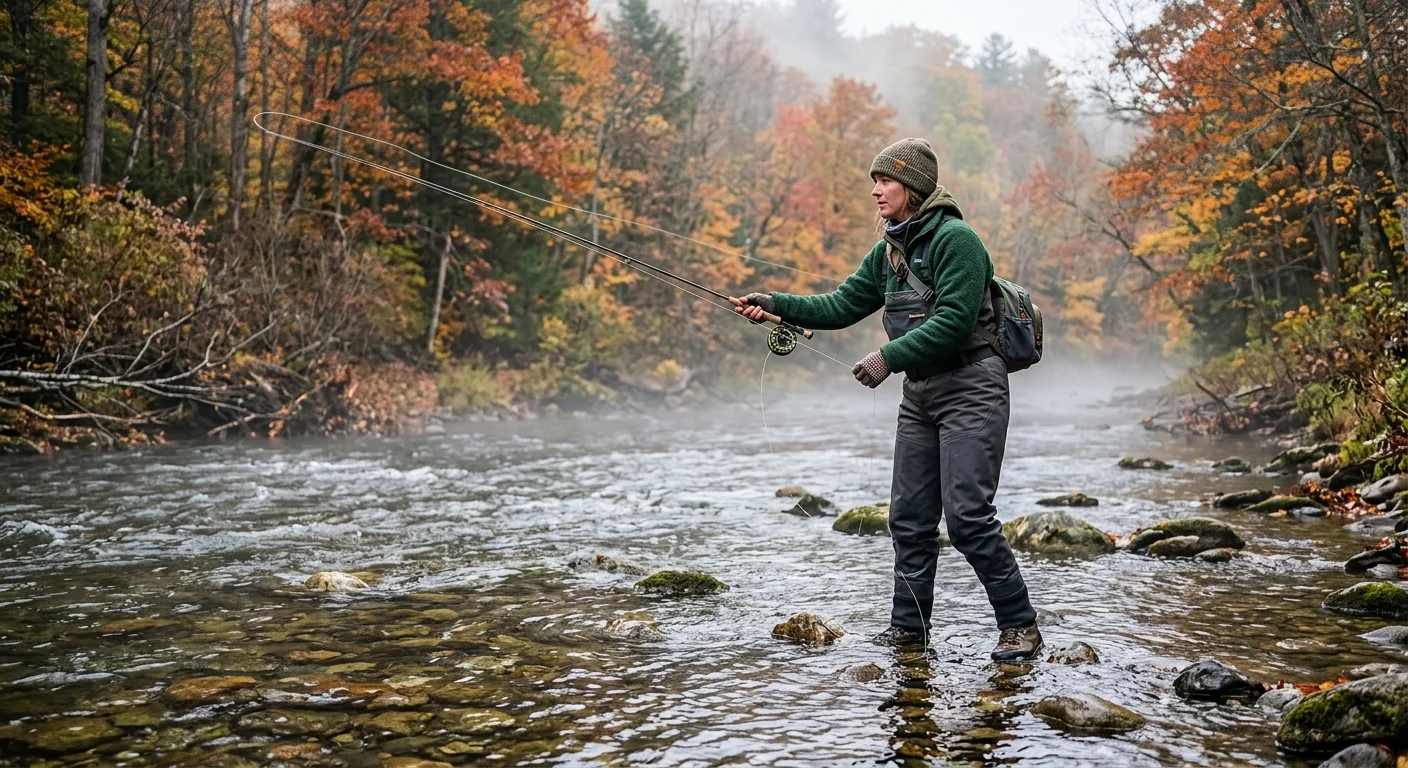
These two materials don't just feel different — they work through opposite physical principles. Knowing why changes how you shop.
Neoprene: The Warm Water Trick
Neoprene doesn't keep water out. It lets a thin layer — 1 to 2 millimeters — slide in against your skin, then traps it there. Your body heats that water to near skin temperature. The closed-cell foam structure holds it in place. No flushing, no convective loss, no cold water cycling through.
The science is cleaner than you'd expect. Neoprene foam is packed with microscopic nitrogen gas bubbles. Gas conducts heat about 25 times slower than water. So those bubbles act as a passive thermal barrier between you and the cold river. High-quality limestone neoprene — like Yamamoto #39 or #40 — is 99.7% water-impermeable. It locks that warm microclimate in and keeps cold water out.
The practical result : 3mm neoprene gives you R-2.5 insulation. That's ideal for water temperatures between 45–55°F. Step up to 5mm and you get R-4.0 — that's your under-40°F option.
Some premium neoprene wader insulation systems add titanium or copper heat-reflecting layers. These cut radiant heat loss by another 20–30%. That's not marketing language. That's physics.
Breathable Membranes: The Sweat Science
Breathable waders — Gore-Tex, eVent, and their competitors — work in the opposite direction. Their microporous membranes contain pores 0.1 to 5 microns wide. Liquid water droplets are far too large to pass through. But sweat vapor molecules slip outward, following the vapor pressure gradient from warm skin to cool air.
A quality breathable wader waterproof membrane transfers up to 10,000g of moisture vapor per square meter every 24 hours. That cuts sweat buildup by 70–90% compared to non-breathable shells. That's why many custom fishing waders suppliers focus heavily on balancing waterproof protection with high MVTR breathability during product development.
The tradeoff? The shell itself offers close to zero insulation — R-0.5 on its own. Every degree of warmth in a breathable wader layering system comes from what you wear underneath.
Women's Fit, Sizing, and On-Water Mobility Realities
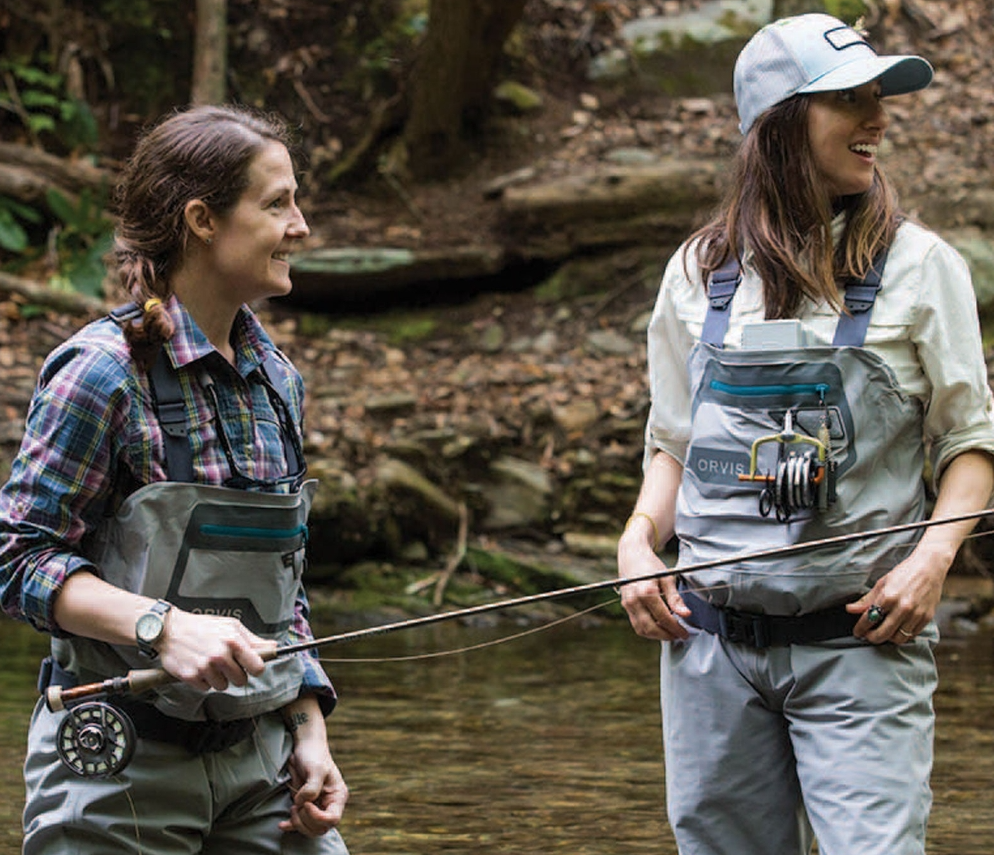
Here's what the wader industry keeps ignoring: the average woman's hip-to-waist ratio sits between 1.2 and 1.4. The average man's is 0.9. That single number explains a lot. Pull on a "unisex" pair of waders and you'll feel the fabric pulling across the hips, bunching at the crotch, and digging into the shoulders — before you've even reached the water's edge.
As more brands expand their OEM/ODM fishing waders services, women-specific cuts with articulated knees, adjustable torso rise, and improved hip gussets are becoming a major focus for long-session comfort on the water.
35% of women report crotch pooling or strap dig in unisex-cut waders. That's not a minor annoyance. It's a fit failure that hits warmth, mobility, and your motivation to go back out next weekend.
Why Your Body Shape Changes Everything About Wader Performance
The physics of insulation don't work in isolation. They work on your specific body . A women's body creates fit challenges that show up in different ways in neoprene versus breathable constructions.
Neoprene in a men's cut gaps at the thighs and hips for any hip-to-waist ratio above 1.25. That gap isn't just uncomfortable — it's a cold water entry point. Women-specific neoprene patterns fix this with a 5–10 cm hip gusset and articulated knees. The difference in knee seam placement alone boosts flexion by 15 degrees. For cold weather fishing waders women wear all day long, that's a real advantage.
Women also run shorter in the torso — an average of 2–3 inches less rise than men's cuts are built for. In neoprene, a too-long rise creates a low crotch that restricts every step. In breathable waders, micro-adjust shoulder sliders close that gap and cut fit variance by about 15%.
Stockingfoot vs. Bootfoot: The Mobility Math
The stockingfoot vs bootfoot waders women debate usually gets framed as a preference question. It's a physics question.
Bootfoot neoprene setup : Weighs 1.8–2.2 kg total. Ankle flexion drops 20 degrees in water below 50°F. That stiffness is real — especially on uneven, rocky riverbeds.
Stockingfoot breathable + wading shoes : Total weight drops to around 1.1 kg — about 40% lighter. Stride improves 12–18% on technical terrain. Hip abduction stays wide open with no restriction.
For wading in moving water, freedom at the hip isn't a comfort luxury. It's a stability asset.
The Bathroom Reality Nobody Talks About
No gear review bothers to mention this part, so let's be direct. Getting out of waders streamside — when you need to — is a genuine logistical challenge.
5mm neoprene requires a full unbuckle and roll-down. Budget 2–4 minutes. In cold air, that's a real cost.
Breathable waders with quick-drop front panels or roll-access designs cut that time to 45–90 seconds. That's a 60–75% reduction. Several women-specific breathable designs from Patagonia and Simms now include dedicated relief panels. It's a small feature that makes a big practical difference over a long day on the water.
Getting the Fit Right Before You Buy
A proper fit starts at the foot. Measure heel-to-toe length in the afternoon — feet swell up to a centimeter throughout the day — and size to your larger foot. Modern women's feet average 24.5 cm (US 7) with a width of 9.2 cm. Many retailers still use outdated sizing charts, which drives return rates up to 20–30%.
For women's wader fit and sizing across both material types, these are the non-negotiables:
Hip gusset of at least 5–8 cm if your hip-to-waist ratio exceeds 1.25
Women-specific torso rise (not just a relabeled men's cut)
Calf taper 2–3 cm narrower than men's equivalent sizes
Articulated knees in any wader — neoprene or breathable — you plan to wear on moving water
The right fit doesn't just feel better. In neoprene, it seals the insulation system the way it's supposed to work. In breathable waders, it lets the layering system underneath do its job without compression or restriction. A beautiful wader on the wrong body is just an expensive frustration.
The Water Temperature × Season × Activity Decision Matrix
Water temperature is the single number that cuts through all the noise. Not the season, not the brand, not what your fishing buddy swears by — the temperature of the water your legs are standing in. Know that number, and the rest of the decision falls into place.
For brands building a private label fishing waders collection, matching insulation thickness and breathable membrane performance to real seasonal fishing scenarios often matters more than adding extra technical features anglers rarely use.
Here's the framework: three temperature bands, crossed against how hard your body is working. That's it. That combination tells you more about wader selection than any product description ever will.
Below 40°F (Under 4°C) — Late Fall and Winter, Low-Exertion Fishing
This is 5mm neoprene territory. Full stop.
At sub-40°F, water pulls heat from your body 25 times faster than air at the same temperature. Standing still or moving slow — holding a run, stripping streamers, waiting out a hatch — keeps your metabolic output low. Your body isn't generating enough heat to fight conductive loss. The neoprene's closed-cell structure steps in to do that job. At 5mm, it delivers R-4.0 insulation.
The mobility trade-off is real. You'll lose 20–30% of your stride freedom compared to breathable waders. For most winter fishing — a slow wade, a careful upstream pick — that's a fair price. The other option is hypothermia. Research puts onset at under one hour of static exposure in water below 50°F.
The rule at this temperature band : heart rate below 90 bpm and you're standing still most of the time — neoprene wins. At low exertion, conductive heat loss outpaces your body's heat production by 10 to 1.
40–55°F (4–13°C) — Spring and Early Fall, Moderate Hike-In Scenarios
This is the trickiest band. It's also where most women get the advice wrong.
A 3-ply breathable wader — Gore-Tex Infinium or equivalent — paired with a solid layering system beats neoprene here. But only if you're moving. A one-to-three mile hike to the water pushes your heart rate into the 80–100 bpm range. At that output level, you need a breathable membrane with a moisture vapor transmission rate above 15,000 g/m²/24h. That keeps sweat from building up and leaving you soaked before your first cast.
The layering formula that works :
- Base layer : Merino wool at 150 g/m² — it wicks about 30% better than synthetics and won't hold odor across a three-day trip
- Mid layer : Polartec fleece at 200 g/m²
- Cold air adjustment : Air temp drops below 35°F? Swap the fleece for a 4 oz synthetic insulated piece
Driving to the water and wading slow at under 90 bpm? Go back to 3mm neoprene. The choice between these two options isn't about the calendar. It's about how hard you're working.
Above 55°F (13°C+) — Summer Through Early Season, High-Activity Creek Wading
Above 55°F, hypothermia is no longer the concern. Research confirms the risk drops to negligible levels above that mark, even with prolonged immersion. What matters now is breathability and weight.
Lightweight 2–3 ply breathable waders — 70-denier fabrics like those in the Simms Waypoints construction — deliver MVTR ratings above 20,000 g/m²/24h. On a four-mile creek wade with real elevation change, that vapor transfer capacity cuts leg fatigue by 15–20% compared to neoprene at any thickness. Over a full day, that's the difference between finishing strong and limping back to the car.
Heart rate above 120 bpm? Your body is generating enough metabolic heat to offset water conduction on its own. Breathable waders are the clear answer here — across every water temperature above freezing.
The Activity Multiplier: Why Heart Rate Overrides Temperature
The chart you need:
Water Temp | Low Exertion (HR <90 bpm) | High Exertion (HR >120 bpm) |
|---|---|---|
Below 40°F | 5mm neoprene | Breathable + insulated mid-layer |
40–55°F | 3mm neoprene or breathable + mid | Breathable only |
Above 55°F | Lightweight breathable | Lightweight breathable |
Here's the core logic: at low exertion, cold water pulls heat out of your body faster than you can replace it. Neoprene's passive insulation fills that gap — you need it. Push past 120 bpm, and your metabolic output flips the equation. Your body is now winning the heat battle. A breathable wader layering system with proper ventilation becomes the smarter call.
One more number worth tracking: regional water temperatures in the Pacific Northwest swing 2–4°C between seasons. A mid-band decision in October can become a sub-40°F situation by late November. Check actual water temperature data for your specific watershed — not just the air forecast — before you lock in a setup for the day.
Scenario-Specific Layering Systems: Winter, Fall, and Spring Setups
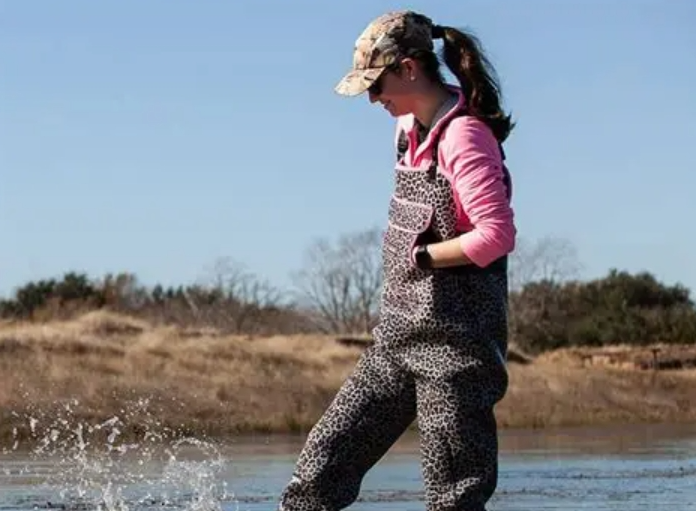
The matrix in the previous section tells you what to wear. This part covers how to build it — layer by layer, scenario by scenario — with specific pieces that work on a woman's body in moving water.
Winter Fly Fishing: Standing Still in Icy Runs
Winter wading is a stillness problem. You're holding a run, mending line, waiting. Your heart rate stays low. Cold water is winning.
Start with 5mm neoprene — sealed ankles, women-specific rise, hip gussets that sit flush against your body instead of gaping at the thigh.
Buyers sourcing through a professional fishing waders wholesaler often prioritize seam durability and women-specific mobility features because they directly impact long-term comfort in cold-water environments.
Once that shell is on, every layer underneath has one job: trap the metabolic heat your body is barely producing.
The build:
- Base: 250g merino or grid fleece long johns with seamless thigh seams. Seamless matters here — a seam ridge under neoprene becomes a pressure point after two hours
- Mid: Windproof softshell or synthetic-insulated pants. Down loses loft when damp; synthetics don't
- Socks: Double-layer merino or cashmere blend. No cotton, ever — cotton holds moisture against skin and speeds up heat loss
- Upper body: Merino midweight top + a packable insulated jacket you can stuff into your vest once the sun comes up
Winter fly fishers live by one rule: be bold, start cold. Walk to the water a little underdressed. You'll warm up within ten minutes of moving. Layer up in the parking lot and you'll be damp before your first cast.
On five-minute casting breaks, roll your chest panel open and air out. After the session, turn your waders inside-out to dry. Neoprene that stays wet inside breaks down faster and smells worse. It's not fussy care — it's ten seconds of habit.
Fall Duck Hunting: Moving Hard, Then Sitting Still
Jump wading in 40–55°F water puts different demands on your system. You're hiking in, setting up, then going still in a blind. Your layers need to handle both states well.
The build:
- Base: 150g synthetic top and bottom — skip merino here. You'll sweat on the approach, and synthetic dries faster
- Mid: Lightweight down vest or grid fleece. The vest keeps your core warm without cutting off arm movement for the shot
- Outer: 3-ply breathable waders with a Gore-Tex equivalent membrane. This is where Gore-Tex waders vs neoprene becomes a real-world choice — neoprene at this effort level turns into a steam room on the hike in
- Foot: 3mm neoprene wading socks inside insulated boots. Feet are the first thing you feel go cold. This is your thermal anchor point
Here's the ventilation move that makes a real difference: open side-zips or chest vents on your approach hike. Seal everything back up before you settle into the blind. Your body temperature drops fast once you stop moving. Trapping that leftover warmth in the first two minutes of stillness gives you forty minutes of comfortable waiting.
Spring Creek Wading: Light, Fast, Forgiving
Spring wading above 50°F is the most forgiving setup in this guide. It's also the one where women most often over-layer and regret it by 10am.
The build:
- Base: Ultralight quick-dry tights with a boxer-brief liner. The liner stops chafing on long rock-hopping days better than any anti-chafe balm you can apply
- Mid: Skip it. Unless water temps drop below 45°F or wind picks up past 15 mph — then add thigh-high synthetic pants, not full bottoms
- Outer: 2-ply breathable waders with articulated knee gussets. On spring creeks with uneven boulders, that knee articulation isn't a bonus feature — it keeps your footing solid when your knee has to flex fast
- Ventilation: Roll sleeves to your chest on active wading stretches. A solid 2-ply membrane clears vapor in 8–12 minutes once you're moving. You'll notice the shift
- Fallback layer: Pack fleece pants in your vest or dry bag. Most days you won't touch them. The one afternoon the wind picks up and you don't have them? That's when you'll wish you did
One cross-season rule worth keeping: the three-layer core — base to wick, mid to insulate, outer to protect — stays the same across all three setups. What shifts is how much of it you put to use. Spring calls for one-third of the system. Winter needs all of it, every layer, no cutting corners.
One Versatile Pair vs Two Specialized Pairs: Cost and Performance Breakdown
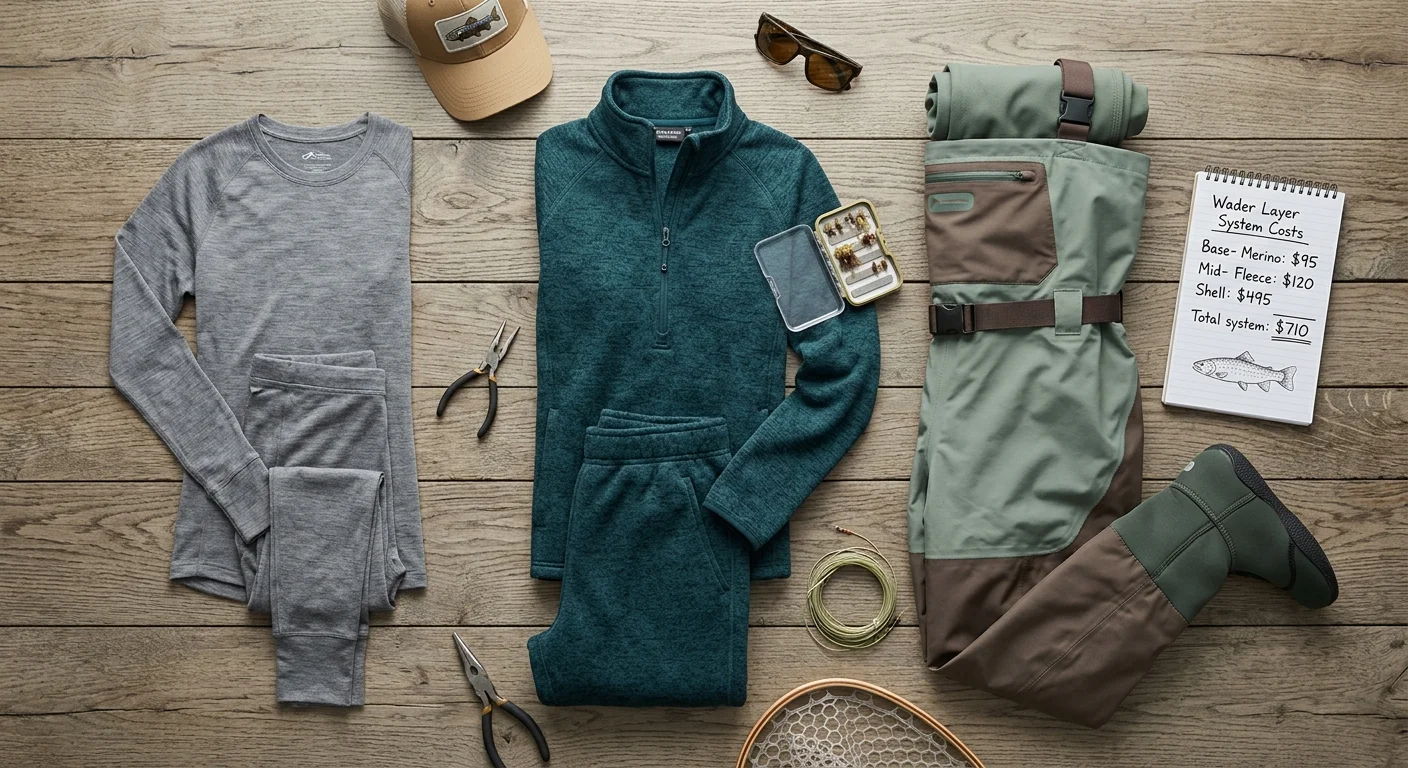
Most gear decisions come down to a simple math problem — except the math never stays simple.
A quality breathable wader runs $350–$600. Add the layering system it needs to get through October and November — merino base, fleece mid, insulated pants — and that's another $150–$300 per season. A dedicated 3mm neoprene pair adds about $280 upfront. It needs almost nothing underneath. The neoprene is the insulation.
Run the numbers over three years at 100 days of use per season:
Single Versatile Pair | Dual Specialized Pairs | |
|---|---|---|
Initial Cost | $450 | $780 |
Annual Maintenance & Layers | $200 | $125 |
3-Year Total | $1,650 | $1,530 |
Performance Coverage | 75% of conditions | 95% of conditions |
The dual system costs less over time. About $4 less per day. Factor in the mid-layer replacements the single-pair strategy eats up each year, and that gap adds up fast.
That said, one pair is the right answer for a lot of women:
Water in your area stays above 40°F most of the year
Your annual fishing days total fewer than 30
Pack weight matters — you're hiking more than two miles to reach water
Your total wader budget is under $600
Two pairs make financial and physical sense when:
Your seasons swing hard — winter steelhead at 35°F, summer creek wading at 62°F
You've already lived through the "wrong wader, wrong day" misery
Women's fit is a recurring issue — neoprene and breathable cuts size on different scales, so owning both means no forced compromise
You fish more than 50 days a year across multiple activity types
Here's the straight answer: fish hard across two or more distinct seasons, and the dual system pays for itself. You get better comfort, better performance, and the very particular pleasure of never being the coldest person on the river.
Conclusion
You came here with a real question — and maybe a wader that let you down. Now you have the answer.
The right choice has never been neoprene versus breathable. It's always been your water temperature, your season, your body, your version of a perfect day on the water. Below 45°F, womens neoprene waders earn every bit of their bulk. Above 55°F, a quality breathable wader layering system lets you enjoy the fishing. No more just getting through it.
Start here: check the average water temperatures for your home waters across your main fishing seasons. Wade-fishing one cold-water season? One well-fitted neoprene pair is your answer. Fishing from March through November? Two specialized pairs will serve you far better than one middle-ground option trying to do everything.
Many retailers and distributors comparing products at fishing waders wholesale price levels now focus more on fit consistency and real-world durability than on marketing-heavy specifications alone.
Buy for the water you're standing in — not the air temperature on the bank.