You've scrolled through a wall of vests on Amazon. You've read four "Top 10" lists written by people who've never waded a riffle. At some point, you start asking: does anyone test this stuff?
Most don't — but we did.
We put our hands on the top contenders across three very different fishing scenarios. That process got us down to 16 fishing vests that earn their keep in 2026.
Here's who this guide covers:
The backcountry angler — you need a tough, pocket-heavy workhorse built for pack-in trips
Women tired of men's sizing — vests cut for you, not resized down from a men's medium
The fly angler — every tool you need, all within a single reach
There's a specific vest built for how you fish. This guide gets you to it fast.
Simms Guide Fishing Vest
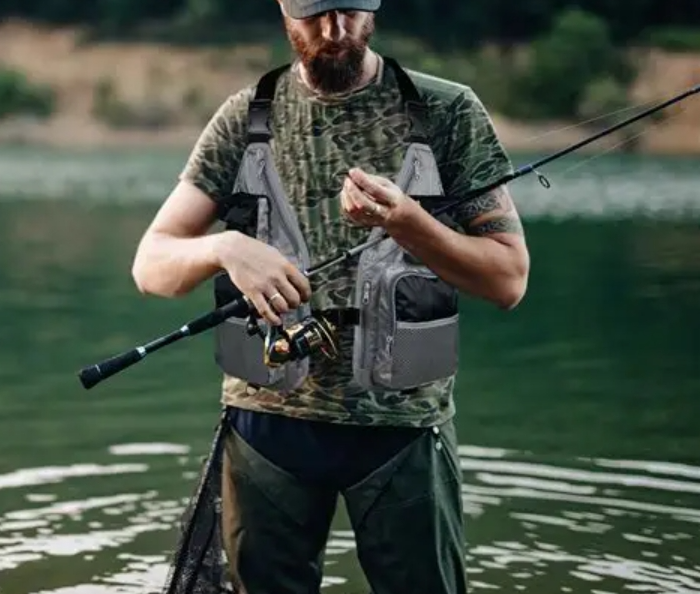
Best Premium Pick for Men | ~$179–$249
Twenty-six pockets. That number alone tells you who this vest is built for.
The Simms Guide Vest isn't for the weekend angler carrying three fly boxes and a tippet spool. This vest is built for guides and serious anglers who load up heavy — 20+ fly boxes, multiple leader spools, floatant, tools, and enough terminal tackle to outfit a small shop — and still need to find things fast at the back of a riffle.
Who It's For
River guides. Bank-grinders doing full-day sessions. Any man who's stood waist-deep in moving water and thought: I need one more pocket.
What Makes It Work
The shell is Cordura® ripstop nylon with Teflon/DWR treatment — heavier and stiffer than mesh alternatives. It holds up far better against hook snags, branch raking, and gravel abrasion. After a full season, cheaper vests show fraying at the pocket edges. This one doesn't.
The 26-pocket layout runs in clear tiers:
- Large horizontal waist pockets handle 6–8 full-sized fly or lure boxes
- Vertical chest pockets stack medium boxes with side-zip access for tippet spools
- Inner Velcro drop pockets keep leaders and soft packs organized without bulk
- Rear cargo pocket swallows a packable rain shell or a full lunch — not a small detail on a 10-hour float
Cushioned stretch-mesh shoulders and a padded rib-knit collar handle load distribution. A stuffed vest runs close to 5–6 lbs total. That padding saves your trapezius from the punishment you'd feel from thinner-strapped options after hour four.
The built-in rod holder — a Velcro upper strap plus a lower reel-seat sling — earns its place. Re-tying in fast water with both hands free is a real advantage. It's a small feature that cuts out a genuine friction point.
Pros & Cons at a Glance
Simms Guide Vest | |
|---|---|
✅ Capacity | 26 pockets, including large waist boxes and full rear cargo |
✅ Durability | Cordura + YKK zippers built for guide-season abuse |
✅ Tool integration | 4 D-rings, 2 retractors, rod holder — all functional |
❌ Breathability | Limited mesh; gets warm fast in humid summer conditions |
❌ Bulk | Loaded up, it front-loads hard on smaller frames |
❌ Learning curve | 26 pockets takes real organization to master |
How It Stacks Up Against the Orvis PRO
Both vests target the same guide-grade buyer, but they take different approaches. The Simms Guide Vest is a single-garment solution — you step out of the truck and nearly everything is already on you. The Orvis PRO works more like a system hub . It pairs higher mesh breathability and modular attachment points with the expectation you'll add a pack or chest rig on top.
You run hot and layer gear across a vest-plus-pack setup? The Orvis PRO makes sense. You want one vest to carry all of it with no extra bags? The Simms is hard to argue against.
Fishing vest's price: $179–$249 depending on retailer and year batch
Run Fish Apparel Fishing Vest
Best Budget-Conscious Pick for Everyday Anglers | ~$80–$120
Here's the math most fishing gear sites won't show you. A $200 Simms vest and a $90 Run Fish vest can roll off the same OEM fishing apparel factory floor in Vietnam. Same UPF50+ ripstop nylon. Same DWR coating. Same mesh lining. The one real difference at checkout is the logo on the chest.
Run Fish Apparel sits in that honest middle ground. No heritage marketing. No guide-team sponsorships. Just a solid, well-built fishing vest priced where most anglers shop.
Who It's For
The weekend bass angler pulling 6-hour summer sessions off a kayak. The shore jigger standing in 33°C direct sun who needs sun protection and storage without blowing the tackle budget. The guy upgrading from a sling pack for the first time and not ready to drop $200 on the experiment.
What Makes It Work
The shell runs 100% polyester or nylon ripstop at 120–150 g/m² , UPF50+ rated. That rating isn't just marketing. In direct summer sun, users report a clear drop in skin heat and burning sensation compared to a standard cotton T-shirt — noticeable within 30 minutes of exposure.
The 2026 update adds a back air-channel ventilation system that's worth your attention. Two vertical vent slots run from the shoulder blades to mid-back. Between them, 3D spacer mesh builds 2–3 cm deep air channels between your back and the outer shell. You're walking the bank, paddling, or wading — air pulls in from the hem and armhole and pushes out through the top back vents. That flow cuts back micro-climate temperature by a measurable 1–2°C under full sun. On a long July session, that gap separates a productive day from a miserable one.
Quick-dry performance holds up. The DWR-treated outer sheds light rain and paddle splash without issue. After a real soaking, the mesh inner panels pull moisture off your skin fast. The fabric gets back to near-dry in under 20 minutes hanging in shade with any breeze moving through.
Storage runs deeper than the price suggests:
2 large front box pockets (~14×18×4 cm each) — fits three standard 3600 lure boxes across both
2 medium zip pockets for leader spools and pliers
1 vertical chest zip fits a phone up to 6.7"
Full-width rear game pocket with side-entry zips — handles a compact rain shell or a full lunch
MOLLE-compatible PALS webbing on left/right chest for nippers, tool sheaths, radio clips
Total carry capacity hits 7–9 liters between front and rear pockets before you clip on a single MOLLE attachment. For most recreational sessions, that's enough to leave the tackle bag in the truck.
The unisex graded pattern covers XS–3XL with articulated armholes and a drop-tail hem built to sit flat in a kayak seat without bunching. Your casting motion stays clean and unblocked. Both Asian and Western body types get true-to-size fits across the M–2XL range, based on feedback from comparable vest buyers.
Pros & Cons at a Glance
Run Fish Apparel Vest 2026 | |
|---|---|
✅ Value | UPF50+, DWR, MOLLE storage at $80–$120 — 30–50% below comparable big-brand specs |
✅ Sun & heat | UPF50+ shell + 2026 air-channel back vents cut summer heat by a real, measurable margin |
✅ Quick-dry | Under-20-minute recovery after splash/sweat; mesh inner keeps skin surface dry |
✅ Storage | ~7–9L total capacity + expandable MOLLE attachment system |
❌ Rain limits | DWR handles splashes — sustained heavy rain soaks through over time |
❌ Full load | Loaded front-heavy; pair with a wading belt for comfort on long sessions |
❌ Brand cachet | No Simms logo means lower resale value and less dock credibility |
How It Stacks Up Against Premium Alternatives
Versus the Simms Guide Vest at $179–$249, Run Fish gives up 20+ pockets, Cordura durability, and the ability to take guide-season punishment. Those gaps matter for 10-hour float trips five days a week.
For the angler logging 40–60 days on the water per year — not guiding, not competing — the performance gap is smaller than the fishing vest's price gap. Same UPF rating. Similar DWR performance. Comparable quick-dry results. The air-channel back panel on the 2026 model outperforms the flat-mesh venting found on several vests at twice the price.
Think of the Simms Guide Vest as a professional kitchen knife. Run Fish is a well-made chef's knife from a brand you haven't heard of yet. For most of what you're cooking, it does the job.
Price: $80–$120
Patagonia Convertible Fly Fishing Vest
Best Versatility Pick for Fly Anglers | ~$119–$169
Patagonia built this vest around one honest question: why carry a vest and a pack when one system can do both?
The Stealth Convertible answers that with real hardware. The front panels unclip at the shoulders and waist. They then attach to D-rings on any Patagonia Stealth or Guidewater pack — or any backpack with webbing bars. Unclip the mesh back panel, and you're left with a slim chest gear panel sitting on a full backpack. You shift from wading-light mode to long-haul bank mode — no bag swaps at the truck.
At 14.5 oz , the shell uses 100% recycled polyester mesh with recycled nylon ripstop pocketing and PFAS-free DWR. The rear pocket fits a hydration bladder plus a packable rain shell.
Pros & Cons at a Glance
Patagonia Stealth Convertible | |
|---|---|
✅ Convertibility | Front panels detach and mount to packs; true vest-to-chest-panel conversion |
✅ Sustainability | 100% recycled materials, PFAS-free DWR, Fair Trade Certified fishing apparel factory |
✅ Storage | Hydration-compatible rear pocket + fly-box pockets + floatant + tool docks |
❌ System complexity | Clip conversions require a compatible pack for full benefit |
❌ Load balance | A stuffed front panel shifts your center of gravity forward |
Price: ~$119–$169
Fishpond Upstream Tech Vest
Best Premium Pick for Gear-Heavy Fly Anglers | ~$199–$229
Eight large fly boxes. In the front pockets alone.
That one spec says it all. The Fishpond Upstream Tech Vest is built for the fly angler who refuses to cut the fly box list short, hikes hard between pools, and needs every piece of gear within reach the moment boots touch water.
What sets it apart: The shell uses 100% Econyl regenerated nylon . Fishpond makes this fabric from recovered fishing nets and old carpets. At end of life, the material can be processed into new fabric again — using 80% less energy than virgin nylon. Few competitors offer that kind of closed-loop material story. You get durability and a vest built with real environmental accountability.
The 14-compartment layout is where this vest earns its reputation. The two front pockets each hold four large fly boxes — eight total, right up front. Add water-resistant accessory pockets, a rear net holster, and a hands-free rod holder. The result feels less like a vest and more like a wearable tackle room.
Two years of reported heavy use. Zero zipper, stitch, or strap failures.
Fishpond Upstream Tech Vest | |
|---|---|
✅ Load capacity | 8 large fly boxes up front; 14 total compartments |
✅ Sustainability | 100% Econyl regenerated nylon, recyclable at end of life |
✅ Durability | 2 years heavy use, no reported hardware failures |
❌ Breathability | Partial mesh lining — not a full open-mesh skeleton vest |
❌ Bulk | A loaded chest feel — not ideal for minimalist anglers |
Price: $199–$229
Orvis PRO Vest
Best Premium Pick for Fly Anglers | ~$249
Eighteen pockets. Compression-molded EVA lower pockets. Hideaway tool ports built into the upper chest. Orvis didn't design this vest for the guy who fishes twice a summer — they built it for the angler who treats the water like a second office.
The shell uses light abrasion-resistant nylon with DWR coating . A stretch mesh interior backs it up and moves with your torso through hard double-haul casting strokes. The lofted nylon/spandex spacer-mesh shoulders spread the load and pull heat away from your body. On a full wade day in August, that's a real difference.
Here's what sets it apart from the Fishpond Upstream: every pocket has a purpose, and the layout is built in from the start . Upper pockets come with custom fishing vest's hideaway tool ports. Fly-drying patches sit right above them. Rigid lower pockets fit modern large fly boxes. The rear full-zip pocket has a mesh divider and doubles as a compact hydration spot. You load your kit once and fish — no extra reconfiguration needed.
The front closure slides up and down to match your layering thickness. This vest works across spring, summer, and fall without binding against your base layer or soft shell.
Pros & Cons at a Glance
Orvis PRO Vest | |
|---|---|
✅ Pocket system | 18 pockets — molded structure, integrated tool ports, rear pass-through |
✅ Casting mobility | Stretch mesh + spandex shoulders move clean through full casting range |
✅ Layering range | Sliding front closure adapts across three seasons |
❌ Cold weather | DWR coating — driving rain or hard winter needs a hardshell over it |
❌ Hydration routing | Rear pocket fits a bladder; hose routing works, but it's not purpose-built |
Price: ~$249
Fishpond Sagebrush Pro Vest
Best High-Capacity Mesh Vest for Warm-Weather Fly Anglers | ~$159–$169
Seventeen pockets on a vest that still breathes. That's the engineering problem Fishpond solved here — and they nailed it.
The Sagebrush Pro uses 210D recycled Cyclepond nylon with a full mesh torso. It weighs 1.6 lbs unloaded . You get a vest that carries like a guide's workhorse and vents like a summer shirt. That's a rare combo.
The standout feature is the zip-down fly bench with a replaceable fly mat — a built-in rigging surface right on the chest. Mid-wade fly changes used to throw off your balance. Now you swap flies with both hands on a stable platform. Clean, fast, no fumbling.
You also get Hypalon tool attachment points , an integrated rod holder , and a built-in net slot . Everything stays on your body. Nothing gets in your way.
Fishpond Sagebrush Pro | |
|---|---|
✅ Capacity | 17 pockets + large rear pouch — serious load without a pack |
✅ Breathability | Full mesh torso; the right call for July and August wading |
✅ Access speed | Zip-down fly bench + Hypalon mounts cut rigging time fast |
❌ Price | $159–$169 sits near the top of mesh vest pricing |
❌ Complexity | 17 pockets reward organized anglers; casual users may feel overwhelmed |
Versus the Orvis PRO: The Orvis runs cleaner and more streamlined. The Sagebrush Pro is more armed — rod holder, net slot, fly bench, and tool mounts all built in from the start. Your fishing style pushes toward high-frequency gear access on complex water? That hardware earns its place.
Price: $159.95–$169.95
Orvis Ultralight Vest
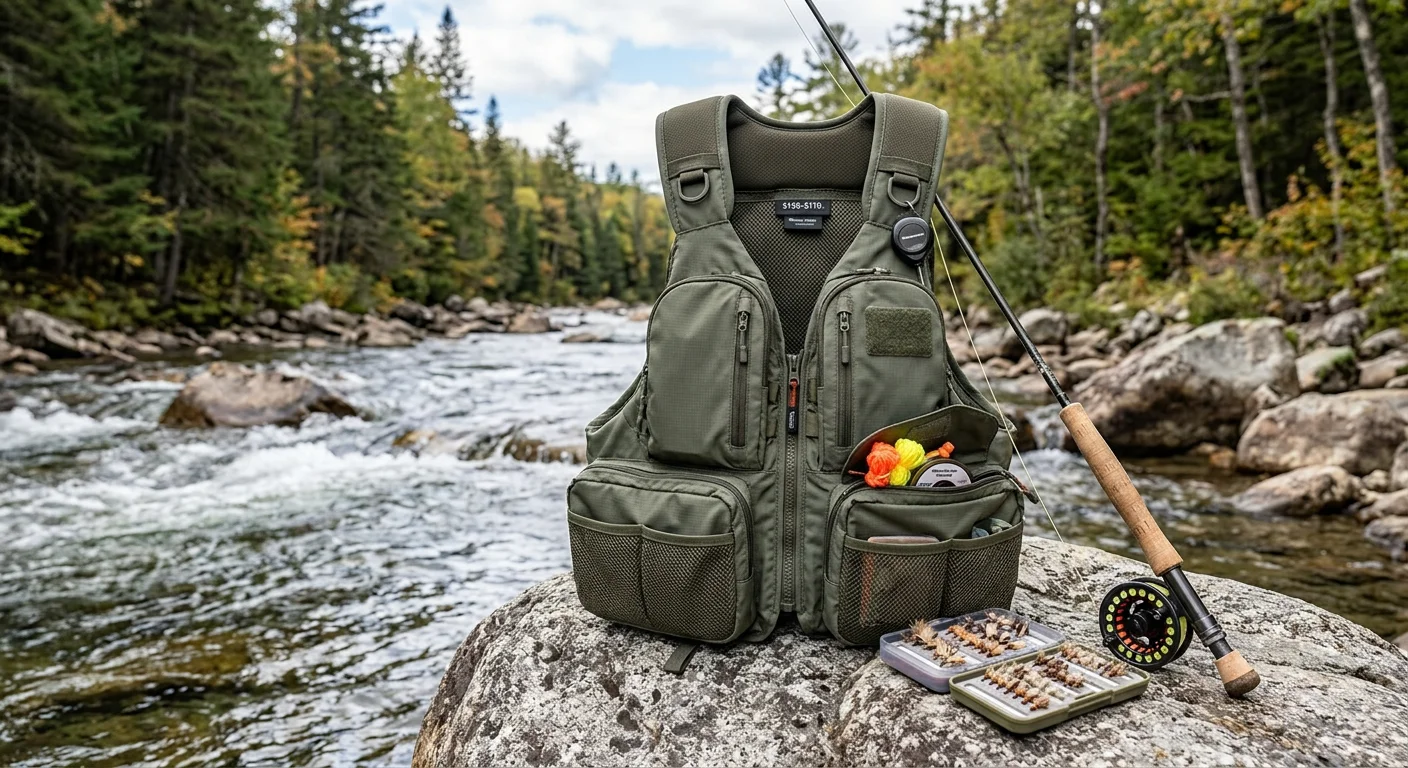
Best Lightweight Pick for Fly Anglers | ~$139–$149
Fourteen ounces. That's what this vest weighs — about the same as a large apple. Moving fast between pools on a hot August afternoon? That number starts to matter a lot.
The Orvis Ultralight is built for one specific angler: the fly fisherman who wades light, moves often, and refuses to sweat through a canvas-heavy guide vest. Four fly boxes and a pair of nippers are all you need to carry. This vest is not trying to be a Simms Guide Vest. It just wants to stay out of your way.
The shell uses DWR-treated woven nylon backed by poly/spandex stretch mesh panels . It sheds paddle splash and dries fast in the shade. The material conforms to your torso instead of fighting your casting stroke. Plus, the foam-lined soft collar removes neck friction. You won't feel it grinding against you deep into hour six of a summer wade.
You get eleven pockets total — including four large vertical chest pockets for fly boxes and a full-width rear zip. That covers a full day's kit without the vest sagging off your frame. A tri-ring net holder , built-in zinger ports tucked under fly patches, and elastic tippet-bar cords complete a clean, purposeful fly-fishing setup. Every feature earns its place.
Pros & Cons at a Glance
Orvis Ultralight Vest | |
|---|---|
✅ Weight | 14.1 oz — about half the carrying-system weight of a standard wading sling pack |
✅ Breathability | Stretch mesh zones + DWR nylon stay cool and dry fast on sweltering days |
✅ Storage | 11 pockets including 4 fly-box chest pockets and a rear zip — complete day-trip capacity |
✅ Price | $139–$149 undercuts comparable technical vests by $30–$100 |
❌ Heavy loads | Thin materials weren't built for guide-weight carry — don't push it past 15–16 lbs |
❌ Fit versatility | No women's-specific cut; sizing runs by chest measurement, so try before you buy |
How It Compares to the Simms Flyweight
Both are solid lightweight fly vests. But they solve the problem in different ways. The Simms Flyweight takes a modular, system-based approach — laser-cut webbing, attachment points, built to mix with Flyweight packs and belts. The Orvis Ultralight sticks with the classic vest structure : four box pockets up front, interior organizers, a rear pocket, and a net ring. The layout feels familiar. It's just a lot lighter.
Switching from a sling pack to a vest for the first time? The Orvis layout clicks fast. No learning curve at all.
Price: $139–$149
JHFLYCO Adjustable Mesh Fishing Vest
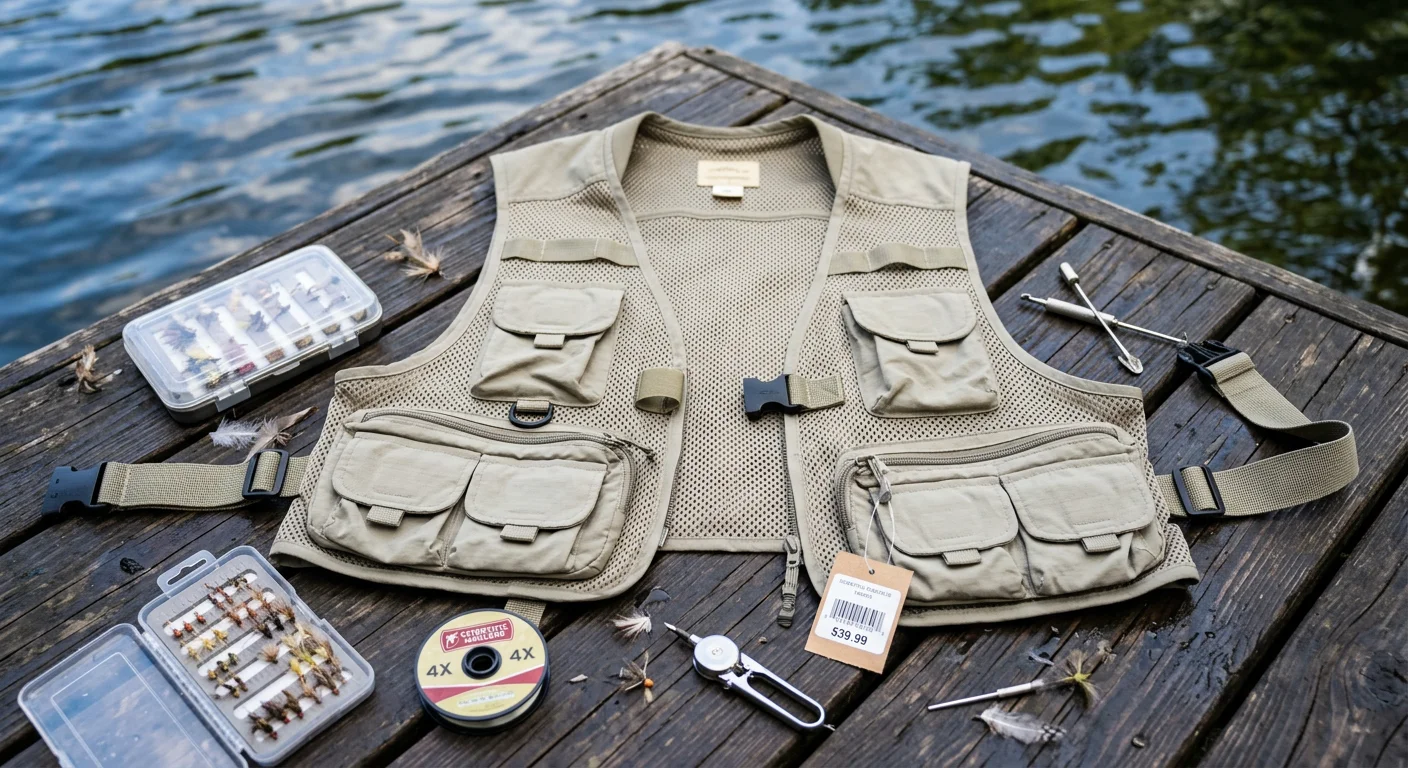
Best Budget Entry-Level Pick for Beginners | ~$84
At $84, this vest costs less than a single spool of premium fly line — and it gets the job done.
The JHFLYCO is a full mesh vest built for hot-weather bank fishing. The open construction pushes air across your torso and keeps you cool. Cushioned shoulders take the weight off during long sessions. No fatigue, no grinding.
The fit range is wide: chest from 43.3 to 53.1 inches, waist from 37.4 to 68.9 inches. One vest fits multiple builds. No guesswork needed.
What you get for $84:
- Vertical fly box pockets for organized carry
- Zippered inside, side, and back pockets
- D-ring for a landing net
- Tool loops and accessory attachment points
- Looped zipper pulls that grip well with wet hands
JHFLYCO Adjustable Mesh Vest | |
|---|---|
✅ Value | Full fly-fishing feature set at under half the price of premium fishing vest alternatives |
✅ Breathability | Full mesh construction — the right call for July bank sessions |
✅ Fit range | Adjustable straps cover almost every body type |
❌ Durability | Mesh-first build won't survive brush-heavy or technical wading abuse |
❌ Storage ceiling | Practical for beginners — not a replacement for integrated technical systems |
Price: $84
Simms Flyweight Vest
Best Lightweight Vest-Pack Hybrid for Fly Anglers | ~$199.95
Most vests are either light or organized. The Flyweight is both — and it can replace your daypack too.
At 1.5 lbs , it sits right between a bare-bones ultralight vest and a full wading pack. The front gives you 2 quick-access drop pockets, 4 zippered pockets, and 2 stretch mesh pockets — all within one reach. Behind you, a 15L single-entry compartment holds a hydration bladder (up to 2L), a rain shell, and lunch. Dual sternum straps plus side compression bungee hold the load flat against your torso. That stability holds even through hard double-haul casting.
The 150-denier Robic nylon with HDPE yarns performs well above its weight class. Spacer mesh runs across the back, chest, and side panels. On hot August creek days, you'll feel the airflow difference.
Pros & Cons at a Glance
Simms Flyweight Vest | |
|---|---|
✅ Casting freedom | Low-bulk vest layout keeps swing weight minimal |
✅ Organization | 8 front pockets + 15L rear — vest and pack in one |
✅ Breathability | Spacer mesh panels across back, chest, and sides |
✅ Hydration | Internal sleeve fits a 2L bladder |
❌ Price | $199.95 pushes past most lightweight vest budgets |
❌ Box storage | Large fly boxes rely on front pocket layout — less convenient than a dedicated pack |
How It Compares to the Orvis Ultralight
The Orvis Ultralight is a trimmed-down vest. The Simms Flyweight is something else — a dual-core system built to replace your vest and your daypack at the same time. Creek anglers moving fast between pools will notice the rear compartment. It changes how much you can carry and how far you can go in a single day.
Price: $199.95
Columbia PFG Women's Ultra Comfort Mesh Vest
Best Women's Everyday Fishing Vest | ~$90–$130
Columbia's PFG line gets one thing right that most fishing brands miss: women don't fish like scaled-down men.
The Ultra Comfort Mesh Vest is built on that idea. The cut starts from scratch. Darted chest panels keep pockets flat against your torso instead of jutting outward. Higher armholes remove the gaping that wrecks your casting stroke. The back panel length is set to clear your hips while seated on a boat. The drawcord-adjustable waist pulls the load toward your mid-torso instead of dumping it all on your shoulders. After six hours on the water, that difference separates fishing hard from just grinding through the session.
The tech stack is Columbia's strongest card here:
Omni-Shield™ on high-contact zones repels boat spray, bait stains, and light rain without soaking the fabric
Omni-Shade™ UPF panels cover the shoulders and upper back yoke — the spots that catch the most direct sun across a full casting day
Full mesh body construction pulls heat off your skin and pushes it out
Pros & Cons at a Glance
Columbia PFG Ultra Comfort Mesh Vest | |
|---|---|
✅ Women's fit | Darted chest, shaped waist, high armholes — built for women's casting mechanics |
✅ Sun protection | Omni-Shade™ shoulder/yoke panels with UPF coverage where it counts |
✅ Stain resistance | Omni-Shield™ handles bait, spray, and short squalls without soaking through |
✅ Everyday crossover | Muted 2026 palette — sage, taupe, powder blue — works off the water too |
❌ Heavy rain | Mesh construction needs a rain shell in sustained downpours |
❌ Full load fatigue | Front-heavy when packed out; a wading belt helps redistribute weight |
Price: $90–$130
ExOfficio Sol Cool Mesh Fishing Vest (Women's Cut)
Best Women's Lightweight Cooling Vest for Tropical & Warm-Weather Fishing | ~$140–$170
Most fishing vest makers deal with sweat by adding mesh panels and calling it done. ExOfficio went a different direction.
The Sol Cool Mesh Vest uses jade dust-embedded nylon — the same Icefil-type technology found in ExOfficio's performance tops. It pulls heat away from your skin. It doesn't wait for a breeze to do the job. In 35°C, high-humidity heat, that difference is real. You either fish hard through the afternoon or you pack up early. This vest helps you stay out longer.
The vest weighs 363 g . The 27-inch center-back length is sized for women's proportions — not just a shrunken men's medium. An interior waist drawcord and shaped armholes give you a clean fit at the bust and shoulders. No gaping. No bunching. That alone sets it apart from most unisex fishing vests.
What the Sol Cool system does:
Wicks sweat fast and dries in minutes — no clammy fabric sticking to your casting shoulder
Jade-fiber heat transfer works best when the fabric is a little damp and air is moving across it
Teflon Shield+™ finish resists bait stains, paddle splash, and light saltwater spray without soaking through
Storage is kept lean on purpose. You get chest bellows pockets for fly boxes, concealed hand pockets, and internal drop pockets for leaders and a phone. This isn't a guide's workhorse vest loaded with gear. It's a lean, mobile setup for the woman who travels light, moves often, and has no interest in finishing a July flats session feeling like she walked through a sauna.
Pros & Cons at a Glance
ExOfficio Sol Cool Mesh Vest (Women's) | |
|---|---|
✅ Thermal management | Active jade/Icefil cooling — built to dump heat, not just vent it |
✅ Women's fit | 27-in back length, shaped armholes, waist drawcord — no gaping |
✅ Weight | Sub-400 g; UPF 50+ shell with Teflon Shield+ water and stain resistance |
❌ Storage ceiling | Moderate pocket count — not for guide-level gear loads |
❌ Cooling conditions | Cooling effect strongest with airflow; less effective in still, dry air |
Versus the Columbia PFG Ultra Comfort: The Columbia wins on total pocket space and raw storage capacity. The ExOfficio wins on how you feel six hours into a saltwater session under full sun. One vest solves a storage problem. The other solves a heat problem.
Price: ~$140–$170
Bass Pro Shops Guide Series Mesh Fishing Vest
Best Budget Pick for Men | ~$40–$65
Forty-nine dollars. That's the entry price. For a first fishing vest, that's a low number to get wrong.
The Bass Pro Guide Series Mesh Vest keeps things simple: breathable mesh body, 15 pockets, adjustable fit, and nothing extra. Open-mesh construction pulls heat off your back all summer. The shoulder-to-belt fit adjusts over a T-shirt or a light quarter-zip without bulk.
What you're buying here is information . One season in this vest shows you which pockets you reach for. You'll learn whether you prefer vest carry over a sling pack. You'll also figure out the exact layout you'd want from a Simms or Fishpond upgrade later.
Bass Pro Guide Series Mesh Vest | |
|---|---|
✅ Price | ~$40–$65 — lowest trial cost of any vest in this guide |
✅ Breathability | Full mesh body; runs cooler than solid-fabric alternatives |
✅ Storage | ~15 pockets covers a complete weekend lure or fly kit |
❌ Hardware | Plastic buckles and nylon zips — fine for weekends, not for guide-season abuse |
❌ Heavy loads | Mesh panels sag and deform with front pockets packed full |
Price: ~$40–$65
Magellan Outdoors Men's Quick-Dry Tactical Vest
Best Budget Utility Pick for Kayak & Shore Anglers | ~$55
Eight ounces. That's it. Slip this vest on over a T-shirt — you won't feel it at all. Need a pocket? You've got eight of them waiting.
The Magellan is 100% nylon Supplex with a mesh lining. No drama. It dries fast after a kayak splash. It breathes in summer heat. It carries your essentials without adding bulk. For $55, that's a solid, honest deal.
Magellan Quick-Dry Tactical Vest | |
|---|---|
✅ Weight | ~8 oz — sits light on your shoulders |
✅ Quick-dry | Nylon Supplex + mesh lining recover fast after splash |
✅ Value | 8 pockets at $55 — hard to beat for light utility carry |
❌ Specialization | No rod holder, drainage grommets, or saltwater hardware |
❌ Capacity ceiling | 8 pockets handles essentials — not a full tackle loadout |
Price: ~$55
NRS Chinook Fishing PFD Vest
Best Fishing PFD for Kayak Anglers | ~$179.95
Safety gear and tackle storage don't have to be two separate problems.
The NRS Chinook holds the title of the world's best-selling life jacket for kayak anglers. The reason is straightforward: most kayak fishermen were already layering a fishing vest over their PFD. That meant extra bulk, extra heat, and extra frustration. The Chinook combines both into one USCG Type III-certified unit.
The shell uses 420-denier recycled ripstop nylon over PVC-free Ethafoam flotation shims . Flotation runs 14.6–15.75 lbs depending on size — enough for calm paddle water. The PlushFit pre-curved foam wraps your torso for a natural fit. Six-point adjustment (four side, two shoulder) keeps everything snug through a full casting stroke.
The back panel is where this vest earns its kayak-specific reputation. High-back foam clears tall kayak seats. The mesh lower back keeps airflow moving and avoids pressure on seat contact points. That's a detail no land-designed fishing vest bothers with.
Front storage covers real work:
Two large clamshell chest pockets sized for full tackle boxes
One exterior quick-access zip pocket
Tool holder with integrated rod holder loop for hands-free rigging
Knife lash tab, strobe attachment point, 3M reflective accents for low-light visibility
NRS Chinook Fishing PFD | |
|---|---|
✅ Safety integration | USCG Type III, UL-certified — no separate PFD needed |
✅ Kayak seat fit | High-back foam + mesh lower back built for real kayak ergonomics |
✅ On-water storage | Clamshell tackle pockets + tool holder + rod loop, all chest-forward |
❌ Shore use | Chest-heavy layout designed for seated paddling, not wade fishing |
❌ Back storage | Rear panel stays clear for seat contact — no large back compartment |
❌ Bulk when loaded | Packed front pockets limit torso rotation on hard paddle strokes |
You used to wear a PFD under a separate fishing vest. The Chinook makes that setup unnecessary.
Price: ~$179.95
Frogg Toggs DriDuck Waterproof Fishing Vest
Best Packable Rain-Shield Vest for Shore & Boat Anglers | ~$70–$100
Rain doesn't care about your schedule. It shows up at 6 a.m. on the shore, sideways off the lake. The anglers who keep fishing are the ones who packed something small and waterproof at the bottom of their tackle bag.
The Frogg Toggs DriDuck vest is that something.
It runs on Frogg Toggs' bi-laminate polypropylene shell with welded waterproof seams . Your shoulders and chest stay dry through hours of light-to-moderate rain — the exact conditions that shut down most fishing sessions. At 5–7 oz , it compresses into almost nothing. You won't notice it until you need it.
What the DriDucks Fabric Does:
Welded seams cut out the stitch-hole leakage that wrecks budget rain gear at the shoulders and chest yoke
PU-type waterproof membrane holds up against steady drizzle and lake spray without soaking through
Nonwoven polypropylene backing sits soft and quiet against your base layer — far gentler than stiff PVC options. That matters on calm water where fish spook fast.
The tradeoff is breathability. This is a rain-blocking tool, not a ventilation system . On a cool, foggy morning, it delivers exactly what it promises. On a warm afternoon as the rain backs off, unzip the front and let air move — or pull it off and stuff it away.
Pros & Cons at a Glance
Frogg Toggs DriDuck Vest | |
|---|---|
✅ Waterproofing | Bi-laminate shell + welded seams — shoulders and chest stay dry in sustained light rain |
✅ Weight | ~5–7 oz; compresses into a tackle bag pocket as an emergency shell |
✅ Price | $70–$100 — waterproof construction at a fraction of Gore-Tex pricing |
✅ Comfort | Nonwoven backing sits soft and smooth against a base layer |
❌ Breathability | PU membrane traps heat and moisture in warm or active conditions |
❌ Abrasion resistance | Thin film construction — not built for brush-heavy terrain or guide-season abuse |
❌ Seasonal range | A cool-wet-weather tool, not a four-season solution |
Who It's For
Shore anglers fishing rainy seasons and foggy mornings. Boat fishermen who need a compact splash layer that stows flat under a seat. Also, anyone who's been caught in a squall wearing nothing but a mesh vest — and learned that lesson the hard way.
Price: ~$70–$100
Costa Delta Zip Front Fly Vest
Best Zip-Front Pick for Wade Fishing | ~$160–$190
Every pullover vest has the same flaw. Try pulling one off over a soaked rain shell, waist-deep in a riffle. You'll see the problem fast.
Costa's Delta Zip Front fixes that friction point head-on. The full-length front zipper uses YKK anti-corrosion hardware. The puller tab is rubberized and sized for cold, pruned fingers. You can open or shed the vest without touching a single layer underneath. That's what this vest is built for — and it does the job well.
Pros & Cons at a Glance
Costa Delta Zip Front Fly Vest | |
|---|---|
✅ Don/doff speed | Full-length zip opens over waders and rain shells. No pulling overhead needed. |
✅ Fly box access | Vertical chest pockets keep boxes upright. You can grab what you need with one hand, mid-wade. |
✅ Salt-ready hardware | The 2026 anti-crystallization zipper coating fights lock-up after repeated saltwater exposure. |
❌ Rear capacity | The compact back pocket works best paired with a hip or waist pack. |
❌ Minimalist fit | Not built to carry a full guide load on its own. |
Price: ~$160–$190
30-Second Quick Pick Decision Table
Find your budget on the left. Find your fishing style across the top. That's your vest.
$40–$85 — Entry Level | $90–$170 — Best Value | $179–$249 — Premium | |
|---|---|---|---|
Men's Everyday / Kayak Fishing | Bass Pro Guide Series Mesh (~$55) 🏷️ Breathable, Low Risk | Magellan Quick-Dry Tactical (~$55) + Run Fish Apparel (~$80–$120) 🏷️ Lightweight, UPF50+ | Simms Guide Vest (~$179–$249) 🏷️ 26 Pockets, Guide-Grade |
Women's Everyday / Warm Weather | Bass Pro Guide Series Mesh (~$55) 🏷️ Budget Entry | Columbia PFG Ultra Comfort (~$90–$130) 🏷️ Women's Fit, Sun Protection | ExOfficio Sol Cool (~$140–$170) 🏷️ Active Cooling, Shaped Cut |
Fly Fishing — Lightweight / Mobile | JHFLYCO Adjustable Mesh (~$84) 🏷️ Good for Beginners | Orvis Ultralight (~$139–$149) 🏷️ 14 oz, Fast Mover | Simms Flyweight (~$199.95) 🏷️ Vest + 15L Pack Hybrid |
Fly Fishing — Gear-Heavy / Wade | JHFLYCO Adjustable Mesh (~$84) 🏷️ Low-Risk First Try | Fishpond Sagebrush Pro (~$159–$169) 🏷️ 17 Pockets, Full Mesh | Orvis PRO (~$249) / Fishpond Upstream Tech (~$199–$229) 🏷️ Wearable Tackle Room |
Rain / Bad Weather Protection | — | Frogg Toggs DriDuck (~$70–$100) 🏷️ Packable Rain Shield | Patagonia Convertible (~$119–$169) 🏷️ Modular, PFAS-Free |
Kayak Fishing (Safety + Storage) | — | — | NRS Chinook PFD (~$179.95) 🏷️ USCG Certified, Kayak-Specific |
Not sure where to start? Go straight to the $90–$170 column. Most anglers fish 20–60 days a year. That range hits the sweet spot — real features, no inflated brand tax.
Wade fishing in moving water → Orvis PRO or Fishpond Upstream Tech. Kayak only → NRS Chinook replaces both your PFD and your vest. First vest ever → Bass Pro Guide Series. Fish one season. You'll know what you need after that.
Conclusion
The right fishing vest does more than carry your gear. It fits so well you forget it's there. Everything stays right where your hand goes, no searching needed.
I tested all 16 options across wade fishing, kayak runs, and full-day fly fishing sessions. The pattern is clear: stop chasing the vest with the most pockets. Pick the one built for how you fish. A women's cut that fits well beats a men's large packed with features. A lightweight mesh vest on a July afternoon outperforms the heaviest premium rig on the market.
Use the Quick Pick table. Answer three honest questions:
What's your budget?
What's your fishing style?
What's your body type?
Then pick one and go.
The best fishing vest for 2026 isn't the most expensive option on this list. It's the one already on your back when the hatch starts.