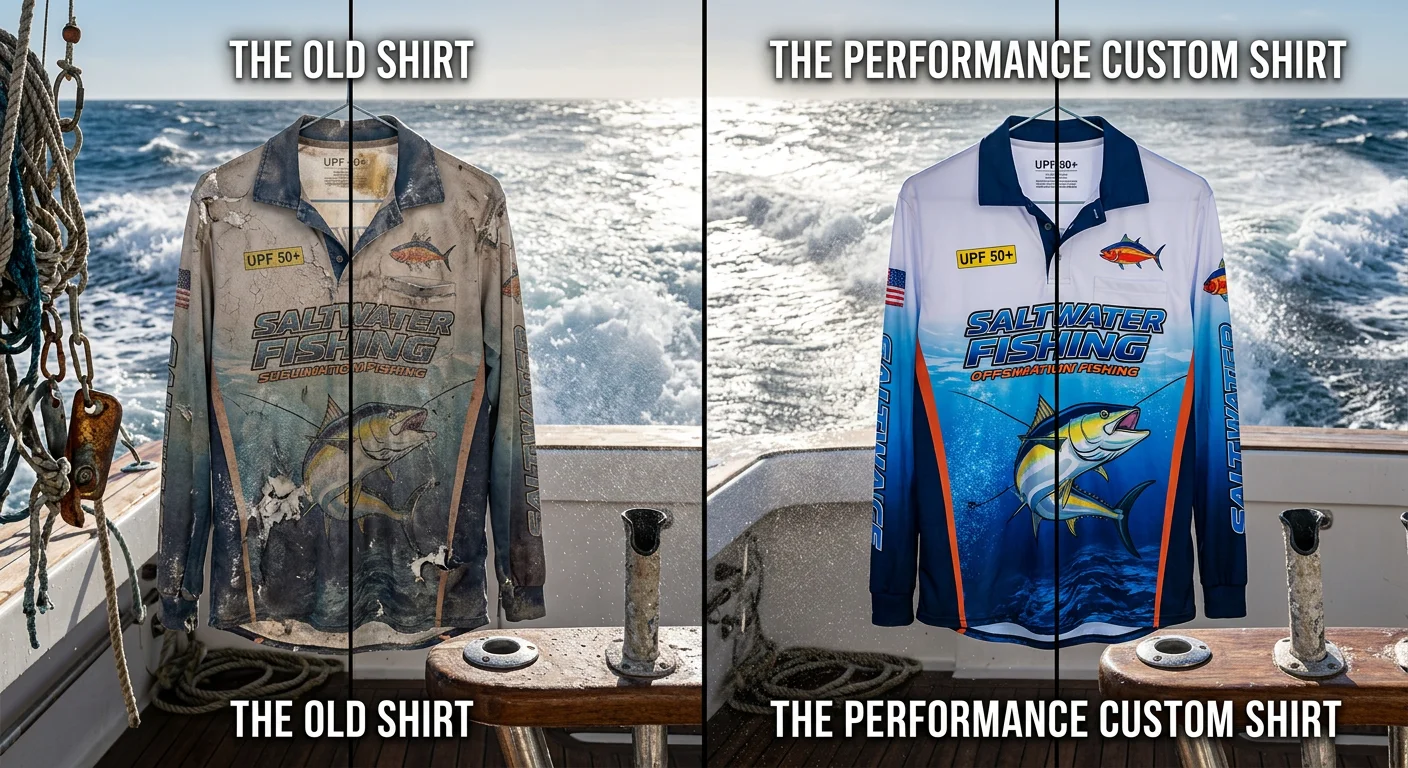
Branded gear that fades after one offshore season is money wasted. If you haven't felt that sting yet, you're talking to someone who has.
Picking between embroidery and screen printing for custom fishing shirts with logo isn't about what looks cool. It's about what your budget can afford long-term.
Think about what every shirt faces out there:
Salt spray hitting the fabric daily
SPF 50 sunscreen soaking into the logo
Machine washes every week, all season long
The wrong decoration method doesn't just look bad — it costs you twice what you thought you saved on setup fees. That math hits hard when you're outfitting a crew, impressing clients, or running a tournament team.
So here's what this breakdown covers. Real numbers. Actual charter operator budgets. Real vendor quotes. You get:
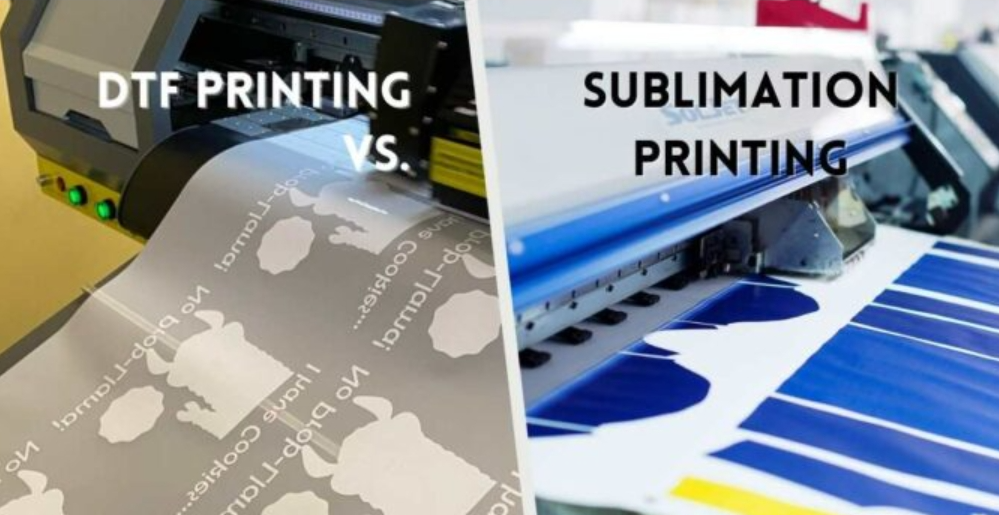
4 decoration methods compared side by side
4 durability curves showing how each holds up over time
1 ROI framework you can run in under five minutes
Run the numbers at 12 units, 50 units, or 200 — and you'll see which process puts more money back in your pocket.
Real-World Cost Breakdown: Setup Fees Across Order Volumes (10–200 Units)
Setup fees are where most fishing business owners or manufacturers get caught off guard.
You call a vendor, get quoted "$25 per shirt," and think you've found a deal. Then the invoice arrives — $200 in screen setup fees on top of a 12-shirt run — and your "deal" just became $41.67 per shirt. That's the math nobody explains upfront.
Here's the full picture.
The Master Comparison: All Four Methods at Every Volume
Decoration Method | Setup Fee | 10 Units | 50 Units | 100 Units | 200 Units |
|---|---|---|---|---|---|
Embroidery | $50–$150 (one-time digitization) | $18–$24/shirt | $12–$16/shirt | $9–$12/shirt | $7–$9/shirt |
Screen Print | $20–$50/color/screen | $14–$18/shirt | $7–$9/shirt | $4.50–$6/shirt | $3.50–$4.50/shirt |
DTF/Heat Transfer | $15–$30 (artwork prep) | $9–$13/shirt | $5–$7/shirt | $3.50–$5/shirt | $2.50–$4/shirt |
Sublimation | $25–$50 (file prep) | $11–$15/shirt | $6–$8/shirt | $4–$5.50/shirt | $3–$4.50/shirt |
Those numbers look clean. The setup fee math underneath them is where it gets interesting.
How Setup Fees Eat Your Budget (By Order Size)
Under 10 units — screen print is a trap
A 4-color screen print design costs $80–$200 in setup fees alone. Spread that across 10 shirts and you're adding $8–$20 per shirt before a single drop of ink touches fabric.
DTF wins this bracket without a fight. A $15–$30 artwork prep fee drops to $1.50–$3 per shirt at 10 units. Zero per-color penalty. A 6-color charter boat logo costs the same to process as a 2-color design.
Embroidery works well here for hats and polos. The $50–$150 digitization fee is a one-time cost. You never pay it again on reorders.
10–49 units — the DTF vs. screen print decision point
Run the real numbers on 25 shirts with a 4-color design:
- Screen print : $250 setup + $75 run cost = $325 total (~$13/shirt)
- DTF : $30 setup + $225 run cost = $255 total (~$10.20/shirt)
Screen print doesn't win here unless your design is 1–2 colors. Embroidery adds no color-count penalty as you scale up — but the per-unit cost stays high regardless of volume.
50–99 units — screen print crosses its efficiency threshold
At 50 shirts, a single-color screen setup ($25) breaks down to under $0.50 per shirt. The economics shift hard:
- Screen print (50 shirts): ~$300 total ($150 setup + $3/shirt)
- Embroidery (50 shirts): ~$450 total ($50 setup + $8/shirt)
- Sublimation (50 shirts): ~$470 total ($20 setup + $9/shirt)
Outfitting a charter crew or tournament team in this range with a simple 1–2 color logo? Screen print starts earning its keep.
100–200 units — the gap becomes clear
Charter operators running 6-day-a-week trips or organizing 150-person tournaments should look at this closely:
Order Qty | Setup Cost (4-color = $100) | Amortized Setup/Shirt | Run Cost/Shirt | Total/Shirt |
|---|---|---|---|---|
10 | $100 | $10.00 | $4–$6 | $14–$16 |
25 | $100 | $4.00 | $4–$6 | $8–$10 |
50 | $100 | $2.00 | $3–$5 | $5–$7 |
100 | $100 | $1.00 | $2.50–$4 | $3.50–$5 |
200 | $100 | $0.50 | $2–$3 | $2.50–$3.50 |
At 200 units, screen print and sublimation hit their floor pricing. Embroidery holds steady at $7–$9 per unit — and that's not a flaw. Embroidery is rated for 50+ industrial wash cycles without fade or cracking . That "premium" cost gets you shirts that last two full fishing seasons instead of one.
The Hidden Cost Layer: Performance Fabric Surcharges
Standard pricing tables don't tell you what polyester fishing shirts actually need .
Screen printing on dri-fit and UPF performance fabric is harder than printing on cotton. Plastisol ink — the industry default — needs high cure temperatures. Those temperatures can break down polyester fibers and weaken UPF ratings. The fix is silicone-based or water-based inks. Both cost more and need specialty setup.
Add a white underbase for dark-colored moisture-wicking shirts, and you're paying an extra $20–$50 per screen before any design colors even start.
Embroidery on performance polyester has its own issue. High stitch-density logos — above 7,500 stitches — can pucker lightweight performance fabric. A standard left-chest logo runs 4,000–6,000 stitches at $1.50–$4.00 per 1,000 stitches. That's manageable. A full-back design at 30,000+ stitches is a different story. The cost and fabric stress both climb fast.
DTF and sublimation avoid both problems. DTF transfers bond directly to polyester with no heat-cure risk. Sublimation is built for 100% polyester — the dye fuses into the fiber itself rather than sitting on the surface. No peeling, no cracking, no UPF damage.
Quick-Reference Decision Matrix
Your Situation | Best Method | Why |
|---|---|---|
Under 25 units, multi-color design | DTF or Sublimation | No color penalty; minimal setup |
Under 25 units, hat or polo logo | Embroidery | Premium look; reusable digitization file |
25–99 units, 1–2 color design | Screen Print | Setup cost spreads thin; per-unit drops fast |
25–99 units, 4+ color design | DTF | Screen setup not yet justified at this volume |
100+ units, simple design | Screen Print | Setup becomes negligible; lowest cost/shirt |
100+ units, full-color or photo-realistic | DTF or Sublimation | No color surcharge; full detail preserved |
Any volume, performance polyester fabric | DTF or Sublimation | Avoids plastisol cure risk altogether |
For custom good fishing shirts with logo , screen printing takes over from DTF at around 50 units for simple designs. For anything with 3 or more colors, that crossover point moves to 100+ units. Below those thresholds, DTF is the smarter spend — plain and simple.
Durability Benchmarks in Salt, Sun & Sweat: Expected Lifespan vs. Wash Cycles
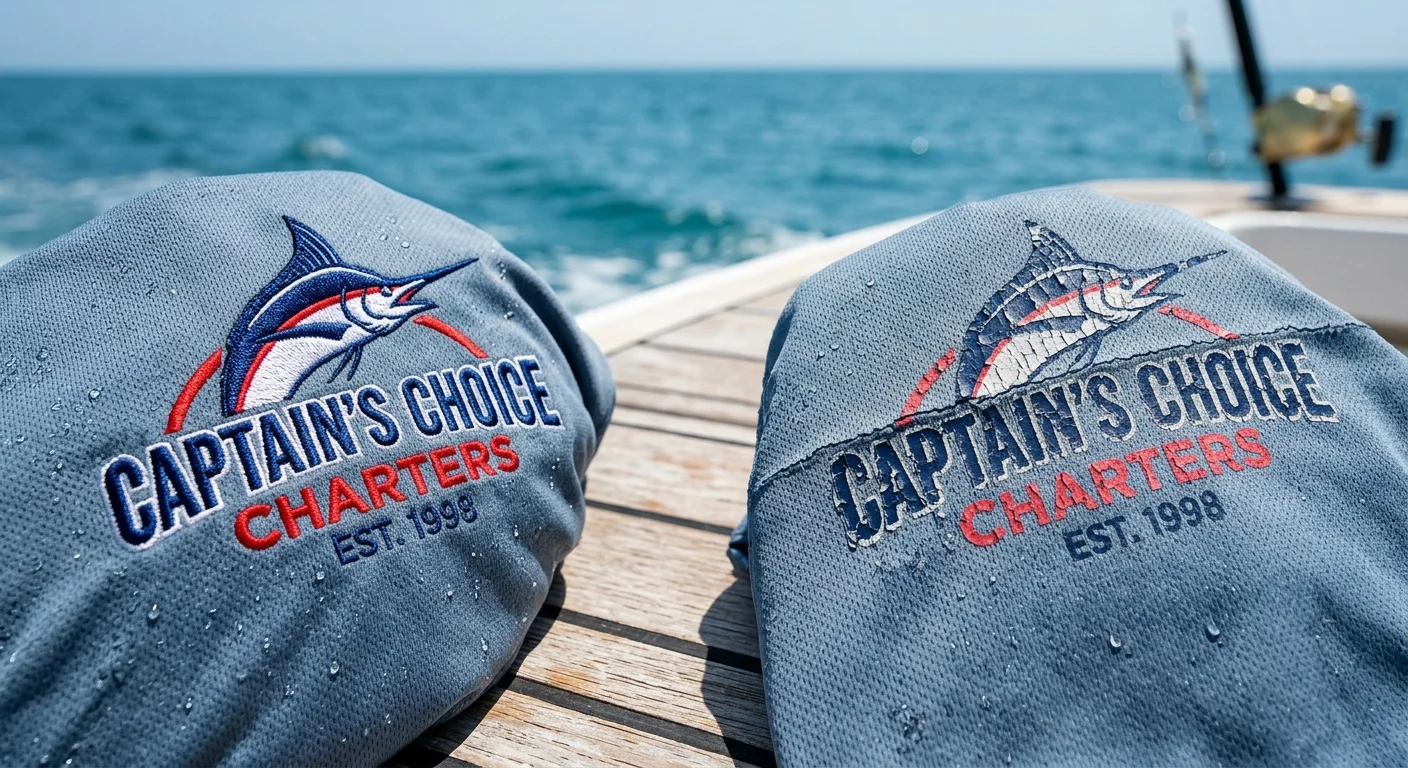
Three months into charter season, your embroidered logo still looks sharp. Your buddy's screen-printed shirts? Already cracking at the fold lines.
That's not an accident. That's chemistry.
Each decoration method reacts to saltwater, sunscreen, and UV exposure in its own way. These are the harsh realities of a working fishing environment. Tracking those reactions — measured in wash cycles and monthly wear estimates — is the clearest way to figure out what your branded shirts cost per use.
The Four-Method Durability Breakdown
Method | Salt/Sweat Resistance | UV Fade Rating | Peel/Crack Risk | Wash Lifespan | Monthly Charter Life |
|---|---|---|---|---|---|
Embroidery | Excellent | High (85%+ color after 75 salt/UV exposures) | Zero | 100+ washes | 24–36 months |
Screen Print | Moderate | Low–Moderate (fades after 50 washes) | Cracks at fold lines: 30–60 washes | 30–50 washes | 6–12 months |
Heat Transfer | Poor | Moderate | Peels at edges with machine drying | 15–25 washes | 3–6 months |
Full Sublimation | Excellent | Excellent (95% UPF retained after 100+ exposures) | None — it's part of the fabric | 80+ washes | 18–24 months |
Why Salt and Sunscreen Are Decoration Killers
Salt isn't just corrosive — it's abrasive. Every rinse cycle after an offshore day scrubs the fabric surface at a microscopic level. For screen-printed shirts, that repeated salt scrub breaks down ink faster than standard wash tests suggest. Plastisol ink sits on top of performance polyester with no bond to the fiber. Salt works underneath it. Heat cracks it. Sunscreen — especially chemical UV filters — acts as a mild solvent that weakens the ink's surface layer over time.
Embroidery skips this problem entirely. Thread doesn't absorb salt or sunscreen the way ink does. Dyed polyester thread holds 85%+ color after 75 combined salt and UV exposures. That's two full fishing seasons of offshore trips every week before you see any real color shift.
Sublimation is the other standout. The dye bonds at a molecular level to the polyester fiber itself — not onto its surface. Salt and sweat have nothing to attack. UPF retention stays at 95%+ after 100+ wash cycles. The decoration is the fabric.
Performance Fabric Variables That Change Everything
The lifespan numbers above assume you're caring for the shirts the right way. Two variables speed up failure faster than anything else.
Cure temperature on screen-printed performance poly. High-temperature plastisol curing — anything above 300°F — breaks down the internal structure that makes moisture-wicking fabric work. Breathability drops 15–20%. UPF ratings erode. A shirt rated UPF 50+ at purchase can test closer to UPF 30 after a season of improper-cure screen prints and regular wear.
Stitch area on lightweight fishing fabric. Embroidery wider than 3.5 inches on moisture-wicking material creates pull tension and blocks chest ventilation. A 5,000-stitch left-chest logo stays in the safe zone. A full-back embroidered design at 30,000+ stitches? You're eating into the performance properties you paid extra for.
The Maintenance Multiplier Nobody Talks About
A five-minute freshwater rinse after every trip removes 80–90% of salt residue before it hits the washing machine. That one habit adds an estimated 30–40 wash cycles to shirt lifespan — no matter what decoration method you use.
Cold machine wash. No fabric softener. No bleach. Air dry.
Softener clogs moisture-wicking fiber channels. Bleach attacks thread dyes and sublimation pigments. High-heat machine drying is the fastest way to peel a heat transfer and crack a screen-printed logo at the same time.
Well-maintained fishing shirts — across all decoration types — hold up for 75–100 active fishing days before fabric performance drops off. Cheap shirts with no care routine fail in 15–25 days of real charter use. That's not a decoration problem. That's a care protocol problem.
What the Wash Cycle Math Means for Your Business
A charter captain running six trips per week washes crew shirts at least once a week. That's 52 wash cycles per year.
Screen print shirts rated for 30–50 washes last 7–12 months at that pace.
Embroidery and sublimation shirts rated for 80–100+ washes last 18–24+ months under the same conditions.
The cost gap between methods runs $4–$8 per shirt. Embroidery or sublimation covers that difference within the first season — you skip the replacement orders before season two even starts.
The Exposure ROI Formula: Quantifying Brand Touchpoints for Charters & Tournaments
Most charter operators think about shirt costs in one direction: money out. The smarter calculation runs both ways.
A client wears your branded shirt on a dock. They post a catch photo on Instagram. They walk through an airport after a fishing trip. That logo is doing paid-media work for free. The question isn't whether that exposure has value. The question is whether you're picking the decoration method that keeps delivering for 8 months — or 28.Here’s where investing in OEM/ODM fishing shirts services with logo starts to shift from a cost center to a measurable marketing asset.
Here's the formula that puts a real number on it.
Net ROI = (Total Exposures × Recall Rate × LTV Value) − Total Apparel Cost
Break that down into terms that apply directly to your business:
Total Exposures : Trips per month × passengers per trip × shirt lifespan in months
Recall Rate : Industry benchmark sits at 18–24% for passive branded apparel. High-contrast logos on performance fabric — the kind that pops against open water and blue sky — push that to 35%+
LTV Value : A repeat charter booking is worth $300–$800 depending on trip type. Merchandise upsell adds another layer. Conversion rate from brand exposure to actual booking runs 12–15% in the fishing charter segment
The 50-Unit Comparison: Where the Math Gets Uncomfortable
Run a real 50-shirt tournament order through both options. The gap is hard to ignore.
Metric | Screen Print ($8/shirt = $400 total) | Embroidery ($14/shirt = $700 total) |
|---|---|---|
Shirt Lifespan | 8 months | 28 months |
Exposures/Month | 4 trips × 6 clients = 192 | 4 trips × 6 clients = 192 |
Total Exposures | 1,536 | 5,376 |
Recall Rate Applied | 20% = 307 brand touches | 24% = 1,290 brand touches |
ROI Potential ($300 LTV × touches × 2% conversion) | ~$1,842 | ~$7,740 |
The embroidered shirts cost $300 more upfront. Over their lifespan, they produce around $5,900 more in potential booking value. That's not a close decision — it's a different category of investment.
Making the Exposure Trackable
Brand touchpoints only matter if you can tie them to real revenue. Two moves make that happen fast.
Add a QR code to the sleeve. Link it to a booking page with a unique UTM tag. Someone scans it from a dock photo or a tournament recap video. You see which shirt drove that click.
Assign promo codes by batch. Tournament shirts get one code. Charter crew shirts get another. After a season, you'll know which apparel investment produced actual conversions — not just impressions.
The sports jersey industry tracks this closely. 10 million logo impressions from a single sponsorship cycle carry a paid-media equivalent value that far exceeds the original print cost. Charter operations are smaller scale. The mechanics are the same.
The Annual Apparel Strategy That Maximizes Both
Screen print and embroidery aren't competing for the same slot in your budget. They serve different exposure windows.
Use screen-printed shirts for high-visibility tournament events. You get maximum reach and concentrated exposure. A shorter lifespan is fine because the event itself creates the touchpoint density.
Use embroidered shirts for charter crew uniforms. The three-season durability means every returning client sees a sharp, professional logo on every trip — across 28 months of repeat bookings.
One method captures a moment. The other builds a brand.
The ROI formula doesn't pick a winner. It shows you the question was never embroidery versus screen print — it's which tool fits which exposure window in your annual strategy.
Decision Matrix & Scenario Routing: Exact Process Match for Order Size & Design
Five variables determine your decoration method. Order volume. Design complexity. Fabric type. Durability requirement. Turnaround window. Get all five right and the decision makes itself.
The matrix below matches every common fishing apparel scenario to its best-fit process — no guesswork, no vendor upsell pressure.
The Scenario Routing Table
Your Scenario | Order Volume | Logo/Art Type | Best Method | Why It Wins |
|---|---|---|---|---|
One-off sample or promo run | 1–9 units | Full color, gradients, complex art | DTF (Heat Transfer) | Zero color penalty, no minimum order, fast turnaround |
Small guide team or fishing crew | 10–30 units | Clean emblem, 1–3 colors | Embroidery | Outlasts salt and sweat, premium charter look, one-time digitization fee |
Mid-season tournament or corporate event | 50–100 units | Bold 1–2 color graphics | Screen Print | Lowest cost per unit, fast bulk production, high visual pop on water |
Full-surface camo or brand pattern | 20–200 units | Repeat pattern, all-over dye | Full Sublimation | Zero peel risk, UPF integrity preserved, dye bonds into fiber |
Multi-season charter fleet uniform | 100–200 units | Small chest logo + back sponsor block | Embroidery (front) + Screen Print (back) | Front lasts the garment's full life; back cycles with each season's sponsor |
The hybrid method in that last row is underused. Charter captains serving repeat clients across two or three seasons get permanent front logos with embroidery. The back panel stays flexible for annual tournament sponsors or rotating partnerships — all at screen print pricing.
Five Decision Rules That Override Everything Else
These aren't preferences. They're hard cutoffs based on how performance polyester fishing shirts behave in production and in the field.
Rule 1 — Gradients, photos, or large-format coverage on polyester: Go sublimation. Screen print cracks on complex color transitions. Embroidery loses detail on photorealistic art. Sublimation handles all three without any trade-off.
Rule 2 — Logo under 4 inches wide, lifespan matters more than price: Choose embroidery. The stitch cost stays fixed no matter how many times you reorder. More months those shirts stay sharp means more exposure ROI for your brand.
Rule 3 — 50+ units, single event, quick turnaround: Screen print. Setup cost spreads fast at volume. Per-unit price drops to less than half of embroidery pricing. For tournament runs with heavy short-term wear, it's the right economic choice.
Rule 4 — Performance fabric with moisture-wicking requirements: Skip standard plastisol inks. Use water-based inks instead, or keep embroidery limited to a reinforced chest panel. High-cure plastisol on dri-fit fishing shirts with company logos cuts breathability by 15–20% and erodes UPF ratings within a season.
Rule 5 — All-over sponsor blocks on custom fishing jerseys: Sublimation is the one method that works here. Multi-screen layering or patchwork embroidery on full-coverage designs distorts the drape, adds fabric weight, and kills the athletic fit that makes performance fishing apparel function properly.
Scoring It When You're Still Unsure
Two methods looking close? Run this five-factor score to settle it:
Factor | Weight | Screen Print | Embroidery | DTF | Sublimation |
|---|---|---|---|---|---|
Order Volume (1–9 low, 50+ high) | ×3 | High vol: 5 | Mid vol: 4 | Low vol: 5 | Any vol: 3 |
Design Complexity | ×3 | Simple: 4 | Simple: 5 | Complex: 5 | Complex: 5 |
Durability Need | ×2 | Event-only: 3 | Long-term: 5 | Short-term: 3 | Long-term: 5 |
Turnaround Speed | ×1 | Fast: 5 | Moderate: 3 | Fastest: 5 | Slow: 2 |
Cost per Unit Target | ×1 | 50+: 5 | Premium ok: 3 | Small runs: 4 | Mid: 4 |
Real example: Mid-season tournament, 75 pieces, bold 2-color graphics. Screen print scores 42/50 — highest of any method. The math confirms the right call before you even contact a vendor.
Plug in your actual numbers and the decision becomes straightforward.
Conclusion
The math doesn't lie — and now you have the math.
Custom fishing apparel with logo aren't a uniform expense. They're a brand asset with a real, measurable return. Embroidery holds up through 200+ wash cycles and stands up to saltwater in ways screen print can't match at volume. But for full-chest tournament graphics or rich color payoff on performance polyester? Embroidery is the wrong tool for that job.
Here's the one framework worth keeping: match the method to the math . Calculate your cost-per-impression, not just cost-per-shirt. A $28 embroidered charter shirt worn by a captain across 60 fishing trips puts your brand in front of more targeted eyes than most paid ads in your three-month budget.
Stop guessing. Pull up three things:
Your order quantity
Your design complexity
Your reorder timeline
Then run the decision matrix one more time.
Your next shipment of custom fishing shirts can be your smartest marketing spend of the year. Make it count.