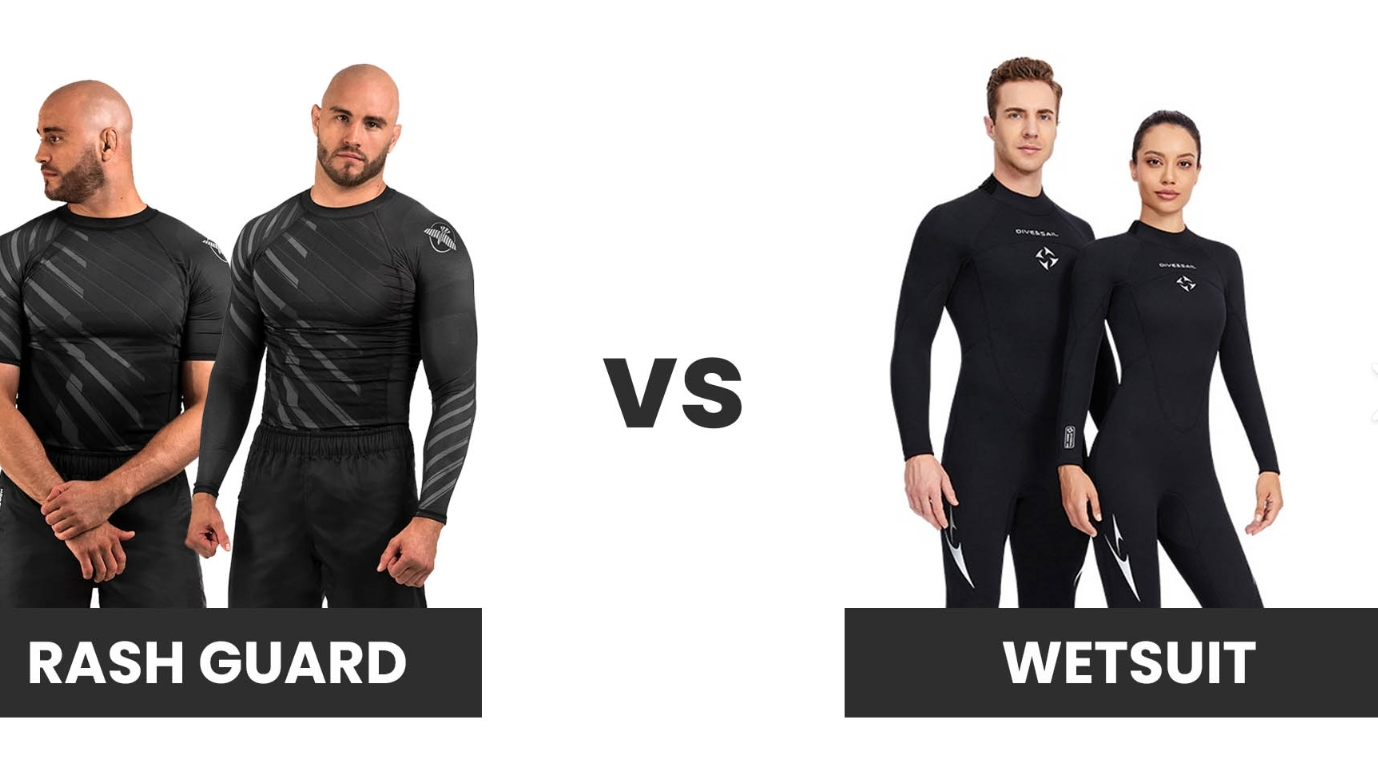
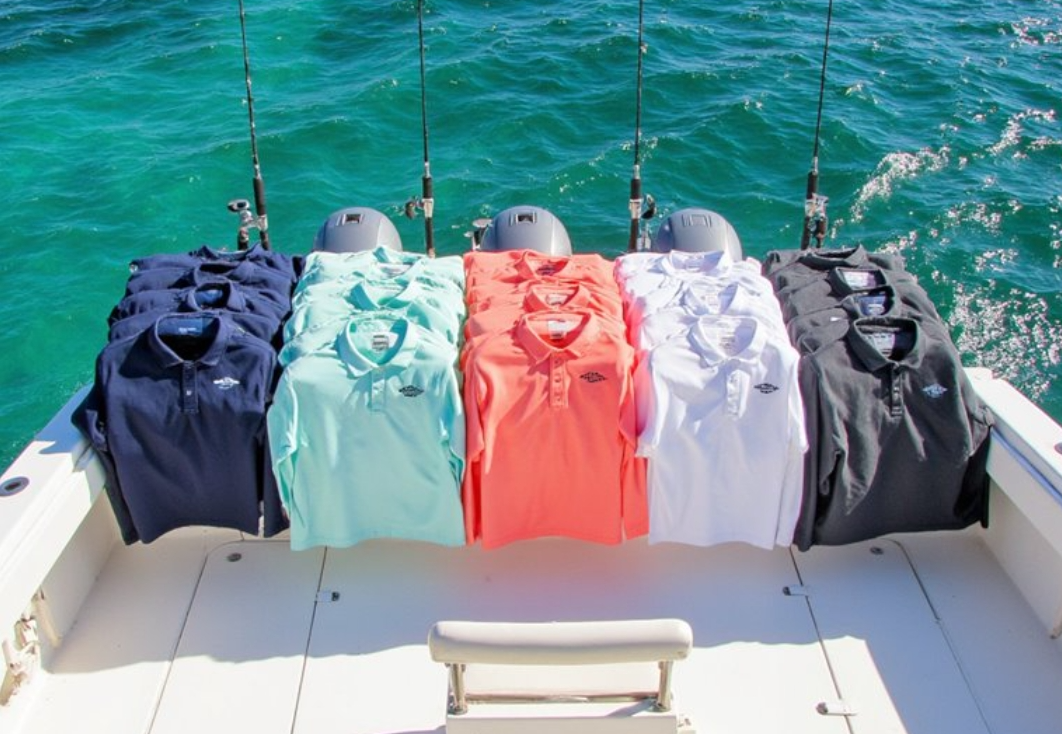
You've spent good money on a "UPF 50+" fishing shirt, slapped it on at 5 a.m., and figured you're covered. You've spent good money on a "UPF 50+" fishing shirt, slapped it on at 5 a.m., and figured you're covered. Many anglers shopping for custom UPF fishing apparel assume the protection story ends at the fabric label.Then, three hours into an offshore run, your forearms are still getting torched. Here's the problem: most anglers treat UPF and SPF like the same number on different packaging. They're not. These two ratings measure two different things.
One rates how much ultraviolet radiation a fabric blocks before it touches your skin. The other measures how long a cream buys you before you burn. Mix those up on the water — with surface glare doubling your UV load — and you're not just uncomfortable. You're building up real damage.
What follows is a no-fluff breakdown of UPF vs SPF , built for fishing scenarios:
The math behind that 50+ rating
Why your sunscreen drops to half its labeled value by midday
A ready-to-use gear protocol so you never have to guess what to wear or reapply
UPF vs SPF Core Comparison: The 30-Second Breakdown for Anglers
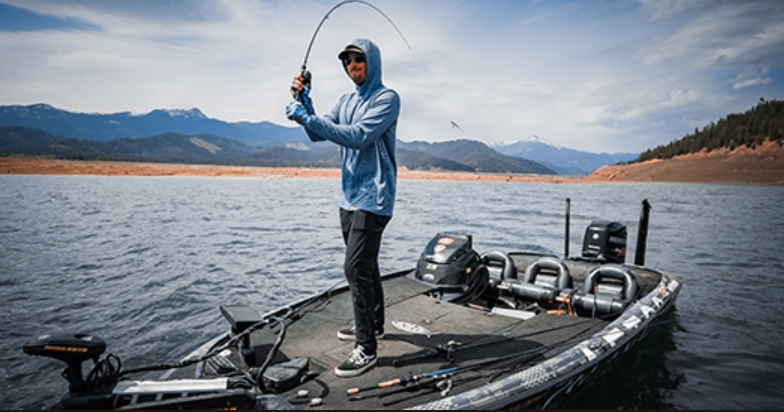
Two ratings. Two different jobs. Mix them up on the water and your skin takes the hit.
Here's the short version: UPF (Ultraviolet Protection Factor) measures how much UV radiation a fabric blocks before it reaches your skin. SPF (Sun Protection Factor) measures how long a sunscreen delays burning. One works through fiber. The other works through chemistry. Any experienced sun protection clothing manufacturer understands that fabric structure and chemical UV filters solve completely different exposure problems on the water.They don't compete — they cover different ground.
Side-by-Side: What Each Rating Measures
UPF — Your Clothing | SPF — Your Sunscreen | |
|---|---|---|
What it rates | UV blocked by fabric | Time before skin burns |
Spectrum | Blocks both UVA + UVB | SPF = UVB only; broad-spectrum adds UVA |
UPF 50+ reality | 98%+ UV blocked; just 1/50th gets through | SPF 50 also blocks ~98% UVB — but this holds true only with correct application |
Durability on the water | Stable — sweat, spray, and heat don't break it down | Breaks down fast — sweating, wiping, and water all cut its effectiveness |
Reapplication needed? | No | Every 2 hours, minimum |
That last row matters most to anglers. A UPF 50+ fishing shirt gives you steady, measurable protection across an 8-hour drift. SPF 50 sunscreen starts losing real-world performance the moment you sweat. On a summer run, that's about 20 minutes out.
For comparison on the fabric side: a standard white cotton T-shirt rates around UPF 5 . That lets 20% of UV radiation pass straight through to your skin.
The Angler's Working Rule
Cover what you can with UPF clothing — torso, arms, neck, hands, legs. For everything the fabric can't reach — face, ears, nose, lips, back of your hands — use broad-spectrum SPF 30+ sunscreen. Reapply on schedule, no skipping.
UPF = wear it and forget it. SPF = apply it and track the time.
Run both systems together. That's the full setup.
Decoding UPF 50+: Fabric Rating Math and Real-World Protection Thresholds
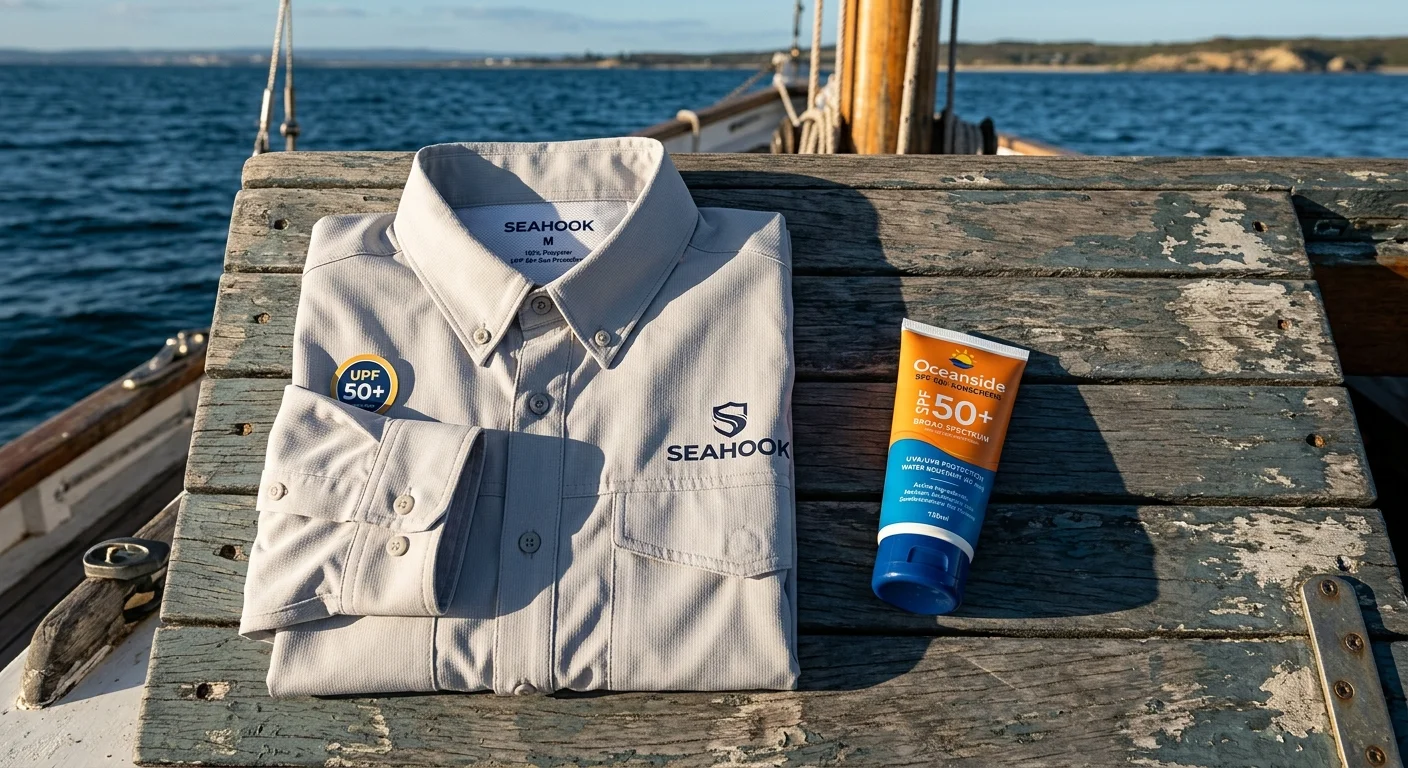
The number on the tag isn't marketing. It's a ratio — and once you understand the math, you'll never look at a fishing shirt the same way.
UPF stands for Ultraviolet Protection Factor . It tells you how much UV radiation passes through the fabric and reaches your skin. The formula is simple: a fabric rated UPF 50 transmits 1/50th of UV — that's 2% getting through , 98% stopped cold .
That's not an estimate. A spectrophotometer in a certified lab measures it directly. The fabric sits under a calibrated UV source. Every wavelength across the UV spectrum gets tested and recorded.Premium OEM fishing shirts often go through additional fabric validation to maintain certified UV performance after repeated saltwater exposure and wash cycles.
The Full Rating Scale (What Your Shirt Tag Really Means)
Here's where most anglers get lazy. They see "UPF 50+" and assume anything below that is close enough. It isn't.
UPF Rating | Protection Category | UV Gets Through | UV Blocked |
|---|---|---|---|
5–7 | Not protective | 14–20% | 80–86% |
15 | Minimum | 6.7% | 93.3% |
25–39 | Very Good | 2.6–4% | 96–97.4% |
40–49 | Excellent | 2.5% | 97.5% |
50 | Excellent | 2% | 98% |
50+ | Excellent (max) | <2% | >98% |
That white cotton tee you've been fishing in? It tests at UPF 5 to 7 . Somewhere between 14% and 20% of UV passes straight through to your skin. Compare that to a certified UPF 50 shirt at 2% transmission — you're absorbing ten times more UV through the cotton. Not a little more. Ten times.
Why "50+" Is a Ceiling, Not a Precise Number
Here's a detail the hang tags never mention. Modern sun-protective fabrics can test above UPF 200 in the lab. The rating still caps at 50+ because that's where the consumer labeling standard stops. ARPANSA — the Australian radiation authority that most serious UPF brands test against — marks both UPF 50 and UPF 50+ as "Excellent protection." It treats 50+ as the highest consumer category.
So two shirts can both say 50+, but one might measure UPF 180 on the instrument. You can't tell from the label. What you can do is look at construction. Tight-knit polyester or nylon with minimal visible light through the weave beats loosely-woven fabrics that depend on chemical UV-absorbing finishes. Hold the shirt up to a lamp. See light through it? UV is getting through it too.
The Durability Factor Most Buyers Ignore
A UPF rating gets measured on new fabric under lab conditions — flat, dry, and unstretched . Real fishing is none of those things.
Two degradation scenarios matter most on the water:
Wet fabric : A soaked cotton T-shirt can drop to UPF 3–4.5 . Purpose-built UPF 50+ fishing shirts in polyester blends are built to hold their rating wet — but that's a construction advantage, not something the UPF label alone guarantees.
Stretch : Stretching opens the weave and lets more UV through. Before buying, test coverage under arm extension and shoulder rotation. Gaps in the weave under stretch mean the UPF rating is too generous for active wear.
Quality-certified UPF garments — tested under AATCC , AS/NZS 4399, or EN standards — hold ≥UPF 50 through 40 to 50 wash cycles. That's the durability baseline worth checking as you compare a $40 shirt against a $70 one. The price difference is real: a legitimate UPF 50+ fishing shirt runs $35–$70, while a standard tee costs $10–$25. The question isn't whether the premium exists. It's whether you fish 8 hours in the sun often enough to make 90% less UV through your fabric worth it. For most serious anglers, that math closes fast.
The One Threshold That Matters for Fishing
Midday summer sun — offshore, nearshore, reservoir, flats — UPF 50+ is the floor, not the ceiling. UPF 30 (3.3% transmission) is the Skin Cancer Foundation's stated minimum for sun-protective clothing. That's fine for casual outdoor use. But you're not at a backyard cookout. You're on reflective water with UV hitting you from two directions. In that environment, the gap between 3.3% transmission and 2% transmission is worth caring about — across a full season of long days on the water, it adds up.
Performance Under Pressure: UPF Stability Versus Sunscreen Degradation
Sunscreen lies to you. Not out of malice — but the number on the tube and the protection your skin actually gets are two very different figures. On the water, that gap gets wide enough to burn through.
Here's what the research shows, minus the marketing language.Several technical brands now rely on ODM UV-protective apparel development to improve moisture management and long-duration sun protection for offshore environments.
The Sunscreen Math Nobody Puts on the Label
Lab SPF ratings use a specific application density: 2 mg per square centimeter of skin. That's a thick, deliberate coat — more than most people put on by a factor of two. Population studies show anglers and everyday users apply somewhere between 0.5 and 1.0 mg/cm² . Half the required amount, sometimes less.
The effective SPF doesn't drop in a straight line. It collapses fast:
Applied Density | SPF 50 Label | Real-World Effective SPF |
|---|---|---|
2.0 mg/cm² (lab standard) | 50 | ~50 |
1.0 mg/cm² (light application) | 50 | ~7–15 |
0.5 mg/cm² (quick smear) | 50 | ~3–7 |
You grab the SPF 50 tube. You run it over your forearms in thirty seconds before pushing off the dock. You're already fishing in the low-teens. That's the starting point. Then the full day gets to work on what's left.
What a Full Day on the Water Does to Your Sunscreen
Organic UV filters — the chemistry that makes most sunscreens work — break down under the same light they're supposed to stop. Photodegradation isn't a theory. It's been measured in lab settings.
The data is specific and worth knowing:
After 30 minutes of natural sunlight, unstable formulas start losing measurable UVA absorbance
After 90 minutes , unstable products show UVA protection indices dropping to 0.41–0.76 — a loss of 25–60% of their original UVA coverage
The common combination of avobenzone (BMDBM) + ethylhexyl methoxycinnamate — found in a large share of consumer sunscreens — shows up in photostability testing as a problem pairing. It loses significant UVA protection regardless of other filters in the formula
Photostable formulas hold up better. But even a well-formulated product can't survive what fishing does to it physically.
Sweat, splash, and contact strip filter from your skin faster than the sun breaks it down. Water-resistance ratings (40 or 80 minutes) describe immersion time before the claim fails. They don't account for the real fishing combination of continuous sweat, salt spray, rod-grip friction, towel wipes, and contact with clothing. Towel drying after immersion removes 60–85% of filter from the skin's surface layers . After a swim, a dousing wave, or drying your hands on your shorts — those areas are unprotected. Reapply right away or treat the skin as exposed.
Add it all up. You started at an effective SPF of 7–15. The chemistry broke down. Sweat moved the filter around. At the two-hour mark on an angler's forearm with no reapplication, real-world protection trends toward single-digit SPF — no matter what the tube said.
What UPF 50+ Does Instead
Sunscreen doesn't look good by comparison.
A certified UPF 50+ fishing shirt transmits ≤2% of UV through the fabric from the first cast to the last light. No chemistry breaking down. No half-life. No application errors. Sweat and spray don't compromise it — polyester and nylon microfibers don't swell when wet , so the weave structure and UV transmission stay stable. Lab tests on engineered synthetic fishing fabrics show less than 0.5 UPF units of change between dry and damp conditions.
The real-world reductions worth knowing:
Stretch zones — shoulders, elbows — can open the weave enough to raise UV transmission from ~2% to 3–4% under hard casting motion. That's still UPF 25–35 territory. Not a crisis, but worth choosing a relaxed fit over a skin-tight one
Fabric degradation from long-term abrasion or thinning — not a single-day issue, but worth checking gear that's seen three full seasons of hard use
For reference: UPF 50+ fabric holds its performance rating through 20–40 wash cycles in certified testing. Day 300 looks like day 1, as long as the fabric hasn't physically thinned from wear.
The Specific Problem of Fishing on Open Water
There's one more variable most anglers underestimate: where you fish amplifies UV load in ways a backyard comparison can't capture .
Calm water reflects 5–10% of UVB and 3–5% of UVA at midday. That's before factoring in scattered sky radiation. White gelcoat, wet decks, and stainless hardware push local reflected UV to 30–40% of direct irradiance on exposed surfaces around noon. Sports dermatology guidelines for anglers treat on-water exposure as roughly 1.5–2× equivalent land exposure for the face, neck, and backs of hands. Those same guidelines recommend cutting reapplication intervals from the standard two hours down to 60–90 minutes on the water.
So your sunscreen — already broken down and physically stripped away — is fighting a higher UV load than the label was ever tested against.
The practical conclusion is straightforward: UPF clothing covers everything it reaches, holds its rating all day, and asks nothing of you after you put it on. Sunscreen is still essential — your face, ears, neck, and the backs of your hands need it — but it's the backup layer, not the primary one. Use it that way. Apply it at the right density. Reapply every 60–90 minutes on the water. That combination gives you full-day coverage. Either system used alone, in real fishing conditions, falls short.
The Hybrid Defense Protocol: UPF Garment Zones vs. SPF Reapplication Map
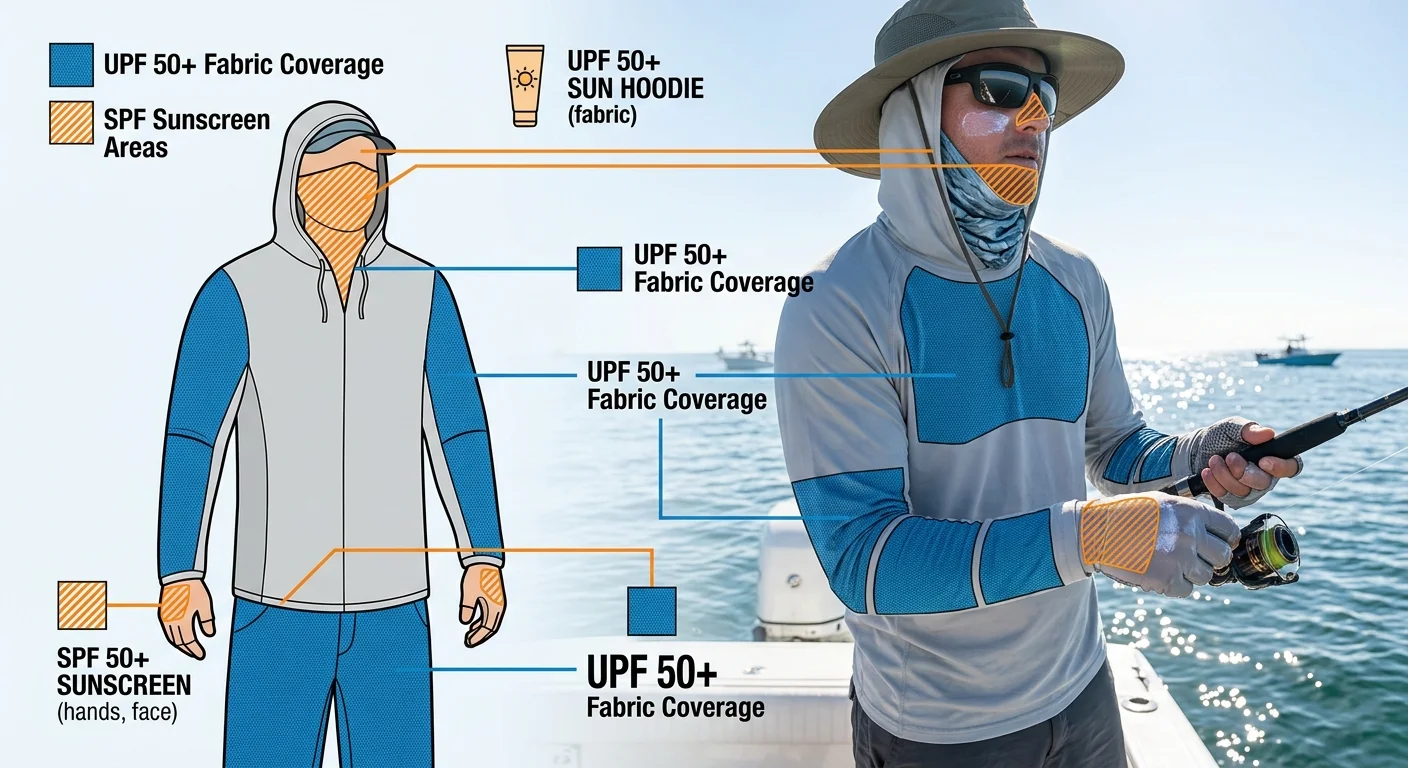
Split your body into two zones. Everything fabric touches — UPF handles it. Everything fabric can't reach — sunscreen owns it. That's the whole protocol.Commercial operators and charter crews often source these systems through a dedicated fishing apparel wholesaler to standardize protection across long summer seasons.
Most anglers treat these two systems as interchangeable. They patch gaps with whichever product is closest once they notice they're burning. That's reactive. What follows is the proactive version: a clear map of what goes where, when to reapply, and which zones can shift from "zero maintenance" to "high maintenance" the second you make one casual move — like rolling your sleeve up to net a fish.
Zone 1: UPF Coverage (Wear It, Forget It)
A good UPF 50+ setup locks down these body regions for the full day. You won't need to touch them again:
Torso and arms — A long-sleeve UPF 50+ shirt in dense polyester or nylon covers this area. Choose a loose fit. Not because it's comfortable, though it is — but because a stretched weave lets more UV through. Pull the shirt tight across your shoulders during a hard cast, and you've just dropped protection on your casting arm.
Legs — Long UPF pants in a tight-woven synthetic or canvas build. Same logic: loose enough to hold their rating through crouching, climbing into the bow, and working the deck.
Neck and lower face — A UPF gaiter or hood pulled up takes these zones out of the SPF column. Once it's up, you don't need to think about your neck again until you pull it down for a drink of water.
Scalp and ears (partial) — A wide-brimmed hat with at least a 3-inch brim handles this. No mesh crown. UV passes straight through mesh — it's a gap, not a shield.
One thing to watch: wet fabric behaves differently than dry. Purpose-built fishing shirts in synthetic microfibers hold their UPF rating while damp. The fibers don't swell and open the weave. A soaked cotton layer does the opposite — it can drop to UPF 3 or 4. So if you're in a cotton-blend "UPF" shirt and it's clinging to your back by 9 a.m., the tag rating no longer describes what's protecting you.
Zone 2: SPF Territory (Apply on Schedule, No Exceptions)
These areas stay exposed no matter what you wear. Apply broad-spectrum SPF 30+ to all of them 15–30 minutes before you leave the dock. Then reapply on a fixed schedule — not just whenever you happen to remember:
Body Part | Why It's High-Risk |
|---|---|
Full face (forehead, cheeks, chin) | Primary UV target; direct + reflected exposure all day |
Nose bridge and tip | Elevated surface angle — catches UV from every direction |
Ears (tops and backs) | Easy to miss; hat brim protects the top but not the back |
Back of neck | Exposed every time you look down at a fish or a chart |
Hands and knuckles | Constant sun exposure, constant washing, almost never reapplied |
Lips | Use a dedicated SPF lip balm; standard sunscreen migrates |
Eyelids | Skipped by most anglers; UV-blocking sunglasses help but don't fully cover it |
For face and ears, use a stick formulation instead of lotion. Wind and salt spray push liquid sunscreen straight into your eyes within an hour. Sticks stay put. For the body, spray works fine — but rub it in. A spray-only coat leaves gaps.
The Reapplication Schedule That Accounts for Fishing
This is where most hybrid protocols break down. People set a two-hour mental timer and stick to it no matter what they're doing. Two hours is a baseline for sitting in the shade. Out on the water, conditions are different.
Light activity, dry deck, overcast or morning hours : Two-hour intervals work for exposed zones.
Active casting, heavy sweat, salt spray : Cut that to 80 minutes . That's the upper limit of U.S. water-resistance testing — the point where even the best water-resistant formulas can no longer guarantee their rated protection.
After any immersion or hard toweling : Reapply to all exposed zones right away. Towel drying strips 60–85% of remaining filter from the skin surface. Don't wait for the next scheduled interval. Treat every toweling-off as a full reset.
The Coverage Discipline Problem (And How to Not Blow Your Protocol Midday)
The most common protection failure on a long fishing day isn't a wrong product choice. It's a casual gesture — sleeves pushed up to stay cool, gaiter pulled down to talk, hat swapped for a visor.
Each of those moves pulls a body part out of the UPF column and drops it into the SPF column — with no sunscreen on it. An uncovered forearm that spent all morning under a sleeve has zero sunscreen on it. The sleeve comes up, and that skin is bare in full sun.
Maintain the map. Keep gaiters up during peak UV hours — 10 a.m. to 2 p.m. Pull one down, and re-treat that zone with sunscreen before pulling it back up. The same rule applies to any sleeve that gets rolled.
The protocol works because it cuts out decision-making on a long, sweaty, distracted day on the water. UPF clothing covers most of your body without a second thought. Sunscreen fills the fixed gaps on a fixed schedule. Respect both zones, and you can fish from first light to last light — without stacking up damage trip after trip across a full season.
Scenario-Specific Fishing Sun Protection Gear Combos
Three environments. Three different UV problems. The gear that works on a flats skiff at noon will leave you exposed on an offshore run. What you carry for a 14-hour canyon trip is overkill for a shaded river bend. Here's how to build the right combo for each.
Nearshore / Flats Fishing (4–6 Hours)
Shallow-water fishing is a UV ambush. Glare off calm flats hits you from below. The sun hits you from above. Both at the same time. Standard clothing won't cut it here.
Gear stack:
- Shirt : UPF 50+ performance hoodie, ultra-light polyester (120–160 g/m²), loose fit, vented back panels. The loose fit isn't about comfort — a stretched weave lets more UV through.
- Hat : Wide-brim bucket or boonie, 3"+ brim, UPF 50+ fabric, vented crown with chin strap for runs between spots.
- Face/Neck : UPF 50+ sun gaiter. Pull it over your nose and ears while poling or running. Drop it to your neck in dock shade.
- Hands : Fingerless UPF 50+ sun gloves with silicone grip on the palms. The backs of hands and knuckles are constant burn zones. Most anglers skip protecting them entirely.
- Legs : UPF 50+ quick-dry pants or shorts, athletic cut for full casting range.
SPF protocol — face, ears, hands, any ankle gap:
- Put it on at the dock 15–30 minutes before launch
- Reapply at hour 2 and hour 4
- Use non-greasy formulas — sunscreen on your palms kills grip
Freshwater / River Fishing (3–8 Hours)
Tree canopy feels like protection. It's not reliable protection. Every bend and open point lets hard bursts of direct UV hit you while you're focused on the current. The shade comes and goes. You can't predict when it disappears.
Gear stack:
- Shirt : UPF 30 minimum, 50+ for full days. Mid-weight polyester or nylon with a DWR finish handles spray and light rain. Go a bit heavier than a flats shirt — it blocks morning wind and keeps you comfortable on cooler river temperatures.
- Hat : Wide-brim or baseball cap, UPF 50 fabric. Under broken canopy, a solid brim evens out the light-gap problem.
- Hands : Fingerless UPF 50+ gloves. Repetitive casting burns the knuckles and the back of the hand faster than most anglers expect. Grippy palms keep dexterity on cork or EVA grips.
- Legs : Quick-dry UPF nylon pants. A zip-off option is useful for temperature swings between morning and midday.
- Eyes : Polarized UV-blocking sunglasses. Non-negotiable on any reflective water.
SPF protocol — face, ears, neck, any exposed limb:
- Apply before launch
- Spot-reapply after washing your hands in the water or wiping your face
- Full reapplication at hour 3–4 on a long day
Offshore / Deep-Water Fishing (8–14 Hours)
Open ocean is a different category. No canopy, no bank, no shade unless someone heads to the bridge. White decks and swells push reflected UV to 30–40% of direct irradiance around noon. Sports dermatology research puts on-water exposure at 1.5–2× the equivalent land exposure for the face, neck, and hands. That math stacks up fast across a 12-hour trip.
Gear stack:
- Core apparel : Full UPF 50+ set — long-sleeve fishing hoodie with an integrated hood and high collar, long pants in high-density polyester or nylon. Pick salt-resistant fabric with UPF built into the fiber construction. Avoid surface treatments that break down after repeated saltwater saturation.
- Head/Face/Neck : Wraparound UPF 50+ balaclava or full-coverage sun gaiter, paired with a wide-brim hat over the hood. The goal is minimal exposed skin between your eyewear, gaiter, and hood.
- Hands : Full-coverage or fingerless UPF 50+ sun gloves, salt-resistant, with grippy palms for gaffs and rail work.
- Eyes : UV400 polarized sunglasses with side-coverage frames. These block reflected glare off water and white gelcoat.
SPF protocol — spots the fabric can't seal (around sunglasses, nose bridge, eyelids, tops of ears, between fingers):
- Use water-resistant SPF 50+ (80-minute rating), broad-spectrum
- Carry a stick format for touch-ups without pulling your gaiter or balaclava off in rough conditions
- 12-hour timing: apply at boarding, reapply at hours 3, 6, and 9. Any daylight past that — one more pass.
Offshore layering is about closing the gaps that are hard to hit with sunscreen in rough seas: the wrist gap between cuff and glove, around life jacket straps, behind the knees. Clothing covers those spots. Sunscreen covers the edges. Run both systems together and nothing gets left to chance.
Conclusion
The sun doesn't care if you're chasing redfish on the flats or trolling offshore. It's burning you either way.
Here's what you learned today: UPF and SPF aren't competing systems. They're teammates covering different positions . Your UPF 50+ shirt protects your torso, arms, and shoulders. It blocks UV rays consistently, stays effective through sweat, and holds up after an hour of fighting fish in saltwater. Your SPF 30+ sunscreen covers the exposed areas — face, neck, hands — where fabric can't reach. Reapply every 90 minutes. No excuses.
Stop overthinking the ultraviolet protection factor math. The decision is simple:
Cover what you can with UPF-tested clothing
Protect the rest with sunscreen
Stick to the reapplication schedule
Buyers comparing long-term outfitting costs should also evaluate durability alongside wholesale price fishing shirts before committing to seasonal gear programs.The angler who gets this right doesn't just fish in comfort — he fishes for decades.