Every bass angler reaches that moment — standing in the tackle shop, a baitcasting reel in one hand and a spinning setup in the other, unsure which one belongs on the rod. It's not a simple question. Anyone who says one setup always wins hasn't spent enough time on the water.
Baitcasting vs spinning isn't about which is better . It's about which is better for you — for the conditions you fish and the techniques you run.
Here's what this breaks down: the scenarios where a baitcaster's precision and power pull ahead, the situations where a spinning rod outperforms it, and a practical framework to help you stop guessing and start fishing smarter.The same approach helps brands develop custom sun protection fishing gear for different fishing styles.
What's the Real Difference Between a Baitcasting and Spinning Setup?
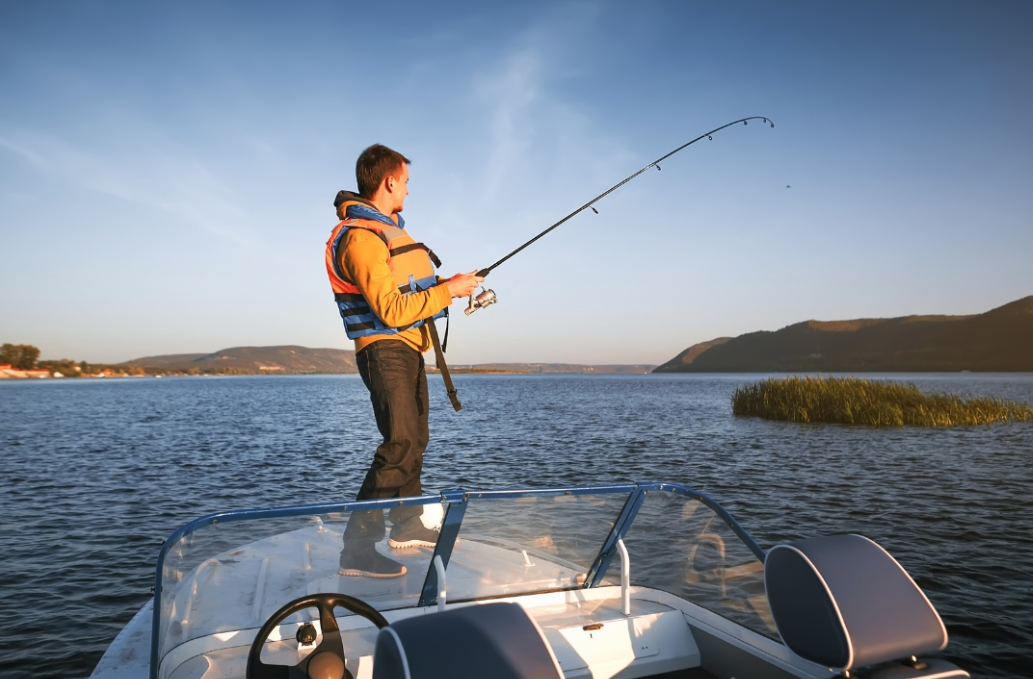
The mechanics tell the story before your first cast happens.
On a spinning setup, the spool stays fixed. It doesn't rotate. Line peels off the front edge in loose coils. It passes through a large first guide, and the whole system mounts below the rod. Open the bail, swing your arm, release — that's it. The design forgives inexperience with almost no effort on your part.
A baitcaster works on a different principle. The spool spins at high speed during the cast. It sends line in a direct, straight path through smaller, tighter guides mounted above the rod. Your thumb rides the spool the whole time. That physical contact — that back-and-forth between hand and line — is where the precision comes from. It's also where the bird's nests come from, once that contact slips.An experienced sun protection fishing gear manufacturer often designs apparel around these real fishing scenarios.
The practical consequences of this difference are real:
Spinning handles light lures with ease — think 1/16 to 3/8 oz , with line as light as 4 lb. The low friction, low resistance build suits finesse work and open water.
Baitcasters are built for heavier work — 1/4 oz and above , paired with 10–25 lb mono/fluoro or 30–65 lb braid for punching heavy cover.
The rod designs follow the same logic. Spinning rods run softer actions (UL through M). They use an oversized first guide to handle the coiling line. Baitcasting rods run stiffer (M through H). You get a trigger grip built for thumb control, plus the backbone to pull fish out of structure.
Budget matters here too. A solid spinning combo comes together for $70–150 . A baitcasting setup that performs well — with a brake system you can trust — starts around $120–200 . Same brand tier, same quality level: the baitcaster costs 20–40% more .
Neither setup is hard to use once you know what each was built for. The real question is which one fits how you fish.
Baitcasting Setup for Bass: Where It Wins and Why
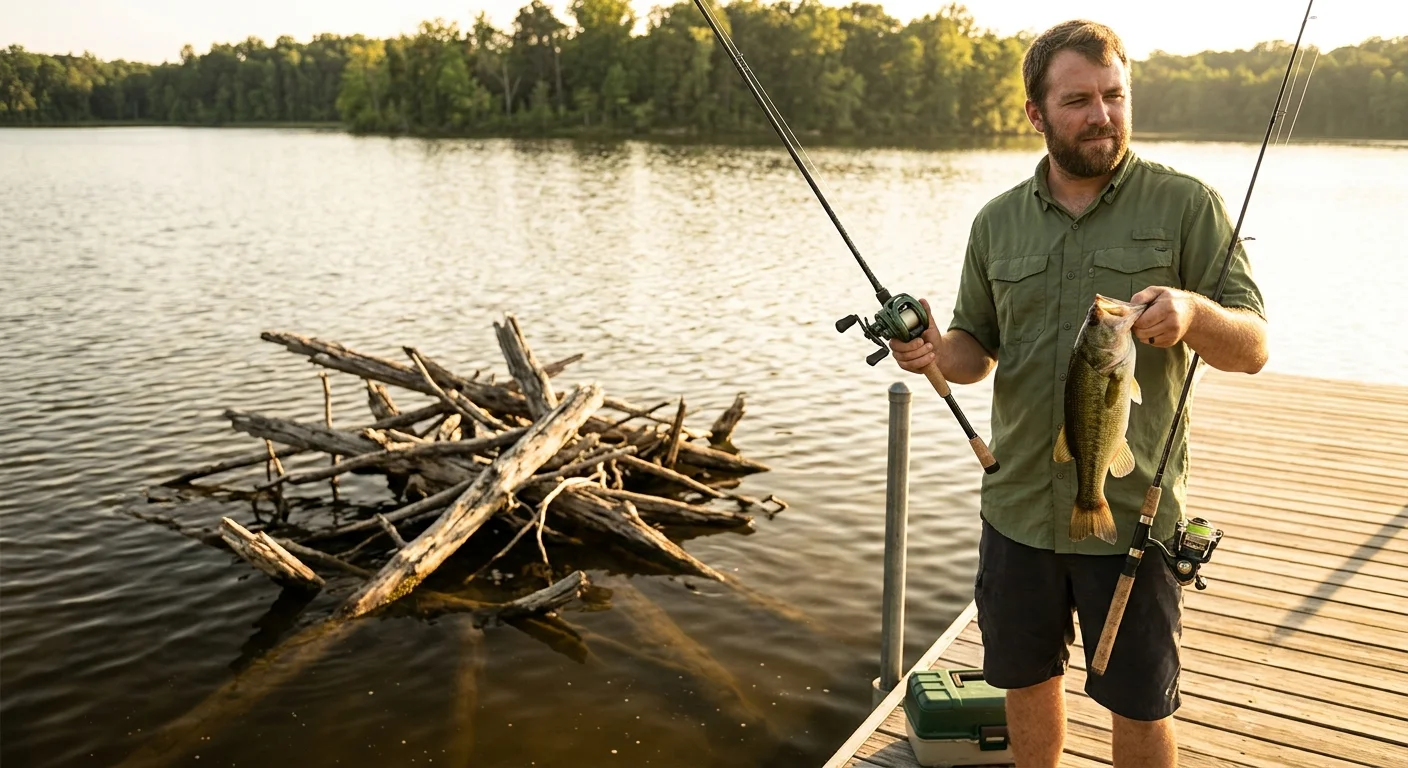
Try pulling a 4-pound bass out of a fallen timber pile with a spinning rod and light line. You'll see exactly why this matters.
The baitcaster's edge in bass fishing isn't about tradition or preference. It's about physics — heavy lures, tight windows, thick cover, and a half-second before a hooked fish buries itself somewhere you can't reach.
Heavy Lures, Heavy Line, Heavy Cover
The baitcaster's home territory starts at 3/8 oz and above . That's not random. Many brands expand these categories through sun protection fishing gear OEM/ODM services.At that weight, the spool mechanics work in your favor. The lure's mass pulls line off the spool cleanly. Your thumb isn't fighting the system — it's guiding it.
Here's what real-world setups look like:
Deep-diving crankbaits / squarebills : 12–15 lb fluorocarbon along rocky structure. Bump that to 15–17 lb fluoro for heavier wood and grass combinations
Jigs in heavy cover : A 7'–7'6" medium-heavy or heavy fast-action rod paired with 17–20 lb fluorocarbon or 30–50 lb braid — built to horse fish out of structure, not coax them
Spinnerbaits, chatterbaits, buzzbaits : 15–17 lb fluorocarbon as a starting point. Upgrade to a heavy power rod + 17–20 lb line as the grass thickens or the fish run large
So why does line weight matter this much? Bass biology explains it. The second a hooked bass feels pressure, it runs toward cover — not away from it. That escape window is 0.5 to 1 second . With line under 12 lb in dense vegetation, mid-sized bass in the 2–5 lb range disappear into grass walls and submerged branches at a much higher rate. The professional standard is clear: 14–15 lb minimum for heavy lure applications , and 17–20 lb when fish exceed 4–5 lbs or the cover gets extreme.
Heavier line does two things at once. It delivers hook-penetrating force at 10–20 meters — the stiff combination of thick line, fast rod, and high drag keeps enough tension to drive a hook through a hard mouth at distance. Plus, it gives you a break strength buffer . A line scraped across a stump or rock face still holds when a 4-pound fish pulls hard.
Accuracy That Changes Your Catch Rate
Heavy cover bass fishing is a precision sport. Strike zones are small — and the numbers show just how small.
Thick vegetation edges leave casting windows of just 30–60 cm wide . Dock structures and fallen timber create productive lanes that are just as tight. The best bites concentrate within 30 cm of the structure edge . Cast outside that zone and you're fishing open water with extra effort.
A practiced baitcaster — not an expert, just someone with reasonable time on the water — can place a 3/8–1/2 oz jig or Texas rig within ±15–20 cm of a target at 10–15 meters. Spinning setups in the same hands land at ±30–40 cm . That gap shows up in your strike count. Every cast inside the 20 cm circle has a real shot at triggering a bite. Casts outside it mostly don't.
A specialized sun protection fishing gear factory can tailor apparel for these technique-specific conditions.
Flipping and Pitching: Built for the Baitcaster
Flipping and pitching aren't just techniques. They're the core language of heavy cover bass fishing. Both were built around what a baitcaster lets your thumb do.
Pitching covers distances of 4–10 meters . Hold the lure with your free hand. Draw back line equal to about half to two-thirds of the rod length . A smooth wrist-and-forearm swing sends the lure on a low, quiet arc. Your thumb controls the spool in real time, slowing the lure to a near-silent landing 10–20 cm from the target. The moment it hits water, the thumb locks. Clean stop. No slack. You're in contact right away.
Flipping shrinks that range to 3–5 meters — grass holes, dock columns, stumps close enough to reach by leaning out. Pull working line by hand, form a controlled loop, and pendulum the lure into the target with rod tip and arm swing. The spool barely moves. The whole system runs on feel, tension, and direct thumb contact with the line.
A spinning reel's bail-and-spool design can't replicate this. Line exits from a fixed spool in coils. There's no direct spool contact, no real-time control, no way to make the same low-trajectory precision shots that flipping and pitching need. The hardware doesn't support the technique.
Standard rig for both methods: 7'2"–7'6" medium-heavy or heavy fast rod , 17–20 lb fluorocarbon or 30–50 lb braid , reel gear ratio 6.1:1–7.1:1 for fast line pickup between casts.
On Backlash — And Why It Shouldn't Stop You
Backlash gets a worse reputation than it deserves. The mechanics are simple. The spool spins faster than the lure pulls line off it. Excess line coils up on itself. That's the bird's nest. Once you understand the cause, prevention is straightforward.
Start in the 3/8–3/4 oz range . Lures below 1/4 oz on a baitcaster without proper brake adjustment cause the most trouble. The lure doesn't carry enough mass to keep steady line tension through the cast. Heavier lures are more forgiving — not less.
Line choice plays a role too. 15–17 lb monofilament or fluorocarbon has enough diameter and stiffness to behave well on the spool. Thinner lines tangle faster when tension drops off.
The brake system on any quality baitcasting reel does most of the work for you. Set it on the firmer side while you're dialing in your cast. The goal on day one isn't maximum distance — it's clean, controlled casts that land where you're looking. That skill develops fast. Once it clicks, the accuracy gap between baitcaster and spinning gear becomes obvious on its own.
Spinning Setup for Bass: Where It Actually Wins
There's a specific kind of bass fishing where the baitcaster — for all its precision and power — just doesn't belong. Not because it's inferior. The physics simply won't cooperate.
At 1/16 to 1/8 oz , a lure doesn't carry enough mass to get a baitcaster's spool spinning. The spool has to fight its own rotational resistance before any line moves. That kills the cast right at the start. Distance drops. Control goes with it. Tangles follow. A spinning reel sidesteps this problem. Line peels straight off a fixed spool. There's nothing fighting it except guide friction and air. At 2–7 grams of total lure weight , that mechanical difference is the whole game.
Professional anglers set the cutoff at 1/8 oz . Below that, spinning rigs aren't a preference — they're the technical standard.Demand for lightweight sun protection fishing gear wholesale products is especially strong among finesse anglers.
Finesse Techniques Built Around This Setup
The rigs that define pressured-water bass fishing — Ned, drop shot, wacky, shaky head — all sit inside that finesse weight range.
Ned rig : 1/16–1/8 oz mushroom head, short stick bait, 6–8 lb fluorocarbon. Slow drag-and-twitch across open bottom.
Drop shot : 4" finesse worm, #1 hook, 1/8–1/4 oz weight placed 18 inches below the hook . You hold the weight still on the bottom and work the lure with small wrist movements. Spinning gear lets you do that with precision.
Wacky/shaky head : 1/16–1/8 oz jighead, 4–5" stickworm. Vertical presentation in 10–15 ft of clear water. Bass can see every twitch, so the detail of your movement matters.
Line choice isn't a minor detail here. In clear, high-pressure water, 6–8 lb fluorocarbon does something heavier line can't — it disappears. Fluorocarbon's refractive index is close to water's. Bass holding at 10–20 ft depth in open, clear conditions don't pick it up the way they spot 15 lb mono. It's not just thinner. It's a different visual signature entirely.
The practical setup: run 10–15 lb braid as your main line, then add a 6–8 lb fluorocarbon leader . You get braid's sensitivity and fluoro's low visibility in one rig. That combination is the go-to for finesse bass fishing at any serious level.
The Gear That Makes It Work
A solid finesse spinning setup doesn't need to be complicated:
Rod : 7'–7'4" medium or medium-light, fast action
Reel : 2500–3000 size spinning reel
Line : 10–15 lb braid main + 6–8 lb fluorocarbon leader
Starting out? 8–12 lb monofilament works well as a single-line setup. It's more forgiving, easier to handle, and still effective for general bass fishing. As your technique develops, the braid-fluoro combo becomes the natural next step.
One advantage that doesn't get enough attention: wind . Throw a 1/8 oz lure into a headwind on a baitcaster and you're asking for a backlash. A spinning reel has no spool to over-rotate. The same cast in the same wind stays clean. That consistency adds up across a full morning on open water. You don't fully appreciate it until you've fished both setups back-to-back on the same day.
Head-to-Head Comparison: Baitcasting vs Spinning Across Key Factors
Six dimensions. That's what separates these two setups — forget the forum debates and brand loyalty. Cast distance. Accuracy. Learning curve. Backlash risk. Cover capability. Lure range. Put them side by side and the right choice gets clear fast.
Factor | Spinning | Baitcasting |
|---|---|---|
Light lure distance (1/4 oz) | 85–100 ft | 70–85 ft |
Medium lure distance (1/2 oz) | 90–110 ft | 100–120 ft |
Heavy lure distance (1 oz) | 100–115 ft | 115–135 ft |
Accuracy within 30 ft | ±12" (~30 cm) | ±6" (~15 cm) |
Time to basic cast | 15–30 minutes | 2–4 hours |
Backlash risk | Near zero | High for beginners |
Casting Distance: It Depends on What's on the End of Your Line
Most comparisons get this wrong. Spinning doesn't lose on distance across the board — it wins at the light end and loses at the heavy end. That gap matters more than people realize.
A 1/4 oz lure on a spinning setup reaches 85–100 ft . The same lure on a baitcaster? 70–85 ft . The fixed spool has less rotational resistance to push through, so light lures travel cleaner and farther. Drop shot rigs, Ned heads, small swimbaits — spinning carries them to water a baitcaster can't reach with light weights.
Flip the weight and the story changes. At 1/2 oz , the baitcaster pulls ahead: 100–120 ft versus 90–110 ft for spinning. At 1 oz , that gap widens — 115–135 ft versus 100–115 ft . The spool mechanics that work against a light lure work for a heavy one. The added mass drives the spool rotation smoothly and holds momentum through the full cast.
Throwing deep-diving crankbaits across a reservoir point? Bombing a 3/4 oz spinnerbait to the far edge of a weed flat? The baitcaster reaches water the spinning setup doesn't cover.Many brands build private label sun protection fishing gear collections around these distinct fishing techniques.
Accuracy: The Difference Between a Cup and a Dinner Plate
Inside 30 feet — dock pilings, stump fields, the tight gap between two weed clumps — accuracy becomes the most important number on this chart. Everything else takes a back seat.
Spinning gear lands at ±12 inches from your target. Baitcasting cuts that to ±6 inches . Spinning puts your lure in a dinner plate-sized zone. Baitcasting puts it in a coffee cup.
That half-foot difference stacks up over a full day on the water. Bass holding tight to a dock shadow or a stump edge won't chase something that lands 10 inches to the left. The strike zone is real and it's small. A practiced baitcaster hits it. Spinning, for all its other strengths, misses it by just enough — and you feel that miss in your catch count by the end of the day.
Backlash vs. Learning Curve: An Honest Trade-Off
The baitcaster's reputation for tangled line is earned — but the learning window is shorter than most anglers expect. Backlash risk for beginners is real, and it spikes in three situations:
Lures drop below 1/4 oz — not enough mass to hold spool tension through the cast
Wind hits from the front or side — the lure slows mid-flight, the spool doesn't
Brake settings are too loose for the lure weight in use
Spinning skips all of that. The fixed spool has nothing to over-rotate. A first-timer gets clean casts in 15 to 30 minutes . On a baitcaster, budget 2 to 4 hours just to stop the bird's nests. Add weeks more before thumb control starts to feel natural.
The trade-off is straightforward: you spend time and frustration upfront with a baitcaster to gain precision and power later. For weekend anglers covering open water with light rigs, spinning handles 70–80% of recreational bass fishing needs without any of that investment. For anglers fishing heavy cover at a serious level — or competing at any tournament stage — more than 90% of tournament professionals use baitcasting gear as their primary tool. That number tells you where the ceiling sits.
Wind and Conditions: The Factor Most Anglers Underestimate
Headwind doesn't just affect comfort. It changes which setup is the right tool for the job.
In strong wind, a light lure on a baitcaster loses flight speed while the spool keeps rotating at full speed. Slack line builds on the spool before the lure lands — and that's exactly where backlash starts. Below 1/4 oz in a headwind, spinning is the correct technical choice, not just a preference.
Tailwind flips the math. With 1/2–1 oz lures and wind behind the cast, a baitcaster gets the full benefit of both weight and wind. It reaches distances that spinning gear struggles to match in those same conditions.
One setup. Two very different performances depending on the day. The conditions you fish most often should carry real weight in this decision.
Choosing the Right Setup Based on Your Bass Fishing Style
Your gear depends on how you fish — not how someone else fishes, not what wins tournaments on TV. Three experience levels, three different answers.
Complete Beginners: One Versatile Setup That Covers Most Situations
Start with a 7 ft medium or medium-heavy fast-action spinning rod paired with a 2500–3000 size reel . This combo covers over 80% of standard bass scenarios. You won't need to master baitcaster thumb control before you've learned to read the water.
For line, keep it simple: 8–12 lb monofilament as a single-line setup. It's forgiving, easy to manage, and effective. As your technique grows, move toward 15–20 lb braid main line with an 8–10 lb fluorocarbon leader . That setup gives you sensitivity in cover. It also keeps you stealthy in clear water.
Four lures cover your first season:
- 6.5" Texas-rigged soft plastic with 1/8 oz and 1/4 oz bullet weights
- 1/2 oz lipless crankbait for covering open water fast
- Medium-diving crankbait (6–10 ft depth range) for mid-column structure
- 3/8 oz white/gold spinnerbait — one of the most forgiving search baits out there
Intermediate Anglers: Adding a Second Rod Changes Everything
Get comfortable reading structure and placing casts with purpose first. Then add a 7 ft medium-heavy baitcasting rod with an extra-fast tip and a 7.1:1 gear ratio reel . Keep the spinning setup for light work. Run the baitcaster on heavier jobs: 30–50 lb braid with a 15–20 lb fluorocarbon leader in heavy cover, 12–15 lb straight fluorocarbon in open clear water.
Two dedicated rods — one for soft plastics, one for hard baits — cuts time spent retying. You also get more casts per hour. That adds up over a full day on the water.
Advanced Anglers: Matching Rod to Technique, Not Just Weight
At this level, you need specialization. A practical multi-rod system looks like this:
7'3" heavy fast : frogging, punching heavy cover, thick-grass Texas rigs
7' medium-heavy fast : swimbaits, spinnerbaits, general search patterns
6'10" medium with composite blank : crankbaits — the softer material absorbs head shakes and keeps treble hooks pinned
6'8"–7' medium-light fast : drop shot, Ned rig, all finesse applications on 6–8 lb fluorocarbon
Reel speed follows technique, not personal preference. Fast search baits and topwater need 7.1:1–8.1:1 . Crankbaits and swimbaits need 5.4:1–6.4:1 to hold the right action through the retrieve. Using a high-speed reel on a crankbait is one of the most common mistakes anglers make on the way up from intermediate level.
The 10-Pound Line Rule: A Simple Decision Framework
Line weight is where the abstract debate becomes a concrete number.
The industry settled on 10 lb as the dividing line for a reason. Below that point, spinning gear works for you. Above it, spinning gear works against you — and baitcasting takes over. Mystery Tackle Box states it directly: 8 lb and under, use spinning. 10 lb and above, use baitcasting. Outdoor Canada draws the same boundary. This isn't opinion — it's mechanics.
Here's what happens at that threshold.
Monofilament at 8 lb runs 0.22–0.25 mm in diameter . At 10 lb, you're at 0.25–0.28 mm . Push past that on a spinning reel and the line stiffens. It forms hard coils, creates line loops, and feeds unevenly through the guides. The spool wasn't built to handle that kind of memory. Above 8–10 lb mono, handling quality drops fast. That's the practical ceiling for spinning.
Baitcasting has its own floor. Run braid under 20 lb on a baitcasting reel and the thin diameter digs into itself under pressure. You get line burying , unpredictable drag spikes, and potential breaks mid-fight. For bass fishing, 30 lb braid is the standard starting point . The diameter of 30 lb braid matches 8 lb mono — so you get spinning-grade line diameter with baitcasting-grade strength.
That crossover point sits right at 10 lb . That's where the two setups split.
A quick decision formula:
Lure ≤ 1/4 oz, open water → target line strength lands around 9 lb → Spinning + 8–10 lb fluoro, or 10–15 lb braid
Lure 3/8–1/2 oz, moderate cover → target line strength hits 11–12 lb → Baitcasting + 12–15 lb fluoro / 30 lb braid
Lure ≥ 3/4 oz, heavy cover → target line strength reaches 14 lb and above → Baitcasting + 17–20 lb fluoro or 40–50 lb braid
Your calculated line need stays at or below 10 lb? Spinning is the right tool. Above 10 lb, the baitcaster takes over. It's not a preference — it's the point where the hardware stops fighting you and starts doing its job.
Should You Own Both? Building a Complete Bass Fishing Rod and Reel Setup
Walk the deck of any professional bass boat during a B.A.S.S. Elite or MLF tournament. You'll count 15 to 25 rods laid out in parallel — 60–70% baitcasting, 30–40% spinning. Not one or the other. Both, working as a system.
That's not excess. That's the whole point.
A single spinning setup covers about 40–50% of productive bass tactics. A single baitcasting setup covers 60–70%. Run both together and your tactical coverage jumps to 90–95% . That's the difference between fishing a situation and being stuck watching it.
Start Here If Budget Is the Real Question
You don't need 20 rods to get there. You need two, built with purpose.
First setup — spinning (priority buy at $150–200 total):
- 7'0" medium fast-action spinning rod, 1/8–5/8 oz lure range
- 2500-size reel
- 10 lb braid main + 6–8 lb fluorocarbon leader
This single combo covers 70–80% of recreational bass scenarios — drop shot, Ned rig, wacky, light swimbaits. Start here. Learn the water.
Second setup — baitcasting (add when budget allows, target $250–350 combined):
- 7'2" medium-heavy fast baitcasting rod, 3/8–1 oz range
- Low-profile reel, 7.1:1 gear ratio with external magnetic brake adjustment
- 16–20 lb fluorocarbon or 40–50 lb braid for heavy cover
The 7.1:1 gear ratio earns its place. It handles slow bottom presentations and faster reaction baits — spinnerbaits, chatterbaits, vibrating jigs. You don't need a separate reel for each style.
How the Two Setups Divide the Work
The overlap between these two rigs lands at 3/8–1/2 oz . That's just enough shared ground to keep both useful. Not enough to make either one redundant.
Setup | Lure Weight | Core Tactics |
|---|---|---|
Spinning | 1/16–3/8 oz | Drop shot, Ned, wacky, small swimbaits |
Baitcasting | 3/8–1 oz+ | Jigs, Texas rig, spinnerbaits, flipping |
On the water, that division plays out in real time. Same piece of structure, two approaches. Flip the baitcasting rig with a 1 oz jig on 65 lb braid to pull a reaction strike. Then pick up the spinning rod and drop-shot the same spot on 8 lb fluoro for the fish that watched and refused. Neither rod does both jobs. Together, they do all of them.
Conclusion
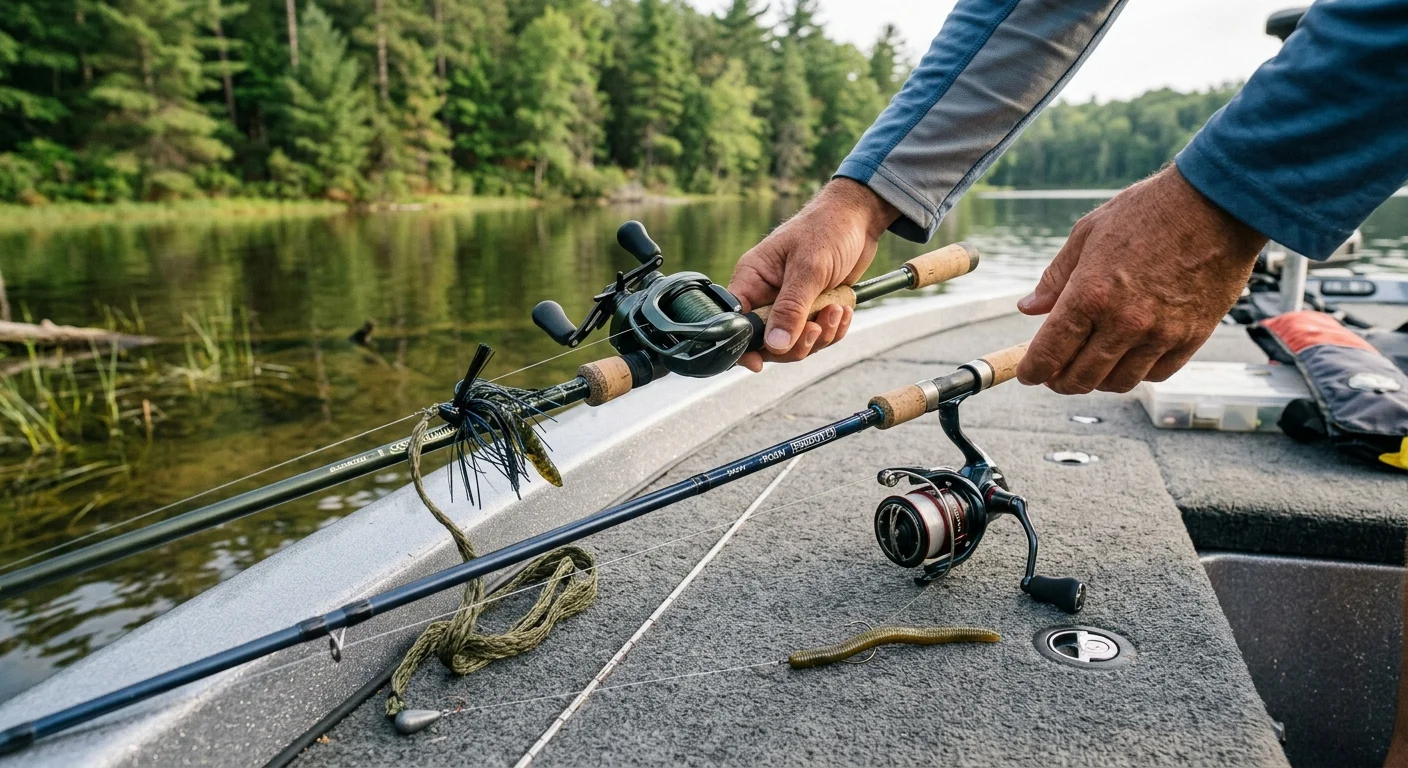
The best setup isn't the one with the most five-star reviews. It's the one that disappears in your hands while you stay locked on the water.
Here's what this guide keeps coming back to: baitcasting rigs own heavy cover and precision casting. Spinning setups handle finesse and lightweight lures. Neither one wins every situation. The anglers who pull bass know this. Most of them run both.
Start where you are right now.
Still fighting baitcasting reel backlash ? Build your confidence on a spinning rod first. That's not a step backward — it's a smart starting point. Once you've got the basics down, a baitcaster opens up techniques and targets that a spinning rod can't reach.
Your next move? Match your gear to your most common fishing scenario. Not your most ambitious one — your most common one.
Because the right bass fishing gear setup doesn't make you look like a serious angler. It makes you become one.Choosing a trusted sun protection fishing gear supplier makes it easier to deliver products that match anglers' real-world needs.