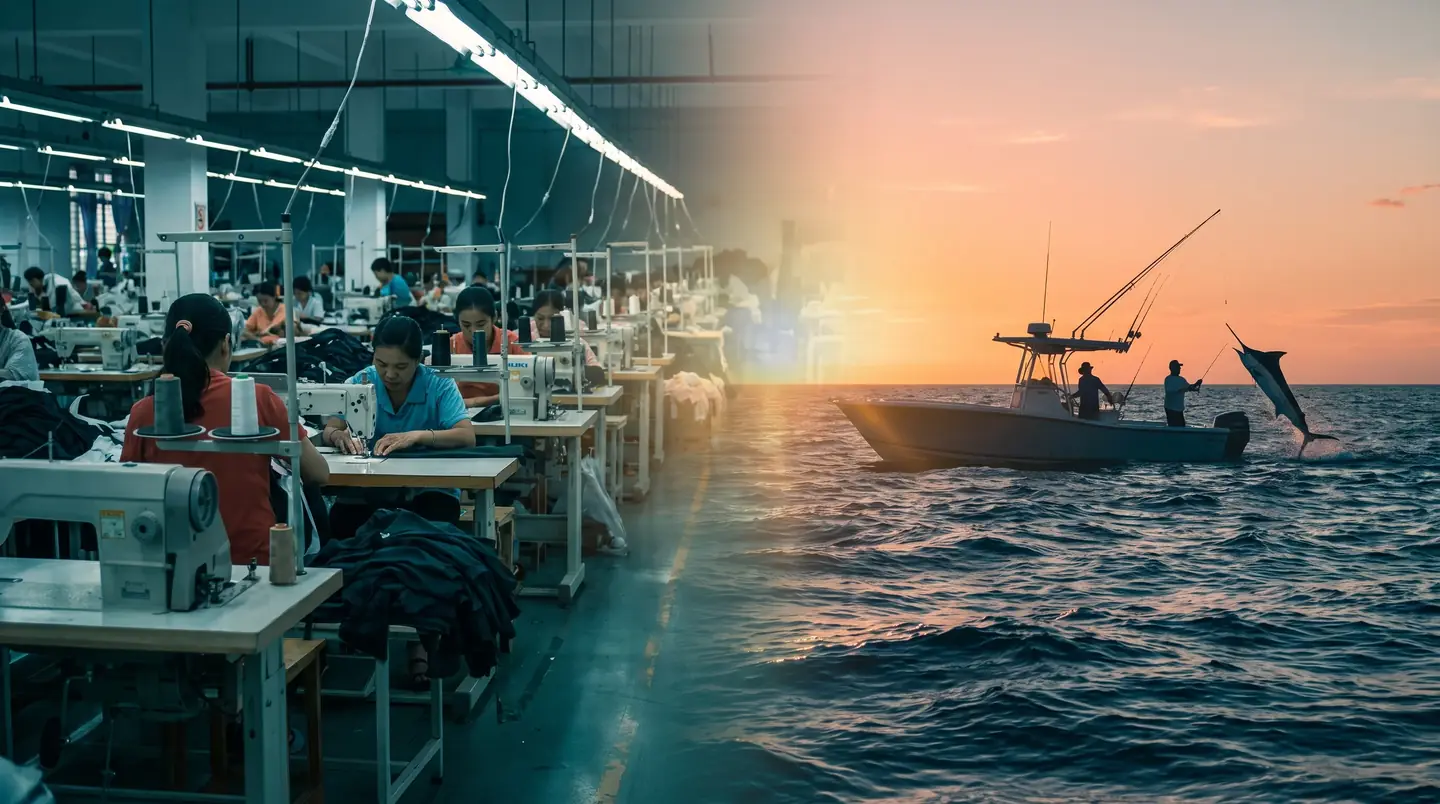
Tournament & Team Kit
Custom Fishing Jerseys for Tournament Teams and Their Sponsors
- MOQ 100 pcs per design
- Samples from 1 piece
- Since 2009 factory
- Shipping to Australia, the US & Europe
Two things are usually fixed before anyone asks a factory for a price: the date of the first event, and a sponsor agreement that already says which mark goes where and in whose colour. Custom fishing jerseys are the part in between — sponsor artwork, a schedule built backwards from your date, one base design across a circuit, roster data, and what the order minimum means for a multi-team purchase. As a fishing tournament team apparel manufacturer we take the sponsor requirement as the specification, not as a decoration added at the end.
Send your sponsor layout and rosterFabric behaviour, sun protection and quick-dry performance are covered on custom fishing shirts; everything on this page is about acceptance, artwork and dates.
Sponsor Artwork
Sponsor Fishing Jersey Layout: From the Agreement to the Panel
A sponsor layout is a set of obligations, not a design preference. This mark on the chest at this size, that one on the sleeve, the title sponsor never smaller than the ones below it, each colour matched to the sponsor's own brand guideline. When a jersey misses one of those, the problem is not that it looks wrong. It is that somebody has to explain it to the sponsor, usually in the week of the event, when nothing can be remade.
So the layout is the thing we work from first, before fabric, cut or packaging is settled.
Select a lettered zone — chest, shoulder or back panel — to read the placement rule for it.
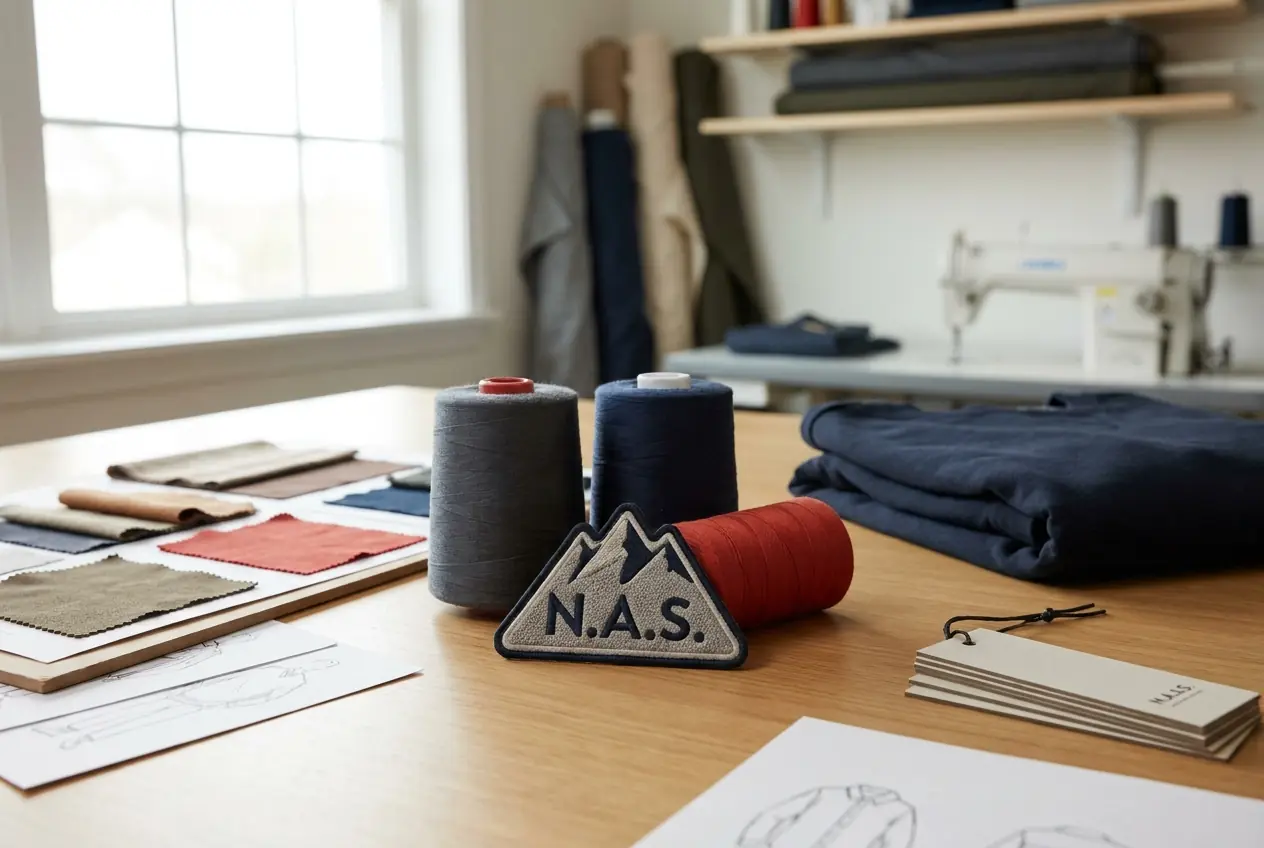
Placement zones and tiers. Chest, shoulder, sleeve and back panel are treated as defined zones, and marks are assigned to them by the four tiers your agreements are already written in: title or presenting sponsor, co-sponsors, supporting sponsors, and the manufacturer mark. You get a placement drawing showing every mark in its zone at its relative size. That drawing is what your sponsors sign off on, which means the approval happens on paper rather than on a finished garment.
Colour matched to the sponsor's guideline. The reference is the sponsor's own brand standard, not the nearest colour that prints easily. Deep, saturated tones are the ones that shift most between a screen, a proof and a finished panel, so those are proofed on the actual fabric before the run rather than checked after it.
Full-coverage artwork. Print coverage is not restricted to a panel or a patch area, so a large sponsor block can run across a seam, over a sleeve, or down to the hem. A sponsor buying a whole front does not end up with a small rectangle on a chest.
Seam matching. Where artwork crosses a joint between panels, the pattern is aligned across the seam. A logo that lands on a seam stays readable instead of stepping half a letter out of line.
Which marks a given circuit permits, and how sponsor tiers are normally written into an agreement, are covered in our guide to tournament jersey sponsor logo placement rules. This section is the production side of it: what we need from you, and what comes back for signature.
Sponsor layout ready?From Your Event Date
Working Backwards From Your Event Date
You do not have a lead time to plan around. You have a date that cannot move. So the plan is built in reverse, from the morning the team has to be in kit back to the day you send the first message, and each node below is a point where the plan either holds or slips, almost always on an input somebody is waiting for.
- The kit is in hand. We deliver. You confirm where: the venue, the team's base, or a distributor's warehouse.
- It ships. We finish and pack. You tell us whether it is packed by team or as one consignment, because that decision is made at packing, not at delivery.
- Bulk runs. We produce to the approved design and the locked roster. You do nothing here, which is why the nodes above it matter.
- The roster locks. You send the final list. How late a change can still reach the main run, and what happens to anything that arrives after that, is one of the terms to settle when the schedule is set.
- The sample is approved. We build to the signed placement drawing. You check it and, where a sponsor is involved, get their sign-off.
- The placement drawing is signed off. We draw every mark in its zone at its relative size. You supply the sponsor requirements and each sponsor's brand colour reference.
- You give us the date. Everything above is counted back from it, along with the number of teams and the total pieces.
The node that slips is rarely production. It is the sponsor sign-off, because it depends on somebody who does not work for you and does not share your deadline. Bringing the sponsor requirement into the first message is what buys that time back.
Dated milestones for your own programme come with the quote, worked back from the date you give us.
The date is where all of it startsOne Base, Every Team
Tournament Fishing Jerseys: One Base Design Across Every Team in the Event
Twelve boats at the ramp on the first morning. From the bank the fishing team uniforms read as one event. Up close every team is unmistakably itself, with its own colours and its own sponsor block.
That is not a styling decision made late. It is a production decision made early: one base pattern, one set of placement zones, one size set, with colour and sponsor artwork treated as variables on top of it. Ordered the other way, as a dozen separate jobs, the teams come back with a dozen fits and a dozen interpretations of the same brief, and the event loses the one visual thing it owns.
Working this way also gives an organiser something to hand a new team mid-season: the base design already exists, so a team joining late gets a colourway rather than a development project.
Multi-team kit for a tournament or a circuit is work this factory has done -- one base design supplied across every team at an event, for buyers that have included the event itself, a sponsor funding several squads, and an agent placing for a region. What we hold ourselves to once an order of that shape is placed is set out under what we commit to on a team kit order. What varies between events is the number of teams and how much of the design each team controls, so that is the first thing worth settling.
If the purchase is the event's rather than one team's, settle this before anything else, because it also decides how the order is counted at the minimum.
Same pattern, same placement zones — colour and sponsor artwork are the variables. Hover or tab through a colourway to trace it back to the base.
Names, Numbers, Roster
Team Fishing Jerseys: Names, Numbers and a Roster That Is Still Moving
On a team order almost nothing is uniform except the design. Jersey number and name customization is the base case here rather than an extra: every garment carries a different name, a different number and a different size, and the list they come from is usually still changing while the order is being placed. That is normal, and it is handled as data rather than as a series of exceptions.
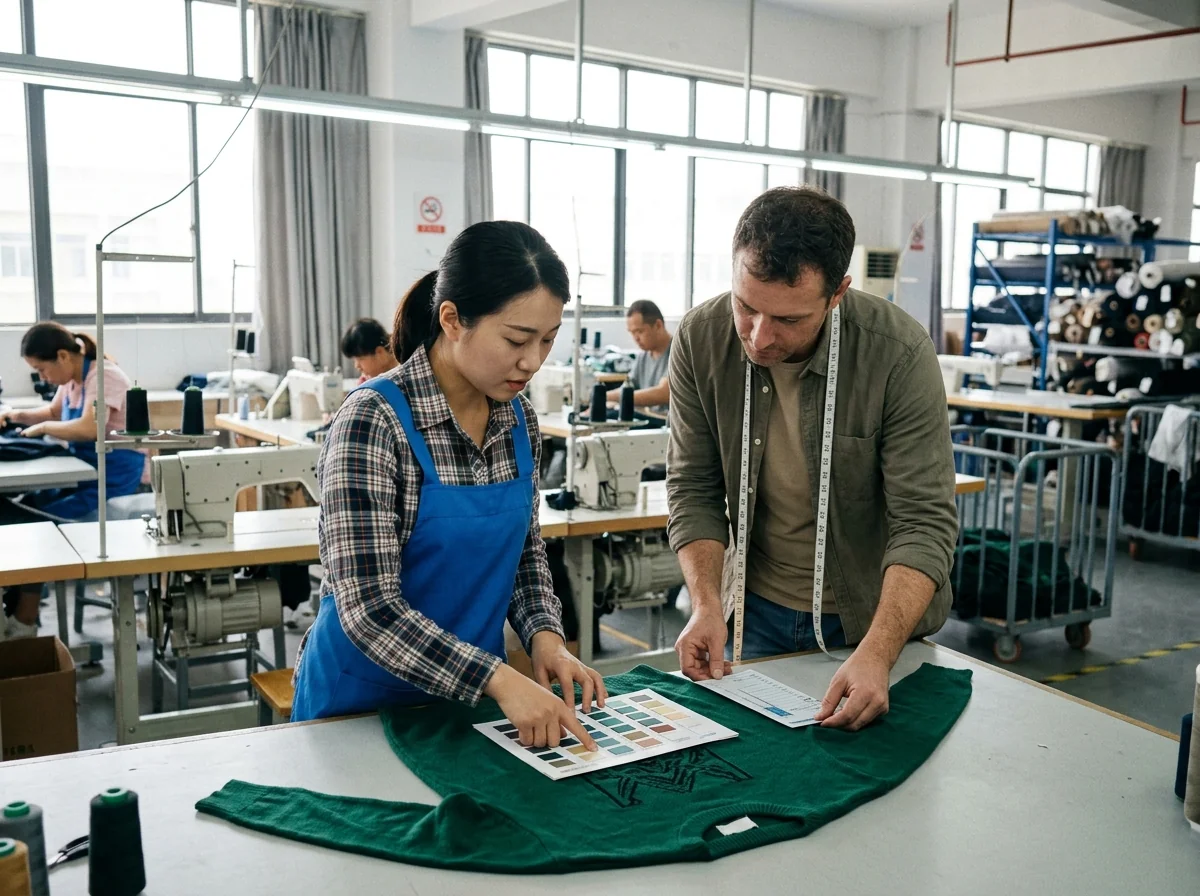
Names
A misspelling is a scrapped garment, not a corrected one, so the roster you send is the authority and it is used exactly as written. Send it as a list, not inside the body of an email thread.
Numbers
Numbers travel with the name on the same row, so a duplicate or a gap is caught while it is still a spreadsheet problem rather than on the morning of the event.
A roster that changes
Entries close later than orders do. The schedule carries a point at which the roster locks; changes before it are part of the run, and changes after it belong to the next batch. Knowing where that point sits is more useful than being told changes are always welcome.
Size run
The mix is built from your actual list, not from an average distribution. Collecting sizes from people spread across several cities is its own problem, and we wrote it up separately in the team roster sizing guide.
Spares
A jersey torn on day two of a three-day event is only a problem if no spare exists. Spares are counted in with the order rather than chased afterwards, so decide the number while the roster is being finalised.
One bass tournament team fished a full season in kit built this way and came back with a larger reorder ahead of the following season -- the kind of result the roster-as-data approach is meant to hold up to, past the first order.
Roster ready?Order Minimums
Order Minimums for a Multi-Team Purchase
The first question most team buyers ask is whether they are big enough to order at all, so it is answered here rather than left to a quote.
Whether a purchase spread across several teams clears that minimum depends on how many designs the event actually runs, which is a different answer for a circuit sharing one base design than for a dozen teams each wanting their own. So it is assessed per project rather than by a rule printed on a page: send the number of teams and the number of designs and it can be answered directly.
If you are one squad of ten and the numbers do not reach it yet, the route that works is a sample first, then joining the purchase your circuit or your regional kit supplier is already placing. That is a real path, and it is the honest answer rather than a promise we would have to walk back.
Mid-Season Changes
Sponsor Changes and Replacement Pieces After the Kit Is Made
A sponsor leaves at the halfway point of the season and the replacement arrives with its own guideline. An angler joins in August. One jersey is torn at an event and the team fishes the rest of it a garment short.
None of that is unusual, and all of it turns expensive when the original order was treated as a one-off. The design has to be rebuilt, the layout re-approved, the sizes re-collected, and the team spends the back half of the season in kit that no longer matches its own agreement.
What keeps it from turning expensive is settled at the start, not discovered halfway through.
- File retention. Whether the approved artwork, the placement drawing, the size set and the roster are held for your programme after the run.
- Raising a swap. Whether a sponsor change can be raised against the existing design instead of being opened as fresh development.
- Top-up quantity. What quantity a run made after the main one would need.
- Cost. What any of that costs.
Put them on the table at quote stage and they are agreed in writing while nothing is urgent. Teams that leave them until a sponsor actually walks are negotiating from the worst possible position.
If a mid-season change looks likely for your season, say so in the first message and these get answered as part of the quote.
What We Commit To
What We Commit To on a Team Kit Order
This is not a capability list. It is what a team kit order binds us to, written so you can hold it against what turns up in the box.
You approve a sample before anything runs, and it is built to the drawing you signed. Not a swatch, not a similar garment from another job — the sample carries your marks, in your zones, at the relative sizes the drawing gives them. That holds whether the order is a bass tournament jersey run for one squad or kit for every team at an event.
The drawing you signed and the roster you locked are the specification. Not our reading of your brief, and not a detail we quietly improve on. What we produce is measured against those two documents, and they are the reference any question about the finished kit is settled from.
Your roster is produced as written. Names are printed as you spelled them, and a number travels with the name on the row it arrived on. Where a row cannot be read — a number used twice, a size left blank — it comes back to you as a question instead of being closed by our best guess.
Anything your sponsor agreement governs stays your decision. Which mark sits in which zone, at what relative size, against which brand colour reference: those come from you and they are not ours to interpret. Where your instruction does not cover something, we ask before it is made, rather than choosing and telling you afterwards.
Anything not on that list is not a commitment we have made. Re-prints, single replacement pieces and what a later run would need are settled inside your project — sponsor changes and replacement pieces explains why they belong there — and they are deliberately not promised on this page.
Ask for these in writing with your quoteSend Your Sponsor Layout and Roster
Send Your Sponsor Layout and Roster
Three things shape the answer more than anything else: the date of your first event, how many teams the purchase covers, and what your sponsor agreement requires. Send those and the reply is priced against your programme instead of against an assumption.
Message placeholder: event date, number of teams, total pieces, sponsor requirements (which marks go where), and whether you want a sample first.
Prefer to message directly?
WhatsApp: +86 177 0272 7677
Email: [email protected]