You've stared at that product label long enough — 10K, 20K, maybe even 30K stamped next to some waterproof membrane buzzword you half-recognize from last year's gear review. Then you're standing in the rain at 6 AM, soaked thighs, fish on the line — and none of those numbers mean a thing.
Here's what most gear guides skip: a higher fishing pants waterproof rating doesn't equal better protection for your specific fishing style . It means higher pressure resistance.
That's a different thing, and it changes how you shop — especially when comparing options from different fishing rain gear manufacturers.
So what do these numbers mean for real fishing conditions? This breakdown cuts through the lab specs. It takes each hydrostatic head rating and puts it in plain English — matched to the conditions you fish in, whether that's a full day of bank fishing in a light drizzle or getting soaked on a kayak in open water.
Decoding the Hydrostatic Head Rating: What Does 10K vs 20K Waterproof Mean?
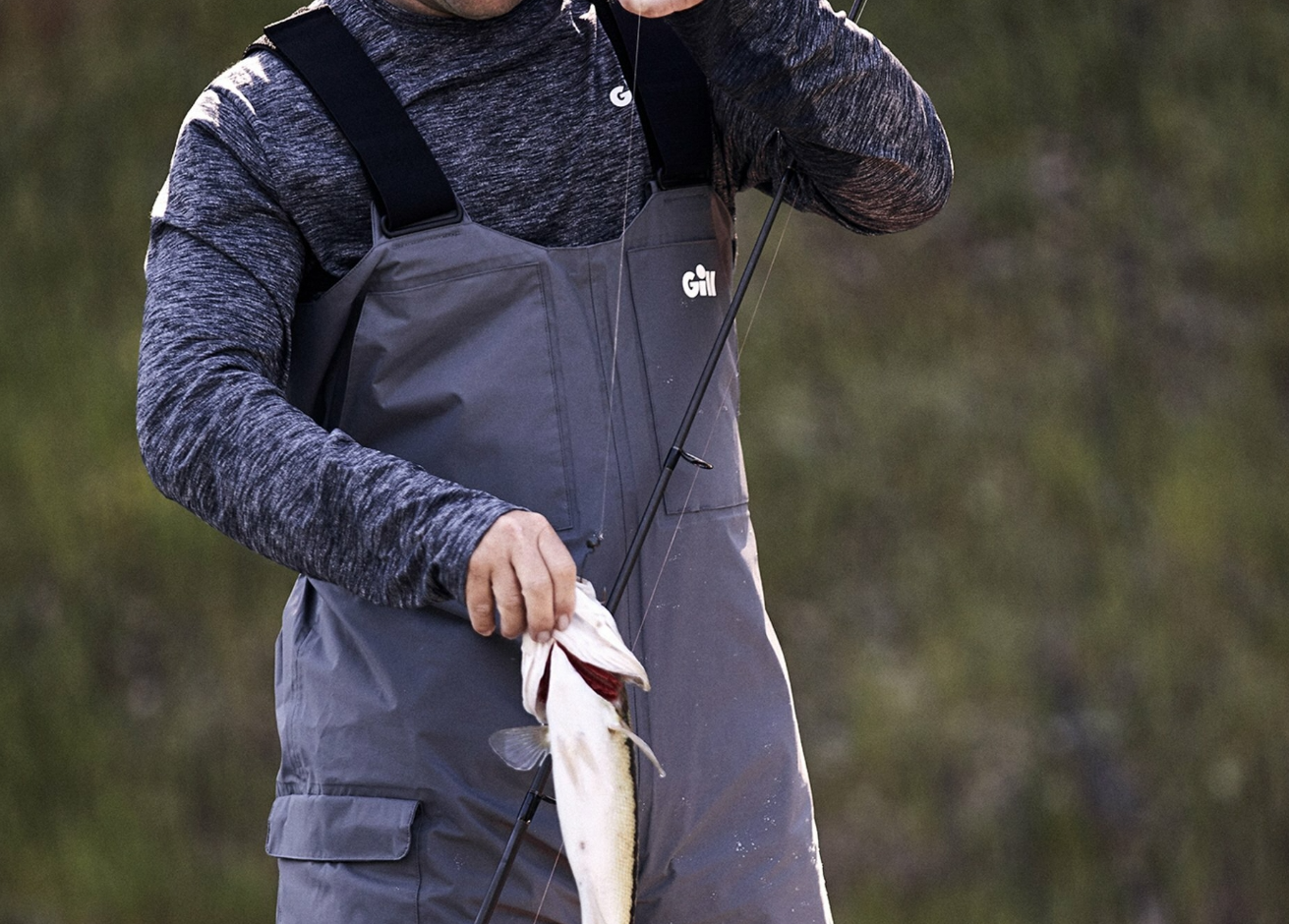
The number stamped on your fishing pants isn't a quality score. It's a pressure measurement. Understand that distinction, and the whole rating system makes sense.Many experienced buyers sourcing from custom fishing rain gear suppliers now compare hydrostatic ratings alongside seam construction before placing bulk orders.
Hydrostatic head (HH) rating measures how tall a water column the fabric can hold back before the first drop seeps through. 10K means 10,000mm — a 33-foot column pressing down on one spot. 20K doubles that resistance to 20 meters of sustained pressure.
Here's what the spec sheet skips: that test is static. A controlled lab tube. No wind, no movement, no seam stress. Real fishing conditions don't work that way. Wind-driven rain hits differently. Kneeling on a wet bank adds direct body pressure. Sitting in a kayak cockpit for four hours creates constant contact pressure. A still water column doesn't capture any of that. So field performance runs 20–30% below the rated number due to these real-world factors.
The gap between 10K and 20K looks dramatic on paper. In practice, it's narrower — but still matters in the right situations.
The Practical Breakdown by Rating Tier
Here's how each tier performs on the water, not in a lab:
Rating | What It Handles | Where It Falls Short |
|---|---|---|
< 10K | Light drizzle, brief showers | Fails in sustained rain — fabric saturates |
10K | Moderate rain, wet conditions for a few hours | High-pressure zones (knees, seat) start seeping in long downpours |
15K | Heavy rain, wind-driven rain, full-day wet weather | Struggles under extreme submersion pressure or long kneeling on soaked ground |
20K+ | Prolonged storms, kayak spray, sustained contact with wet surfaces | Overkill for casual bank fishing — you're paying for protection you rarely need |
The 10K threshold is where "water-resistant" ends and real waterproofing begins. Below it, you get a jacket that shrugs off a sprinkle — nothing more. At 10K, you have a solid barrier for most fishing situations. At 20K, you get real protection for high-pressure zones — the spots where body weight or sustained contact forces water through the fabric.
Where Pressure Builds Most on a Fishing Trip
Most anglers don't stop to think about where their pants face the most stress. The rating matters most at these contact points:
Knees — kneeling to net fish, crouching on a wet bank, or pushing through shoreline brush
Seat — sitting on a kayak deck or wet boat cushion for hours at a stretch
Inner thighs — constant friction and movement in wading or active wade-fishing situations
A 10K pant handles a standing angler in a rainstorm without trouble. Kneel in wet grass for five minutes, or sit on a soaked kayak seat for half a day — that sustained pressure starts pushing water through at 10K levels. That's the moment 20K earns its price premium.
So, is 20K better than 10K? It depends on whether your fishing style creates sustained fabric pressure. Most bank anglers fishing a few hours in the rain do fine with 10K. Kayak anglers and serious wade fishermen spending full days in wet conditions — 20K is the smarter baseline. Not because the rain falls harder, but because the contact pressure is higher .
30-Second Scenario Match: Finding the Best Waterproof Rating for Fishing
Stop overthinking the number. Your fishing style already tells you what rating you need — you just haven't matched it yet.For brands developing seasonal collections through OEM/ODM fishing rain gear services, matching waterproof tiers to actual fishing scenarios helps reduce product returns and sizing complaints.
Use this table as your decision shortcut. Find your primary fishing scenario. Confirm your typical weather exposure. You'll have your minimum waterproof rating in one pass.
Fishing Scenario | Typical Conditions | Minimum Rating | Why That Threshold |
|---|---|---|---|
Shore / Bank Casting | Light drizzle, intermittent rain, standing position | 10K | No sustained contact pressure — rain falls, doesn't press |
Boat Fishing | Spray, splashing, seated for hours on damp surfaces | 15K | Seat contact pressure builds over time; 10K starts seeping after hour two |
Kayak Fishing | Cockpit spray, paddle drip, prolonged wet seat contact | 20K | Constant pressure at seat and thighs — the spot where 10K breaks down fast |
River Wading / Wade Fishing | Current pressure, deep splashing, frequent kneeling | 20K | Moving water pushes directly and steadily — this is the toughest use case |
Rainy Day All-Species | Moderate to heavy rain, mixed movement and sitting | 15K | Covers most multi-hour sessions without paying for kayak-level specs |
How to Read This Table for Your Situation
A few practical filters before you lock in a rating:
Fish from the bank 90% of the time? 10K covers your whole season. You're standing and moving. There's little sustained contact pressure between your body and wet surfaces. Stepping up to 20K means paying for protection you don't need.
Split time between bank and boat? Build toward 15K. That middle tier handles both situations. You skip the steep price jump that comes with premium membranes.
Kayak fishing or river wading is your main style? 20K isn't a luxury — it's the starting point. Your body stays in contact with wet surfaces the whole time. That's a job 10K wasn't built for.
One more thing worth noting: the rating tells half the story. A 20K pant with a worn-out DWR coating and open seams will perform worse than a well-kept 10K pant with taped construction. The number puts you in the right range — but build quality and seam sealing decide whether it holds up once the rain starts.
Beyond the Number: Why Breathability MVTR, Taped Seams, and DWR Coatings Dictate Real-World Performance
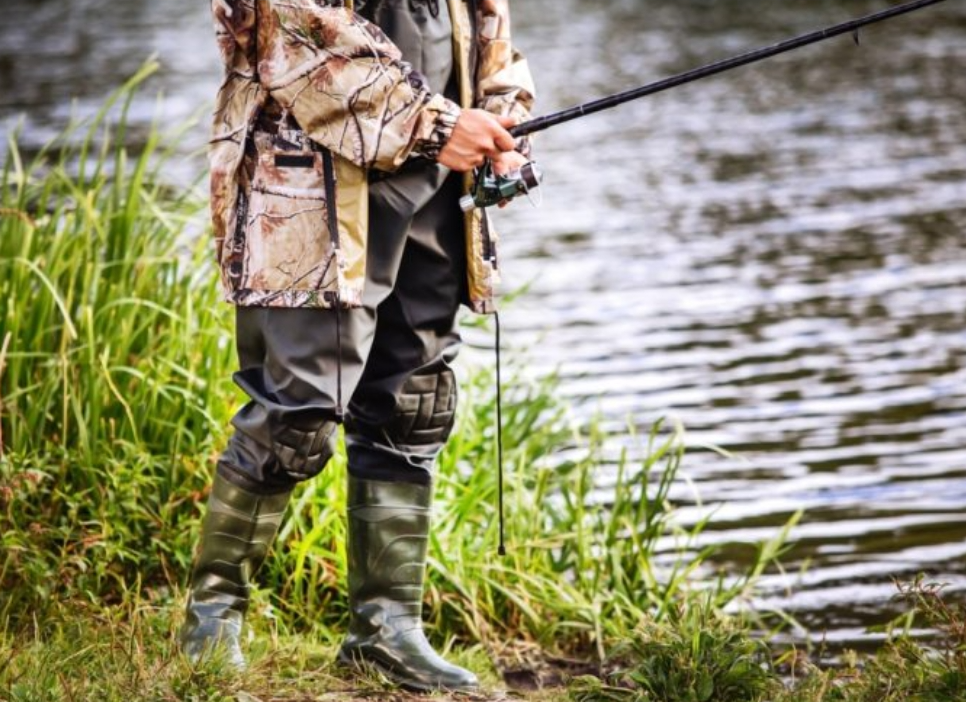
Two anglers. Same 20K pants. One stays comfortable through a six-hour downpour. The other is clammy, damp, and miserable by hour three — and the rain never even got through the fabric.
The difference wasn't the waterproof rating. It was everything the label didn't mention.That's why many premium private label fishing rain gear programs focus heavily on MVTR performance, seam taping quality, and long-term DWR durability instead of only advertising higher waterproof numbers.
Match your fishing style to the right rating tier, and the number stops being the main variable. Three other factors take over. These are what separate gear that holds up through a full season from gear that just looks good in a product photo.
Breathability MVTR: The Number That Prevents the Sweat-Trap
MVTR (Moisture Vapor Transmission Rate) measures how well a fabric moves sweat vapor from your skin to the outside air. It's rated in grams per square meter per 24 hours — and most anglers have never checked it once.
Here's why that's a problem. A high waterproof rating without a matching MVTR score creates a moisture trap. Water can't get in — but sweat vapor can't get out either. The result is that clammy, soaked-from-the-inside feeling that has nothing to do with the rain.
For fishing, the stakes break down like this:
Shore casting or slow-moving bank fishing : Low exertion. A modest MVTR of 10,000–15,000 g/m²/24h handles most sessions without issue.
Active wade fishing or kayak paddling : Your body generates real heat out there. You need 20,000+ MVTR to keep vapor moving. Without it, you'll cook inside a waterproof shell.
Cold-weather fishing with heavy layering : Vapor buildup is fastest with more layers on. Higher MVTR matters more in the cold, not less.
One technical point worth knowing: breathability drops hard when the face fabric gets saturated . The outer layer soaks through — most often because DWR has worn off — and vapor transmission can fall 40–60%. At that point, your premium membrane performs closer to a basic PU-coated shell. A dry face fabric isn't just cosmetic. It's what keeps the breathability system running at all.
Taped Seams: The Failure Point Nobody Checks at the Store
Every needle puncture in a sewn seam is a potential leak path. Stitching threads create tiny capillary channels. Water wicks straight through the fabric and bypasses the membrane. That's where seam sealed fishing gear earns its value — and where unsealed construction fails first.
There are three seam construction types worth knowing:
Critically taped seams : High-stress zones only get sealed — shoulders and main seams. Fine for light rain, not for a sustained downpour.
Fully taped seams : Every seam is sealed. This is the standard for any pants rated above 10K that you plan to fish hard in.
Welded/bonded seams : No stitching at all. Found on premium wading and offshore gear. Top-level protection, highest cost.
Do a quick check before buying. Look behind logos and along the interior leg seams. Tape shows up as a thin strip running along every stitched line. No tape visible — or tape only at the waistband — means critically taped construction at best.
Seam tape also breaks down over time. UV exposure, saltwater, and repeated washing all wear down the adhesion. Inspect your seams each season. Keep a seam repair kit in your gear bag. A $12 fix saves you a $200 replacement.
DWR Coating: The Invisible Layer You're Likely Neglecting
DWR (Durable Water Repellent) is the finish on the face fabric — the outer surface of your pants. It makes water bead up and roll off instead of soaking in. Without it, the face fabric saturates, breathability collapses, and your 20K membrane fights a losing battle the whole session.
DWR wears down through normal use. Dirt, body oils, sweat, UV exposure, saltwater, and abrasion all eat through it faster than most anglers expect. The coating fresh from the waterproof fishing pants factory isn't what you have after a full summer on the water.
Restoring DWR is simple — most anglers just skip it:
Wash with a technical cleaner like Nikwax Tech Wash. No fabric softener, no standard detergent — both destroy DWR.
Tumble dry on low heat. Heat reactivates the existing DWR chemistry.
Beading still not coming back? Apply a spray-on or wash-in DWR treatment.
Do this once or twice a season. It takes twenty minutes. It adds real life to any waterproof fishing pant.
Here's the bottom line before you finalize your gear decision: the waterproof rating gets you in the right range, but MVTR, seam construction, and DWR condition decide whether the pants actually work on the water . A 15K pant with fully taped seams and a fresh DWR treatment beats a neglected 20K pant in most real fishing conditions. Chase the full system — not just the headline number.
10K vs 20K Fishing Pants: Cost & Pressure Benchmarks
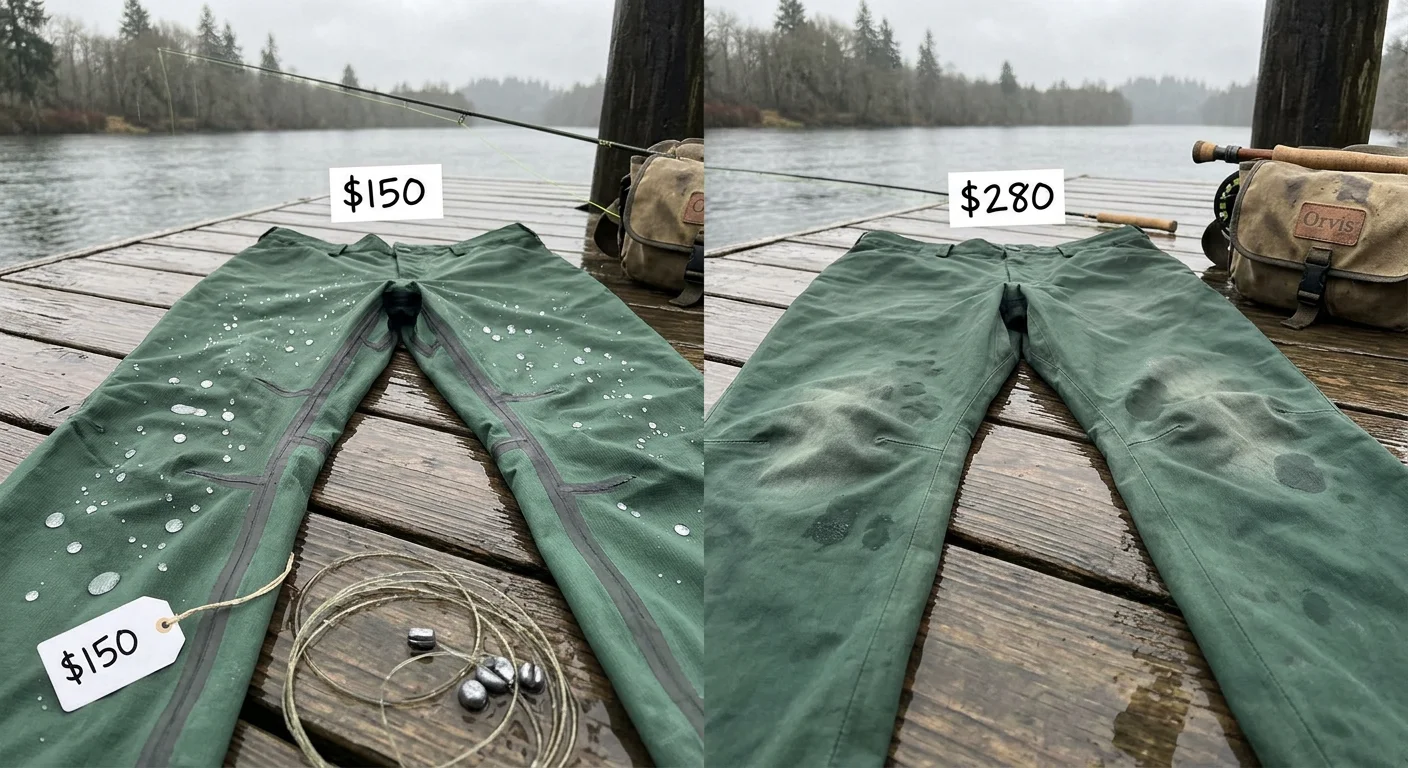
Most anglers overspend on waterproofing they'll never need. Others underspend by about $40 and regret it every rainy session.
The real question isn't how hard it rains or how long you're outside. It's one thing: how much sustained physical pressure your pants absorb on a typical trip . That's it. Pressure.
Here's the physics in plain terms. Sitting on a wet kayak deck puts about 5,000mm of contact pressure on your fabric. Kneeling on a soaked riverbank pushes that to 10,000–15,000mm. Fast-moving current spray? That hits 15,000mm and above. This is the actual stress your pants face — not a lab test, not a hangtag rating. Your fishing style decides which side of that pressure curve you land on.
The Pressure Threshold: Where 10K Holds and Where It Breaks
A 10K pant handles a standing angler in moderate rain with margin to spare. Normal rainfall impact puts about 2,000–3,000mm of pressure on the fabric. At 10K rated resistance, you get a 3× safety buffer while you're upright and moving. That's solid, real-world protection.
The margin shrinks fast the moment your body makes sustained contact with a wet surface. Here's how the numbers break down:
Standing in rain (bank casting) : ~2,000–3,000mm pressure. 10K holds with no problem.
Sitting on a wet boat seat : ~5,000mm. 10K still works, but the buffer is getting thin.
Kneeling to land a fish on a wet bank : ~10,000–15,000mm. You're at or past 10K's actual limit.
Wading in current with spray : 15,000mm+. This is where 10K stops being waterproof. It becomes wishful thinking.
Kneeling is the honest dividing line. Your fishing rarely involves sustained kneeling, wading, or cockpit-style contact? 10K does the job. Those scenarios sound like your average Tuesday on the water? 20K isn't a luxury upgrade. It's the minimum spec.
The Cost Reality: What You're Paying For
The price jump from 10K to 20K isn't random. It reflects real construction differences. Higher-rated fabrics use denser face material, thicker membrane layers, and stronger seam taping. That's labor and material cost — not marketing spin.Buyers working with a reliable fishing rain gear wholesaler often notice that durability improvements matter more over multiple seasons than chasing the absolute highest waterproof rating.
Here's what the numbers look like:
1.10K fishing pants : Starting point under $120–$150 for solid construction
2.15K–20K fishing pants : Budget $180–$280 for quality mid-tier options
3.Premium 20K+ (Gore-Tex, etc.) : $300 and above
That 30–60% price bump buys you two things beyond raw waterproofing: durability and longevity . Higher-denier construction stands up to abrasion from brush, rocks, and rough boat surfaces. A quality 20K pant holds its protection through 4–5 seasons of regular use. A 10K pant under the same stress starts showing seam wear and membrane fatigue after 2–3 seasons.
The cost-benefit breakdown is simple:
Fish easy — mostly bank or dock, moderate rain — 10K saves you $60–$100 with no performance penalty
Fish hard, kayak or wade often, multi-hour wet sessions — 20K pays for itself in durability within two seasons
Tight budget but fish mixed conditions — a 10K pant with taped seams and a solid DWR treatment beats a cheap 20K pant with open seams. Every time.
The Honest Decision Rule
Your worst-case session is standing in rain for three hours? 10K is the right call. You're not creating the pressure that makes 20K worth the extra cost. Put the savings toward a better base layer instead.
Your worst-case session involves a kayak cockpit, hip-deep wading, or kneeling in wet terrain for long stretches? Stop looking at 10K options. The pressure load at that level makes 20K the starting point — not a splurge.
One number to anchor this: 15,000mm is the practical crossover point . Your fishing style pushes contact pressure above that? The upgrade is justified on pure performance. Below it, 10K covers you.
The rating gets you to the right shelf in the store. What you do on the water tells you which shelf to stop at.
Conclusion
Here's the bottom line: a higher waterproof rating doesn't make you a smarter buyer. Matching the right rating to your fishing reality does.
Bank fishing in light drizzle or occasional spray? 10K waterproof pants keep you dry without draining your wallet. Kayak fishing, heavy downpours, or kneeling on wet ground for hours — that's where 20K earns its price. The number on the label tells only part of the story. Taped seams, MVTR breathability, and DWR coating durability are the hidden factors. Those are what separate pants that perform from pants that just promise .
Before your next gear purchase, go back to that scenario match table. Pick your fishing style. Pick your weather. Then buy the minimum rating that covers it — not the maximum your budget allows.Many commercial buyers sourcing at fishing rain gear wholesale price levels now prioritize real-use durability over headline waterproof specs alone.
Dry legs don't require the most expensive gear. They just require the right gear.