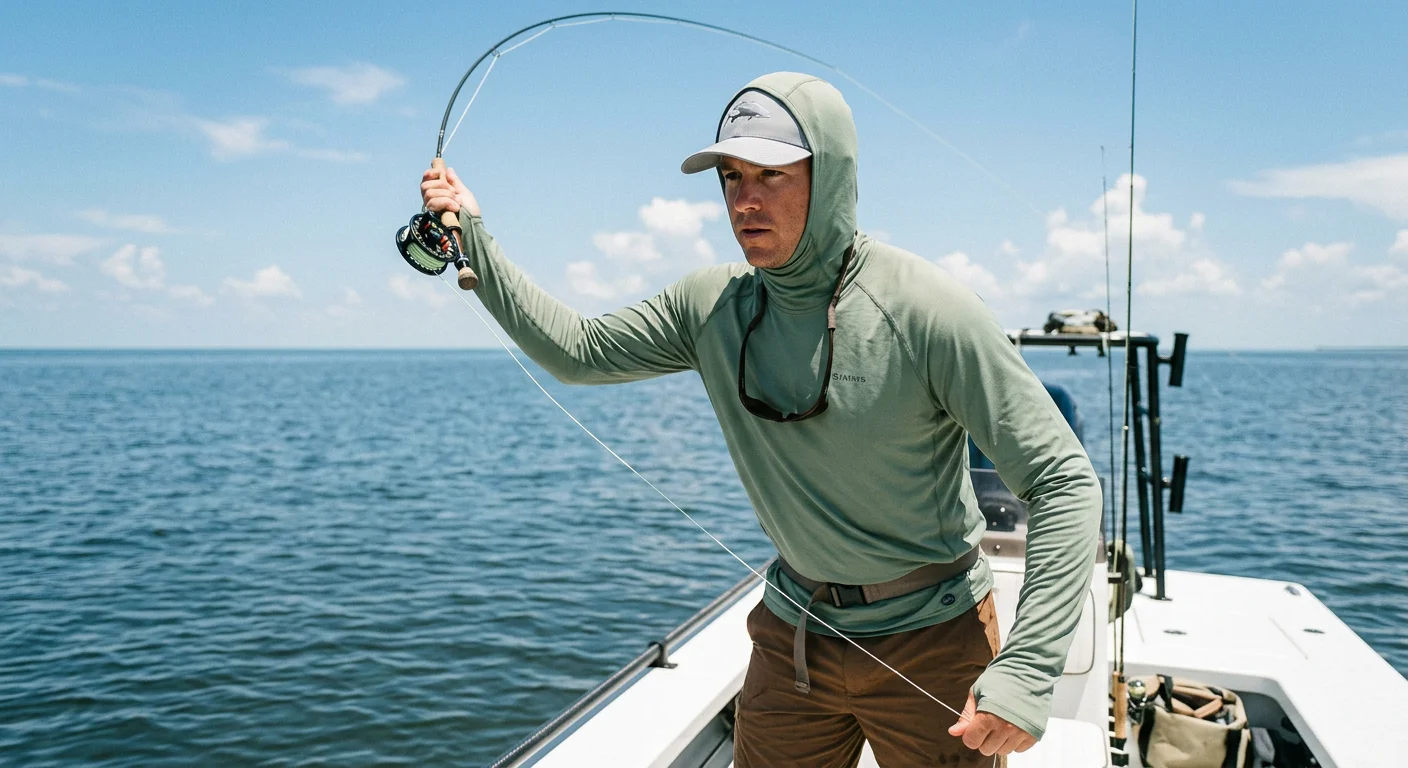
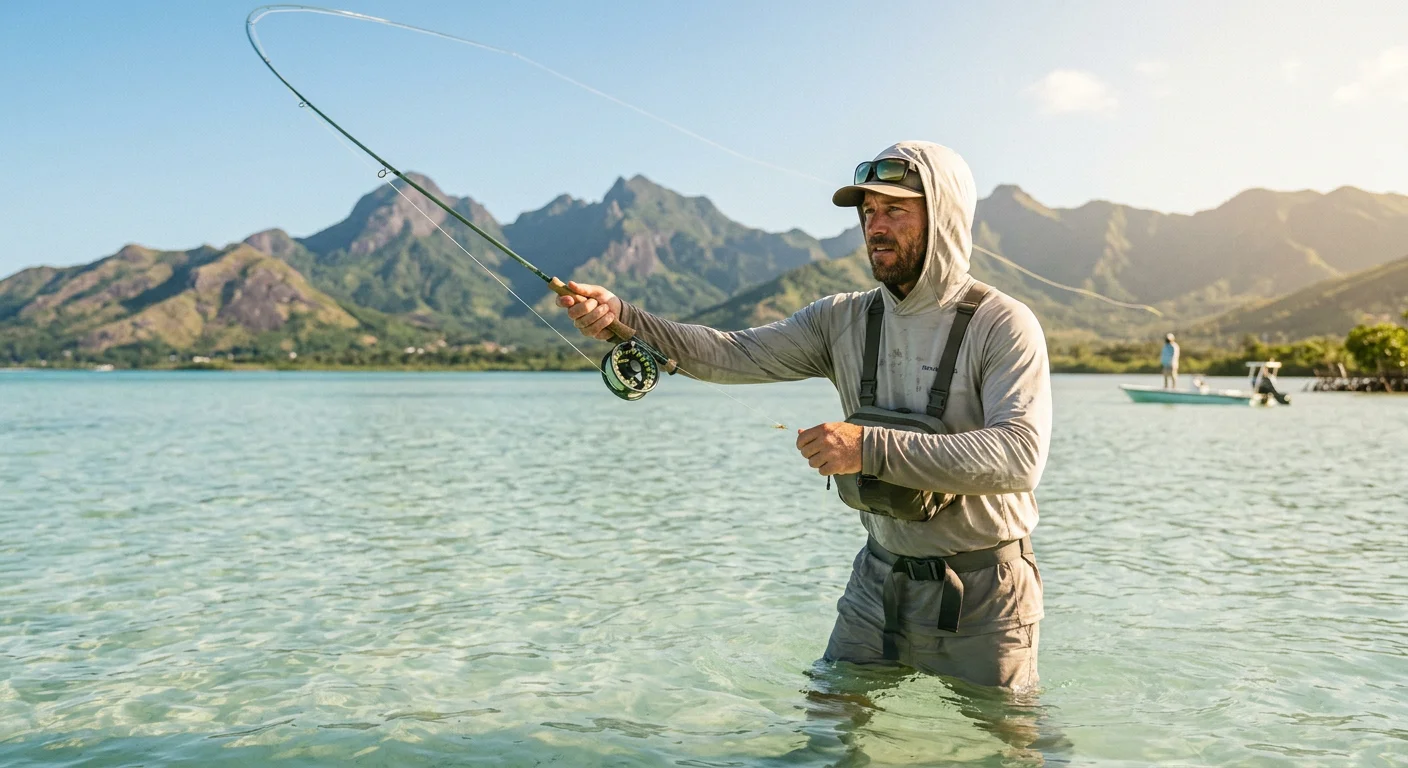
Getting the Simms wader size chart right the first time isn't about luck. It's about knowing which numbers matter and in what order.For anglers comparing custom Simms waders options, accurate sizing becomes even more important before ordering specialized fits or layered builds.
Most people stare at four columns of measurements, pick the one closest to their waist, and hope for the best. Then they're standing in a river with a chest panel cutting into their shoulders — or excess neoprene bunching around their ankles — with no idea where things went wrong.
Here's the thing: Simms sizes on its own scale. It doesn't match Orvis. It doesn't match Patagonia. And it almost certainly doesn't match whatever you're wearing right now.
So before you add anything to your cart, you need a clear, repeatable process:
Measure your body the right way
Read the chart in the correct priority order
Account for your base layers before you commit
That's what this guide walks you through — step by step.
Execute Precision Body Measurements for Wader Sizing
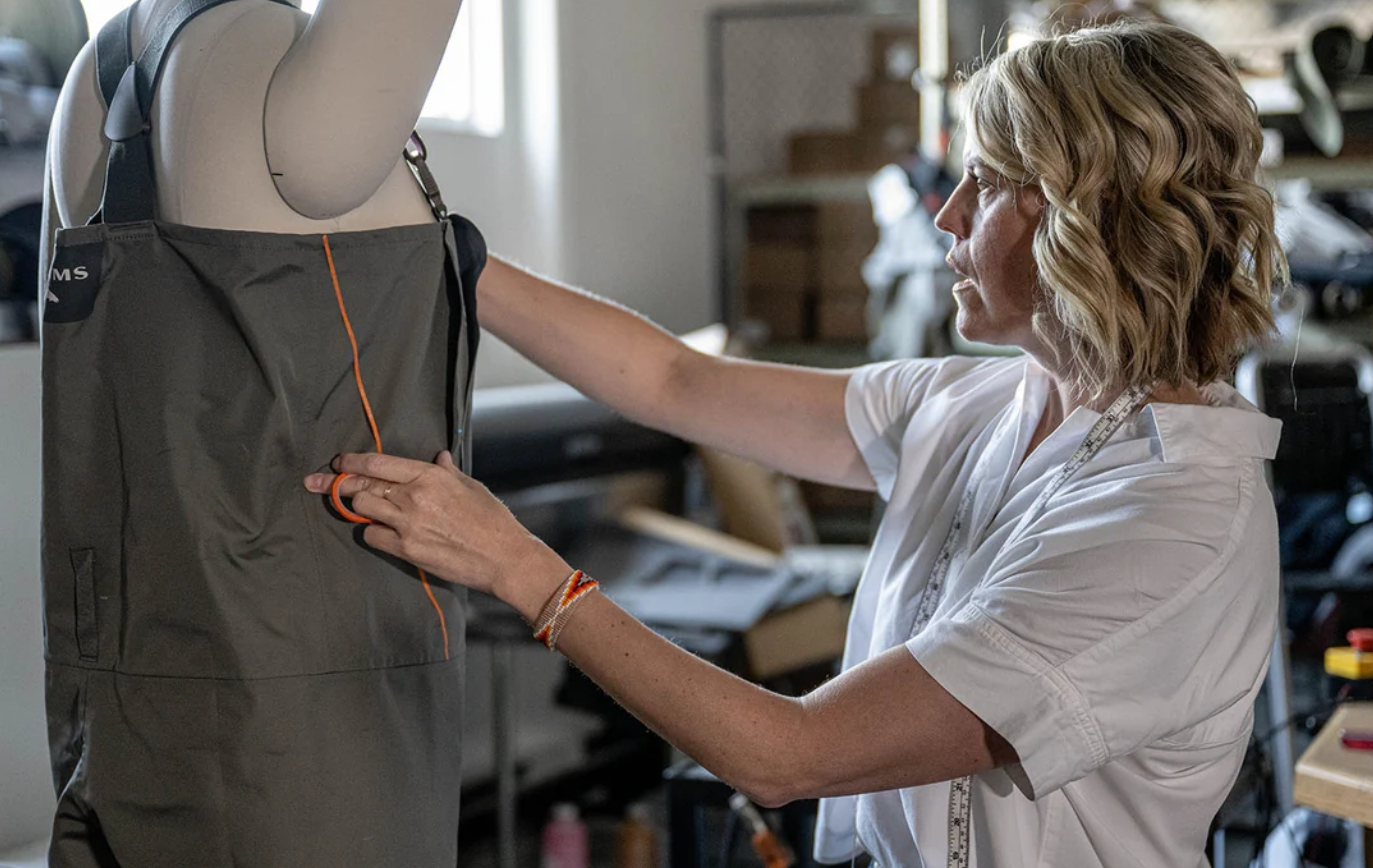
Four measurements. That's all that stands between you and a wader that fits — or one that ruins a full day on the water.
The problem isn't the Simms size chart itself. It's that most people bring the wrong numbers to it. Many Simms waders manufacturers design around precise body proportions, so inaccurate measurements immediately create fit problems on the water.They pull from a clothing label, guess at their hip measurement, or skip the inseam because it seems optional. None of those shortcuts work here.
Here's the exact protocol to get numbers you can trust.
What You Need Before You Start
Strip it down to basics:
A flexible tailor's tape (cloth or vinyl). No rigid measuring tape. Have string instead? Measure the string with a ruler after.
A hard, flat floor surface. Soft carpet adds up to 0.5" of error in your inseam.
Light base layer only — thin shirt, light bottoms. No jeans. No hoodie. No fleece vest. Fish cold weather and plan to layer? Add one thin insulating layer before measuring. That's it.
Stand relaxed. Feet shoulder-width apart. Eyes forward. Don't flex, don't puff, don't suck anything in.
The Four Measurements That Drive Every Decision
1. Chest — Your Primary Number
Wrap the tape around the fullest part of your chest. Go just under your armpits and straight across your shoulder blades. Arms down. Shoulders relaxed. Breathe at a natural pace and read the tape at the end of a gentle exhale — not a full inhale. A 40" chest reads at different numbers between peak inhale and natural rest. Simms sizes to the natural rest position.
2. Waist — Locate It Right
This isn't your belt line. Your natural waist sits about one inch above your navel. That's the spot where your torso creases when you bend sideways. Wrap the tape there, parallel to the floor, with your abdomen relaxed. Record to the nearest quarter inch.
3. Hips — Don't Skimp Here
Find the widest point of your glutes — about 8–9 inches below your natural waist. Wrap the tape there and keep it level. It tends to drift down toward the thighs, so watch for that. This measurement is the deciding factor for simms king size waders and all women's fits.
4. Identify Your Largest Girth
Compare chest, waist, and hips. Whichever is biggest? That's your controlling number. Size down from it and you risk binding. Simms prioritizes this number in its chart logic, so you should too.
Inseam: The Measurement Most People Get Wrong
Your jeans inseam is not your body inseam. Denim labels run 1–2 inches shorter than your actual leg. Using that number for simms wader inseam measurement is one of the most common reasons waders pull in the crotch during a high step over rocks.
Here's how to measure it right:
Stand against a wall, barefoot, feet shoulder-width, weight even.
Find the point where your inner leg seams would intersect — the crotch seam intersection.
Place the zero end of your tape there and run it straight down the inside of your leg to the floor.
Do this twice. Average the two readings.
A common result is around 33". Here's the conversion most guides skip: wader inseam runs 2–3 inches longer than your body inseam. That extra length lets you do a full squat, a high rock step, and seated movement without pulling. So a 30" denim inseam → ~31–32" body inseam → look for a wader listing 33–34" in the Simms chart.
Fish in thick underlayers or high-waist base pants? Add another 1–2" buffer. The simms wader layering room question isn't just about chest. Your inseam needs that extra space too.
Boot and Stocking Foot Size
For simms stockingfoot wader sizing, start with your current US shoe size. Half size? Round up to the next full size. Then add one more size for your wading boot. Neoprene booties plus thick fishing socks compress your fit in ways your street shoes never do.
Don't size down the stocking foot to tighten the fit. Toe pressure during a long streamside walk turns into numbness fast. Go for a heel-and-midfoot snug fit with enough room at the toe for your intended sock thickness. That's your number.
Decode Simms Size Chart Data Priority Rules
Four columns of numbers. Most people treat them like a multiple-choice test where any answer might be right. That's the wrong mental model.
Simms built its size chart around a strict hierarchy. There's a first number, a second number, and a third number — and the order matters. Break that sequence and you'll end up in the wrong wader. Follow it and you'll land in the right one nearly every time.
Here's the sequence.
Priority #1: Largest Girth — This Is Your Anchor
Forget the column labeled "waist." Don't default to your chest measurement out of habit. Simms defines the primary measurement as your largest girth — the biggest number across your chest, waist, and hips.
That's your anchor. Most OEM/ODM Simms-style waders follow this same fit hierarchy because chest and hip mobility directly affect long-hour comfort while wading.Everything else adjusts around it.
The men's girth bands run like this:
Size | Girth Range |
|---|---|
S | 35"–36" |
M | 39"–40" |
L | 43"–44" |
XL | 47"–48" |
XXL | 51"–52" |
3XL | 55"–56" |
4XL | 59"–60" |
Find your girth band first. Do not downsize your girth to fix an inseam problem. That logic runs backward. It's how fishermen end up with a chest panel that restricts their casting stroke by noon.
Priority #2: Inseam — Pick Your Length Variant
Once you're locked into a girth band, choose your inseam variant. Simms uses three:
Short (S suffix — MS, LS, XLS, etc.): 29"–32"
Regular (no suffix — M, L, XL, etc.): 33"–36"
Long (L suffix — ML, LL, XLL, etc.): 35"–38"
The suffix doesn't change your girth. It shifts only the leg length. An MS and an M share the same 39"–40" girth band. The difference is the MS runs about 3–4 inches shorter in the inseam.
Women's charts follow the same logic. Simms labels the long variant "Tall" rather than an "L" suffix. Different label, same function.
Practical example: Your largest girth is 39.5". Your body inseam is 30.5". That's a clear answer — MS . Medium girth band, Short inseam variant. No guessing needed.
Priority #3: Stockingfoot — Adjust the Boot, Not the Wader
Stockingfoot sizing is the last variable. It's also the most forgiving one. Neoprene stretches. A half-size difference doesn't mean you need to switch wader sizes.
Simms charts pair stockingfoot ranges with size bands like this:
S: shoe size 7–8
M: shoe size 9–11
L: shoe size 9–11 or 12–13 (model-dependent)
XL / XXL and above: shoe size 12–13
Your shoe size sits at the edge — say, 8.5 or 11.5? Don't change your wader size. Adjust your wading boot selection instead. Simms recommends sizing boots between your street shoe size and one full size up. Half size? Go up.
The neoprene stocking foot handles minor size differences far better than a torso squeezed into a girth band that's too small. Your foot size falls outside the available range for your size — men's US 5, or US 15+? You're looking at a different model. That likely means a simms boot foot wader setup or a different fit series.
When the Numbers Conflict: Tie-Breaker Rules
This is where most people stall. Here are four specific conflict scenarios, resolved:
Conflict 1: Girth says M, inseam says Short
→ MS. Anchor girth first, then use the suffix to correct leg length.
Conflict 2: Girth is 42.5" — sitting between M (39"–40") and L (43"–44")
→ Bias up. A 42.5" measurement at the high edge of M puts you at the seam stress limit before you've added a single layer. Go L — or LL if your inseam is 35"–36".
Conflict 3: Girth is 44" (solid L), inseam is 34.5" — right between L and LL
→ Choose by fishing style. Lots of wading, rock-hopping, or crouching? Take the LL for that extra range of motion. Mostly boat or wade-in-place fishing? The L works fine.
Conflict 4: Your largest girth is 41"–42" but your height is average
→ This is the simms king size waders scenario. The K suffix — MK, LK, MKS, etc. — adds about 2–3" of girth within the same inseam range. An MK runs 41"–42" girth with a 33"–34" inseam. You carry a bigger chest, belly, or powerlifter frame at a standard leg length? King sizing is built for that body. Don't force a standard L when an MK fits the actual build.
The three-level hierarchy — girth first, inseam second, stockingfoot last — is the full decision tree. Use that order with the numbers you've already measured. The simms waders size chart stops being a puzzle and becomes a simple lookup table.
Cross-Check Model Variations & Borderline Fit Decisions
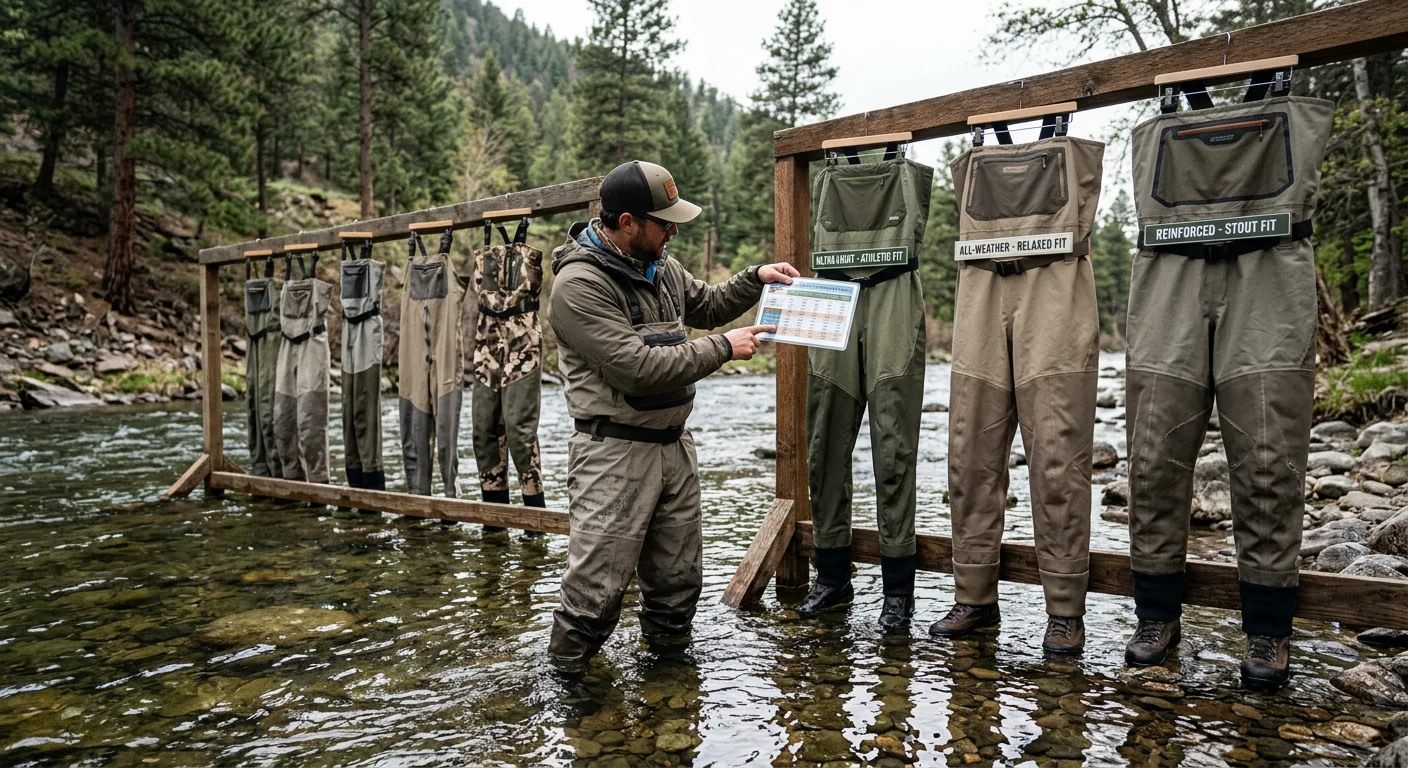
Two Simms models can look identical on a size chart and fit in completely different ways on your body.Experienced Simms wader suppliers often recommend comparing fit geometry between product lines before choosing a final size.That's not a flaw in the chart — it's a design reality you need to work around.
Lock in your girth band and inseam variant first. Then check whether the specific model you're buying follows that same sizing logic. It might not.
How Simms Wader Fits Vary Across Product Lines
Simms builds different wader lines for different use cases. The fit geometry shifts with the price point and intended purpose.
Here's a quick breakdown:
Model | Fit Style | Notes |
|---|---|---|
G4 Pro / G4Z | Athletic, trim through torso and thighs | Size up between sizes or plan to layer |
G3 Guide | Standard fit — Simms' reference cut | Closest match to the size chart as published |
Freestone | Relaxed through the seat and thighs | Can size true; more forgiving on borderline measurements |
Tributary | Generous, roomy cut | Chart shows borderline? Size down |
The G3 Guide is Simms' neutral baseline. Read the chart right, and your G3 numbers will match your real-world fit better than any other model in the lineup. Start there as your reference point.
The G4 Pro runs trimmer — through the upper thigh and seat in particular. Your hip measurement is your controlling girth number, so buying a G4 means you need at least a half-size buffer. A borderline L becomes a firm L, not an experimental M.
The Freestone and Tributary lines run roomier. Both are built for anglers who want comfort over a close fit. Dead center in a size band on the chart? Both models will fit fine. At the low end of a band? Drop down one step.
Borderline Fit Decisions: Four Scenarios Resolved
You're between M and L (girth sits at 41"–42")
The G3 Guide has room at 41" in a standard L. The G4 Pro does not. Buying G4? Take the L. Going with a Freestone or Tributary? A well-layered M might still work — but your hip measurement needs to be under 41" for that to hold.
You wear *simms wader layering room in winter — thick midlayer, base pants, heavy socks*
Add one full size to your warm-weather measurement. That goes for your girth and your inseam. Heavy base layers cut your usable inseam by 1–1.5". A regular-inseam wader at bare-skin length turns into a short-inseam wader the moment you pull on fleece-lined bottoms.
You're purchasing *simms stockingfoot wader sizing in a Tributary or Freestone*
The stocking foot on budget-tier models runs a bit narrower in the toe box compared to the G3/G4 line. Wide foot or thick neoprene socks? Size the stocking foot up one step. Do that no matter what your overall wader size is.
You've worn a competitor brand (Orvis, Patagonia) and know your size there
Don't carry that number over. Simms' medium sits closer to a true athletic medium — less room in the torso than Orvis, and trimmer than Patagonia's Swiftcurrent line. An Orvis L is often a Simms L or XL depending on build. Re-measure. Don't guess from memory.
The 1-Size Buffer Rule for Winter Builds
Cold-weather fishing changes the whole equation. Here's a simple decision rule:
Spring/Summer/Fall (minimal layers): Size to your measured girth band, true to chart.
Winter (fleece base + midlayer): Go up one full girth size and confirm your inseam variant handles the extra bulk at the crotch. Most winter anglers on a 5'10" frame in a heavy kit end up in an LS or LR — the same anglers who wear an M all summer.
Check whether Simms' simms wader return policy covers free returns through your purchase channel — most authorized dealers do. Use that as your safety net. Order two borderline sizes. Try both with your actual fishing layers, standing and squatting. Return the one that doesn't work. Simms built that policy knowing how the chart reads to first-time buyers. Use it as a tool, not a last resort.
Calculate Layering Room for Base Layers & Winter Fishing
Winter fishing breaks the size chart. This is also why many private lable fishing waders designed for cold-water anglers include extra layering allowance in the torso and inseam.Not because Simms got the numbers wrong — but because you're no longer the same body you measured in August.
Add a heavyweight merino base, a thick fleece midlayer, and insulated bib pants before stepping into your waders. You've just added real girth to every measurement that matters. Skip that math and you'll spend a cold morning fighting fabric that used to move with you.
Here's how to calculate what you need.
The Layering Multiplier: A Faster Way to Get the Right Number
Start from your bare measurements. Then use a multiplier based on your layer stack:
Light synthetic or merino base (150–180 g/m²): Multiply your largest bare girth by ×1.02 . In most Simms "fishing cut" models, this difference is negligible — size true to chart.
Mid-weight base + light fleece midlayer (200–260 g/m²): Multiply by ×1.04–1.05 . Your bare girth sits in the upper half of a size band? Move up one full tier. In the middle of the band? You can hold.
Heavy thermal base + thick fleece + insulated bib (deep winter, northern rivers): Multiply by ×1.07–1.09 . This almost always pushes you one full girth tier up — M becomes L, L becomes XL.
A worked example: bare chest 101 cm, winter layered with heavy kit. 101 × 1.08 = ~109 cm. The G3 Guide Men's L Regular runs 107–112 cm in the chest band. That's your size. The summer M that fits clean over a t-shirt won't work in February.
King Sizing as a Layering Tool
You don't have to jump a full nominal size if a King (K) variant covers your layered girth. The MK adds 8–10 cm of chest and hip room over a standard M. The inseam length stays the same. Your layered girth lands in that added range but your height still fits Medium? MK is the cleaner solution. You keep the inseam fit without going full L.
Don't Forget the Inseam
Girth gets all the attention, but simms wader layering room applies to leg length too. Heavy base pants and fleece-lined bottoms eat 1–1.5 inches of functional inseam from a regular-length wader. The wader that cleared your ankle in July will bind at mid-calf in December.
Your warm-weather size is a Regular inseam? Go Long for winter builds. That one step — Regular to Long — gets back the leg movement you'd lose to bulk.
Stockingfoot Sizing Under Heavy Socks
The neoprene stocking foot size Simms uses runs 3.5–4 mm. Under boot pressure and water immersion, count on about 10% compression — so 4 mm drops to around 3.6 mm of working thickness. That compression won't save you from an over-tight boot.
Build your sock system first, then size the boot:
Sock Combination | Added Thickness |
|---|---|
Thin liner only | 0.5–1 mm |
Medium wool sock | 1.5–2 mm |
Liner + heavy wool | 2.5–3.5 mm |
The rule: stand in your full sock stack inside the neoprene bootie and check for at least 6 mm (¼ inch) of toe clearance . Most anglers running 4 mm neoprene plus a liner plus medium wool need +1 full US shoe size over their street shoe. Add a heavy wool sock — ice fishing, late-season steelhead — and that jumps to +1.5 to +2 US sizes .
For simms boot foot wader setups, size torso and boot as two separate decisions. Never bump up a full girth tier just to reach a larger boot. The torso follows your layered girth multiplier. The boot follows your foot-plus-sock stack. Keep those two choices apart.
The Winter Sizing Checklist
Before finalizing your order for cold-weather use:
Measure bare girth (chest, waist, hip — take the largest)
Identify your layer stack: light / mid / heavy
Use the multiplier: ×1.02 / ×1.04–1.05 / ×1.07–1.09
Match adjusted girth to the chart — pick the first size whose spec meets or beats that number; choose K/Full over jumping two nominal sizes
Check whether Regular inseam still covers you with layers on — if not, go Long
Size your boot with the full sock system on, confirming ¼" toe clearance while standing
That's the full layering equation. One multiplier, one number, checked against the chart in the right order.
Real-World Fit Case Studies & Pre-Purchase Verification
Three body types. Three different sizing outcomes. Here's what the chart produces when you run real measurements through it.
Case 1: 41" Chest, Athletic Build
Chest: 41" | Waist: 36" | Hips: 40" | Inseam: 32"
Largest girth: 41" (chest drives the decision)
That 41" chest sits right at the top of the M band and the bottom of the MK. One inch is doing a lot of work here. Which way you go depends on the model.
Buying a G4 Pro? Go MK . The G4's trimmer athletic cut through the seat and thighs puts real stress on the chest panel of a standard M by mid-morning. The MK adds torso room without changing the inseam — you stay at Regular length, which is correct for 32".
Buying a Freestone? Go M . The Freestone's relaxed hip and thigh design handles that 41" girth without issue. Going up to MK adds bulk through the midsection and causes bunching under the wading belt. Not worth it.
Verification check: Do a full squat and take a high step. No crotch-seam tension? You're in the right size. Can you pinch about 1" of fabric at the chest with a light midlayer on? Good — that's your working ease.
Case 2: 46" Waist, Longer Inseam
Chest: 44" | Waist: 46" | Hips: 45" | Inseam: 34"
Largest girth: 46" (waist drives the decision)
This is a classic belly-first fit. The LK covers parts of this girth range on paper. But a 46" waist puts too much stress on the belly seam as you bend forward — more so with base layers on. Don't talk yourself into an LK.
The right answer is XLL (XL Long) where available. The XL girth band handles the 46" waist. The Long inseam handles the 34" leg. Both problems solved in one size code.
Cold-season fishing? XLL is the only real option. Simms builds around 2–3" of ease at largest girth into its winter sizing standard. An XL Regular burns through most of that ease at the waist alone. The Long variant keeps your leg mobility intact when you're in a full layering kit.
Verification check: Sit down and lean forward. Waistband or suspenders pressing into your stomach? You're undersized at the girth. Also simulate netting a fish — there should be no sharp pull across the lower back or belly seam.
Case 3: 38" Girth, Unusually Long Legs
Largest girth: 38" | Inseam: 34"
The mismatch build — slim frame, long stride
This is where first-time buyers go wrong. The girth says S. The inseam says Long. Those two signals don't exist in the same size code. Going smaller on the girth to "get a better fit" costs you full range of motion on every step over a slick rock.
The answer is ML (Medium Long) . A 38" girth fits well inside the M band with 2–3" of working ease to spare. The Long inseam matches the 34" leg. It also removes the crotch tension that makes deep wading a grind.
MS? Skip it. The short inseam pulls at the seat and opens a boot-to-leg gap in any high-step move.
Verification check: Step up onto a 10–12" platform and check the seat. Drop from tip-toes to flat-footed. The lower-leg fabric should stay loose across the back of the calf — no snapping tight.
Pre-Purchase Verification Checklist
Run through this before you finalize the order. Clear every box and your odds of a correct first-try fit go above 90%.
Largest girth confirmed — measured chest, waist, and hips; the largest number is your fit driver
Girth lands inside a band — not at the ceiling of a size; if it is, size up
Inseam category matched — Short (28–30"), Regular (30–32"), Long (33–35"); go longer for deep wading or bank climbing
Stockingfoot range checked — your street shoe size sits inside (not at the edge of) the listed range; thick socks or wide feet mean moving up one foot size
Model cut accounted for — G3/G4 Pro for athletic builds, Freestone/Tributary for comfort-priority or belly-first frames
Layering scenario confirmed — warm season: size near mid-band; cold season with heavy layers: size so your layered girth hits mid-band or lower, not the ceiling
Return policy verified — check your dealer's exchange window (30–60 days is standard, new condition, original tags and box required); try the waders indoors on a clean floor first so they stay returnable
That last point matters. The Simms wader return policy isn't fine print — it's a core part of the sizing process for anyone buying online without a fitting room. Order your two most probable sizes. Try both with your actual fishing layers. Send back the one that doesn't work. The checklist gets you to 90%. The return window takes care of the rest.
Conclusion
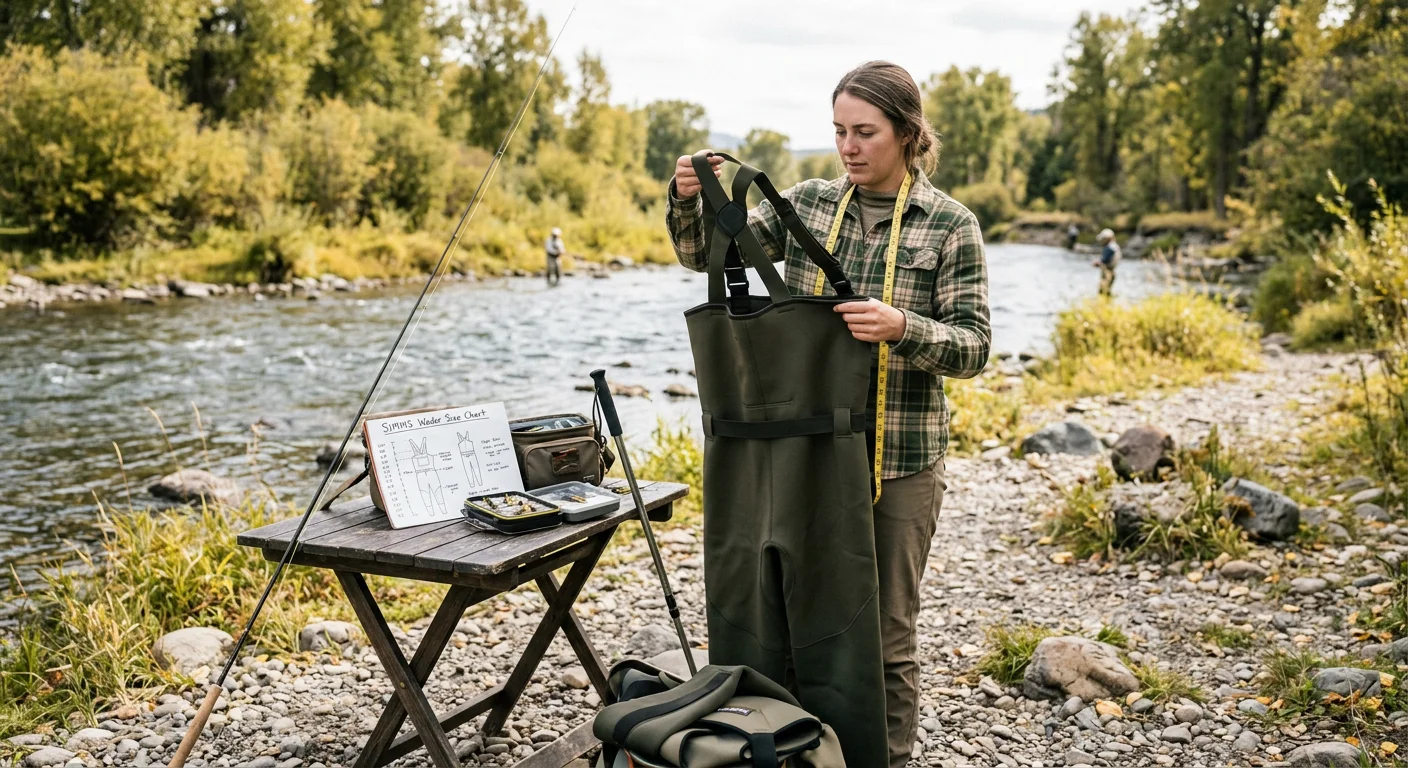
You've done the hard part. Fitting Simms waders isn't guesswork — it's a sequence . Take your measurements. Prioritize chest over waist when the numbers disagree. Account for your layering setup before locking in a size.
Here's what most people skip before their first Simms purchase: the chart works as well as the measurements you bring to it. Nothing more. Grab a soft tape, spend five minutes, and use the case studies in this guide. That's all it takes to go from "pretty sure this is right" to real confidence.
Before adding anything to your cart, pull up the Simms wader size chart one more time — this time with your numbers written down. Between sizes on the simms wader inseam measurement ? Go longer. You can layer up on the water. You can't add inches to a hem that's already too short.
Get the fit right once. Fish more. Return nothing.Before comparing Simms waders wholesale price across retailers or distributors, make sure your measurements and layering setup are fully dialed in first.