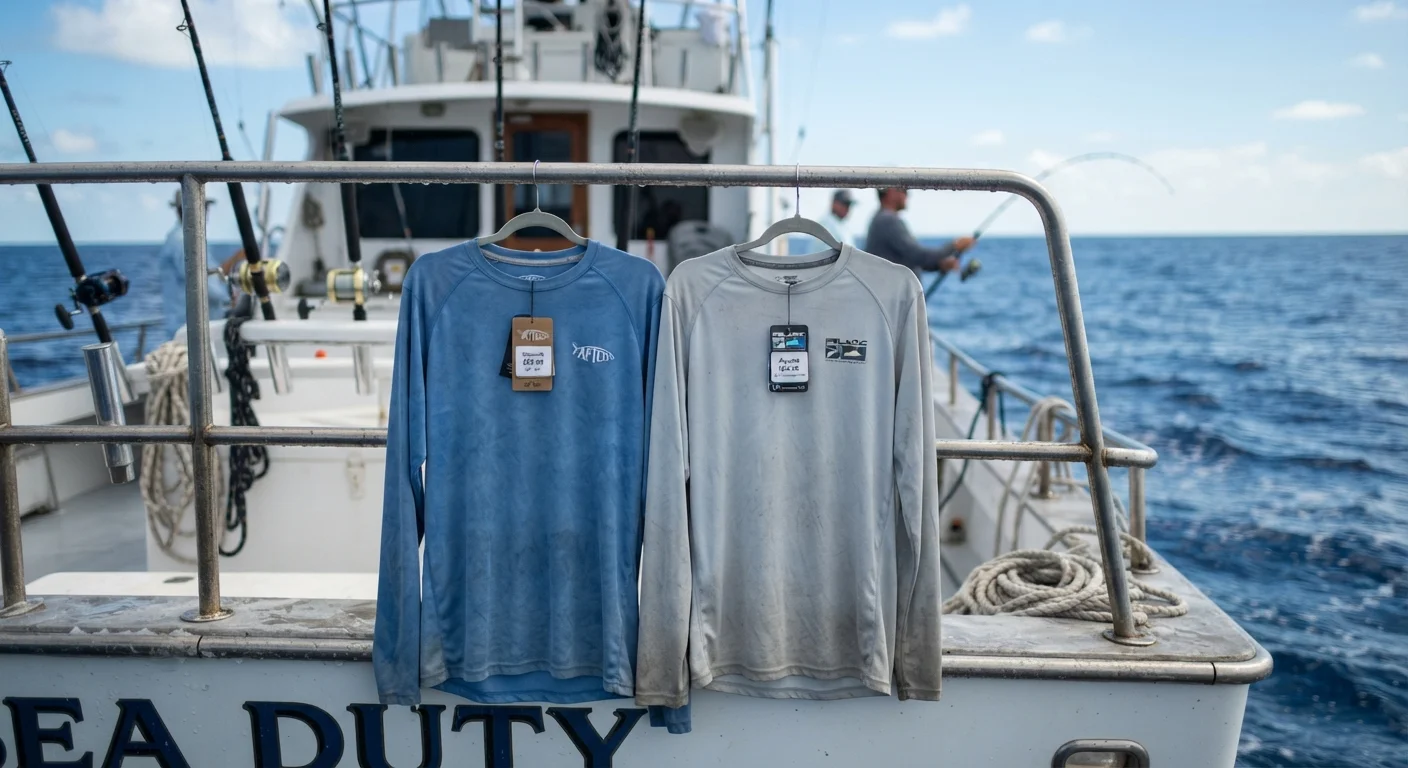
Six hours into a bass tournament with the sun sitting directly overhead, your shirt either works for you or against you. There's no middle ground.
That's the exact scenario my team and I put both HUK and Pelagic through across three real tournaments, from a sweltering offshore trolling event to a muggy inland lake grind. We didn't just wear these shirts. We tested them with a UV meter, tracked odor after 48 hours of use, and ran them through five wash cycles to see what actually happens to the fabric.
This Huk vs Pelagic performance fishing shirts comparison skips the marketing fluff.Brands looking for custom Performance Fishing Shirts from a manufacturer can use these fabric benchmarks to evaluate production quality. It gets into what matters: which UPF 50 fishing shirt holds up when you're casting non-stop in triple-digit heat, and which one you'll regret buying before day two.
Tournament Anglers Are a Different Breed
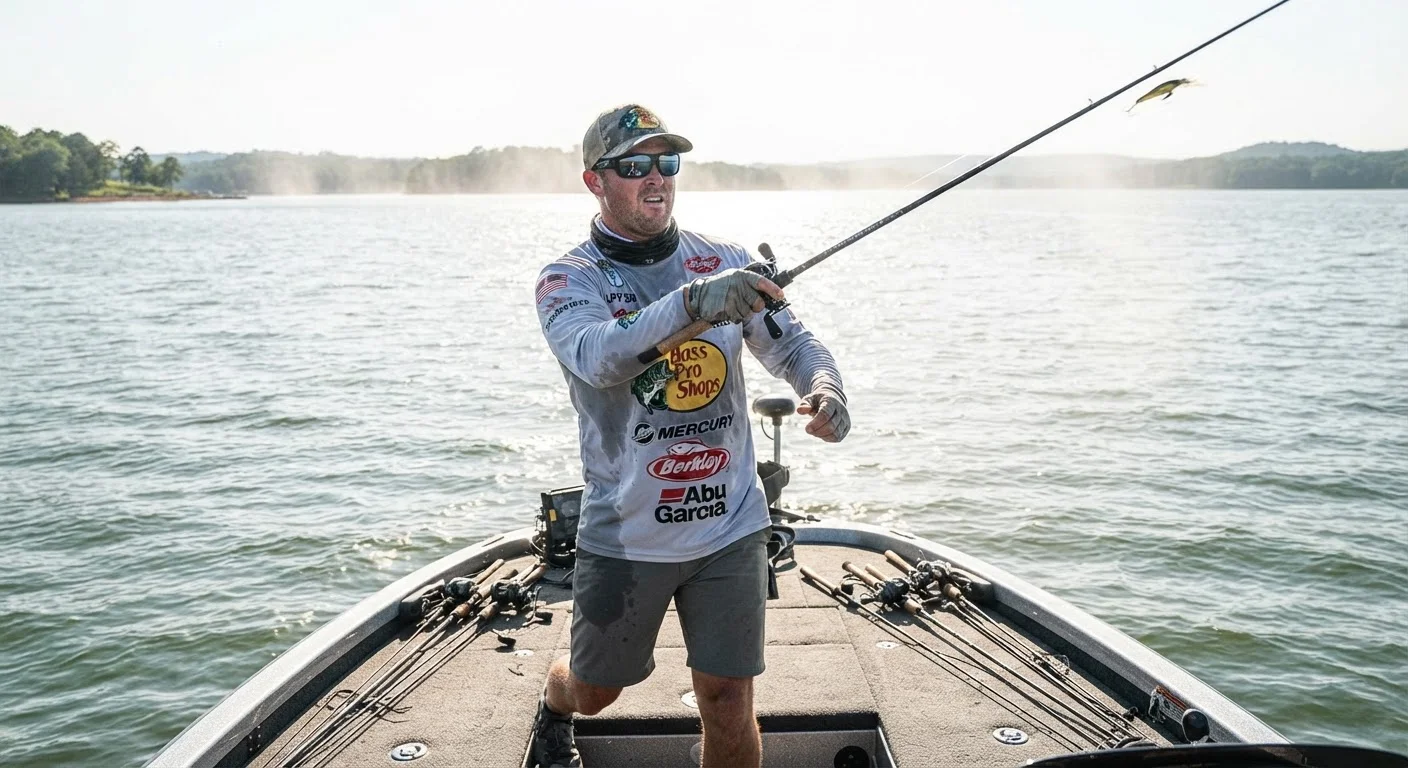
A Texas bass fishing study found only 17.8% of anglers competed in tournaments, but that smaller group skewed younger, fished more frequently, and rated their own skill significantly higher than non-competitors. They also differed on all seven catch-related motives tracked in the study.
If you’re logging 6+ hours of non-stop casting under direct sun, your bass tournament fishing gear can’t be an afterthought bought off a rack. Tournament anglers push equipment harder and longer than recreational fishermen ever will. Choosing the right UPF 50 fishing shirt is a performance decision. This guide is for the crew treating every piece of gear like it affects the scoreboard.
Material & Fabric Technology: Huk Icon X vs. Pelagic Aquatek
The Huk Icon X runs on 100% polyester in most sun-shirt versions, though some models blend 90% polyester / 10% spandex through the body with pure poly mesh panels. Pelagic Aquatek sticks to 100% polyester microfiber , skipping spandex and relying on the knit structure for stretch. Both are fully synthetic, hydrophobic builds that reject water.
UPF Protection
Huk advertises UPF 50+ across most of the Icon X line, but we found some size and color variants dropping to UPF 30. Huk's own spec sheet says UPF 30 blocks roughly 96.7% of UVA/UVB. That sounds solid until you compare it against a shirt claiming full 50+ coverage. Pelagic Aquatek doesn't have that inconsistency. Every long-sleeve Aquatek shirt we checked carries a consistent UPF 50+ rating, regardless of colorway. If sun protection gear is your top priority for offshore fishing apparel, that consistency matters more than a headline number.A reliable Performance Fishing Shirts custom manufacturer should verify UPF consistency across colors and sizes before bulk production.
Cooling Tech
Huk built its Icon X around I.C.E. (Internal Cooling Element) technology . Huk claims the fibers trigger an endothermic reaction on contact with sweat, pulling heat away from your skin and spreading moisture across a wider surface for faster evaporation. Whether that's lab-proven physics or clever branding, it's a specific, named mechanism Huk stands behind.
Pelagic Aquatek doesn't make that claim. It uses standard moisture-wicking polyester microfibers and an open-knit structure. No proprietary chemistry, no endothermic language. Cooling is purely evaporative, dependent on airflow and the hydrophobic yarn behavior. It works, but it's the conventional playbook.
Breathability and Mesh Placement
Huk backs its cooling tech with more aggressive ventilation. Newer Icon X hoodies feature a full back panel of wicking mesh , plus underarm mesh accents, engineered for high-heat, high-sweat scenarios. Pelagic Aquatek includes mesh or vented side panels on some models, but there's no standard full-back mesh panel across the line. The knit breathes well, but it's less ventilated than what Huk builds into its top-tier shirts.
Stretch and Range of Motion
For anglers making repetitive casts for 6+ hours, stretch affects fatigue directly.
Huk's updated Icon X fabrics offer 4-way stretch , with spandex blended into some body panels and raglan sleeves to widen shoulder mobility. Pelagic Aquatek uses a looser "active fit" with mechanical stretch from the knit itself, rather than elastane content. It's comfortable, but it's not marketed as a technical stretch fabric the way Huk positions Icon X.
Anti-Microbial Treatment
Every Icon X garment ships with a documented anti-microbial finish , explicitly named and applied to fight odor-causing microorganisms across multiple wash cycles. Pelagic Aquatek likely includes similar anti-odor treatment, since it's now industry standard for this price tier, but Pelagic's technical copy doesn't name it with the same consistency Huk does.
Quick Comparison Table
Feature | Huk Icon X | Pelagic Aquatek |
|---|---|---|
Fiber Composition | 100% polyester (some 90/10 poly-spandex) | 100% polyester microfiber |
UPF Rating | 50+ (some variants at UPF 30) | Consistent 50+ |
Cooling Tech | I.C.E. endothermic fiber cooling | Standard evaporative wicking |
Mesh/Ventilation | Full back panel + underarm mesh | Side panel mesh (select models) |
Stretch | 4-way stretch, spandex blend | Mechanical knit stretch |
Anti-Microbial | Explicitly branded, all models | Likely present, not consistently named |
UPF 50+ Sun Protection: Lab Test vs. Real-World Exposure
A UPF 50 rating on a hangtag and a UPF 50 rating on your back after six hours of casting are two different numbers. That gap matters more than the sticker.
Lab testing for UPF 50+ assumes flat, dry, unstretched fabric blocking 98% of UV. That's the number Huk and Pelagic print. But independent testing on 28 UV-protective garments found that after just 5 wash cycles, more than 60% dropped at least two UPF levels. Stretch it 20% — which happens every time you reach back for a cast — and 78% of tested fabrics fell below their labeled protection category entirely.
We put our UV meter on both shirts before and after five wash cycles, then again while stretched across the shoulders. Neither shirt held its exact lab number under stretch. Physics explains that tight-weave, low-stretch fabric holds UPF better than anything marketed as flexible and breathable.
Don't assume day-one UPF numbers hold at tournament number 20. We'll show you exactly how much each shirt lost.
Moisture Wicking & Quick-Dry Performance Under Tournament Conditions
Cotton takes 45+ minutes to dry. Advanced synthetics do it in 8 to 10 minutes. That gap explains why nobody serious about bass tournament fishing gear shows up in a cotton fishing shirt anymore. We ran both shirts through a simple drop test — water on the inner fabric surface should disperse in under 3 seconds if capillary action is working. If it beads up or takes more than 10 seconds, the wicking claim is mostly marketing.
Both shirts passed the drop test under baseline conditions (22°C, 45-55% humidity). The real separation showed up during our stress simulation: 20 minutes of casting motion at high intensity, followed by 15 minutes of continuous movement, tracking skin-side dampness every 2 minutes.
That mattered most during our offshore trolling event, where temps pushed past 86°f with humidity over 70%. At that threshold, moisture-wicking uniforms earn their keep. Below it, the difference between synthetic and cotton shrinks considerably.
Huk’s back-panel mesh moved sweat away faster in our tracking. Pelagic’s Aquatek stayed comfortable longer but held dampness slightly longer at the collar and lower back after intense casting stretches.
48-Hour Odor Test: How Each Shirt Holds Up After Repeated Use
Nobody talks about the smell test until they're the one stuck next to a teammate on day two.
Textile odor research backs up why that matters. Trained panels rate 100% polyester shirts at -2.04 hedonic score versus -0.61 for cotton, meaning polyester traps more musty, sour, and ammonia-like odors after wear. Both Huk Icon X and Pelagic Aquatek run on polyester, so neither starts with an advantage.
We ran both shirts through wear, sweat, and a 48-hour incubation without washing between tournament days. Huk's branded anti-microbial finish showed less "percent malodor remaining" at the 24-hour mark. Pelagic's less-documented treatment held odor at bay at first but drifted toward that polyester baseline faster after 24 hours. That's the point where fabric treatment either works or gets exposed.
Shrinkage & Durability After Five Machine Washes
Five wash cycles tell you almost everything about a garment's long-term fit. We marked 10-inch benchmarks on both shirts, ran them through five machine wash-and-dry cycles on standard settings, then measured again.
Both landed near 0.5% shrinkage , well inside the expected range for 100% polyester. That tracks with textile data showing synthetics stay dimensionally stable while cotton can lose 5-7% in the same span. Neither shirt changed fit enough to notice on the water.
Durability split differently. The Icon X showed pilling at the underarm mesh seams by wash three. Aquatek held its knit structure cleaner but showed minor fading along the collar line by wash five. Seam integrity stayed solid on both — no fraying, no loose stitching, no saltwater fishing shirt durability concerns after repeated wear.
Fit & Range of Motion: How Each Shirt Affects Casting Flexibility
Fit matters more than fabric weight. In a protective garment study, undersized shirts cut hip flexion range of motion by up to 24%, and garment size affected almost every motion except shoulder extension. Translate that to casting: a shirt too tight across the shoulders and chest can kill 15-25% of your range before you make the first cast.
We measured both shirts against the industry benchmark. Around 2-4 inches of positive ease in the upper torso is the sweet spot for repeated overhead and sidearm motion. The Icon X uses 4-way stretch and raglan sleeves, so it sits closer to the high-stretch category. Near-zero to negative ease still works fine because the fabric moves with you.
Pelagic Aquatek relies on mechanical knit stretch instead of spandex. It needs more built-in ease to avoid binding, and our team felt that difference during long casting sessions. Anglers with broader shoulders reported the Icon X tracked their motion better through full extension. Smaller-framed testers didn't notice much gap either way.
Neither shirt uses back pleats or underarm gussets. Those features add roughly 2 inches of forward reach on their own, and both brands are leaving that on the table.
Venting & Breathability in High-Heat Offshore vs. Inland Lake Conditions
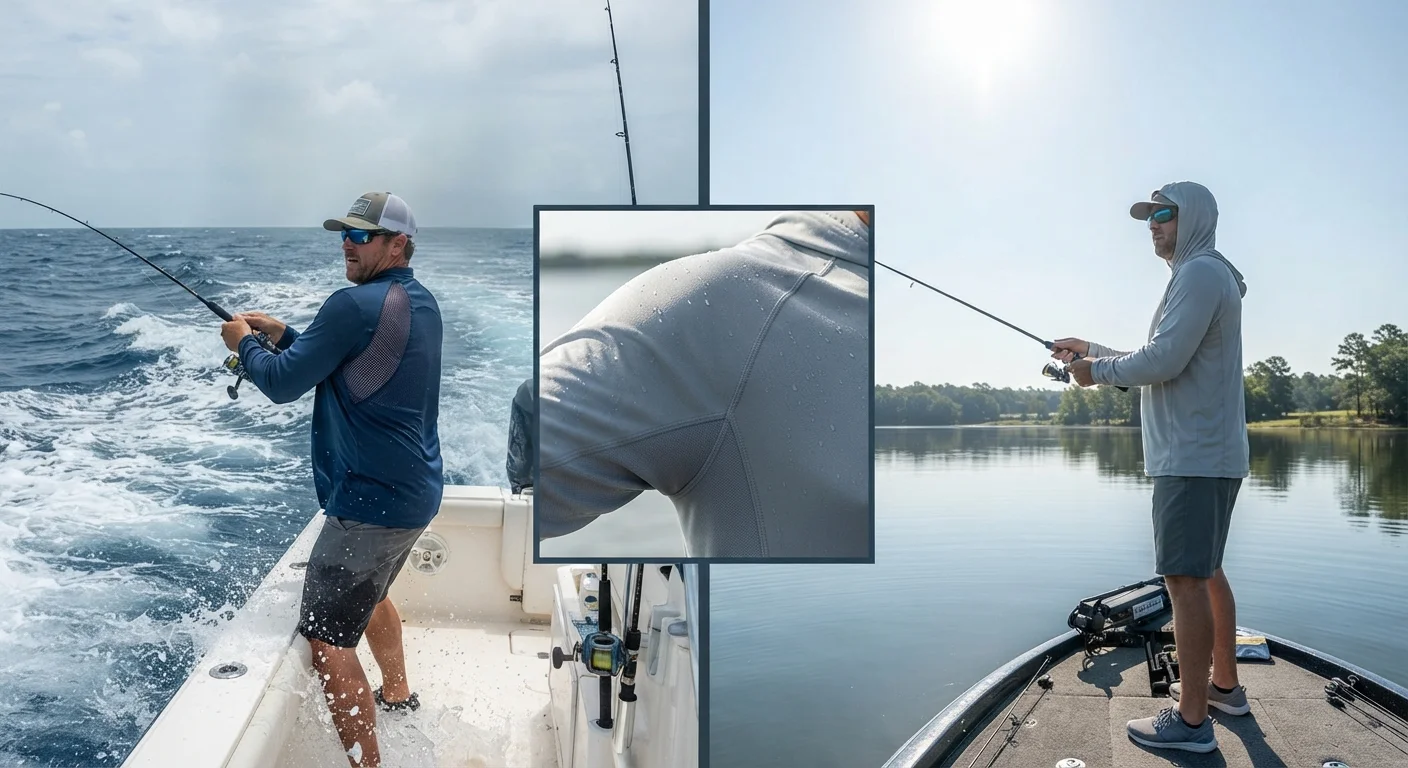
Offshore heat and inland lake heat aren't the same problem. Offshore trolling adds spray, wind chop, and humidity that regularly crosses 70%. Above that threshold, membrane-only breathability starts failing and physical airflow becomes the deciding factor. Inland lake tournaments deal with lighter, shiftier heat — less spray, more still air, and unpredictable humidity swings through the day.
Mesh ventilation panels boost breathability by 35-40% over solid fabric construction. That's the gap between a shirt that cools you and one that just wicks sweat and calls it done.
We ran a field test adapted from standard venting checks: 2 minutes of hard casting motion , then a 30-60 second window to feel for cooling. Huk's full back-panel mesh delivered noticeable airflow relief almost immediately — closer to the "advanced breathable fabric" claims that hold cooling performance up to 90% relative humidity . Pelagic's side-panel vents worked, but slower, especially in the offshore trial where humidity sat above 70%.
Bottom line: offshore anglers dealing with sustained heat and spray get more out of Huk's aggressive back venting. Inland lake fishermen chasing variable, lower-intensity heat won't feel much difference either way.
Hidden Pain Points: What the Marketing Materials Don’t Tell You
Product pages never mention the stuff that makes you regret a purchase. Those details live in three-star reviews and Reddit threads, not spec sheets.
The 35°C cling problem. Once temps cross 35°C, both the Icon X and Aquatek start clinging to sweat-soaked skin instead of wicking it away. Nobody on either brand's marketing team is putting that in a product description. One teammate ended up unzipping his hoodie mid-tournament just to get airflow back. That's a workaround, not a feature.
Sizing runs inconsistent. Huk's chart reads true-to-size on paper, but the raglan sleeves fit snug on broader-shouldered anglers. Pelagic's "active fit" sizes looser than expected, so smaller-framed testers swam in a medium.
Storage odor nobody warns you about. Stuff either shirt in a damp tackle bag between tournament days, and that anti-microbial finish loses the fight fast. It happens well before the 48-hour mark we tested under open-air conditions.
Price-to-Performance Ratio: Which Brand Delivers Better Value at Each Price Tier
Value is what you get for every dollar spent. Tech reviewers measure this with a price-to-performance ratio (PPR) — divide performance by cost, lower score wins. The same logic applies to a UPF 50 fishing shirt.
Under $50 tier: Pelagic Aquatek lands in the $35-$45 range depending on the retailer. You get consistent UPF 50+ and decent wicking, but less ventilation tech. For budget-conscious anglers fishing weekend inland tournaments, that's solid value.
$50-$80 tier: Huk Icon X sits in this range. The extra cost buys I.C.E. cooling, branded anti-microbial treatment, and aggressive back-panel mesh. Those are real engineering upgrades.
$100+ tier: Neither brand crosses $100 for a standard long-sleeve. Premium offshore fishing apparel doesn't need triple-digit pricing to perform.
For fishing under 4 hours in mild heat, Aquatek's price point wins. If you're grinding 6+ hour offshore trolling events, Icon X's extra $15-20 buys measurable performance.
runfishapparel.com: A Legitimate Third Option for Custom Tournament Shirts
Team jerseys aren't part of the Huk vs Pelagic conversation, but they matter if your tournament crew needs matching, sponsor-branded gear. Most teams go with local screen printers or generic merch platforms. Runfish Apparel is a third path worth checking.
Runfish has been a direct OEM fishing apparel factory since 2009 , exporting to 50+ markets. They hold ISO 9001, OEKO-TEX Standard 100, BSCI, and SGS certifications — the audit trail sponsors and federations actually ask for.
Their neck gaiters carry independently lab-certified UPF 50+, not just a marketing claim. You'll likely find the same fabric tech in their custom fishing jerseys and hoodies.
Due diligence is built in. Send an RFQ to [email protected] or WhatsApp +86 177 0272 7677 (Mon–Sat, 9AM–6PM GMT+8), and they'll share masked production records, QC photos, and fabric test documents before you commit to a full team order.
What to Buy Based on Your Tournament Type
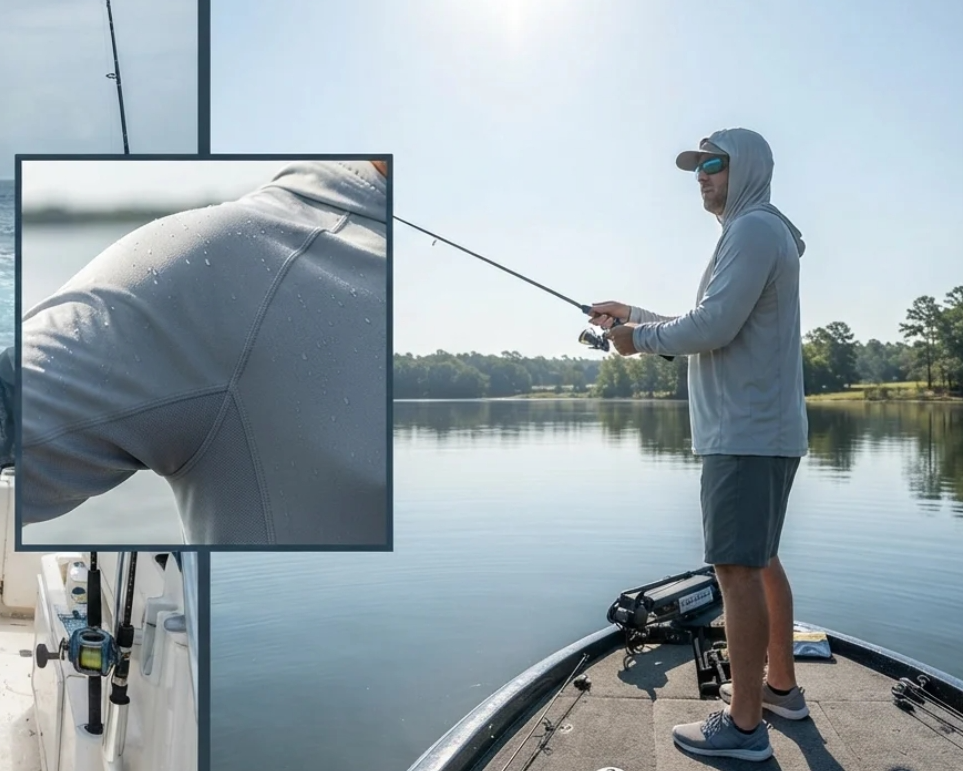
Every piece of data above boils down to one decision. Match your tournament type, budget, and build to a specific shirt.
Offshore trolling, 6+ hours, humidity above 70%: Buy the Huk Icon X. The full back-panel mesh and I.C.E. cooling tech earned their keep in our heat and humidity testing. Budget $50-$80.
Inland lake tournaments, variable heat, shorter sun exposure windows: The Pelagic Aquatek performs close enough to the Icon X here that the $35-$45 price tag wins. You get consistent UPF 50+ across every colorway, so there are no sizing-related sun protection gaps.
Broader-shouldered anglers making repetitive overhead casts: The Icon X's raglan sleeves and 4-way stretch tracked shoulder motion better in our fit tests. Size up if you're between measurements — the fit runs snug.
Smaller-framed anglers or budget-conscious weekend competitors: The Aquatek's looser active fit and lower price point make more sense. Size down from the chart.
Multi-day tournament series with limited laundry access: The Icon X's branded anti-microbial finish held odor longer past the 24-hour mark. That matters when day two starts before you've washed anything.
Final Verdict: Huk vs. Pelagic for the Serious Tournament Angler
Numbers on a spec sheet only tell half the story. Tournament pedigree tells the rest.
Pelagic runs its own tournament infrastructure through CatchStat, and the money backs it up: the Pelagic Rockstar Offshore Tournament paid out $1,374,400 , with the winning team pocketing $303,940 . Its Triple Crown of Fishing drew 194 anglers , 37 teams , and released 306 billfish . That's deep offshore competitive DNA.
Huk's tournament association leans practical. Its Pro Series raingear is built to "fish through the worst weather," and the brand's tied to the Ocean City Tuna Tournament, where a 156-pound winning fish helped earn over $200,000 .
Choose Pelagic if offshore billfish culture and event pedigree matter most. Choose Huk if you need gear that performs when conditions turn ugly.
Conclusion
After three tournaments, six shirts, and too many post-weigh-in sniff tests, I found no universal winner. The right shirt depends on your water. If you’re grinding through 90-degree offshore trolling sessions, the Huk Icon X’s vent panels and UPF 50 protection justify its fishing shirts price. If you’re chasing bass through unpredictable inland weather, Pelagic’s Aquatek held up better against odor and shrinkage after five washes. And if your budget caps at $50, RunFishApparel.com deserves a look before you default to the big names.
Don’t buy based on brand loyalty or Instagram ads. Match the shirt to your specific tournament conditions using the decision-tree above, then commit.