You bought a “performance” fishing shirt because the label promised sun protection and breathability. Then you spent your first cast fighting fabric that either strangled your shoulders or billowed like a sail every time the wind picked up.
Whether a fishing shirt should be tight or loose depends on where you’re fishing.Brands can develop custom Fishing Shirts for different fishing conditions. A kayak angler paddling through chop needs a different fit than someone casting off a dock at sunrise. A boat fisherman battling headwinds has different problems than someone layering up for a chilly night bite.
Below we break down how fit changes across four real fishing scenarios, how to measure your shoulders and biceps to nail your size, and a simple three-question decision tree that tells you, no guessing required, whether you need an athletic fit or a relaxed one.
The Correct Fishing Shirt Fit: Snug, Not Skin-Tight
The perfect performance fishing shirt fit sits close to your body, like a good athletic sun shirt, without ever feeling like compression wear.
Signs your shirt is too tight:
- Raising your arms overhead pulls fabric tight across your shoulder blades
- Deep breathing feels restricted
- Rotating your shoulder for a cast feels stiff
Signs it's too loose:
- You can pinch a handful of extra fabric at your lower back
- The shirt balloons or flaps when you move
The practical target is "roomy but not sloppy." You want a small air pocket between fabric and skin, because that pocket improves breathability. That makes the tight-versus-loose debate over UPF fishing shirts a bit misleading.An experienced Fishing Shirts factory can adjust fit by target market.
Garment measurements are finished-garment numbers, not body measurements. Match your chest to the garment chest plus intended ease, not chest-to-chest.
Columbia's PFG Bahama shirts are sold as Relaxed Fit, genuinely loose, built for airflow and unrestricted movement. The company even tells shoppers to size down if they want something closer to the body. If a relaxed fit feels too breezy for your casting motion, drop a size rather than switching styles.
Quick fit checklist before you buy:
- Shoulders and chest move freely, no pulling
- Sleeves cover your wrists with arms extended
- Torso stays covered when you bend or reach
- Fabric lies flat, no compression lines
Get those four right, and you've nailed fishing shirt comfort for nearly any water you fish.
Tight vs. Loose Fishing Shirts in Real Casting Movements
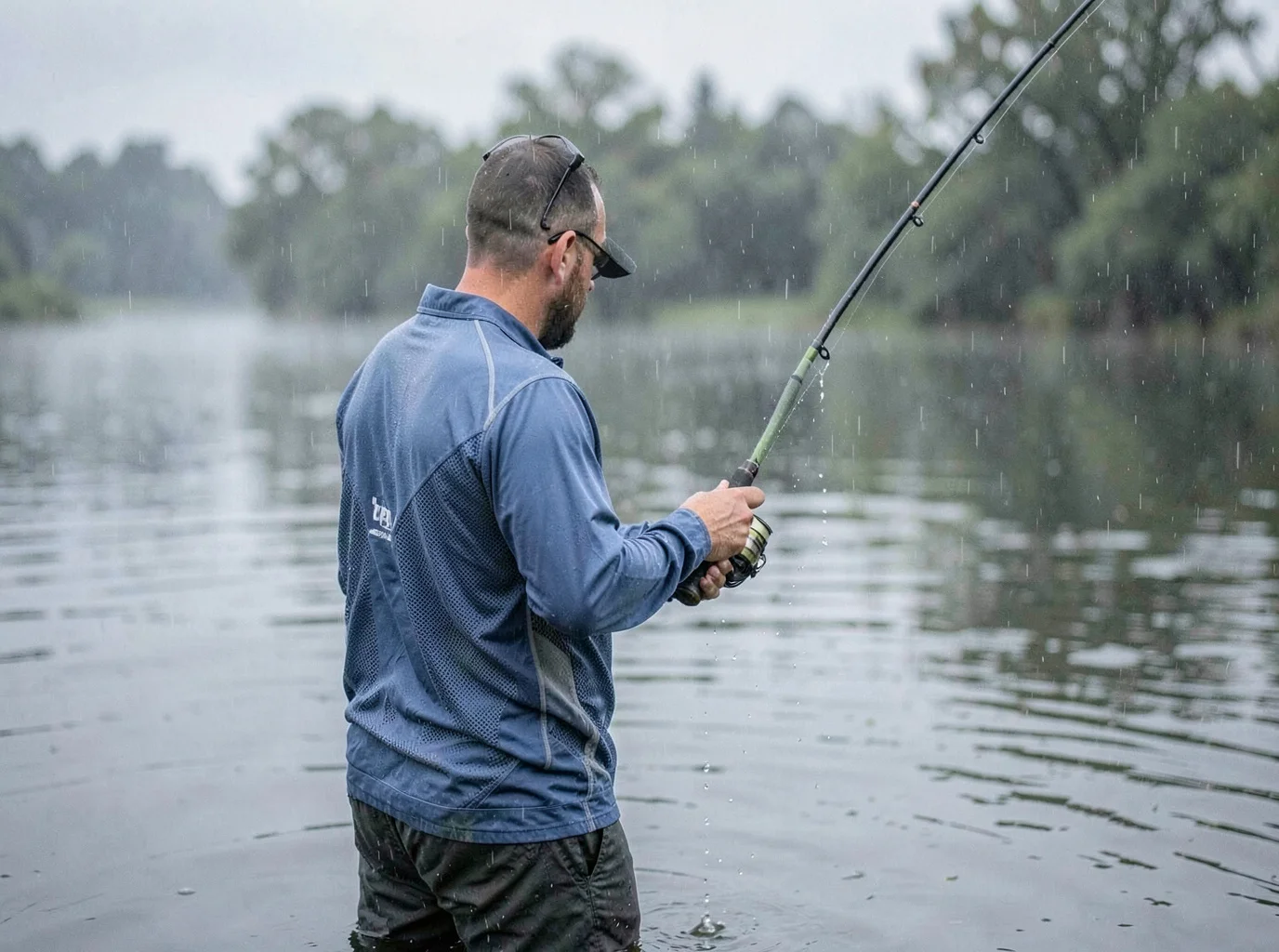
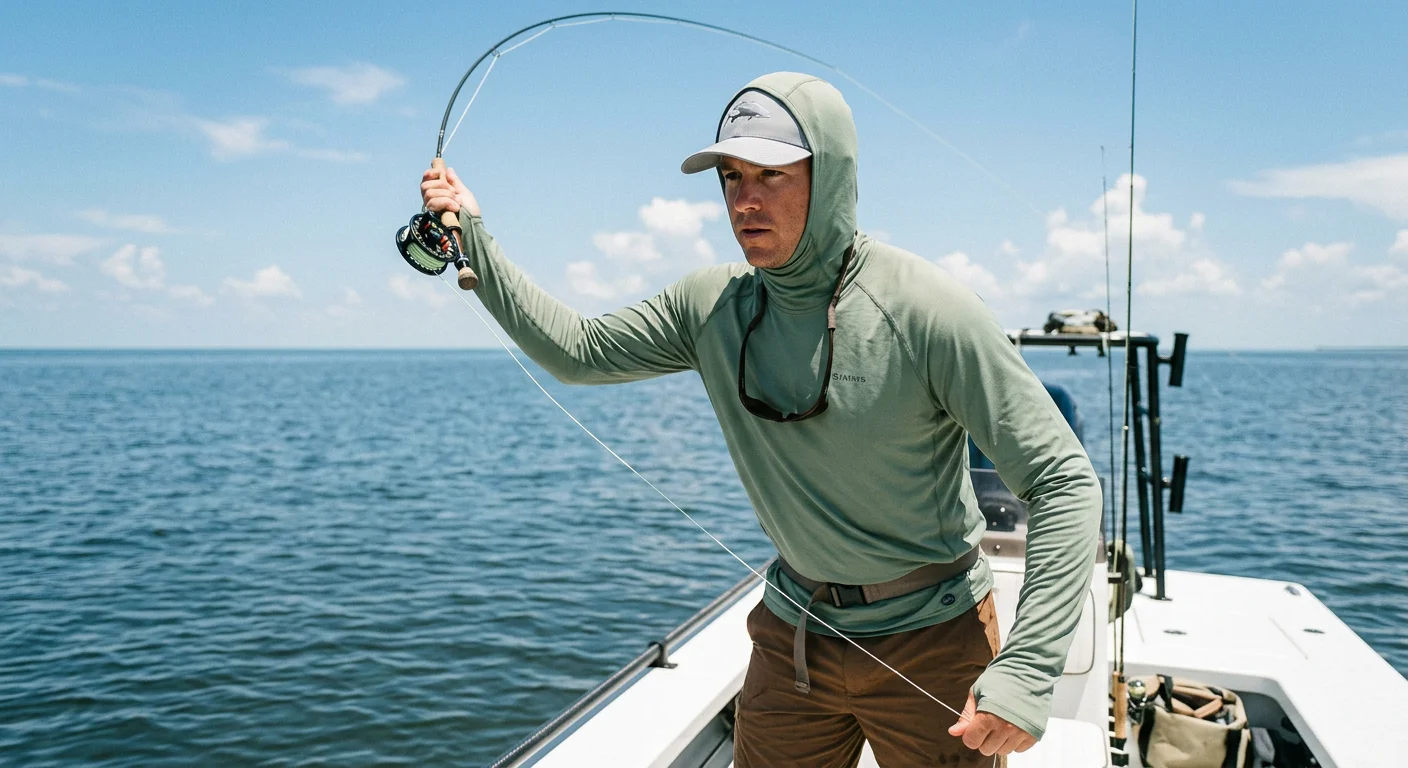
Your shirt can sabotage your cast through the shoulder seam. Saltwater fly casters aim for 180-degree shoulder rotation on the backcast. Tight shoulder seams cut that short. Narrow armholes disrupt the power stroke entirely. You lose distance and you don't even know why.
Fabric stretch matters just as much as fit.Brands can ask their Fishing Shirts supplier for stretch fabric samples. In kayak-fishing tests, 4-way stretch preserved 96–98% of natural range of motion. Basic 2-way stretch dropped that to 82–87%. That gap shows up the moment you’re reaching for a low sidearm cast from a seated position.
Sleeve construction matters more than tightness. Helios measured 97%, Orvis 94%, Patagonia 91%. The top performers use the raglan sleeve, the diagonal seam from collar to underarm instead of across the shoulder. Columbia PFG’s Terminal Tackle line builds its Regular Fit around this exact feature, marketed plainly as “full range of motion while casting.” Huk ’s ICON collection does the same, pairing raglan cuts with a claim of “effortless casting.” Bass Pro’s buying guidance says to look for a yoked back.
Before buying, try a self-test. Mime a full overhead cast and a sidearm cast right in the store. If you feel pulling at the shoulder seam or the sleeve riding up your forearm, that shirt will fight you on the water, no matter how flattering the tight fit looks in the mirror.
Kayak Fishing Needs a Controlled, Stretch Fishing Shirt Fit
Sitting low in a kayak for hours changes everything about how a shirt should fit. You're seated, wearing a PFD, and reaching forward with every paddle stroke.
What your fit test should look like:
- Reach forward 26–28 inches, like planting a paddle stroke
- Rotate your torso 45–50 degrees
- Sit for 30–45 minutes with your PFD strapped on
If the fabric bunches at your waist or the PFD digs into pressure points on your lower back, that shirt isn't built for kayak fishing.
Prioritize the stretch zones that matter. Your shoulders, upper back, and underarms need the highest stretch allocation. The lower panels can stay more structured since they're not doing the work during a paddle stroke.
Look for 4-way stretch, articulated shoulders, and a PFD-compatible slim profile. A specialized Fishing Shirts manufacturer can develop articulated shoulder patterns.A common construction benchmark is an 84% polyester / 16% spandex blend with UPF 50+, though brands like Treeline take a different route. Their 2026 fishing sun shirt uses 52% recycled nylon / 48% T400 polyester with mechanical stretch and a relaxed fit, trading some tightness for all-day wearability.
When fabric stretches, the knit opens slightly and lets more UV through. That's why sizing up sometimes preserves sun protection better than sizing down. Aim for controlled stretch, somewhere between compression-tight and loose, so the shirt moves with your paddle stroke without snagging your PFD straps or bunching where you sit.
Shore Fishing Works Best With Regular or Slightly Relaxed Fit
Standing on a pier or beach all day is a different beast than paddling or bracing against boat spray. For shore fishing, the sweet spot isn't tight and isn't baggy. It's regular fit or, if you run warm, slightly relaxed.
AFTCO 's sizing language backs this up. They describe regular fit as "more relaxed than performance fits, but keeps shape." Their relaxed fit promises "maximum roominess" and "ample breathing space." Columbia says the same thing—they call regular fit their "universal, easy fit for comfortable range of motion." Some newer Columbia models run closer to the body than older relaxed-fit versions did.
How to check the fit yourself:
- Raise both arms overhead like you're setting a hook
- Simulate a full cast
- Reach across your body
If fabric pulls tight anywhere during those three moves, size up.
One common sizing benchmark puts numbers to the difference: relaxed fit adds 4–6 cm of chest room and about 2 cm of extra length over regular fit. Patagonia's fly-fishing lineup reflects this too. Regular fit dominates their catalog, with relaxed fit as a smaller secondary option.
For shore fishing, short-sleeve or convertible long-sleeve styles beat sleeveless compression cuts. Standing sun exposure and airflow matter more than boat-specific tightness. Look for mesh ventilation panels under the arms, quick-dry fabric, and easy-access pockets—things you use when you're standing rather than seated. Carhartt's relaxed-fit fishing tee, built from a 5-ounce, 60% cotton/40% polyester blend, shows how comfort-first construction works over athletic shaping.
Default to regular fit with slight ease. Go relaxed only if you need extra chest room, and skip oversized streetwear cuts.
Boat Fishing Requires Room for Layers Without Excess Wind
A stiff headwind can drop the felt temperature by 20–30°F, even when the air itself feels mild. That's the reality boat anglers face, and it changes everything about fit. The right fishing shirt for a boat needs room for a proper layering system without turning your shirt into a windsock.
Three layers get the job done. Start with a moisture-wicking base — merino wool works here, never cotton, since cotton holds moisture and dries painfully slow. Add an insulating mid layer like fleece. Top it with a windproof, waterproof outer shell. AFTCO breaks this down by temperature. Mild days from 45–70°F, cold days from 32–45°F, frigid days below 32°F each get different layer weights.
Two layers can carry you through warm afternoons. Three layers earn their keep once the wind picks up or the temperature drops.
What to look for in your outer shell
- Waterproof rating around 10,000–15,000 mm
- Breathability near 8,000–10,000 g/m²/24hr
- Taped seams and a cinchable storm hem
- A hat with a chin strap, because loose hats don't survive open water
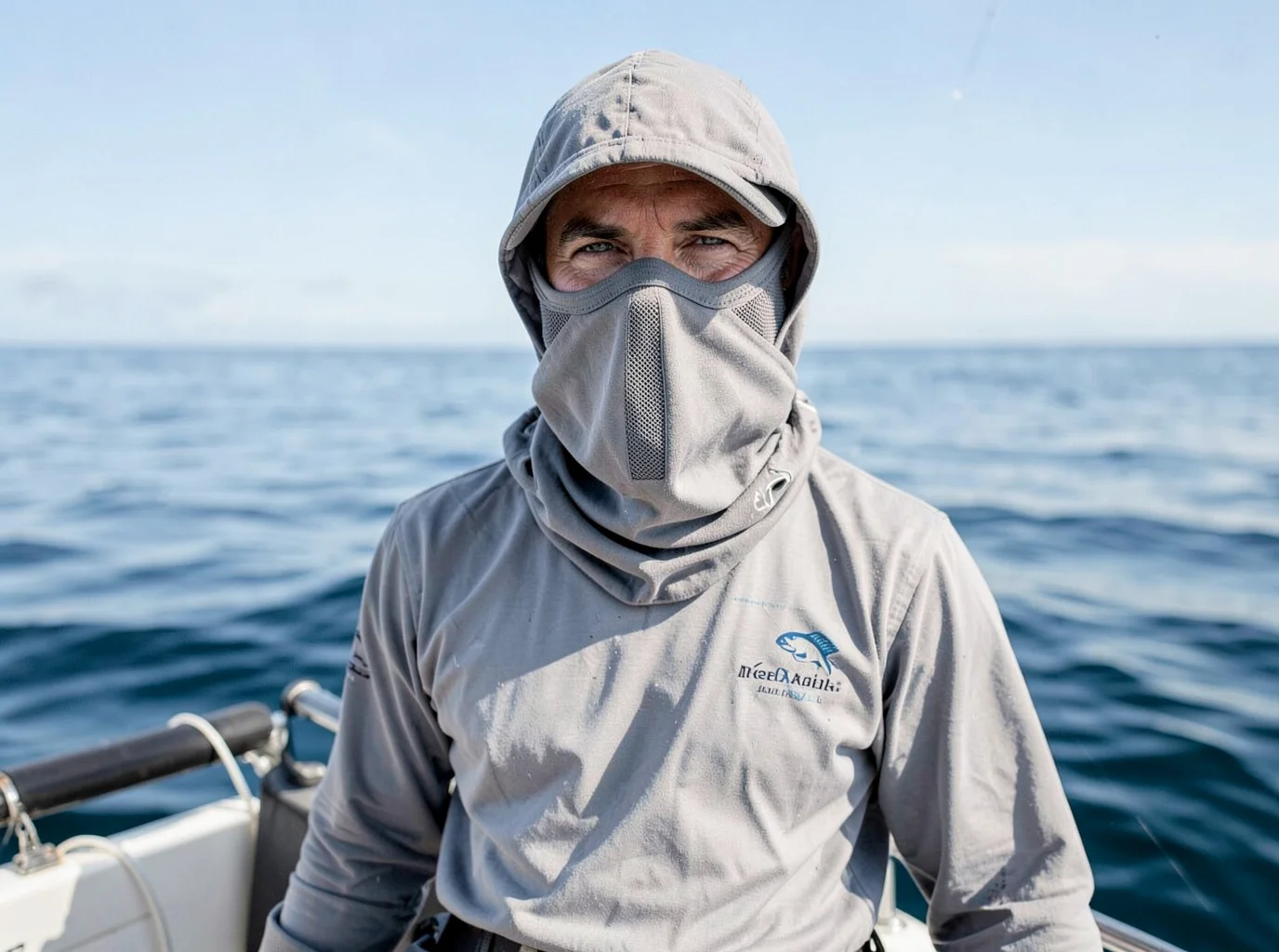
- A neck gaiter for spray and wind
Size your base layer athletic-fit and snug. Leave your outer shell just roomy enough to layer over it, not so loose it catches wind like a sail.
Night Fishing and Cool Weather Need Layering Space, Not Compression
Temperature drops fast after sunset. A fishing shirt that felt perfect at noon can leave you shivering by 9 p.m. The fix is layering room, not a single warmer shirt.
Each layer should fit over the one beneath it, not squeeze against your skin. That extra space isn't a sloppy look, it's insulation. Air pockets between layers trap warmth. Compress them and you defeat the whole purpose of layering.
Build your stack this way:
- Base layer : merino wool or synthetic performance fabric, snug against skin to move moisture. Skip cotton. It holds sweat and stops insulating once wet.
- Mid layer : fleece or synthetic fill, sized to fit over your base without binding.
- Shell : windproof or waterproof-breathable, with enough room to move across both layers.
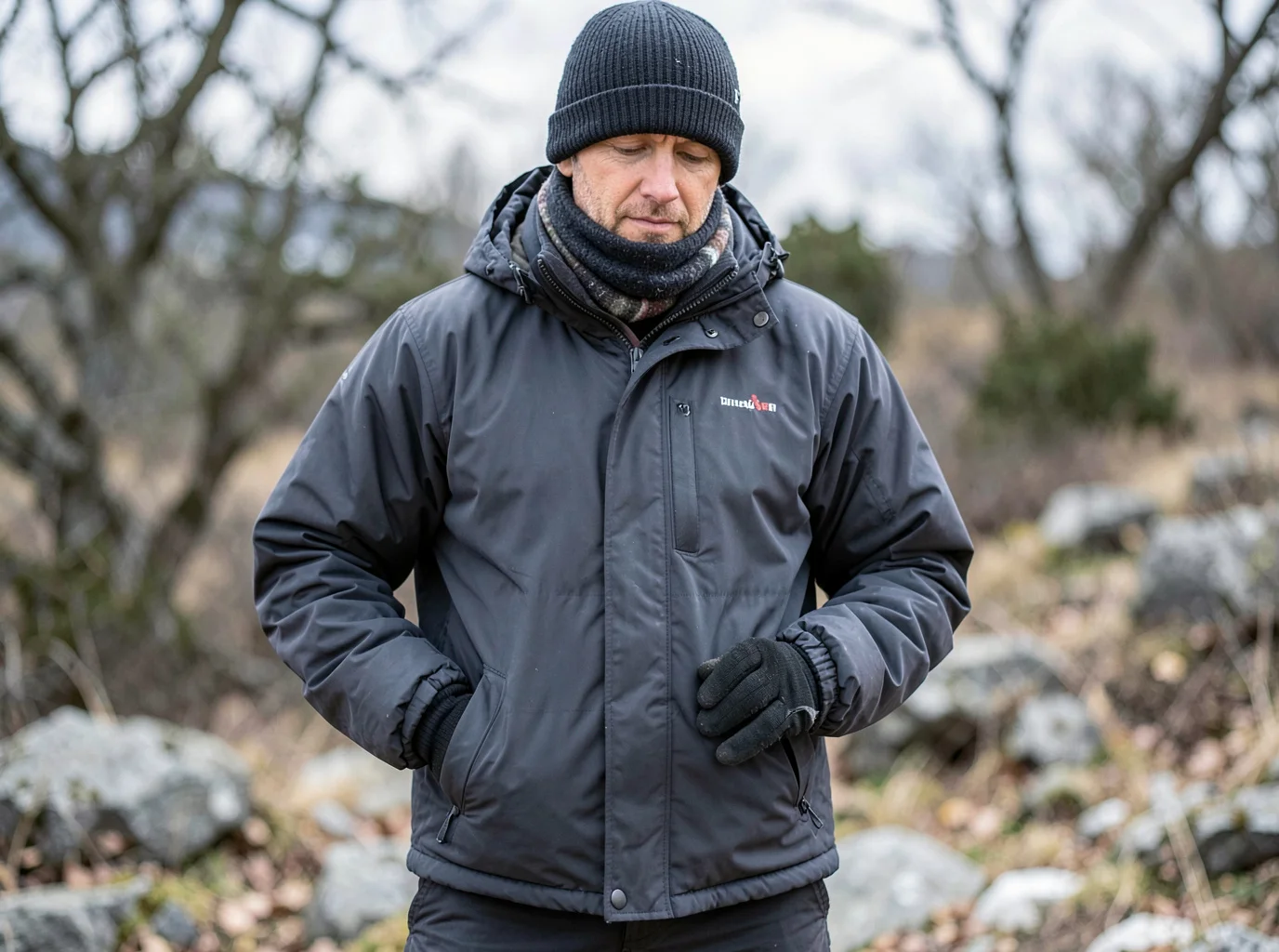
Add layers before you feel cold, not after. Once temps fall, seal your cuffs, collar, and waist to trap heat. Finish with a beanie, gloves, neck gaiter, and thermal socks. Aim for slightly roomy at every layer, never tight.
Body Shape Determines Whether to Stay True to Size or Go Up One Size
Two people can wear the exact same "Medium" and end up with different shirts. Fit charts are built around a mid-range body type, so height, shoulder width, bust-to-waist ratio, and limb length all push your true size in different directions.
Buy for your largest relevant measurement, then adjust everything else. If your shoulders and chest call for a Large but your waist reads Medium, go Large. You can always tailor the extra room at the waist; you can't stretch a shirt that's already choking your shoulders.
How to measure it yourself:
Measure shoulder width across your back from the edge of one shoulder to the other. Compare that number to the shirt's flat-lay shoulder measurement.
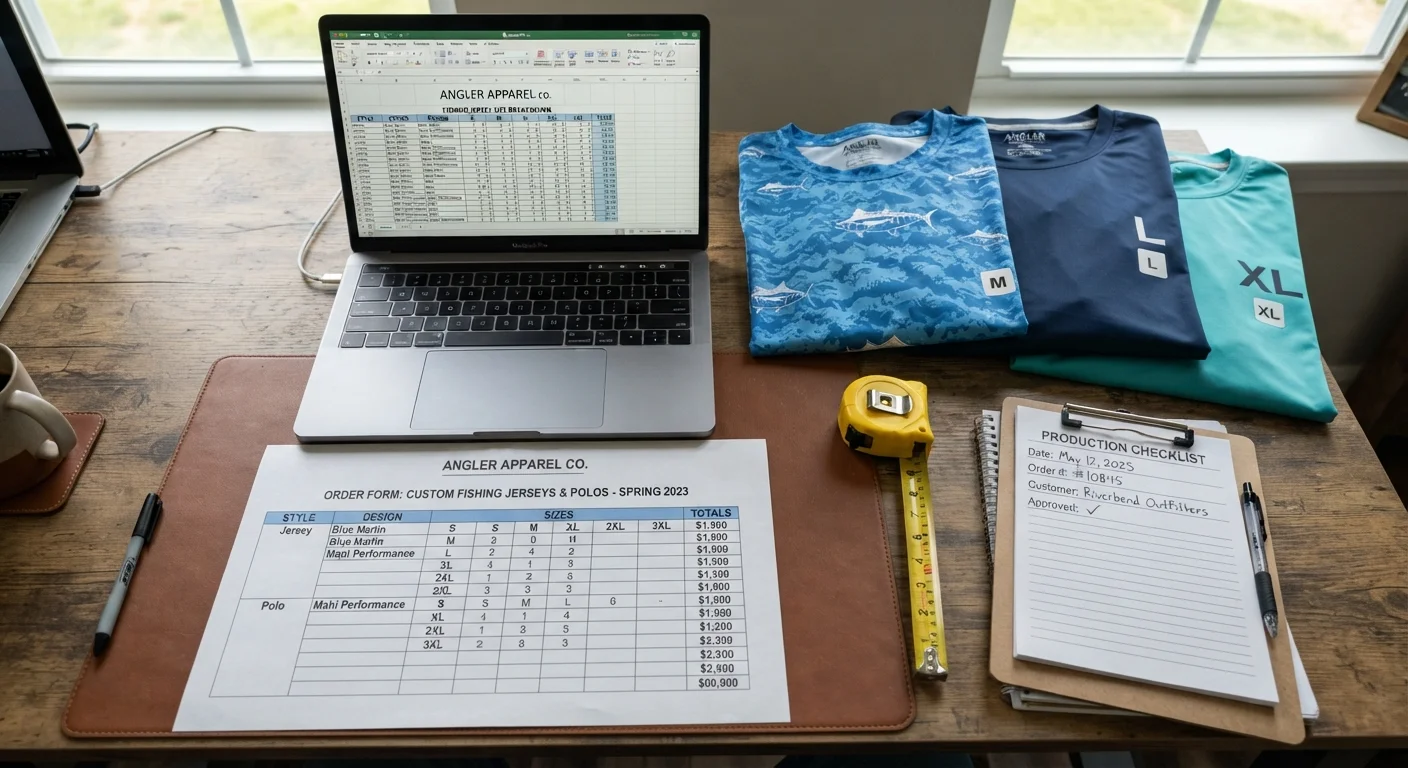
Wrap a tape measure around the widest part of your upper arm for bicep circumference. Broad-shouldered or muscular anglers often need to size up here even if their chest measurement says otherwise.
One size chart shows why this matters. A size Medium built for Body Shape 1 measures 92 cm bust, 72 cm waist. The same Medium built for Body Shape 2 measures 99 cm chest, 89 cm waist. Same letter, very different shirt.
Quick guide by build:
Athletic or broad-shouldered: size up
Round waistline: size up
Lean, average build: stay true to size
How to Measure a Fishing Shirt Before Choosing the Size
Grab a fishing shirt you already love, lay it flat on the table, and measure it before you buy anything new. This flat-lay method beats guessing every time.
Three numbers matter:
- Chest : Measure armpit seam to armpit seam, then double it. Or measure a favorite T-shirt one inch below the armpits, laid flat.
- Body length : From the shoulder or back collar down to the hem. Most fishing shirts run 70–87 cm depending on size.
- Sleeve length : Center back of the neck, over the shoulder, down to the wrist bone with your elbow slightly bent.
Compare those numbers to the brand's chart.
Common men's chest ranges:
- S: ~104 cm (41 in)
- M: ~110 cm (43.25 in)
- L: ~116 cm (45.75 in)
- XL: ~122 cm (48 in)
- 2XL: ~128 cm (50.5 in)
Some charts use "to-fit" bands instead, like 99–103 cm for Medium. Women's charts run on bust ranges, 84–89 cm for size 8 up through 129–134 cm for size 26.
If you land between two sizes, go bigger. That extra room helps airflow and sun protection layering, not just comfort.
The Three-Question Decision Tree for Fishing Shirt Fit
Skip the endless brand comparisons. Three questions get you to a size faster than any review ever will.
Question 1: Where does the shirt pull? Raise both arms overhead. If the hem lifts above your waist, size up for body length. If sleeves ride up before reaching your wrist bone, you need Tall sizing.
Question 2: Is it chest or length that's off? Chest and waist too tight while sleeves fit fine points to Big sizing. Sleeves and body length too short while chest fits fine points to Tall. Some anglers need both.
Question 3: What's your fit intent? Performance fit means fabric touches skin for wicking, with about 2–4 inches of chest ease so you can rotate and reach without the hem pulling. Loose or regular fit trades that closeness for airflow.
If you land between sizes anywhere in this process, size up. That extra room protects your cast, your UV coverage, and your comfort all at once.
The Five-Minute Fit Test That Confirms the Right Size
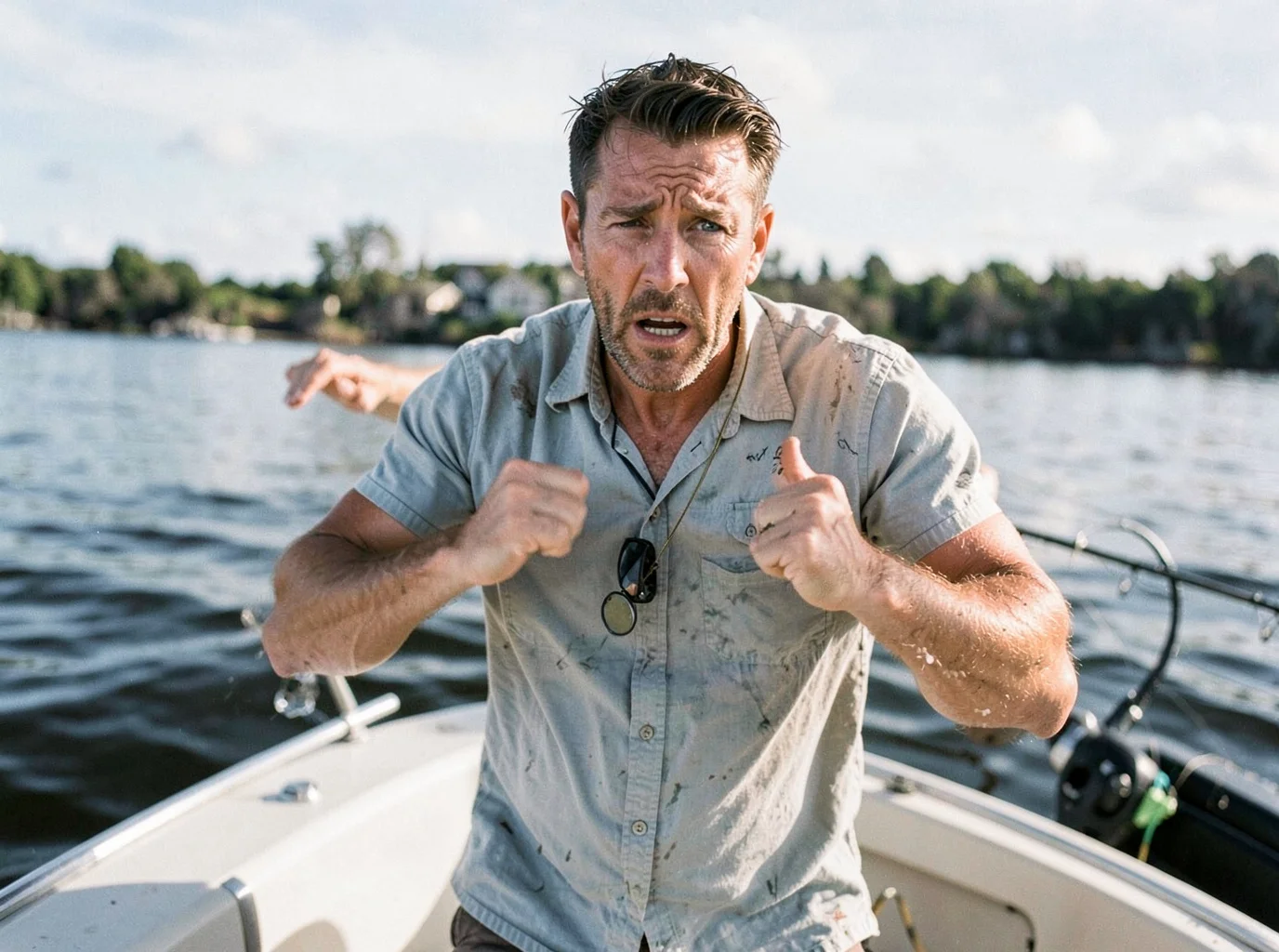
Try the shirt on, but don't take it off after thirty seconds in front of the mirror. Give it five real minutes before you decide.
Run through this sequence, in order:
Button the collar. You should have one-finger breathing room, no more, no less.
Rotate your shoulders. Watch for pull lines forming across your back.
Raise both arms overhead. Check how far the hem lifts.
Sit down and mimic typing or reeling for 60 seconds. Notice cuff pressure on your forearms.
Stay seated. Watch whether buttons strain or gap near your torso.
A shirt passes when:
Buttons lie flat while you sit and reach
Cuffs allow room for a watch or a base layer underneath
Nothing pinches, slips, or creates hot spots after the full five minutes
If you're still adjusting the collar or tugging the hem at minute five, that's your answer. Size up.
Conclusion
How tight your fishing shirt should be depends on where you're standing, paddling, or drifting when you cast. A kayak calls for a snug, stretchy fit that won't snag your paddle stroke. Shore fishing wants breathable room to move. Boat days need just enough layering space to dodge the wind without ballooning. Night fishing is where a looser, cozier fit earns its keep.
That decision comes down to your water, your build, and what you're willing to trade between sun protection and freedom of movement.: Request a custom wholesale price for Fishing Shirts based on your sizing requirements.
Grab a tape measure, run through the five-minute fit test, and trust the numbers over the guesswork.