Dropping $400—sometimes closer to $900—on a pair of waders isn't an impulse buy. It's a commitment. Picture yourself waist-deep in a Montana spring creek at 6 a.m. A pod of browns is rising right in front of you. The last thing you need is a leaking seam sending cold water up your thigh because you picked the wrong brand.
Simms and Orvis both carry serious reputations in fly fishing. But reputation alone won't keep you dry through a full season of hard use.Many anglers researching premium waders also compare options for custom fishing waders before investing in long-term gear.
This Simms vs Orvis waders comparison cuts through the marketing language. It looks at what truly determines longevity:
Fabric construction
Seam technology
Real-world field performance
Warranty support when things wear down
A weekend wade fisher and a full-time guide logging 200 days a year have different demands—but both need gear that holds up. The durability gap between these two brands is bigger than most buyers expect. Most only find that out after the waders fail.
Simms Waders: The Durability Benchmark for Serious Anglers
Simms doesn't hide their durability claims—they publish the numbers. On their internal rating scale, the flagship G4Z scores 5 out of 5 . The Freestone, their entry-level option, sits at 3 out of 5 . The Tributary? A 2 . That two-point gap between a guide's wader and a weekend angler's wader isn't marketing talk. It comes down to fabric layers, seam construction, and material science proven in the field.
Built for the People Who Can't Afford a Failure
The G4Z and G4 Pro are built for working guides. These are anglers logging 100-plus days a year on gravel beds, in cold currents, on their knees adjusting tippet while river rocks grind against their legs. The lower body uses a 5-layer Gore-Tex Pro Shell , tested across 16,000 hours of real field use . That's not a number pulled from a spec sheet. It equals 13 to 26 full guide seasons of wear stress.
The upper body runs 3-layer Gore-Tex Pro . This balances breathability with structure. From the seat down—where friction destroys waders fastest—Simms adds more layers. You get 25% greater breathability than past generations. Plus, independent reviewers call it "the most durable wader fabric I've ever worn."
Engineering Details That Outlast Trends
Three construction choices set the G4 series apart from everything below it:
Patented front-and-back leg seam geometry — moves the seam away from the highest-friction zones at the knee, groin, and inner thigh, where traditional inseams fail first
Compression-molded stocking foot — cuts down on fabric bunching inside the boot, a common cause of wader failure most anglers overlook
Heavy-duty Gore-Tex belt loops + integrated gravel guards — small details that stop slow abrasion at the ankle and waist before it turns into a blown seam mid-season
For guides or serious fly fishers putting in 600 to 1,200 hours per season , the G4Z is the clear choice. For recreational anglers wading fewer than 50 days a year , the Freestone holds up fine. Just treat it as a 1-to-2 season product under hard use—not a multi-year investment.
Orvis Waders: Durability Meets Value in Modern Design
Orvis built the PRO waders around one clear idea: Cordura belongs on a wader the same way it belongs on a military pack.
No other wader maker uses Cordura fabric this way. That's not a casual claim—it's the core of everything the PRO line delivers. Simms anchors their durability story in Gore-Tex Pro layering. Orvis took a different path. The Cordura laminate base gives you 3–5× the abrasion cycles of standard apparel nylon. On sharp granite. In heavy brush. Season after season.
The design follows the logic of high-end Gore-Tex builds—without copying the formula:
4-layer upper / 5-layer legs — heavy reinforcement placed right where rocks, snags, and scrambling cause the most damage
Removable Ortholite X-25 knee pads — built to hold their shape over time, shielding both fabric and your knees on hard kneels
Internal modular pocketing — stretch mesh plus a removable gear compartment that takes pressure off outer seams through heavy use
The proof? Troutbitten ran a 100-day hard-use field test. Zero leaks. Zero seam failures. The reviewer called it "impressive" —and that word barely covers a full season of abuse.
Where Orvis Fits Across Budget Tiers
Tier | Price | Best For |
|---|---|---|
Clearwater | ~$200–250 | 20–40 days/year, entry-level use |
Ultralight Convertible | ~$350–400 | Hiking-heavy, warm-weather mobility |
PRO | ~$600–700 | 100+ days/year, guide-grade rough terrain |
The PRO goes head-to-head with the Simms G4 on price and purpose. Hatch Magazine called it "a serious contender" in the premium durability segment. Not a challenger trying to catch up—an equal built on different material science.
For guides and hard-core fly fishers, that Cordura build isn't a gimmick. It's the reason these waders still hold water long after others give out.
Materials & Construction: Gore-Tex vs Cordura Head-to-Head
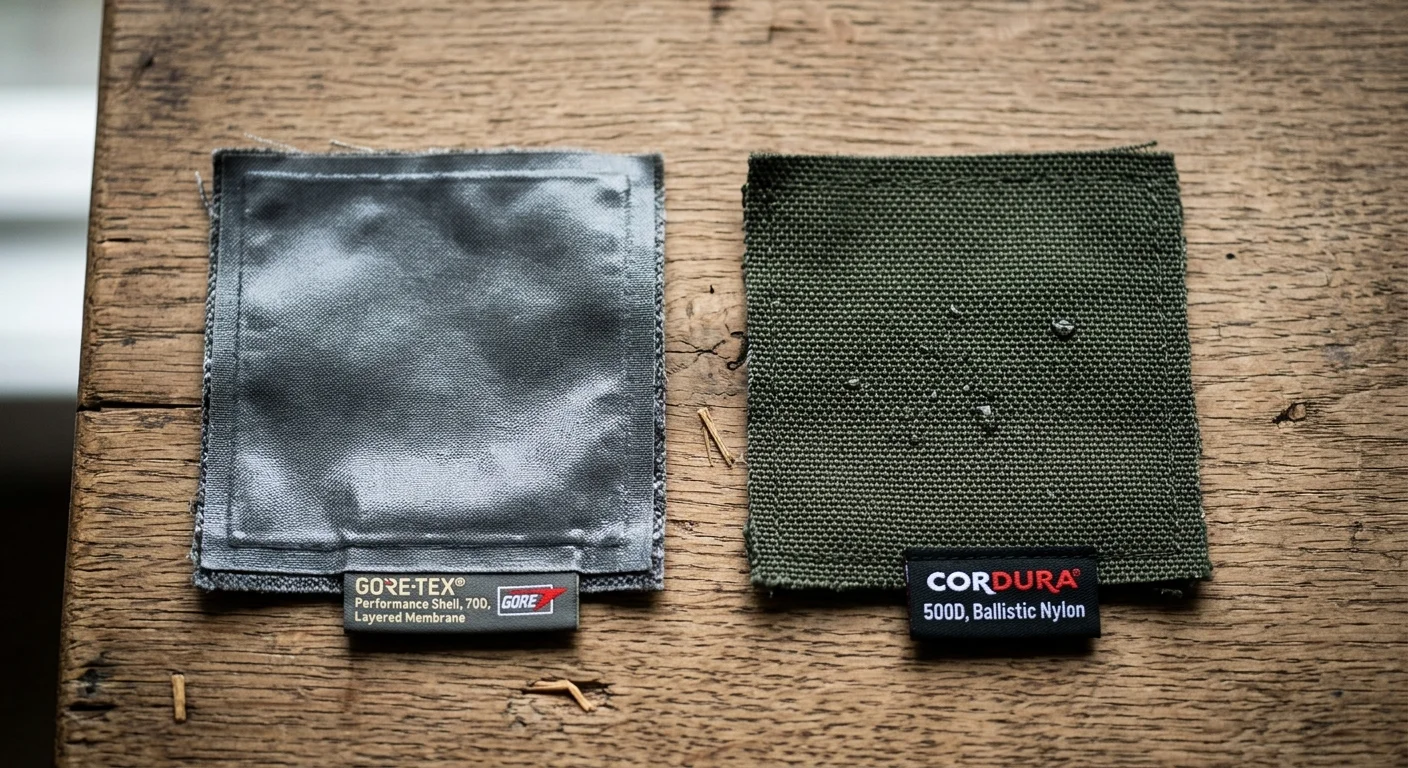
Gore-Tex and Cordura are not competing versions of the same idea. They solve different problems. Knowing that difference changes how you read every spec sheet on both brands.
Gore-Tex is a membrane. It sits behind the outer fabric as a continuous lining. It does two things at once: blocks water from getting in, and lets body vapor escape outward. That dual function— waterproof plus breathable —is the whole point. Simms builds their G4 series around this system. The membrane runs wall-to-wall across panels. Built right, there are no gaps in the waterproof barrier.
Cordura is woven nylon. High-tenacity, dense, built to resist abrasion the way a military pack resists a decade of hard use. Its water resistance comes from weave density, denier weight, and coating treatment—not from a breathable membrane. Orvis chose it for the PRO line because no other outer fabric holds up to granite and streamside brush the same way.
Here's where buyers get confused: Cordura is water-resistant, not waterproof. Those two terms are not the same on a cold October morning. The fabric itself repels surface water well. But seams, panel joins, and untreated zones are the primary failure points. No membrane underneath means Cordura alone can't deliver the sustained waterproofing that Gore-Tex constructions provide.
What Each Material Does Best
Property | Gore-Tex | Cordura |
|---|---|---|
Waterproofing | ✅ Membrane-grade, continuous | ⚠️ Water-resistant, coating-dependent |
Breathability | ✅ Vapor-permeable by design | ❌ Not engineered for vapor transfer |
Abrasion resistance | ✅ Good | ✅✅ Benchmark-grade |
Seam integrity | Depends on membrane integration quality | Depends on denier, DWR, and seam treatment |
The honest verdict: Gore-Tex wins on waterproof-breathable performance. Cordura wins on outer fabric toughness. The best real-world build combines both—Cordura outer shell, Gore-Tex membrane underneath, sealed seams throughout. That's why the top waders in both lineups hold up where cheaper builds fail.
Comparing specific models? Check whether Gore-Tex coverage is full-lining or partial paneling. Also check Cordura denier—210D performs very differently from 1000D. Those details matter more than the brand name on the hang tag.
Durability by Price Range: Which Brand Wins at Each Budget Level
The fishing waders price gap between an entry-level wader and a flagship tells you something real. It's not just about materials. It shows what each brand thinks you actually need out on the water.
Here's how both brands compare across three budget tiers.
Entry Level: $200–$300
The Orvis Clearwater ($249) and Simms Tributary ($229–$279) sit in the same price range of fishing waders. But they're built around different priorities.
The Clearwater is the smarter pick for under 20 days a year on the water. You get solid repairability and good warranty coverage at a low cost. It's simple, functional, and honest about what it is.
The Simms entry-level goes harder on reinforced knees and layered fabric. It takes more abuse before showing wear. That matters a lot for 20–50 days a year on the water, or for anyone spending real time on rocky riverbeds.
Quick read:
- < 20 days/year → Orvis Clearwater. Lower per-day cost.
- 20–50 days/year → Simms entry-level. Better abrasion resistance over time.
- Rocky substrate, frequent kneeling → Don't just look at price. Check knee reinforcement and seam tape width on both.
Mid-Range: $300–$500
At this tier, the two brands stop going after the same buyer.
The Simms Freestone ($379–$499) focuses on one thing: durability-per-dollar. You get reinforced panels, a stable fit, and abrasion-resistant fabric in all the right spots. For anglers wading 30–80 days a year at below guide-level intensity, it pays for itself over 2–4 seasons of hard use.
The Orvis Ultralight Convertible ($349–$449) chases a different goal: mobility. It's lighter and convertible. It suits warm-weather fishing and hike-in terrain well. It won't outlast the Freestone in rough conditions—but that's the trade. You give up some durability and get comfort and flexibility back.
Quick read:
- Durability-first, higher-frequency use → Simms Freestone
- Hiking-heavy, warm weather, mobility matters → Orvis Ultralight Convertible
Flagship: $600–$999
At the top end, the decision comes down to hard numbers.
The Orvis PRO runs $698–$798. The Simms G4Z sits at $999. That $200 gap isn't random. It reflects real differences in seam construction, zipper spec, and abrasion protection at the highest-stress zones.
Run the per-day numbers:
Model | Price | Days/Year | Lifespan | Daily Cost |
|---|---|---|---|---|
Orvis PRO | $749 | 50 | 5 years | $3.00/day |
Simms G4Z | $999 | 50 | 6 years | $3.33/day |
At 50 days per year, the cost gap is $0.33 a day. Push to 100 days per year and both figures drop fast. At that point, the G4Z stops being an economics argument. It becomes about reliability in extreme conditions.
Quick read:
- Guides, 100+ days/year, demanding terrain → Simms G4Z. The premium buys failure insurance, not just fabric.
- Serious angler, under 30 days/year → Orvis PRO. The extra cost of the G4Z doesn't pay off at lower use levels.
The short version:
Budget | Durability Winner | Value Winner |
|---|---|---|
$200–$300 | Simms (abrasion) | Orvis Clearwater (low-frequency TCO) |
$300–$500 | Simms Freestone | Orvis Ultralight (if mobility matters) |
$600–$999 | Simms G4Z | Orvis PRO |
Real-World Durability Testing: What Fly Fishing Guides Report
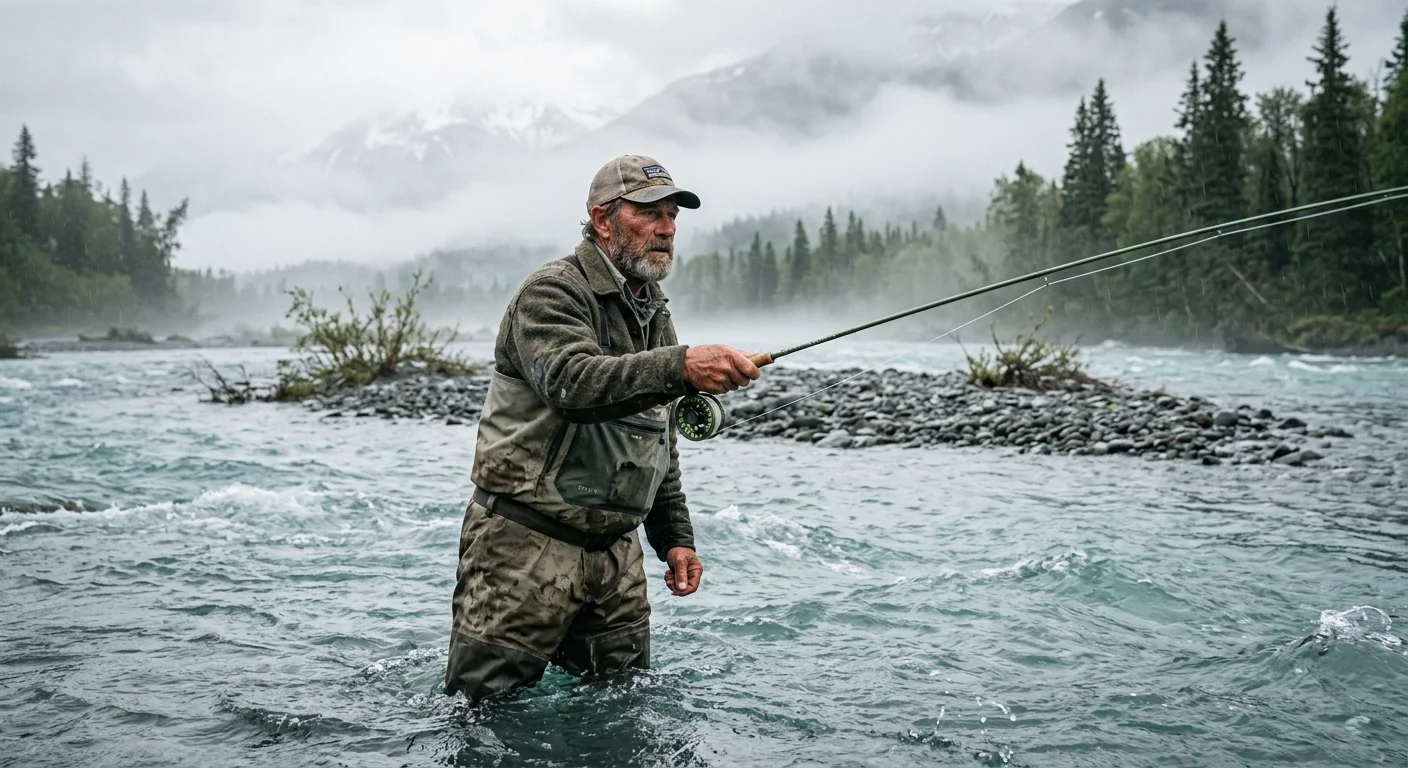
Guides don't review gear. They survive it.
A lodge operator running salmon trips in Alaska doesn't care about five-layer construction or breathability ratings. They care about one thing: do the boots hold together through a full season? Six days a week. Ten hours a day. On gravel bars, mudflats, and the side of an aluminum skiff. That's the test. Everything else is noise.
What Alaska Guide Conditions Do to Simms G4
The Simms G4 Pro earned its "bombproof" reputation in those exact conditions. Many guides burned through mid-tier boots in one to two seasons. Soles separated. Eyelets pulled free. Uppers split along the welt. The G4 Pro told a different story. Through a full Alaskan season— 400–500 hours on the water —the structural failures that tend to show up in cheaper boots never came. Scuff marks, yes. Pressure dents from hull contact and streambed rock, yes. But no separation. No cracking. No blown seams.
With the G4Z waders, multi-season users noticed clear improvement in the weak spots. Previous Simms models broke down first at the crotch, the knees, and the ankle connections . The G4Z held longer in all three zones. The chest zipper stayed smooth and sealed across repeated seasons—no grit binding, no tape edge delamination. That's a real change from the G3 and earlier G4 builds, where seam tape edge-lifting was a known, recurring problem.
Where Orvis Pro Holds and Where It Shows First
Troutbitten's 100-day field test gave the Orvis PRO a clean result. Zero leaks. Zero seam failures. The test covered freestone creeks, big-water float trips, and winter tailwaters. That's 400 to 800 hours of real use—not lab simulation.
Wear does show up, but it starts in a specific place: the foot and lower leg . Small pin-hole leaks start appearing between day 60 and 120. The crotch seam holds well past that point—better than most mid-range waders at the same stage. Users also notice the underfoot support softening before the fabric itself gives out.
The Common Failure Map: Where Each Brand Gives Out First
Failure Zone | Simms G4 Series | Orvis PRO |
|---|---|---|
Crotch seam | After ~150–300 fishing days | Holds well past 100 days |
Knee & ankle | Tape edge lifting over time | Pin-hole wear, ~60–120 days |
Chest zipper | Durable; minor grit issues possible | Seepage at fold points, 1–2 seasons |
Bootie/sole | Front-third foam compression at 2–3 seasons | Support fatigue before structural failure |
Neither brand fails fast. Both are built for serious, hard use. But where they wear out tells you which one fits your fishing style—and which repair kit belongs in your vest.
Warranty & Repair Policies: Long-Term Durability Support Compared
The warranty is where a brand stops talking about durability and starts proving it.
Both Simms and Orvis back their premium waders with real policies. But the structure of that support differs. Those differences affect what you spend over five years of hard fishing—more than most buyers expect.
How Each Brand Covers You
Orvis runs a 25-year guarantee for their core lineup. Something fails—they repair or replace it. The cost to you: a flat $60 processing fee , every time. It doesn't matter what broke or when. No tiered pricing. No back-and-forth with a rep about whether your seam failure counts as a "manufacturing defect." Sixty dollars. Done.
Their entry-level Encounter series carries a shorter 5-year repair warranty . The same $60 flat fee applies. Walk into an Orvis retail location and staff will handle the shipping for you. That smooth, no-hassle process has become close to a benchmark in fly fishing circles.
Simms works on a different schedule. In the first year , manufacturing defects are covered at no charge beyond return shipping. After that, repairs move to a fixed-fee model. Users report costs in the $50–$75 range , plus return shipping. That puts you at around $70–$95 per incident once you're past the free window.
Year two is where the real difference shows up. Most waders start showing honest wear right around then.
The 5-Year Cost Reality
Run the numbers on two identical $600 waders. Each needs two repairs over five years—both after the first year:
Orvis | Simms | |
|---|---|---|
Purchase price | $600 | $600 |
Repair 1 (Year 2) | $60 | ~$90 |
Repair 2 (Year 4) | $60 | ~$90 |
5-Year TCO | $720 | $780 |
That's a $60 gap —not huge, but consistent. It grows across longer ownership cycles.
Simms does have one clear edge here. Something fails within the first year —you might pay nothing beyond shipping. Orvis charges $60 no matter the timing. Fish hard and expect early issues? Simms's first-year window has real practical value.
The Part Most Buyers Miss
The bigger gap isn't price. It's predictability .
Orvis repair costs stay fixed for 25 years. You know the number before anything breaks. With Simms, the out-of-pocket cost depends on what failed, when it failed, and how the damage gets classified. Anglers in fly fishing forums have reported cases where wear-pattern damage on Simms waders got tagged as normal use—not a manufacturing issue. That pushed them outside free coverage and into paid repairs sooner than they planned.
No brand offers a true ironclad warranty against hard use. What you're buying, in both cases, is a company's commitment to keep your gear working across multiple seasons. On that measure, Orvis's flat-fee structure cuts out the guesswork. Simms's first-year coverage is stronger up front, but the long tail is harder to predict.
Bottom line: Guides or anyone logging 80-plus days a year will find Orvis's 25-year flat-rate model keeps long-term repair costs lower and more consistent. Fish less often and want the best shot at a free fix in the first few months? Simms's first-year policy holds real value—just plan on paid repairs from year two onward.
Which Brand Should You Choose? Durability Recommendations by Angler Type
The right wader isn't the most expensive one. It's the one that fits how you fish.
Here's a quick breakdown by angler type.
Guides and heavy users — 100+ days per year
The Simms G4Z or G4 Pro is the clear choice here. You get four-layer Gore-Tex built into the lower body — where waders take the most abuse. The zipper is stitchless and fully waterproof. The harness system holds firm through thousands of bends and flexes. These aren't minor upgrades. Each one targets a real failure point that shows up under hard, daily use. Rocky riverbeds. Constant kneeling. Cold winters across 10-hour shifts. This build handles all of that.
Serious anglers — 30 to 80 days per year
The Orvis PRO is the all-around pick for premium waders. It's not built to be the toughest wader on the river. It's built to handle the widest range of conditions well — and it delivers. At this use level, you need versatility, comfort, and repair costs you can predict. Raw abrasion toughness matters less here.
Recreational anglers — under 30 days per year
Start with the Orvis Clearwater . It covers everything you need. You won't pay for guide-grade features you'll never use.
Thinking about upgrading from Clearwater? Watch for these signs: your day count is climbing past 30 per year, you're wading rougher ground, or you're seeing wear at the knees, ankles, or zipper sooner than expected.
The short version:
Angler Type | Best Pick |
|---|---|
100+ days/year, demanding terrain | Simms G4Z / G4 Pro |
30–80 days/year, versatile use | Orvis PRO |
Occasional, budget-conscious | Orvis Clearwater |
Mid-frequency, standard rivers | Simms Freestone |
Conclusion
Both brands have earned their place on the river — but they've earned it in different ways.
Simms builds waders like a craftsman builds furniture: overengineered, unapologetic, and priced to match. You're logging serious miles through abrasive freestone streams. You're guiding clients five days a week. That GORE-TEX construction and bulletproof seam work isn't a luxury — it's an investment. You get seasons of use out of it, not just months.
Orvis has closed the gap. The dedicated weekend angler gets breathable performance without the flagship price tag. Their modern construction holds up better than most reviews give them credit for.
The honest answer? Your water decides.
Hard use, technical terrain, and long-term ownership costs all point toward Simms.
Versatile performance at a smarter price point of fishing waders lands with Orvis.
Now stop comparing — and start fishing. Browse our full Customized fly fishing gear comparison guides to find the exact wader that fits how you fish.