A 150 GSM polyester might feel great in a tackle shop fitting room—and fall apart after three months of saltwater abuse. Most fishing shirt fabric guides talk texture and "feel," not the hard numbers that actually predict performance.
This is a technical breakdown of the ten fabrics dominating fishing apparel in 2024, scored across five measurable dimensions: GSM fabric weight, moisture-wicking speed (per AATCC 195 testing), cooling coefficient, four-way stretch percentage, and verified UPF rating. You'll see how polyester vs nylon fishing shirt fabrics stack up under lab conditions, why some brands blend spandex into their weave, and which materials hold up to 12-hour offshore sessions versus casual freshwater trips. If you're comparing Fishing Shirt supplier spec sheets or just tired of guessing, the data starts below.
Polyester Microfiber
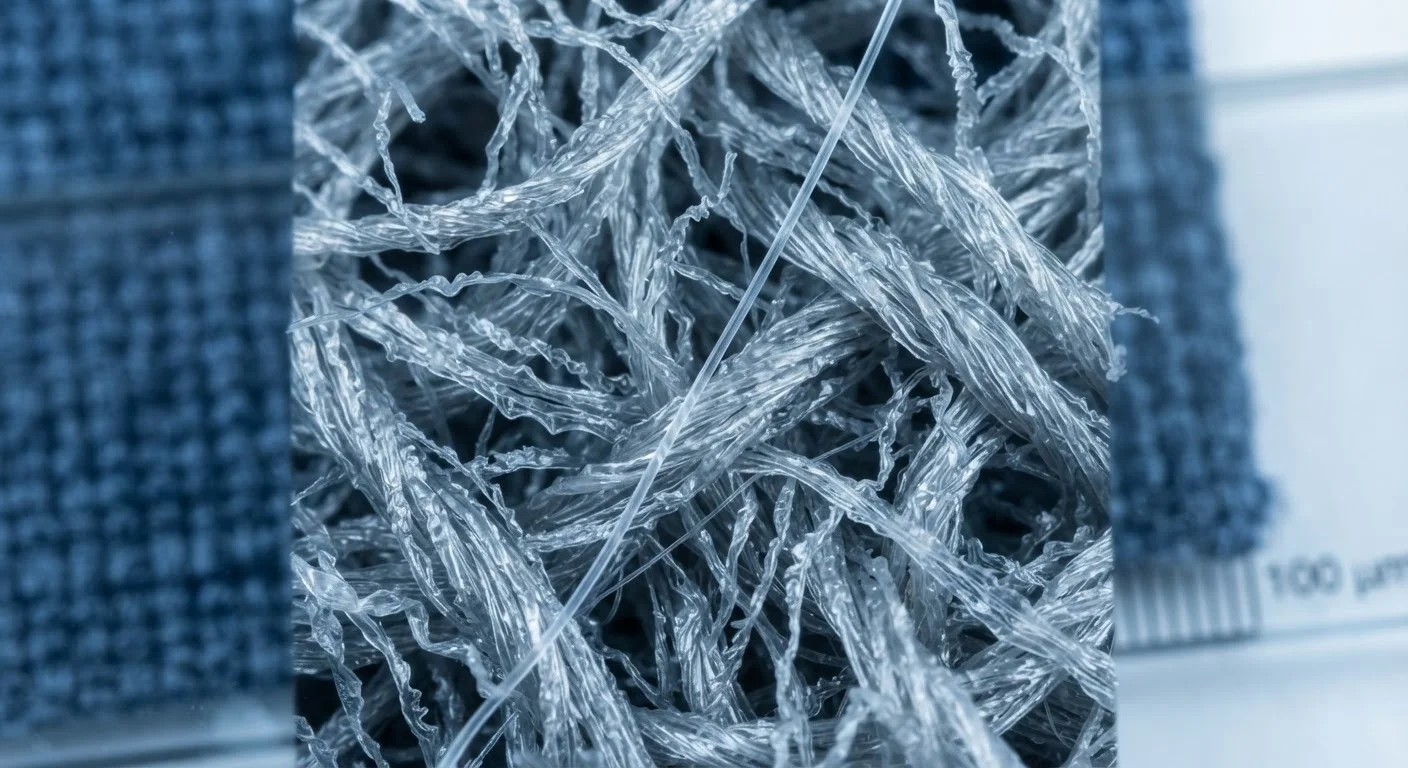
Zoom into a single polyester microfiber strand and you'll find something thinner than 1/15th of a human hair. Fiber fineness rated at 0.5–1.0 denier, packed into a surface area that can reach 500 m² per square meter of fabric. More surface area means more capillary action, which means faster wicking, which is exactly what you want for hot, humid conditions.
Polyester Microfiber Performance Matrix:
Metric | Data |
|---|---|
GSM Range | 80–120 GSM (lightweight fishing-specific) |
Wicking Speed | Under 15–30 sec (AATCC 195 benchmark) |
Drying Time | 2–3 hours in sun (vs. 6–8 hrs for cotton) |
Stretch | 5–10% mechanical give (weave-based, no spandex) |
UPF Rating | 30–40+ (dense weave + mid-tone dyes) |
Friction Coefficient | ≤0.2 (vs. 0.35 standard polyester) |
Polyester's raw moisture regain sits at a hydrophobic 0.4%—terrible on paper. But microfiber geometry flips that weakness into a strength. Water absorption jumps to 15–20× the fabric's own weight, absorbing 3× faster than pure cotton. Backed by lab logic, that's your quick dry fishing apparel fabric benchmark.
This also explains why polyester microfiber survives 500+ wash cycles at 30°C without breaking down—a durability spec that matters if you're sourcing anti-odor fishing shirt fabric for repeated saltwater exposure. Combined with thread counts up to 1,800, brands get a tight enough weave for sun protection without sacrificing the breathable feel anglers expect on 12-hour trips.
Best fit: Inshore, tropical, and freshwater fishing where humidity and abrasion resistance matter more than heavy-duty deep-sea stress.
runfishapparel.com
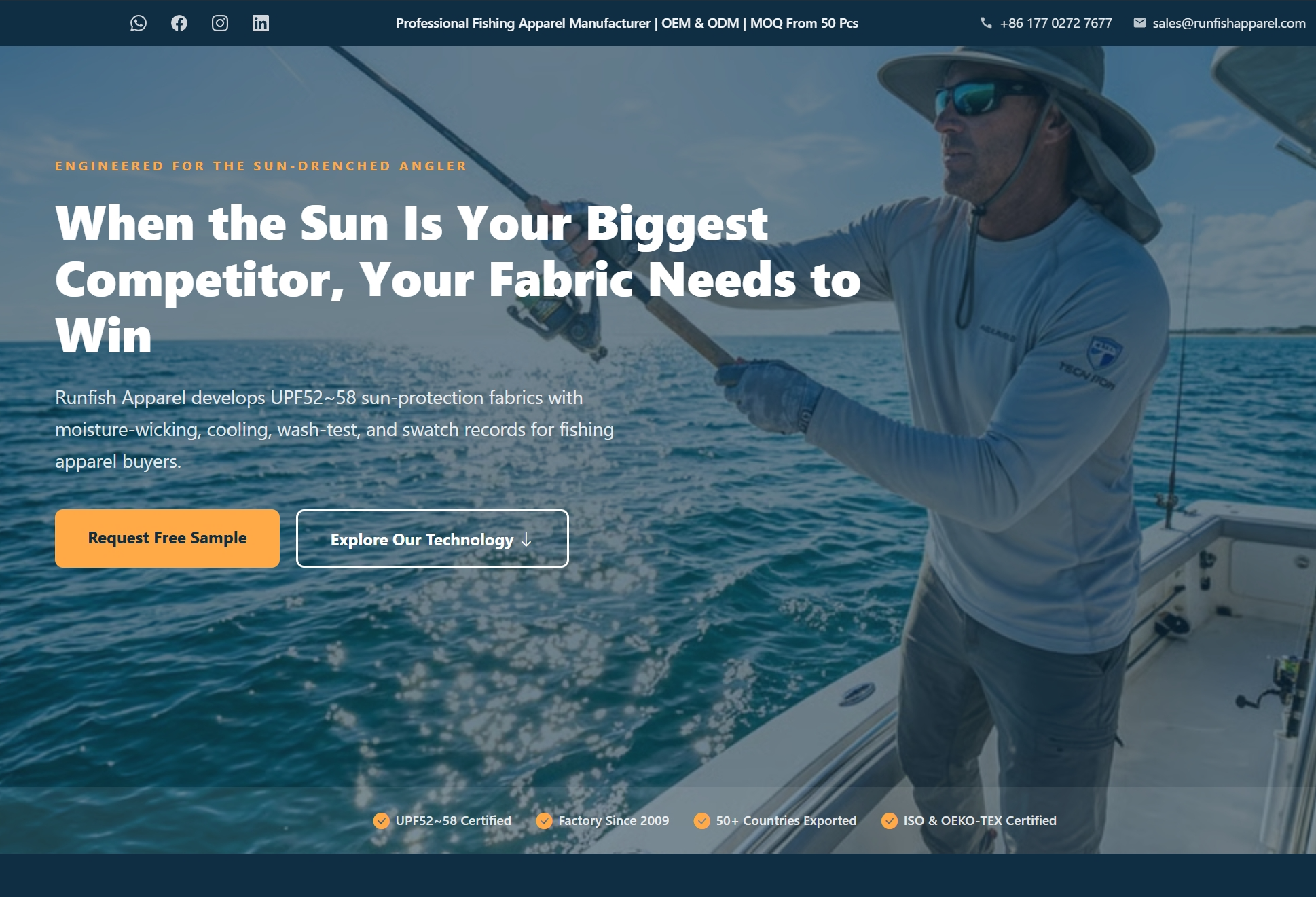
RunfishApparel is a fishing apparel factory in Guangzhou that makes offshore fishing shirts. They have been in business since 2009 and produce OEM/ODM fishing garments at 130–160 GSM, which puts them in the tropical-weight range brands ask for most.
Their fabric scores UPF52–58 , verified through AATCC 183 and AS/NZS 4399 testing at SGS, BV, and SDL Atlas labs. That equals a 98.1% UV block rate that holds after 50+ washes. The offshore line is 100% polyester with anti-salt-spray treatment. They don't publish a spandex ratio, but standard OEM blends (90–95% polyester, 5–10% spandex) give you 15–20% two-way stretch.
MOQ is 50 pieces, and sampling takes 7 days, which is fast enough for brands who want to check fabric specs before going to bulk orders.
Nylon/Elastane Blend
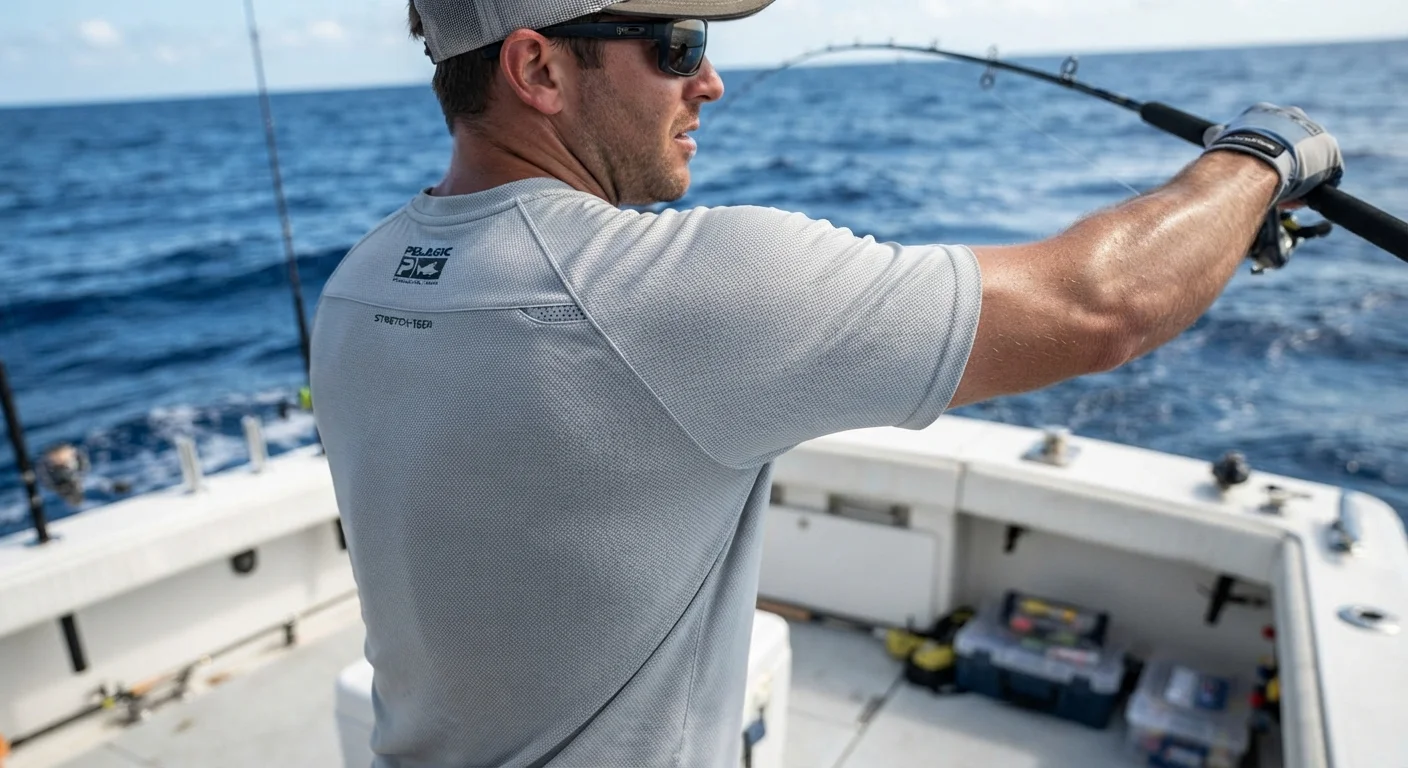
Patagonia didn't pick nylon/elastane by accident. Stretch-woven fishing shirts from major outdoor brands lean on this blend because casting, rowing, and boat-deck movement demand flexibility that polyester alone can't match.
Nylon/Elastane Performance Matrix:
Metric | Data |
|---|---|
Blend Ratio | 80–90% nylon / 10–20% elastane |
GSM Range | 130–180 GSM (midweight) |
Stretch | 20–30% four-way stretch |
Wicking Speed | 20–30 sec (AATCC 195) |
Dry Time | Moderate—faster than cotton, slower than polyester |
UPF Rating | 30–50+ (dense weave + UV finish required) |
Nylon's moisture regain sits at 2.4–4.5%, noticeably higher than polyester's 0.4%. That extra absorption gives nylon a softer, almost silky hand feel, but it also means slightly more retained warmth and a less cool sensation on skin. If you're chasing maximum cooling coefficient, polyester still wins.
Nylon/elastane pulls ahead in abrasion resistance. This blend resists tearing, snagging, and pilling far better than straight polyester, which matters when you're rubbing against boat rails or rocky shorelines all day.
UPF is trickier here. Both nylon and elastane fibers have poor inherent UV resistance—stabilizers and dense construction are required to hit that 30–50+ range.
This blend fits best in cooler coastal, estuary, and night fishing where mobility and soft-hand comfort outrank raw cooling performance.
Nylon
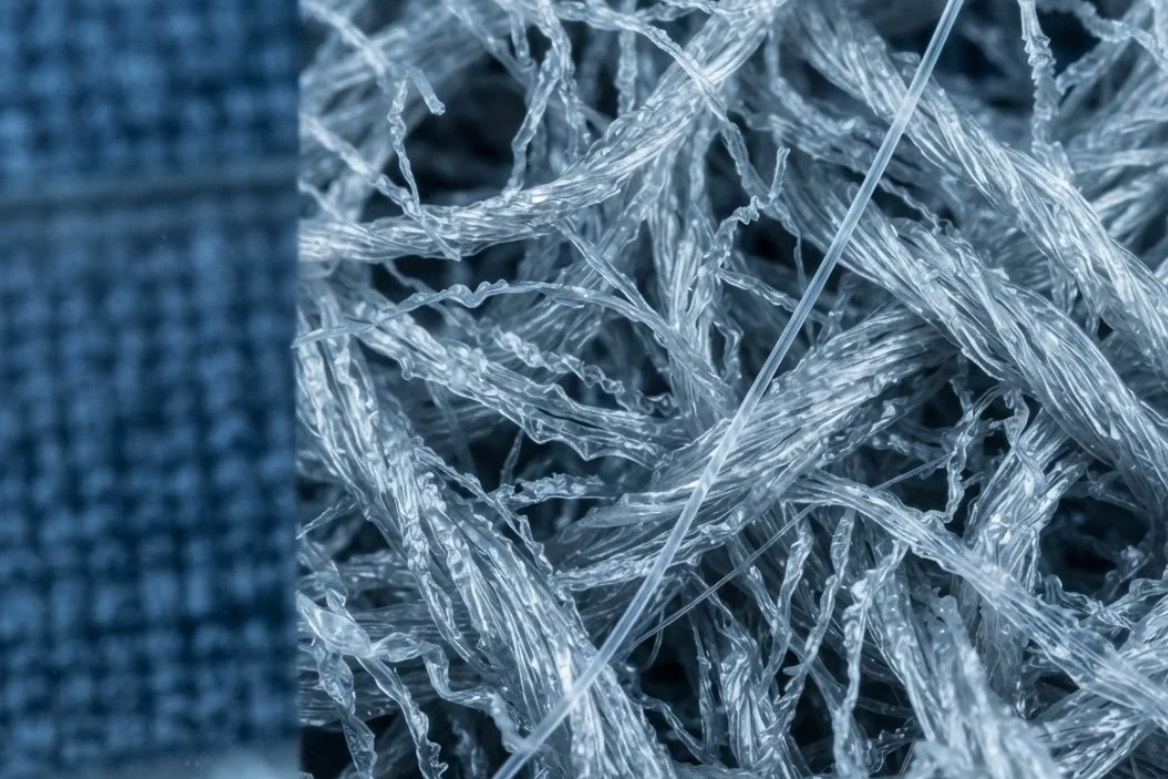
Pure nylon rarely gets credit for what it actually does well. Strip away the elastane, and you're left with a fiber that's tougher, tighter-woven, and more UV-resistant than most anglers assume.
Nylon Performance Matrix:
Metric | Data |
|---|---|
Fiber Density | 1.14 g/cm³ (PA6/PA66 range: 1.12–1.15) |
Tensile Strength | ~75 MPa; tenacity 4–9 g/denier (retains 90% wet) |
GSM Range | 90–130 GSM lightweight, 130–160 GSM midweight technical |
Wicking Speed | Rated "good"—slower onset than polyester, low total uptake |
Stretch (no elastane) | 10–15% mechanical give from 20–40% fiber elongation |
UPF Rating | 30–50+ in tight, high-density weaves |
Moisture Regain | 3.5–5% (vs. polyester's 0.4%) |
Nylon's fiber-level UV resistance rates only "fair." Engineering pushes it to UPF 50+: dense weaves, thread count, darker dyes, and TiO₂ finishes. Breathability runs low, heat retention sits medium—so nylon shirts feel warmer than polyester mesh but survive gunnels, rod butts, and PFD friction better than almost anything else on this list.
Melting points of 215–265°C mean deck heat and dryers won't touch it.
Best fit: Offshore, deep-sea sun-protection shirts where abrasion resistance and salt exposure matter more than peak cooling.
Bamboo/Ice Silk Blend
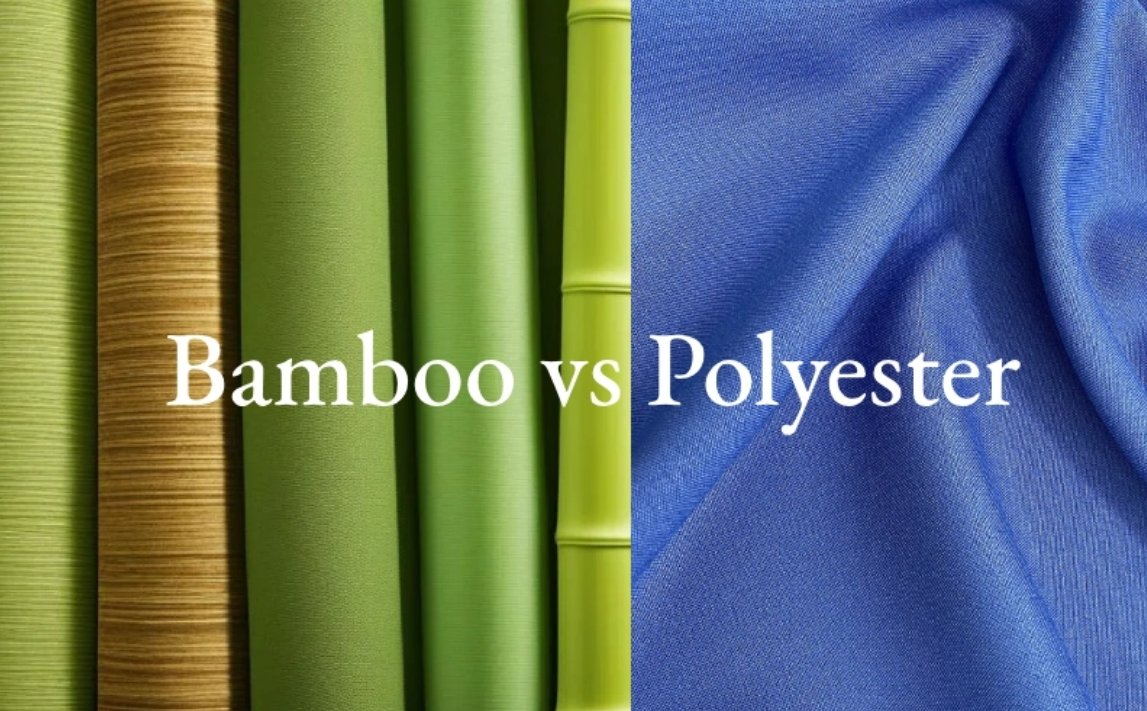
Asian outdoor markets quietly solved the polyester-versus-nylon debate with a fabric that doesn't take sides. These bamboo/ice silk blends combine bamboo viscose with "ice silk", usually a mix of 70–88% polyester or nylon and 12–30% spandex. The result is cooling and wicking performance that either fiber alone can't reach.
Bamboo/Ice Silk Performance:
Metric | Data |
|---|---|
GSM Range | 100–140 GSM (tropical weight) |
Wicking Speed | 5–10 sec visible spread |
Drying Time | 20–30 minutes (cotton: 68 min) |
Stretch | 5–8% (knit-driven, low spandex ~3–6%) |
UPF Rating | 20–30 baseline, boostable to 50+ |
Contact Cooling | 4–6°F skin temperature drop |
The construction makes sense. Ice silk goes on the front face for an instant cold-touch effect, while bamboo sits on the back to pull moisture away. Lab tests on high-grade ice silk show it dries in 22 minutes under a 100g sweat load. Cotton needs 68 minutes.
Tensile tests on a 50:50 bamboo/silk weave show warp strength hitting 67.54 kgf versus 50.48 kgf for pure bamboo. Crease recovery is better too: 109° compared to 101.25°.
Best use is tropical freshwater and light inshore fishing, where staying cool matters more than maximum sun protection. Layer a hoodie over it for full UPF coverage.
Polyester Mesh
Ten to a hundred tiny openings per inch decide whether a fishing shirt breathes or bakes. Engineers use this range for polyester mesh, so it shows up in ventilation panels instead of full-body construction.
Polyester Mesh Performance Matrix:
Metric | Data |
|---|---|
GSM Range | 60–100 GSM (apparel-style open weave) |
Mesh Count | 10–100 openings/inch (6–16 holes/inch in some weaves) |
Open Area | 20–80% porosity |
Thickness | 0.2–3.0 mm |
Stretch/Recovery | ~5–6% recovery; 5–12% elongation at break (high-tenacity) |
Moisture Absorption | 0.4% (hydrophobic base fiber) |
Shrinkage | Under 1% dimensional change |
More open area means more airflow. Airflow cools your skin, not the fiber chemistry. That's why mesh is one of the most breathable fishing shirt materials here, even though its moisture absorption matches standard polyester.
UV performance is lower here. Wider gaps let more light through, so the UPF rating is lower than tightly woven fabrics. This is not a UPF 50 material.
Best fit: Ventilation panels, underarm gussets, and back yokes on hot-weather shirts. In these spots, quick-dry performance matters more than blocking the sun.
Tightly Woven High-Density Synthetic
Cover factor explains why some polyester shirts block sun like armor while others let light bleed through. Tightly woven high-density synthetics push this metric to 1700–2200 (some patented weaves hit 1800–2540), packing polyester or nylon yarns so close together there's barely room for UV to sneak past.
High-Density Synthetic Performance Matrix:
Metric | Data |
|---|---|
GSM Range | 150–200 GSM (performance-weight band) |
Cover Factor | 1700–2200+ (low porosity) |
Air Permeability | SAP ≤3 L/dm²/min; DAP ≤500 mm/s |
Moisture Regain | <0.5% (polyester base) |
Wicking Speed | 20–30 sec surface transport |
Stretch | 5–10% (crimped yarn, no elastomer needed) |
UPF Rating | 50+ (dense weave, minimal finish required) |
Tensile Strength | 300–800 N/5cm apparel-grade |
This is the sun protection fishing shirt fabric behind Buff-style offshore gear. Low permeability means moderate cooling. Airflow gets restricted, so performance relies on wicking and evaporation instead of breeze. Lifecycle data on similar outdoor synthetics shows 5–7 years of UV durability before degradation.
It fits best in offshore tournaments, extreme UV climates, and wind-heavy conditions where blocking rays matters more than open-air ventilation.
Cotton Blend Performance
Budget apparel lines use cotton/poly blends because they cut costs while beating pure cotton on durability. 50/50 blends sit at 140–200 GSM; 60/40 blends run 150–210 GSM. Polyester improves bursting strength, shrinkage control, and dimensional stability compared to cotton alone.
Cotton Blend Performance Matrix:
Metric | Data |
|---|---|
GSM Range | 140–210 GSM (50/50 to 60/40) |
Wicking Speed | Slower than synthetics, moderate improvement over pure cotton |
Stretch | Limited unless spandex added (95/5 cotton-spandex common) |
Best Fit | Casual, low-intensity fishing |
Cotton fibers hold moisture longer, so wet fabric clings and feels heavier. It's a comfort-cost compromise for casual anglers.
Spandex Blend Performance Fabric
Spandex fiber stretches 400–800% of its original length and snaps back with 95%+ recovery. Those numbers drive the serious spandex blend fishing apparel out there.
Spandex Blend Performance Matrix:
Metric | Data |
|---|---|
Blend Ratio | 85–90% polyester / 10–15% spandex |
GSM Range | 180–220 GSM (medium-heavy knit) |
Stretch | 30–50% four-way stretch |
Recovery Rate | >95% snap-back |
Moisture Absorption | <0.4% (very fast drying) |
UPF Rating | 30–50+ (dense jersey/interlock) |
Push spandex to 12–15% of the blend and you get maximum mobility when casting and wading. The fabric also handles abrasion from boat decks and PFDs well, and its surface takes dye-sublimation graphics cleanly. It's the go-to breathable material for kayaking and high-motion angling, but the heavier knit trades some airflow for durability.
Best fit: Kayak fishing, wading, and casting-heavy sessions where range of motion matters more than ultralight ventilation.
Polyester/Nylon Hybrid
Teijin Frontier built an entire outdoor fabric line around the idea that nylon's toughness doesn't have to cancel out polyester's dry time. That's the whole logic behind polyester/nylon hybrids—blend ratios of 50/50, 60/40, or 70/30 let Best Fabric for Fishing Shirt manufacturers dial in abrasion resistance from nylon while keeping polyester's UV stability and quick-dry edge. For B2B buyers chasing one fabric that covers inshore sun exposure and offshore gear contact, this hybrid is the closest thing to a universal answer in the polyester vs nylon fishing shirt debate.
Polyester/Nylon Hybrid Performance Matrix:
Metric | Data |
|---|---|
Blend Ratio | 50/50 to 70/30 polyester/nylon (60–70% polyester recommended for UV priority) |
GSM Range | 100–150 GSM (light-midweight woven/knit) |
Wicking Speed | <15 sec face-to-back transport |
Drying Time | <30 min saturated to near-dry |
Stretch | 10–15% mechanical (weave-driven, low/no elastane) |
UPF Rating | 50+ with UV-reflective finish over 120–150 GSM base |
The mechanical data backs up the marketing. Zhouye's technical comparison rates this hybrid's tear resistance as "high and stable"—better than standalone polyester, close to pure nylon. Abrasion resistance lands in the same bracket. Dimensional stability scores "excellent," matching polyester alone. You get nylon's ruggedness without polyester's rigidity or nylon's clammy stretch.
UV performance leans on fiber-level physics. Polyester resists UV degradation well on its own; nylon doesn't, but its strength allows tighter weave counts that physically block light. Combine both with a light-to-mid 120–150 GSM construction and UV finish, and UPF 50+ becomes standard.
For sourcing teams verifying performance fishing shirt technology claims, request tensile testing under ASTM D5034, tear strength under ASTM D2261, and a minimum 500-hour Xenon arc exposure for accelerated UV aging with pre/post colorfastness checks.
Conclusion
There’s no single best fishing shirt fabric—only the right GSM, UPF rating, and stretch for your specific water. The polyester vs nylon choice comes down to matching 150 GSM breathable polyester to freshwater humidity, or upgrading to 220 GSM nylon-elastane blends when you’re dealing with saltwater spray and 8-hour sun exposure.
You now have a five-dimension framework—weight, wicking speed, cooling factor, four-way stretch, and UPF 50 fabric rating—to decode any fishing shirts supplier’s spec sheet in seconds instead of guessing from marketing copy.
Pull this scoring matrix, cross-reference it against your next fabric quote or product tag, and make your first purchase (or bulk order) based on numbers. The anglers who win aren’t the ones with the flashiest shirt—they’re the ones who understood the fabric first.