You've ordered the wrong shirts before — maybe not you, but someone on your team has. The bass tournament kicks off at 6 AM under a brutal July sun. Half your crew shows up in embroidered cotton polos, soaked through by the first weigh-in. Or flip it: sponsor dinner guests sit across from anglers in full sublimation-printed fishing jerseys that belong at a kayak race, not a banquet table.
Both mistakes happen more than you'd think. And both are avoidable.
Picking between tournament fishing shirts vs team polos isn't about personal taste. It's about reading the event — and knowing when it makes sense to work with OEM/ODM fishing apparel services that can tailor gear to both performance and presentation. What follows is a scene-by-scene breakdown covering: What follows is a scene-by-scene breakdown covering:
Which garment wins in each situation
What the hard specs look like side by side
How to place a smart bulk order with confidence
Tournament Fishing Shirts vs Team Polos: Technical Specs & Cost Matrix
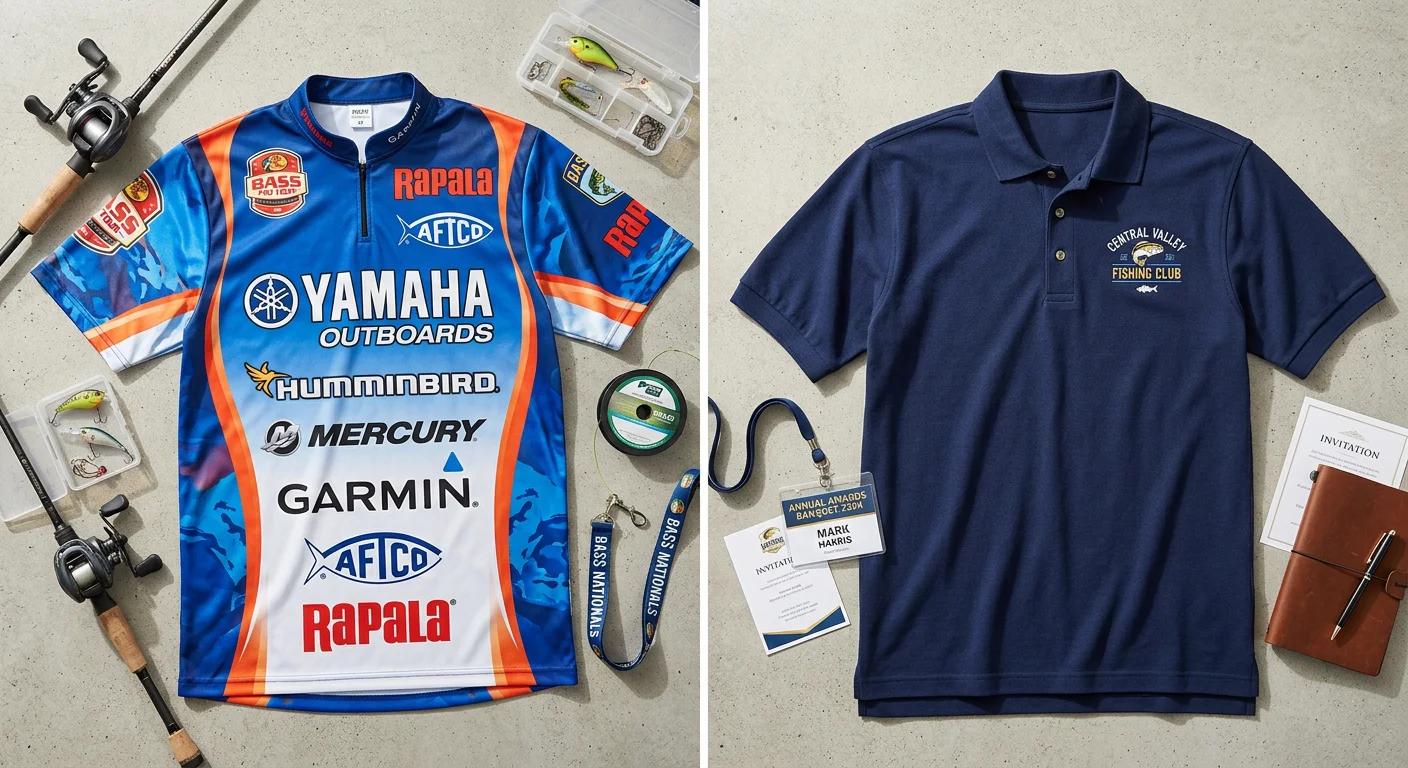
These two garments look similar at a glance. But the differences go all the way down to the fiber.
Fabric & Construction: Built for Different Battlefields
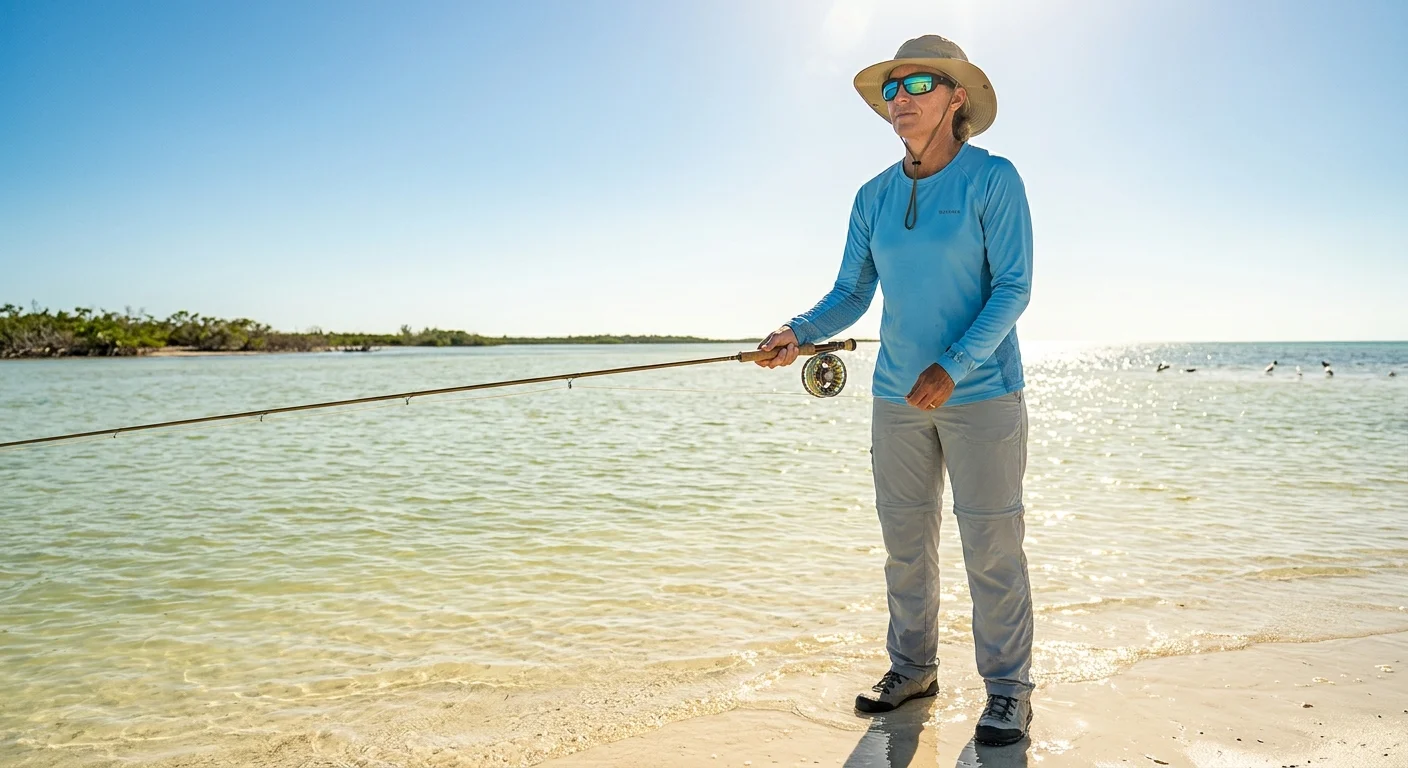
Tournament fishing shirts are built to take abuse. The core material is 100% polyester or a 90/10 polyester-spandex blend. It weighs around 4.1 oz — light enough that you barely notice it at noon in July. Premium cuts like the AFTCO Samurai add 4-way stretch and vented mesh panels. These push air across your back while you fight a fish. The extended tail runs 3 to 5 inches longer than a standard shirt. It stays tucked through every cast, squat, and lean over the gunwale.
Team polos take a different approach — and that's by design. A 65/35 poly-cotton interlock gives them real structure. The collar holds its shape after a dozen washes. They breathe well enough. They look clean and sharp. But they're not built for full-day sun exposure or saltwater spray.
Print Technology: Where the Real Gap Shows
This is where the two options split hard.
Sublimation printing (used on fishing shirts) fuses dye straight into the polyester fibers. You get unlimited color gradients, photographic sponsor logos, and zero cracking after 200 wash cycles.
Embroidery and screen printing (standard on team polos) give you a clean, professional finish. Great for chest logos and collar-area branding. But they can't match the full-coverage sponsor visibility that tournament teams now expect.
Your event needs prominent sponsor logos across the full chest, back, and sleeves? Sublimation-printed fishing shirts are the clear choice. Nothing else comes close.
UV & Moisture Performance: The Hard Numbers
Feature | Tournament Fishing Shirts | Team Polos |
|---|---|---|
UV Protection | UPF 40–50+ (blocks ≥98% UVB) | UPF ~30 via poly blends; not standardized |
Moisture Wicking | Quick-dry + DWR stain release; saltwater and oil resistant | Moisture-wicking capable; better stain masking on dark fabrics |
Durability | Fade, wrinkle, and shrink resistant; no pilling on line guides | Pilling risk in friction zones; requires low-heat iron for collar crispness |
UPF 50+ isn't a marketing footnote. It's the difference between a team that stays sharp at 2 PM and one that's sunburned and losing focus.
Cost Breakdown: What Bulk Actually Costs You
Order Volume | Tournament Fishing Shirts | Team Polos |
|---|---|---|
50–100 units | $22–$35 base; +$5–$10 for stretch fabrics or full sublimation | $14–$22; +$2–$6 per embroidery stitch count |
100+ units | $18–$45 (lightweight 4 oz microfiber at lower end) | $12–$28 (bulk poly-cotton; HUK-style quick-dry options) |
The price gap is real. So is the reason behind it. Tournament shirts carry the cost of UPF technology, DWR coatings, and sublimation-compatible fabric. Polos cost less to make — and that lower cost makes them the right pick in the right context.
Bottom line on specs : Your event puts people on the water for 6+ hours under direct sun? The tournament shirt's UPF 50+ and quick-dry performance are worth the $8–$12 per-unit premium. Your event runs indoors, post-competition, or in a corporate setting? That premium adds nothing. The polo's cleaner look wins outright.
Lake Bass Tournaments & High-UV Water Days: Sublimated Performance Jerseys
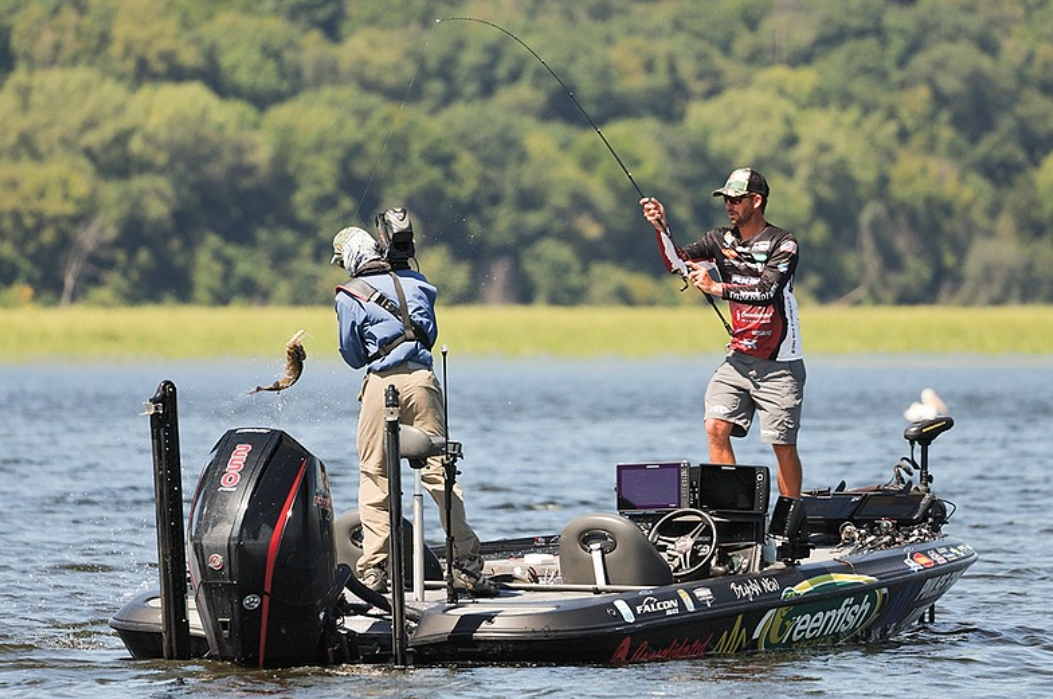
Midday on the water in July doesn't forgive bad gear choices. The sun hits the surface and bounces straight back up. Your team takes it from both directions for six to ten hours. There's no real debate here — sublimated performance fishing jerseys are the one garment built to handle what a full-day bass tournament throws at a team.
Here's what that day looks like in practice, and why the shirt matters.
The Conditions That Break the Wrong Shirt
A regional bass qualifier isn't a morning outing. It's a multi-hour grind through high humidity, constant rod movement, boat spray, and unbroken UV exposure. Cotton absorbs water and holds it. Even a standard moisture-wicking polo starts to drag by hour four. The fabric traps sweat against skin in friction zones — collar, underarms, the back of the shoulders where your PFD rides.
A 100% microfiber performance polyester jersey at 135–140 GSM (about 4.1 oz/sq yd) sidesteps all of that. The fiber structure pulls moisture away from your skin and releases it through evaporation faster than any poly-cotton blend can manage. You cast, you get splashed, the shirt sheds the water weight and dries before the next retrieve. No drag, no chafe, no soaked fabric sitting heavy across your shoulders at weigh-in.
Why UPF 50+ Isn't Optional Here
UPF 50+ blocks 98% of UVB radiation — and on high-UV water days, that number adds up fast. Open water reflects UV back upward. Your arms, neck, and face take exposure from two directions at once. A long-sleeve sublimated jersey with extended cuffs and thumb holes keeps coverage in place through every cast and rod-handle position.
The thumb loops aren't a style feature. They stop sleeve coverage from sliding back during retrieves. That closes the exposed wrist gap that shorter cuffs create after a few hours of arm movement.
For multi-day offshore or regional qualifiers, this matters even more. Repeated sun and saltwater exposure over back-to-back days speeds up skin damage in ways one tournament won't show you. Over a two-day event, the built-up UV protection is where UPF-rated long-sleeve jerseys earn every dollar of their cost premium.
Sublimation Makes Sponsor Coverage Work on the Water
Full-wrap sponsor visibility doesn't work with embroidery or screen print on a performance jersey. The rubber ink layers trap moisture against the fabric and create heat pockets right where you need airflow. Dye sublimation fuses graphics into the polyester fiber , leaving the breathability of the fabric fully intact. The graphic becomes part of the shirt — not a layer sitting on top of it.
That matters for bass tournament teams. Sponsor logos across the full chest, back, and sleeves need to stay sharp through sweat, spray, and repeated washing across a full season. Sublimated graphics don't peel, crack, or fade after 200 wash cycles. They look the same in October as they did in the pre-tournament photos from March.
Procurement Specs for Bass Tournament Jerseys
Placing a bulk order for a lake event or multi-day qualifier? Here's the spec sheet that matters:
Fabric : 100% polyester, 135–180 GSM (lightweight end of the range for maximum breathability in high heat)
UPF Rating : 50+ full-garment coverage — not just the body panel, across sleeves and cuffs
Print Method : Dye sublimation — avoid DTF (direct-to-film) on performance polyester; it compromises moisture transfer
Functional Features : Moisture-wicking, quick-dry, long-sleeve cut with extended cuffs and thumb holes
Sizing Range : Toddler through adult for teams that include youth divisions
MOQ & Pricing : Minimum 10 pieces at the custom level of tournament fishing shirts;tournament fishing shirts wholesale pricing runs $2.50–$8.50 per unit at volume, with full custom bass team jerseys priced higher based on graphic complexity
Lead Time : Factor in artwork approval time — sublimation requires vector files for clean logo reproduction at full-garment scale
Photo angle that works for team kits : anglers in console boats under direct midday sun, full-sponsor jerseys visible from bow to stern, with action framing that shows rod retrieves and water spray. The all-over graphic reads better in motion than it does on a hanger.
One last point worth noting: the $5–$10 per-unit premium that performance sublimated jerseys carry over a standard team polo pays for UPF technology, DWR coating, and sublimation-compatible fabric — not branding markup. On a six-hour water day, that's what keeps your team functional, protected, and looking sharp from first cast to final weigh-in.
Trophy Weigh-Ins, Sponsor Dinners & Award Banquets: Custom Logo Polos
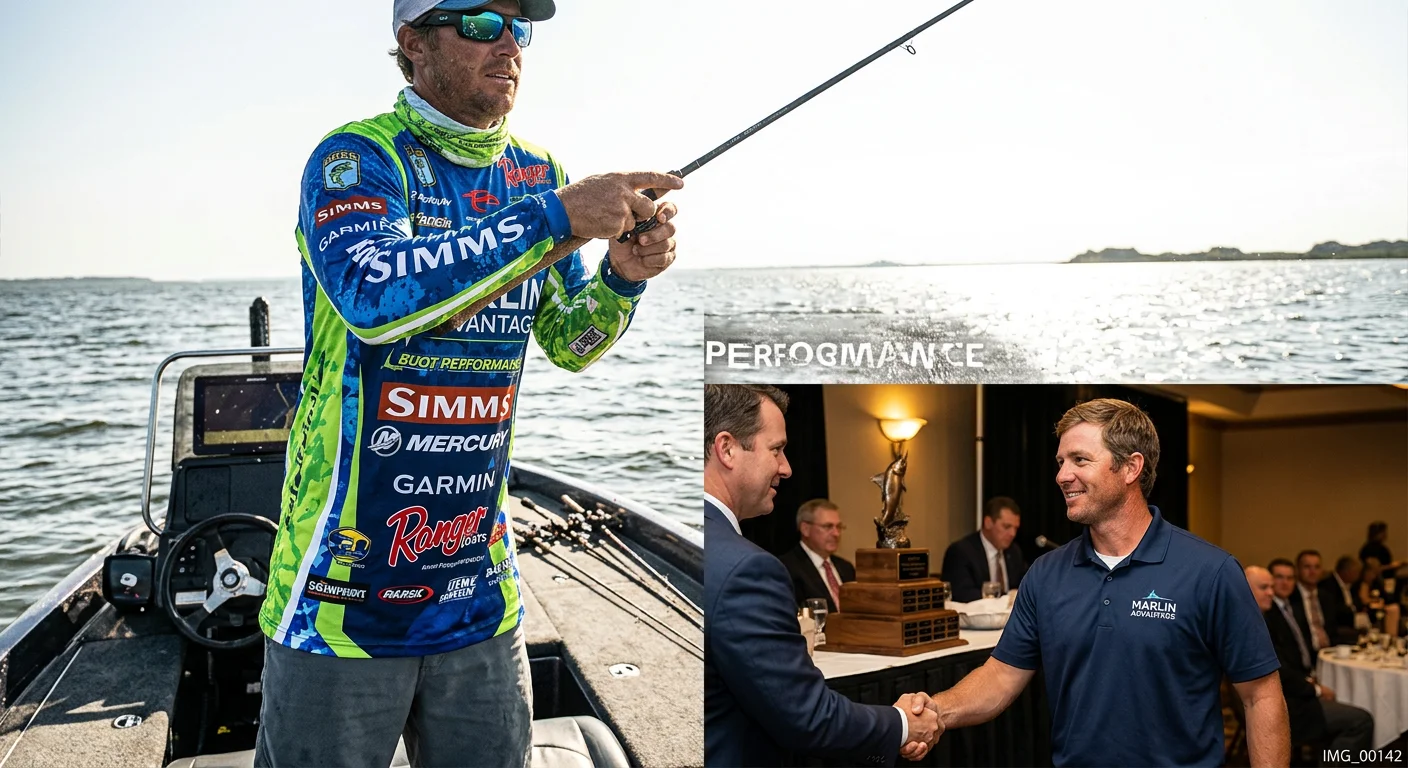
The tournament ends. The shirt that kept your team alive on the water is now the wrong shirt for every room you walk into next.
Weigh-in stages, trophy presentations, sponsor dinners — these are the moments that get photographed, posted, and remembered. A sublimated performance jersey works great on a boat at 11 AM. At a banquet hall at 7 PM, standing next to a sponsor rep in a blazer, that same jersey makes you look like you just wandered in from the parking lot.
That's where custom embroidered fishing team polo shirts earn their spot in a tournament wardrobe. Not as a backup option. As the right call.
At the Weigh-In Stage: Clean Lines Under the Lights
Weigh-in stages move fast. There are 100+ athletes cycling through, officials running scale operations, and cameras catching every handoff. Your stage staff needs to look unified and easy to identify — not just to the crowd, but to cameras shooting straight into stage lighting.
Left-chest embroidery at or under 10,000 stitches is the standard that works here. The logo sits clean. The stitching reflects light without blowing out the image. Color-matched thread keeps branding sharp across different fabric tones. Uniform color blocking across your staff polos also creates a consistent visual backdrop for weigh tag and scale photos. Every event photographer shooting tournament coverage knows this. Your gear should account for it.
One detail that gets missed until the second event: anti-curl placket stays . After 100 athletes press into a weigh-in photo op, collars start to curl. A polo with built-in stays keeps that collar flat through the whole operation. It's a small thing — but it shows up in every photo from the day.
At the Gala, Banquet, or VIP Dinner: Authority Without Overdressing
Sponsor dinners have a dress code, stated or not. The unspoken standard is business casual — structured enough to show respect for the room, relaxed enough that it's not a black-tie event. A piqué knit polo at 4.5–5.8 oz/yd² hits that range well.
The weight matters for another reason at indoor events. Climate-controlled banquet halls run cool, but a heavier fabric still overheats staff who are managing room setup, seating, and trophy logistics. The lighter piqué breathes without looking sloppy. Pearl-look buttons instead of metal add subtle visual polish that holds up against upscale lodge or hotel dress codes — a detail that costs almost nothing at the manufacturing level but reads well in the room.
Embroidered logos carry a certain authority at these events that sublimation doesn't. Quality embroidery has texture and depth. It photographs well under warm indoor lighting. It signals credibility in a way that printed graphics can't replicate at a formal sponsor table.
Procurement Specs for Weigh-In & Banquet Polos
Placing a bulk order to cover both the weigh-in stage and the evening event? Here's the spec framework that handles both:
Fabric : Piqué knit poly-cotton or performance poly, 4.5–5.8 oz/yd²
Logo Application : Left-chest embroidery, ≤10,000 stitches, color-matched thread
Construction Details : Anti-curl placket stays, pearl-look buttons, structured collar
Care : Machine-washable — extends garment lifespan 2–3x compared to dry-clean-only options, critical for circuits running 10+ events per season
MOQ : 12–24 units at direct-manufacture pricing of fishing team polos ; scale orders unlock bulk discounts at 50+ units
Lead Time : 2–4 weeks from artwork approval — provide vector logo files and finalized color selections at submission
Photo framing that works : stage lighting hits the left-chest embroidery during a trophy handoff, sponsor branding stays visible, and a clean color-blocked backdrop sits behind the scale. That's the image that ends up in the event recap and the sponsor's post-event report.
The performance jersey carried your team through the tournament. The polo carries your organization through everything that comes after. Both decisions matter — they just belong to different moments in the same event day.
Fishing Expos, Charity Activations & Corporate Team Building: Hybrid Wear Strategy
Three different events. Three different rooms. One team trying to look cohesive through all of them.
Fishing expos, charity lake days, and corporate team-building events share one thing tournament days and banquet dinners don't: they shift environments mid-event . Your staff moves from a carpeted expo floor to a dock to a sponsor meet-and-greet — all within the same eight hours. No single garment handles that transition well. That's why teams that look sharp at these events plan for two.
The Two-Shirt Strategy That Works
Here's the split experienced event coordinators land on after one season of getting it wrong:
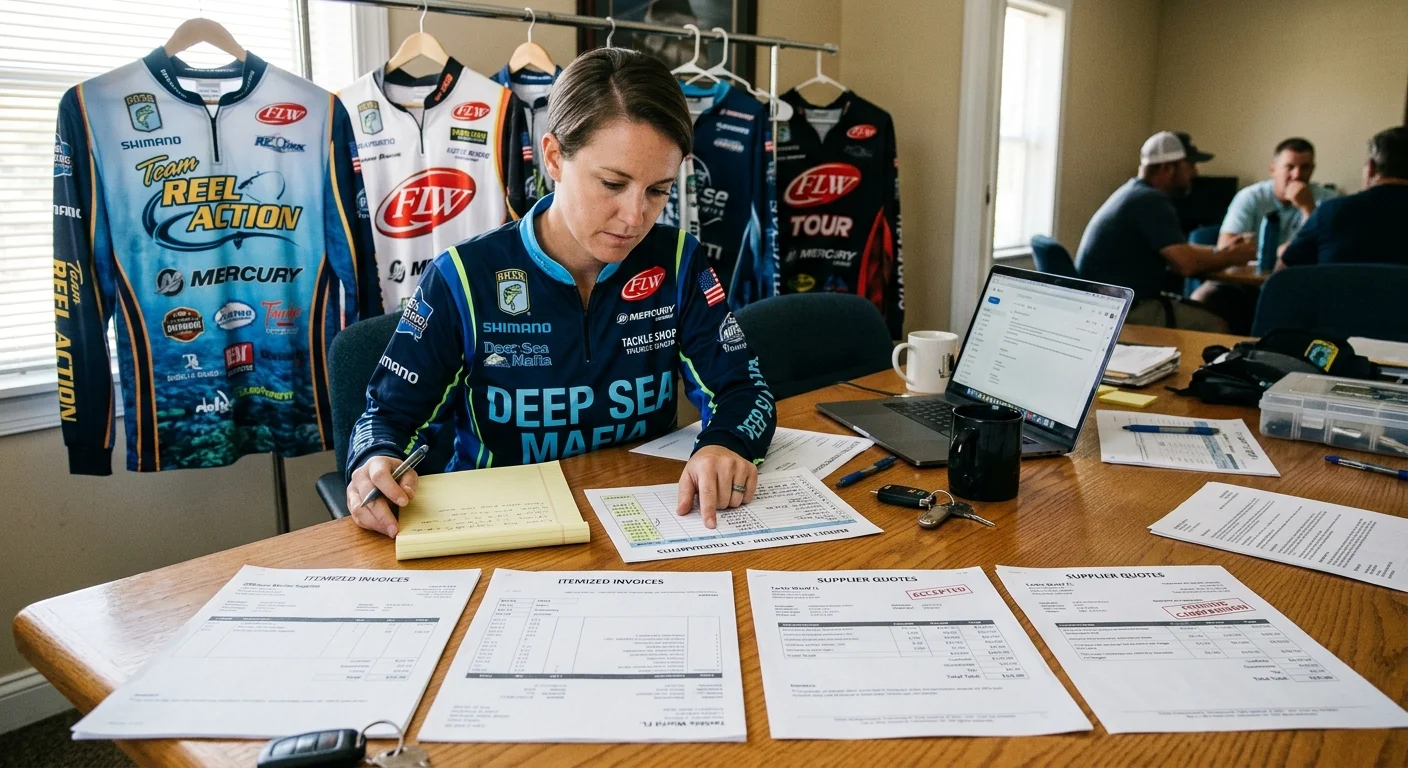
Embroidered polos for the booth, the networking zone, and VIP sponsor tours. The polo's structured collar and clean chest embroidery read as credible in a B2B setting. A corporate prospect walks up to your expo booth. Your staff looks ready for a site visit — not a casting competition. That visual cue builds trust before anyone says a word. A piqué knit polo at 4.5 oz keeps staff comfortable through 8+ hours of standing and conversation. It won't show sweat saturation either.
Sublimated performance shirts for every active phase. Charity fishing launches, lakeside volunteer cleanup, casual boat competitions — these are the moments where UPF 50+ coverage and quick-dry polyester stop being premium features and start being basic requirements. A 92% poly/8% spandex sublimated jersey handles sun exposure and physical movement. The polo wasn't built for that.
The rotation is straightforward. Staff wear embroidered polos for the morning expo floor. They switch to sublimated shirts once the event moves to the water or the volunteer phase starts. Color-coordinate both garments — same navy, same brand palette — so the switch looks planned, not random.
Brand Visibility Across Both Zones
Sublimation earns its cost on the active side of these events. Charity branding across the full chest and back reads well during a lakeside launch or on-water team competition. Visibility stretches across open water. Embroidery does the close-range credibility work at the booth. The texture and depth of quality stitching carry a different kind of authority at a sponsor table than printed graphics do.
Matching company hats across both garment types tie the overall look together. It's a low-cost move that lifts brand visibility across zones — no third uniform option needed.
Procurement Checklist for Hybrid Events
Item | Spec |
|---|---|
Polo Fabric | Piqué knit, 4.5 oz, poly-cotton or performance poly |
Active Shirt Fabric | 92% polyester / 8% spandex, UPF 50+, quick-dry |
Polo Branding | Left-chest embroidery, Pantone-matched thread, ≤10,000 stitches |
Active Shirt Branding | Full sublimation, vector artwork required |
Color Coordination | Verify dye lot consistency across both garment types |
MOQ | 50 units minimum for custom embroidery and sublimation of fishing shirts |
Lead Time | 3–4 weeks from final artwork approval |
Coordinated uniforms at outdoor brand activations boost visibility by 30–50% compared to uncoordinated team wear. Building both garments around a single color story costs nothing extra at the design stage. That's the ROI case for planning the two-shirt split before the order goes in — not after you're standing on a dock wishing your volunteers had the right shirts on.
Visual framing that works here : expo booth staff in embroidered polos mid-conversation with sponsors, khaki shorts completing the casual-professional look — then cut to the same team in color-matched sublimated shirts at the lakeside charity launch. Same brand, different function, and every bit of it planned.
Fleet Procurement Decision Checklist: MOQ, Lead Time & Custom Options
A great garment choice means nothing if the order breaks down on logistics. This framework keeps bulk uniform orders on track — from first quote to final delivery.
Minimum Order Quantities: What Each Garment Type Requires
Custom sublimated fishing shirts and embroidered polos run on different MOQ floors.
1.Sublimated tournament jerseys : 10-piece minimums for small club orders. Wholesale pricing kicks in at 50+ units — that's where the real savings start.
2.Embroidered team polos : 12–24 units at direct-manufacture pricing of fishing shirts. Hit 50+ units and bulk discount tiers open up.
3.Hybrid event orders (both garment types combined): 50-unit minimums across the full run. This keeps per-unit costs competitive.
Testing a new fishing apparel supplier? Start with a 100–200 unit verification order. Quoted production capacity and actual delivered capacity often don't line up — a fishing clothes supplier claiming 2,500 units per month may ship only 600. Get proof before you commit to a large run.
Lead Times: Build These Into Your Event Calendar
Order Type | Standard Lead Time | Peak Season (Q3–Q4) |
|---|---|---|
Sublimated fishing jerseys | 3–4 weeks from artwork approval | Add 10–20 days |
Embroidered polos | 2–4 weeks from artwork approval | Add 10–20 days |
Hybrid two-garment orders | 4–5 weeks | Plan 6–8 weeks minimum |
Lock your order 60+ days before your event date during tournament season. Artwork delays cause more missed deadlines than anything else. Submit vector files at the time of submission — not after the fact.
Custom Options Checklist
Run through these items before placing any bulk order. Each one confirmed now prevents a problem later.
Garment type finalized per scene (jersey for water, polo for post-event)
Vector artwork files ready for sublimation or embroidery digitization
Pantone thread colors specified for embroidery orders
Size run confirmed — adult through youth if the event includes junior divisions
Functional features locked: UPF rating, thumb holes, anti-curl stays, button style
Dye lot consistency verified across both garment types for hybrid orders
Delivery address and event date confirmed in writing at the time of PO
One decision made here saves three problems later.
Conclusion
The right shirt doesn't just cover your team — it shows who you are before anyone casts a line.
The pattern is clear across every scenario, from scorching tournament days on open water to sponsor dinners under the lights. Sublimation-printed performance fishing jerseys own the water. Embroidered team polos own the room. Smart teams don't pick one over the other. They budget for both and use each one with purpose.
Your buying decision doesn't need to be hard. Two clear situations, two clear answers:
1.Competing, sweating, chasing a trophy under a brutal UV index? Moisture-wicking tournament shirts are a must.
2.Shaking hands, facing cameras, or representing a sponsor at a formal event? A structured polo tells the room your organization means business — from the dock to the dinner table.
You now have the matrix. Use it.
Pull up that checklist. Confirm your MOQ and lead time. Then place the order that makes your team look as serious as they fish.