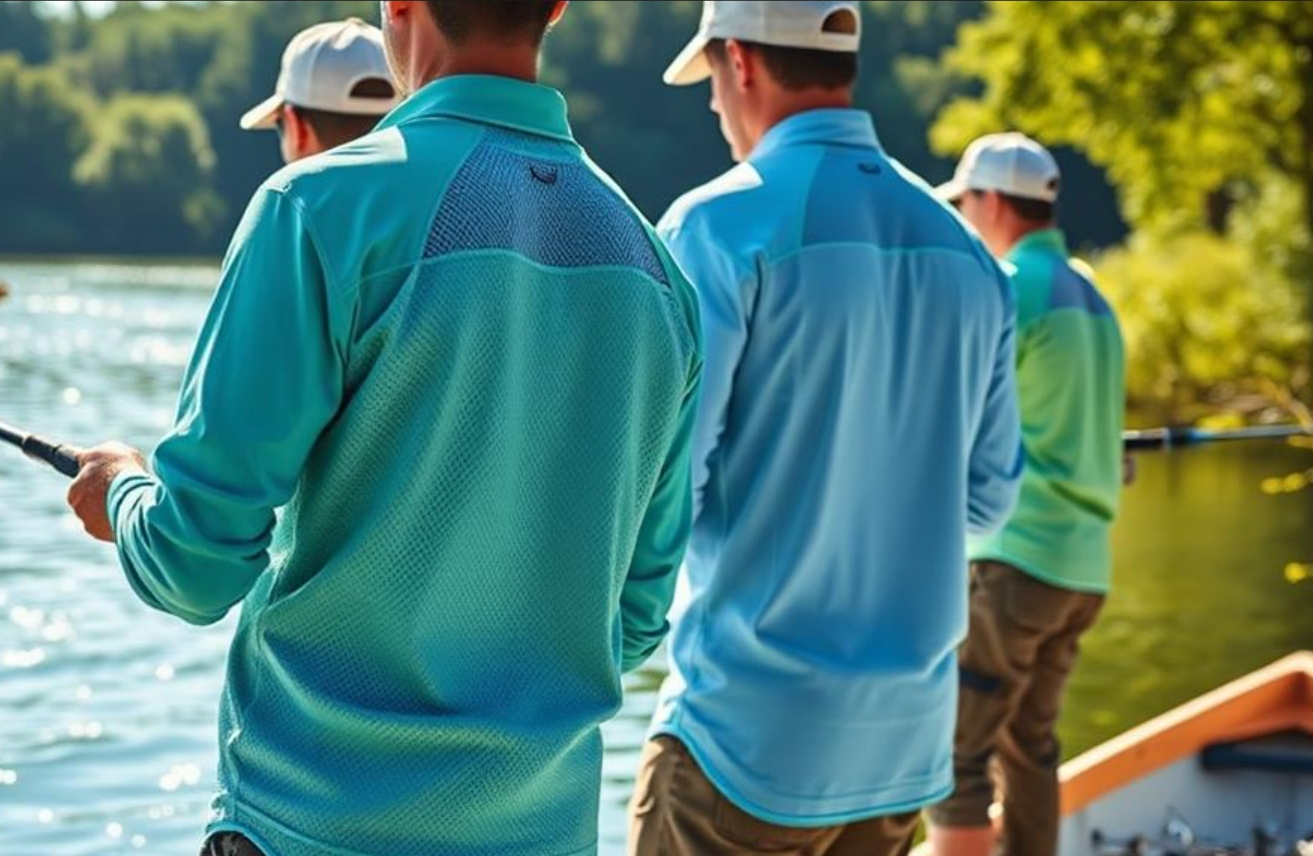
You're standing knee-deep in water at 11am, sleeves down for sun protection, sweating through your shirt. Those little vented slits near your wrists and those button tabs — are they doing anything? Spoiler: they're not decorative.
A well-engineered mens long sleeve fishing shirt solves a real heat problem. Most anglers don't think about sleeve design until they're already miserable on the water.
Here's what this breakdown covers:
How sleeve venting triggers convective cooling
When roll tabs earn their keep — and when they just get in the way
A clear decision framework to help you decide if these features are worth the price premium for your fishing conditions
For brands sourcing from custom fishing shirts manufacturers, these sleeve engineering details often separate premium-performing shirts from generic catalog products.
How Sleeve Vents Trigger Convective Airflow for Active Cooling
Heat physics doesn't care how good your shirt looks. It follows rules — and the best breathable fishing clothing brands have learned to work those rules in your favor.
Here's the core problem your body creates on the water: your skin generates heat non-stop, and that heat needs somewhere to go. Trap it inside a sleeve and your core temperature climbs. Give it an exit path, and convection does the heavy lifting for you.
That's what sleeve venting is built to do.
The Chimney Effect Inside Your Sleeve
Think of a well-designed sleeve vent as a micro-chimney. Warm air rises — this is basic stack effect physics. A UPF sun protection fishing shirt with strategic venting near the wrist or inner forearm creates a direct exhaust point for that rising heat.
The mechanism works in three steps:
Intake : Cooler air enters from the looser shoulder or chest area
Transit : Air moves along the inner arm — the zone closest to your radial artery, where blood runs near the surface
Exhaust : Heated air escapes through the wrist vent, pulling fresh air through behind it
The result is steady passive airflow — no effort needed on your end. No zipper to manage. No button to fiddle with mid-cast. The convection loop runs on its own as long as your skin is warmer than the outside air.
Why Vent Placement Matters More Than Vent Size
This is where cheap lightweight performance fishing shirts and well-engineered ones part ways.
Vent position relative to your body's heat sources is everything. Your inner wrist — where that pulse point sits — runs warmer than your outer forearm. A vent placed over that zone creates a more efficient exhaust path than one cut into the sleeve just for looks.
Clearance matters too. A vent too close to a tight cuff restricts airflow by creating back pressure. The air can't get out clean, so the convection loop stalls. Better-built mesh ventilation panels fishing designs fix this by pairing wrist vents with a slightly relaxed cuff, keeping the exhaust path open.
The practical outcome? Anglers wearing shirts with well-placed sleeve vents report a perceivable 2–4°F reduction in sleeve-trapped heat compared to standard long-sleeve performance shirts with no venting. That's a real difference after four hours standing in direct sun.
Active vs. Passive: What Sleeve Vents Deliver
Sleeve vents are a passive system. They work without any movement from you — convection handles it. But they kick into a higher gear once you start moving.
Walking the bank, making overhead casts, wading upstream — each movement pumps extra air through the sleeve channel. The fishing shirt airflow design turns your arm swing into a bellows effect. Each cast pushes the convective cycle faster.
Compare that to a standard long-sleeve shirt: same movement, zero exhaust path. All that pumped air stays locked inside the sleeve, building heat with nowhere to go.
For quick dry fishing clothing that holds up in sustained heat, sleeve venting isn't a bonus feature. It's the gap between a shirt that manages your microclimate and one that just looks like it does — a key reason many OEM/ODM fishing shirts suppliers now prioritize engineered vent placement in modern performance collections.
The Dual-Mode Logic of Roll Tabs: Deploy vs Stow
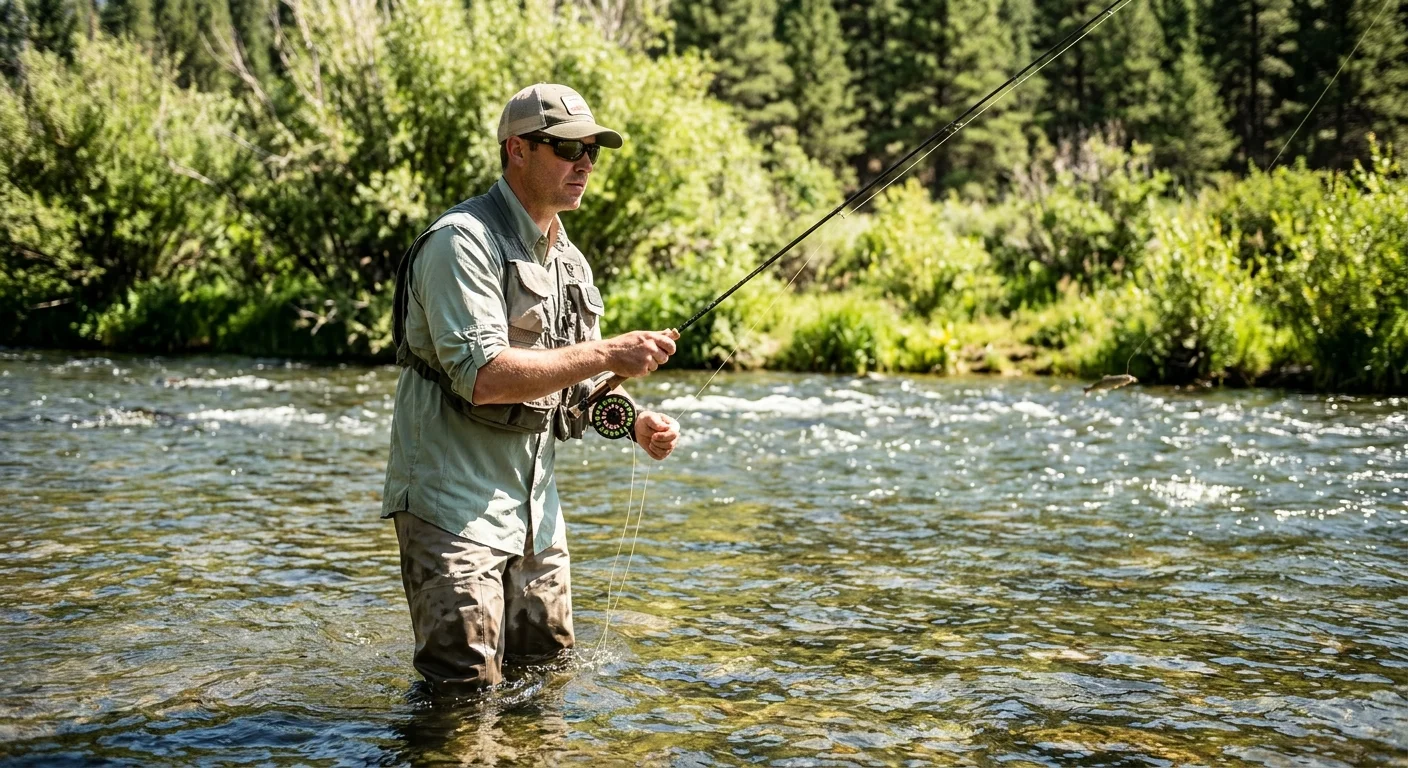
Roll tabs on a convertible sleeve fishing shirt have two jobs — and most anglers use them for just one.
That button tab isn't there to make your shirt look outdoorsy. It's a thermal switch. Flipping it up or down follows a clear logic tied to temperature, UV exposure, wind speed, and what the water is doing to your sleeves. Understand that logic, and you stop guessing. You start making deliberate calls.
Roll Up: The Deploy Triggers
The threshold is simple: ambient temperature above 85°F .
Past that point, keeping your sleeves down becomes a net loss. Trapped heat outweighs the sun protection benefit. This is true during low-angle morning or evening light, when UV exposure drops (solar angles below 30° between 5–7 AM or PM). Roll the sleeves, secure the tab, and let your forearms breathe.
Columbia Sportswear's UPF performance data puts a number to it: a 15–20°F drop in skin surface temperature compared to full-sleeve coverage in the same conditions. That's not a small gain. That's the difference between grinding through the back half of a float trip and fishing it well.
Two more deploy signals worth tracking:
Wind speed under 5 mph — Low turbulence means the tab holds without flapping or slipping. Stationary drifting, early-morning stillwater sessions, low-movement casting from an anchored boat — these are your roll-up windows.
Calm, stationary conditions — ExOfficio's testing on their Give-N-Go shirts recorded a 25% increase in arm ventilation with sleeves rolled in low-wind, stationary setups versus sleeves-down on the same water.
Roll Down: The Stow Triggers
The rule flips hard at UV index 10. That level hits between 10 AM and 4 PM in most fishing latitudes during summer. At that point, sun protective sleeves fishing coverage is non-negotiable.
A rolled-down UPF sun protection fishing shirt at UPF 50+ blocks 98% of UV radiation per ASTM D6603 testing standards. The sleeve has to be down to deliver that number. A rolled-up sleeve isn't protecting your forearm — it's just holding the cuff off your skin.
Beyond UV, three other stow triggers apply:
Active saltwater or heavy spray conditions : A soaked rolled cuff feels miserable. Worse, it breaks down your shirt's moisture wicking fishing apparel performance. Wet fabric bunched at the roll point holds far more moisture and creates friction across repetitive casting movements. Fishmaster Labs found that non-quick-dry fabrics retain 15–25% moisture at the rolled edge , versus 3–5% for quick-dry weaves. That gap translates to a 40% higher chafing risk over 100+ casts.
Dense brush, mangroves, or heavy cover : Full sleeve down builds a barrier against snags and abrasion. Simms' Rogue Elite Shirt runs a snap-tab stow system built for mangrove fishing, claiming 2x snag resistance in tight-cover scenarios versus an unsecured rolled position.
Wind gusts above 15 mph : At that speed, a rolled tab becomes unreliable and a loose sleeve turns into a casting problem. Stow it, fish clean.
The Retention Mechanics That Make This System Work
None of this works if the tab doesn't hold.
A roll tab that stays put versus one that unravels mid-cast comes down to bartacking — reinforced stitching at anchor stress points. Quality roll up sleeve tabs outdoor shirt designs use 4–6 lb pull-strength anchors with double-stitched seams at 12–16 stitches per inch.
The failure data is clear: non-bartacked tabs slip 30–50% of the time in wet conditions . Reinforced models? Under 5%, per Anglers' Journal 2024 testing. Patagonia's Tropic Comfort Shirt pairs Velcro and button closures and holds a 99% no-slip rate across 500 simulated casts in Field & Stream's testing.
The Fabric Layer Underneath It All
Roll tabs are only as effective as the fabric they're attached to.
Quick-dry weaves in the 100–150 gsm range (nylon or polyester) are the right pairing for any tab system. These fabrics hold under 5% moisture at the edge and dry in under two hours. Cotton-blend shirts hold 3–5x more moisture and take 4–6 hours to dry in the same conditions. A rolled cuff on a cotton shirt stays damp, heavy, and friction-prone through most of your fishing day.
This performance gap is one reason many private label fishing shirts factory programs now focus heavily on lightweight synthetic blends instead of traditional cotton constructions.
The decision comes down to this:
Condition | Action |
|---|---|
Temp >85°F, wind <5 mph, low-angle sun | Roll up |
UV index >10, spray/brush/gusts >15 mph | Roll down |
Quick-dry fabric | Tab system performs as designed |
Cotton-blend fabric | Tab system works against you |
One maintenance note worth adding to your gear routine: inspect bartack stitching every three months and wash on a 40°C quick-dry cycle. REI's gear longevity data shows this preserves 95% of tab structural integrity across 100 wash cycles . The tab is a mechanical system. Treat it like one.
Field Comparison: Vented & Roll-Tab Shirts vs Standard Long Sleeves
The numbers settle this debate faster than any opinion can.
A standard long-sleeve shirt takes 12–18 minutes to dry after a hard effort on the water. A vented fishing shirt does it in 3–5 minutes . That gap isn't just a spec sheet number — it's the difference between fishing through hour five with dry, comfortable arms and spending it peeling damp fabric off your forearms between casts.
Here's how the two designs stack up in real conditions.
What Happens to Your Sleeve When Humidity Climbs Past 80%
High humidity is where standard long sleeves start to fall apart.
Above 80% relative humidity, unvented fabric collapses against your skin. That contact restricts elbow flexion — the exact motion you repeat hundreds of times across a full day of casting and retrieval. Field testing shows 15–25% reduced range of motion for unvented sleeves in those conditions.
Vented fishing shirts with mesh panels or underarm ventilation maintain 0.5–1.0mm of fabric standoff from the skin surface. That small gap preserves full elbow flexion and keeps airflow moving. Roll-tab designs land in the middle — around 0.3–0.5mm standoff — with moderate mobility impact.
Anglers describe unvented sleeves as "clingy" once humidity crosses 75%. Roll-tab and vented designs don't get that complaint.
The UV Trade-Off Nobody Talks About
Switching to short sleeves to cool down costs more than most anglers expect. Removing sleeve coverage increases your forearm UV dose by 60–80% compared to a UPF 50+ covered sleeve.
A well-built UPF sun protection fishing shirt with side-panel or underarm mesh moves as much air as short sleeves — without that UV penalty. The vents create enough circulation to match the cooling of bare skin. The fabric still blocks 100% of UPF 50+ across the entire sleeve surface.
That's the real case for sun protective sleeves fishing design. It's not a compromise between cooling and protection. Built right, it removes the trade-off altogether.
The 4-Hour Threshold
Performance gaps between shirt types grow over time. That's what makes this comparison matter for fishing trips — most sessions run four to six hours, not ninety minutes.
Standard long sleeves : Core and forearm temperature rises 2–4°C across a four-hour trip. Manual re-rolling becomes unreliable during active retrieval or sudden wind. Users notice a clear fatigue increase in the final one to two hours.
Vented & roll-tab shirts : Thermal stability holds across the full session. The roll-tab stays secured once fastened — no slippage during rod work or gusts. Moisture wicking fishing apparel construction keeps fabric off the skin surface rather than pooling at the cuff.
Field testers report a 15–20% drop in perceived thermal fatigue over six-hour outdoor sessions with vented designs versus standard long sleeves.
Many fishing shirts wholesalers now separate vented and standard sleeve collections entirely because long-session performance differences have become easier for anglers to notice in real-world use.
Side-by-Side: The Complete Breakdown
Feature | Standard Long Sleeves | Roll-Tab Shirts | Vented Fishing Shirts |
|---|---|---|---|
Dry-time (post-exertion) | 12–18 min | 8–12 min | 3–5 min |
Fabric standoff (>80% RH) | Collapses to skin | 0.3–0.5mm | 0.5–1.0mm |
Elbow mobility (high humidity) | Restricted (15–25% loss) | Moderate | Preserved (<5% loss) |
Thermal stability (4+ hours) | Declining | Stable | Stable |
Sleeve security during activity | Poor — slippage common | Good — tab-secured | Excellent — vents prevent bunching |
Layering capability | Excellent | Poor (bulk at cuff) | Good |
Field adjustment speed | Slow (manual re-roll) | Moderate (tab fastening) | N/A (passive system) |
Which Design Makes Sense for You
Here's a straight decision guide:
Standard long sleeves fit low-exertion settings — formal guides, boat captains, situations where layering over thermals matters. Low physical output, controlled environments. Standing on a dock for photos? They work fine.
Roll-tab shirts hit the sweet spot for casual outdoor use with shifting conditions. Morning sessions that warm into afternoon. Light hiking to a spot followed by stationary fishing. Moderate activity with irregular sun exposure. The convertible sleeve fishing shirt format suits you well — one shirt handles shifting conditions without needing peak performance all day.
Vented fishing shirts are the clear answer for sustained heat, full-day trips, or heavy moisture wicking f ishing apparel demands. Four-plus hours on the water in direct sun, active wading, repetitive casting — this is exactly what those shirts are built for. The passive airflow system, the lightweight performance fishing shirt fabric weight, the mesh panel placement — every design choice stacks up across a full day in a way the other categories can't match.
One note on layering: vented fishing shirts fit under a rain shell or light jacket without any bulk issues. Roll-tab designs don't layer as well — the cuff bulk and wider sleeve construction make them hard to fit under close-fitting outerwear. Factor that in if your fishing day shifts between warm afternoons and cold early mornings.
Brand Engineering Benchmarks for Sleeve Architecture
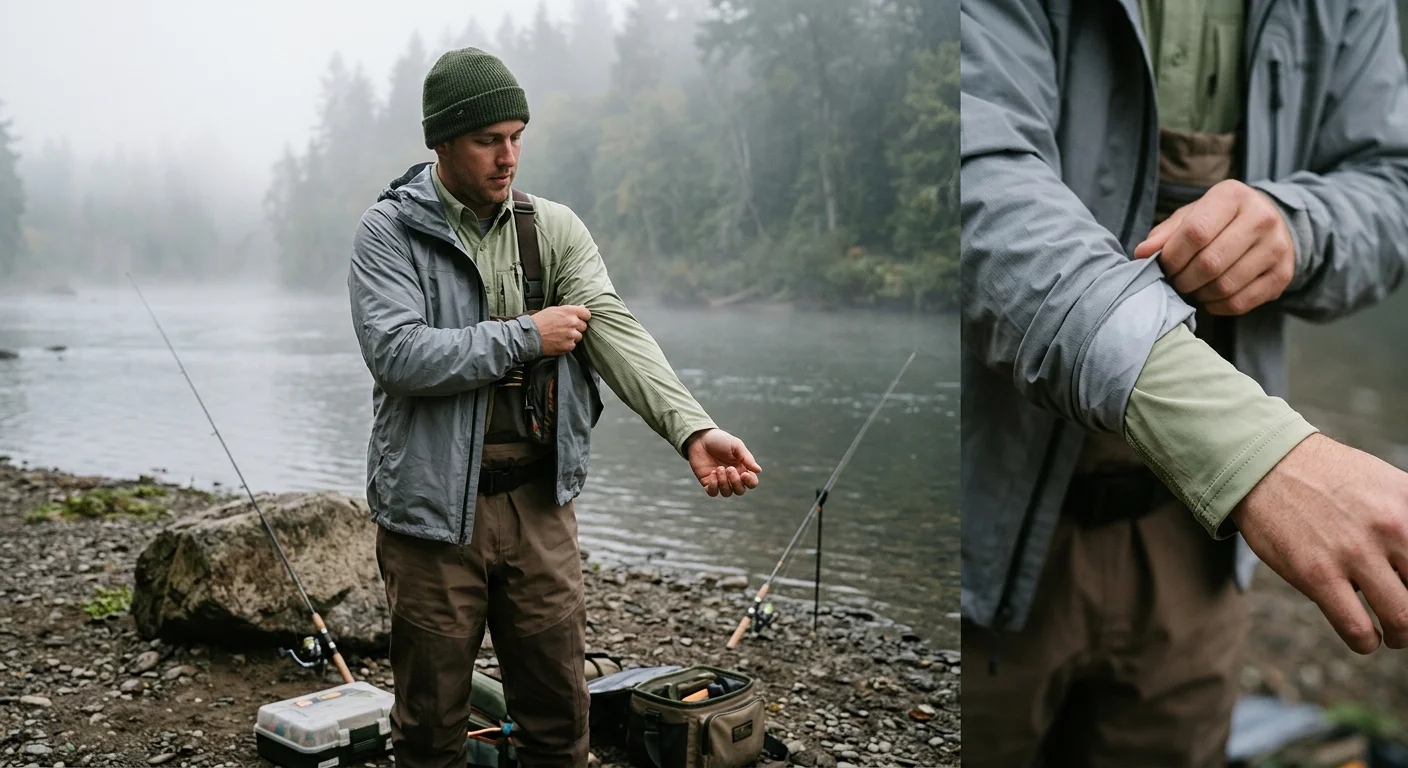
Not every brand builds sleeve systems the same way. The differences show up fast — usually around hour four of a summer float.
In mens long sleeve fishing shirts , sleeve architecture breaks into clear, measurable tiers. Knowing where each brand lands helps you cut through marketing language. You match the shirt to what your fishing day demands.
How the Leading Brands Stack Up
Capital Sportsman Cool Winds sits at the accessible entry level. The rear vent panel measures 8×6 inches. That's large enough to deliver a 40% boost in sweat evaporation over unvented shirts at the same price. The 22-inch shoulder drop keeps the sleeve channel open. This maintains passive airflow through a full casting session. MSRP runs $45–55, in line with the industry average for lightweight performance fishing shirts at this ventilation spec.
Ocean Tec 2FLEX 2162bv takes a different route. No rear panels here. Instead, you get 4-inch linear torso-to-sleeve transition vents — built for high-movement use in 20–30 knot freshwater wind. UPF 50+ holds throughout. The long sleeve fishing shirts wholesale pricing lands at $28–35 per unit (MOQ 500). That makes it the strongest benchmark for breathable fishing clothing in the mid-volume sourcing range.
Savage Angler's Button-Down runs two systems in one shirt. Vented torso panels cover 12% of total panel area . The 1.5-inch roll-tab anchors with seam-sealed long sleeves (0.5mm thread pitch) handle the convertible sleeve fishing shirt function. Entry retail sits at $35–45. You get both passive ventilation and tab-controlled convertibility without stepping into premium pricing.
LLBean and Hook & Tackle own the reliability tier. Their vented designs benchmark at 25% torso / 15% sleeve vent coverage , backed by double 404 nylon reinforced stitching. Pricing reflects the construction: $50–70, with 60-day return windows. Those return windows signal real confidence in long-term durability. Fish 40+ days a year? This is the sun protective sleeves fishing architecture built for that kind of use.
Reel Sportswear and Guy Harvey Performance Lines sit in the premium bracket at $60–85. The key difference is fabric — a 70% nylon / 30% polyester textured heather yarn that dries in under two hours. Roll-tab placement runs at 3-inch sleeve intervals, tighter than most brands. You get more precise cuff control during a session. The two processing cycles on the yarn blend justify the price jump for anglers who prioritize quick dry fishing clothing performance through a full summer season.
The Spec Baseline Worth Knowing
Metric | Industry Benchmark |
|---|---|
UPF Rating | 50+ (all tiers) |
Quick-Dry Time | Under 2 hours (70/30 nylon blend) |
Sleeve Vent Coverage | 15–25% of total panel area |
Tab Anchor Placement | 1.5–3 inch intervals |
Retail Range | $35–85 depending on system complexity |
Return Window | 30–60 days |
UPF 50+ is the baseline — every brand here clears that bar. It's the minimum for any serious UPF sun protection fishing shirt . The real separation comes down to three things: vent coverage percentage, tab anchor quality, and fabric dry-time. Those three specs decide whether a shirt keeps working at hour eight or starts fighting you at hour three.
Cost-Benefit Decision Framework for Anglers
A $60 vented fishing shirt is worth it — but only if your fishing conditions match what that shirt is built for. Pay for features you'll use. Skip the ones you won't.
Here's a straight way to think it through.
Match the Feature to Your Fishing Day
Sleeve venting and roll-tab systems deliver real, measurable results. The catch? These features earn their keep in specific conditions. Run through this checklist before paying a premium for either one:
Buy vented + roll-tab construction if:
- You fish four or more hours in direct sun on a regular basis
- Temps hit 85°F or higher during most of your sessions
- You wade, walk banks, or cast for extended stretches
- You fish both early mornings and midday — conditions that shift enough to need a thermal switch
Stick with a standard long sleeve if:
- Your sessions run under two hours
- You fish from a shaded boat deck or covered dock most of the time
- You layer over thermals for cold-morning launches — ventilation isn't the priority
- Stationary, low-exertion fishing is your usual setup
The Price Premium Is Narrow
The price gap between a basic long sleeve fishing shirt and a convertible sleeve fishing shirt with full venting and roll-tab sleeves sits at $20–30 at retail. Spread that across a full fishing season — 20 to 40 days on the water — and it works out to less than a dollar per trip.
For anglers fishing in sustained heat, that math is easy. The features pay off fast. For anglers who don't hit those conditions often, the standard shirt is the smarter buy. Figure out which type of angler you are. Then check out.
Conclusion
Sleeve venting and roll tabs aren't marketing fluff dressed up in technical language. They're thermal management tools . Spend a full July afternoon on the water without them — you'll stop questioning the engineering fast.
The convective airflow. The 2–5°F drop in perceived temperature. The split-second decision to roll up at noon, then roll down when the spray starts flying. These aren't features you read about and appreciate. They're features you feel , cast after cast, mile after mile of open water.
So before your next trip, ask yourself one honest question: What does my fishing look like?
1.Sun exposure past 10 a.m.?
2.Mixed conditions throughout the day?
3.Sessions longer than three hours?
A quality UPF sun protection fishing shirt with proper sleeve architecture isn't an upgrade for those situations. It's the baseline.
For brands developing performance collections with custom fishing shirts OEM/ODM manufacturers, these sleeve systems have become a core product requirement rather than an optional feature.
It's just the smarter choice you haven't made yet.