Japanese fishing brands don't just make gear — they engineer obsessions.For brands sourcing custom fishing apparel, studying how Japanese manufacturers engineer fabrics and functional details can provide valuable product development insights.
Western anglers have long trusted big names like Columbia and Simms . But a quieter revolution has been happening on the water in Japan. Brands like Shimano, Daiwa, and Gamakatsu have spent decades bringing the same sharp precision to fishing apparel that made their rods and reels legendary.
The result speaks for itself. You get technical fishing shirts with UV protection ratings that put beachwear to shame. The fabrics pull moisture away fast — built for humid coastal mornings. The layering systems are made for anglers who treat a day on the water like a real athletic event.
These eight Japanese fishing apparel brands are worth knowing. The people behind them understand fishing from the ground up — and it shows in every stitch.
1. Shimano — Precision-Engineered Performance Wear Backed by a Global Fishing Giant
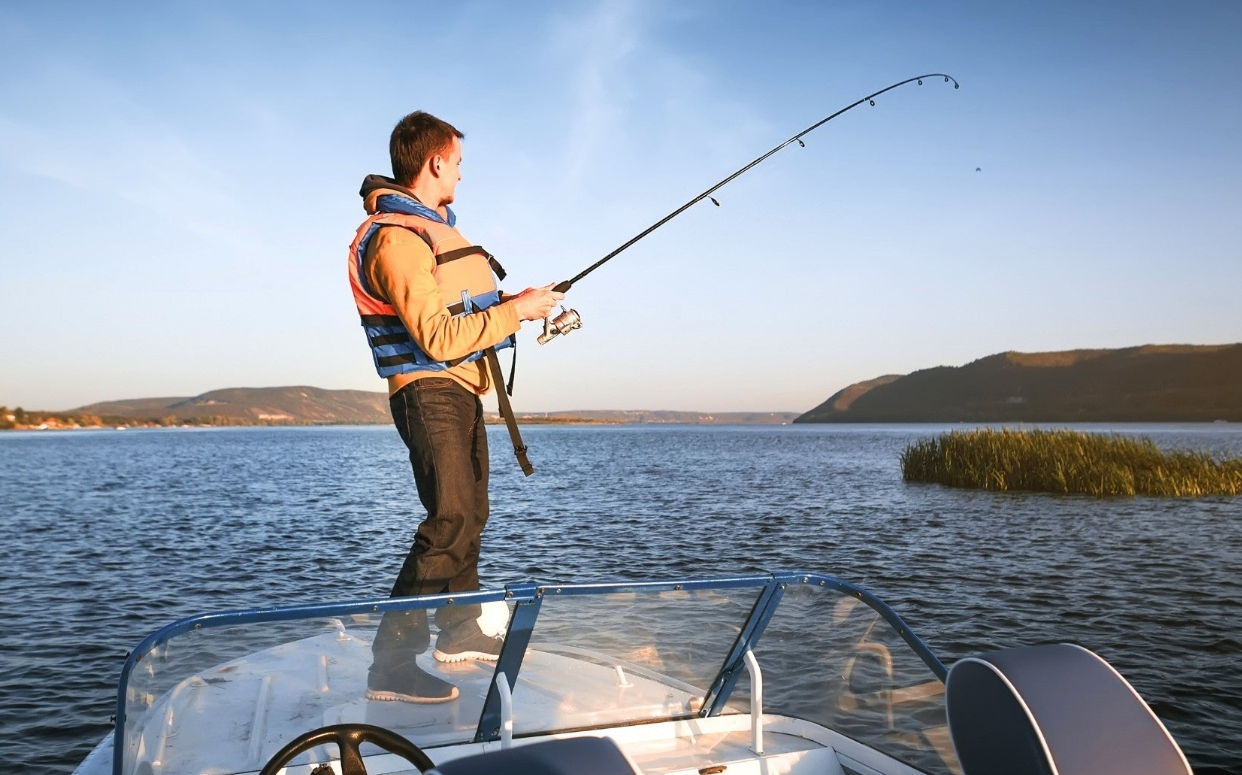
Shimano built its reputation one component at a time — bearings, gears, drag systems so refined that anglers stopped questioning them and just trusted them. That same philosophy runs through every seam of their XEFO apparel line.
The XEFO series is Shimano's core technical clothing range across Japan and the broader Asian market. It covers floating vests, waterproof shells, hoodies, and sling bags. Every piece is built around a single idea: the angler as a system , not just a person holding a rod.
XEFO Floating Vest — Safety Built for Extreme Conditions
The XEFO Floating Vest 5500 targets hard-core shore and rock fishing. Shimano positions it as protection "under the most extreme conditions." That's not marketing fluff. The construction backs it up:
Waterproof rating : 10,000–20,000 mm hydrostatic head — handles sustained heavy rain without giving out
Moisture permeability : 8,000–15,000 g/m²/24h — you stay dry inside without overheating
Taped seams at shoulders, hood connections, and zipper edges — the weak points most other brands skip
Multiple independent buoyancy chambers , wide-shouldered harness, waterproof zippers, and front-access pockets sized for real lure boxes
Chest fit covers an 18"–22" torso width. Retail price sits around USD 100–150 , which lines up with Japanese-market safety vests in the 10,000–20,000 yen range.
XEFO Grey Hoodie — Tournament-Ready Daily Wear
The XEFO Hoodie looks casual. It isn't. Shimano built it for all-day sun exposure on boat and shore sessions:
UPF 30–50+ protection blocks 96–98% of UV radiation
Fabric weight of 180–260 g/m² — light enough to move through casting sequences without restriction
5–10% spandex content woven into the fabric — this matters more than most anglers expect. Throw 200 casts in a tournament morning and you'll feel the difference
Dries in 1–2 hours under normal airflow — cotton takes 3–4 hours by comparison
Fishing apparel price range: USD 60–120 / AUD 80–150 depending on market.
The System Logic Behind XEFO Design
What separates Shimano apparel from generic fishing clothing isn't any single feature. It's the ecosystem thinking . Take the XEFO Shoulder Sling Bag XT (priced USD 50–100 ). Shimano designed it with precise interior dimensions — pocket depths exceeding 28 cm to fit standard lure boxes (27–28 cm wide), plus plier slots sized for the 16–20 cm tools most lure anglers carry.
Vest pockets, bag compartments, and D-ring positions are all coordinated so a lure clip or net handle never crosses your casting arc. That's not a marketing claim. That's engineering from people who fish for real.
Who is Shimano apparel for?
Scenario | Recommended Piece | Price Range |
|---|---|---|
Rock/Shore Fishing | XEFO Floating Vest | USD 100–150 |
Boat/Offshore Fishing | Vest + Sling Bag combo | USD 150–250 |
Lure Tournament | XEFO Hoodie | USD 60–120 |
Full System Setup | Vest + Hoodie + Bag | USD 250–400 |
The core user is a serious angler — 25–55 years old, fishing more than 20 times a year, and ready to invest in gear that holds up when conditions get bad. For that person, Shimano apparel isn't an accessory. It's part of the rig.
2. Daiwa — Technical Layering Systems Built for Serious On-Water Conditions
Daiwa didn't stumble into apparel. The company spent decades engineering drag systems and blank tapers. That same precise, obsessive thinking went straight into building fishing clothes. The goal: keep anglers dry, warm, and functional in the worst weather a coastline can throw at you.
The result is a three-layer system that holds together when conditions fall apart.For buyers evaluating a high-performance fishing apparel supplier, Daiwa's layering architecture is a useful benchmark for comparing waterproof performance, mobility, and long-term durability.
The Three-Layer Architecture
Base layer — Daiwa's moisture-wicking underlayers run 80–95% polyester with 5–20% elastane. Sweat disperses in under 60 seconds. Flatlock seam construction cuts out friction points across a full day of casting. Mesh panels sit under the arms and across the back — right where heat builds fastest.
Mid layer — This is where Daiwa's body-mapping approach earns its keep. Synthetic insulation runs heavier across the chest and back — 60–80 g/m² — and lighter through the sleeves and sides. Your casting arm stays free. Your core stays warm. Compressed down, most mid layers pack to 30–40% of their original volume. On a crowded boat, that extra space is worth having.
Shell layer — Two options. Daiwa's own waterproof fabrics hit 10,000–20,000 mm hydrostatic resistance with 8,000–15,000 g/m²/24h breathability. The GORE-TEX collaboration jackets push that to 28,000–30,000 mm — built for full-day downpours. Both come with taped seams, double-layer cuffs, adjustable storm hoods with stiffened brims, and high bib designs. The bib seals at the waist. So you stay dry even bent over a fish box in breaking swells.
Who Fishes in Daiwa Apparel
Daiwa's North American footprint is smaller than Shimano's. Daiwa USA leans harder into rods and reels at retail. In northern Europe — the UK and Scandinavia especially — the story is different. Daiwa's high-waterproof shells have a strong following among saltwater anglers working the North Sea in flat-out brutal conditions. Anglers report staying dry through 6–8 hours of sustained rain , with GORE-TEX models pushing that protection even further.
For anglers running full-day offshore trips or winter boat sessions, the Daiwa layering system delivers purpose-built technical fishing wear — not outdoor gear that's been repurposed for the water.
3. D-VEC — Where High-Fashion Meets Hardcore Fishing Technology
Most fishing brands pick a lane. D-VEC refuses to.
D-VEC grew out of Daiwa's engineering roots, but it runs as its own identity. Think of it as a technical lifestyle line that bridges street-ready design and real on-water performance. The logo says a lot. Daiwa positions it as "not just a brand, but a vision for the future." On D-VEC gear, that logo sits large, clean, and minimal. That's a deliberate call. This isn't your typical tackle-shop branding. It's closer to what you'd find in a Tokyo streetwear boutique.
That design sense doesn't stop at looks. The actual product engineering backs it up.
Technical Fabric, City-Ready Cuts
The D-VEC Grey Logo Long Sleeve Sunshirt runs 90% polyester, 10% spandex. That ratio is built for repeated casting. No binding at the shoulders. The spandex keeps the fit close but leaves your range of motion free. UPF protection lands in the UPF 30+ bracket , so you stay covered through long hours under the sun.
The fabric spec is only part of the story. D-VEC designs for a specific angler — someone who drives into the city Monday morning in the same jacket they wore on the water Sunday.
The City-to-Water Gear System
The D-VEC Cooler & Storage Backpack puts that philosophy into practice. From the outside, it looks like a clean commuter pack. Open it up, and you get a 32-quart (30.3L) insulated cooler chamber , a waterproof base, and dual rod mounts with enough vertical clearance for two rigged setups. That's 36 cans of bait-cooling capacity in a bag that draws zero attention on a subway platform.
The Vinyl Soft Tackle Box (DTVB-60) follows the same idea. It fits two standard Plano 3600-compatible tray boxes. The abrasion-resistant vinyl wipes clean with a rinse. Functional, tough, and consistent with the D-VEC look.
Who reaches for D-VEC? Weekend anglers who fish hard but live in cities. Anglers running J-Braid and multi-spool setups who also care about how their gear looks before they hit the water. The brand sits at a 15–40% premium over comparable unbranded fishing gear — and buyers pay it. D-VEC delivers both the technology and the aesthetic to earn that gap.
4. Gamakatsu — Hardcore Angler Identity Fused With Functional Apparel Design
Gamakatsu didn't start with apparel. It started with hooks. Hand-formed in 1955, in a small Japanese workshop. Back then, the company was the smallest fishing hook manufacturer in Japan. That origin matters. It's the foundation everything else is built on.
The trust Gamakatsu brings into clothing doesn't come from fashion. It comes from performance hardware that serious anglers have relied on for decades.
That same obsession with engineering shows up in the Nano Alpha hook technology. You get 2× better penetration and 4× better corrosion resistance compared to standard plated hooks. Slicker entry. Faster hook-set. Longer durability in both saltwater and freshwater. A brand that holds itself to those standards doesn't go loose once it moves into apparel.
Built for the Tournament Angler, Not the Casual Buyer
Tackle Warehouse describes Gamakatsu JDM products as gear "desired by hardcore bass anglers for their practicality, durability, and versatility." That's not a brand writing its own press release. That's a retailer reading its own customer base.
The apparel line follows that same positioning. It's built around four functional pillars that reflect what bass-tournament and all-day shore anglers need on the water:
UV protection for sustained sun exposure across full competition days
Quick-dry moisture management built for heat, spray, and sweat at once
Freedom-of-movement patterning that stays out of the way during casts and hooksets
Performance-layer compatibility built to work with sunshirts in multi-layer setups
Gamakatsu's edge isn't styling. It's legitimacy. That legitimacy is earned through precision manufacturing and backed by a community that trusts the brand where performance gets put to the test.
5. Megabass — Premium Fishing Culture Branding With Technical Substance
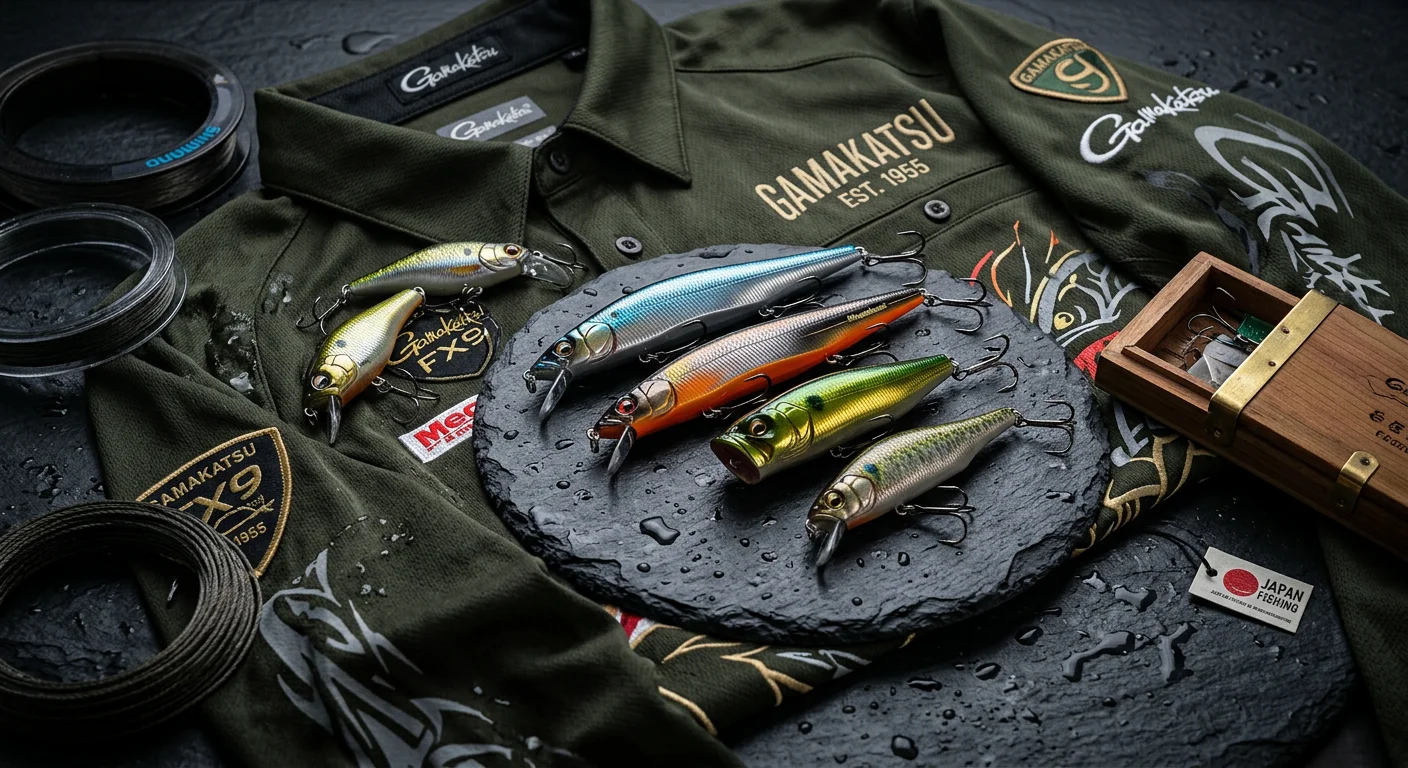
Itō Yuki founded Megabass in 1986 with one bold idea: fishing gear could carry culture. Not just function — culture. The lures came first. Each one was hand-engineered with precise color choices, built to reflect Japanese design philosophy and the specific water it was made to fish. The apparel followed the same thinking.
That's what sets Megabass apart from every other brand on this list.
Style and Substance, Running Parallel
Megabass doesn't hide behind technical spec sheets. The brand's own words — "legendary fishing lifestyle," "premium outdoor streetwear for the dedicated angler" — tell you straight what they're selling. This is fishing clothing for someone who cares how they look walking to the water, not just how they perform once they're there.
The technical side is real, though. You get:
UPF 30+ sun protection
Quick-dry polyester blends
Water-repellent coatings
Sweatband-lined caps with deep brims to cut glare
These aren't mountain-rescue specs. They're solid, functional fishing basics — enough to handle a full day shoreside or on a bass boat without any issues.
The premium comes from somewhere else.
Color as a Design Language
Every Megabass lure color tells a story. That same thinking carries straight into the clothing. Cap colorways echo iconic lure finishes — the same high-contrast palettes, the same baitfish-inspired tones, the same sharp focus on visual identity. Buy the Pop-X. Buy the matching hat. The whole thing becomes a set.
That's no accident. It's a clear, deliberate cultural system.
Limited Runs, Deliberate Scarcity
Megabass apparel doesn't sit on shelves long. Retailers stock it in small, defined batches — often listed as "limited Japan orders" — and once it sells out, it's gone. No restock. The short-cycle, multi-colorway strategy that built the brand's JDM lure reputation runs straight through the clothing line too.
First stock moves fast — within 24–72 hours of a drop announcement. Collectors track Megabass apparel the same way they track a new lure color release. At $40–$60 for a cap versus $30–$40 for a comparable unbranded piece, the price gap is real. Buyers pay it without hesitation. Scarcity and design justify that gap far more than fabric weight ever could.
Best for : Bass anglers, lure collectors, and anglers who want their gear to reflect a real fishing identity — not just fill a functional role.
6. Jackall — Modern Lure Angler Apparel Built for Bass and Finesse Fishing
Jackall made its name on soft baits built for situations where nothing else works. The mid-column stall. The hover-stroll in front of a forward-facing sonar cone. Presentations so dialed-in that largemouth second-guess themselves. That same sharp focus carries straight into the apparel line.
This clothing is built for the finesse angler. Not the offshore troller. Not the surf caster grinding through heavy gear. It's for the bass angler throwing 200 casts before noon, running light tackle in July heat, needing a shirt that just gets out of the way.
Built Around the Cast, Not Around the Brand
The functional logic is tight:
UPF 40–50+ fabric at 120–150 g/m² — light enough that you forget you're wearing sun protection
Extended sleeves with thumb loops covering 20–25 cm² of the hand dorsum — they stay put through long casting sessions, not ride up by hour three
Stretch panels at the shoulder and elbow with ≥120% extension ratio — your casting arm never fights the fabric
Mesh ventilation zones across the back and underarm — 15–25% of total surface area — because finesse fishing in August is still fishing in August
Chest zip pockets sized at 0.3–0.5 L — right for a soft bait pouch or a phone, nothing shaking loose mid-hookset
Some versions use permethrin-treated fabric . It holds insect repellency through 30+ washes. That's worth something if you're running shoreline structure at dawn.
The Aesthetic Is Intentional
Jackall goes dark — black, slate grey, deep olive — then hits it with high-contrast accents in acid green or burnt orange. The look is modern and competitive. That's the exact space Jackall occupies in the lure market. The graphic mark sits large across the chest: 80–120 cm² of clean brand presence. You see it in tournament footage. You see it in the Reels.
That visibility ties into a deliberate content strategy. Tournament partnerships and lure-angler collaborations put the clothing in the same frames as big bass. Serious buyers pick up on it.
Price and Where It Sits
Jackall apparel sits between Columbia PFG and Simms. Core sun shirts run $60–90 . Technical builds push $100–120 . Columbia PFG covers solid UPF 30–50 at $40–70. Simms gets you full professional rigging at $80–150+. Jackall holds the middle ground with a younger, sharper design language and finesse-specific construction that neither competitor really touches.
Best for : Bass tournament anglers, finesse technique specialists, and lure-focused anglers who want technical performance without the traditional fishing-shirt look.
7. Tackle House — Specialist Craft From a Boutique Japanese Fishing Brand
Since 1982, Tackle House has focused on one thing: making hard lures for saltwater. Minnows, pencils, metal jigs — all built in Japan, all by hand-calibrated craft. No outsourcing. No mass-production shortcuts. The apparel line came out of that same philosophy. It was never built to compete with Shimano or Daiwa on volume.
And it doesn't try to.
Small SKUs, Narrow Purpose
Shimano rolls out 100+ apparel SKUs per season. Tackle House offers around 10–30 pieces per year. You get logo tees, caps, the occasional lightweight wind vest or fishing shirt — often printed with outlines of their iconic CONTACT or Tuned K-Ten lure series. You're not buying a layering system. You're buying a statement of allegiance.
The functional focus is tight: shore rock fishing, coastal wind, salt spray . Shoulder and elbow panels run heavier for abrasion resistance. Sleeve cuts stay close to the arm to cut wind drag through long-distance casting arcs. Quick-dry performance targets 30–60 minutes — the practical standard for anglers working wet, windswept inshore rock.
That specificity is the point.
Scarcity Is the Feature
Tackle House apparel doesn't restock on a regular cycle. Core styles run for several seasons with minor updates. That creates the kind of "old-hand recognition" that fast fashion destroys. Pricing sits 20–40% above comparable unbranded technical shirts — not because of fabric weight, but because of small-batch production and real brand identity among serious JDM lure anglers.
Getting it outside Japan takes effort. International retailers like Monster Fishing NZ stock the lures. The clothing rarely ships with them. Your realistic options:
Cross-border order from Japanese tackle shops
JDM platforms like Digitaka
A proxy buyer
The secondary market on Yahoo! Auctions — expect to pay 10–50% over Japanese retail once shipping clears
Best for : Shore lure anglers targeting yellowtail, sea bass, and inshore pelagics who want apparel that signals something real — not just covers the sun.
8. Ryobi — Heritage Japanese Fishing Brand With Reliable Technical Apparel
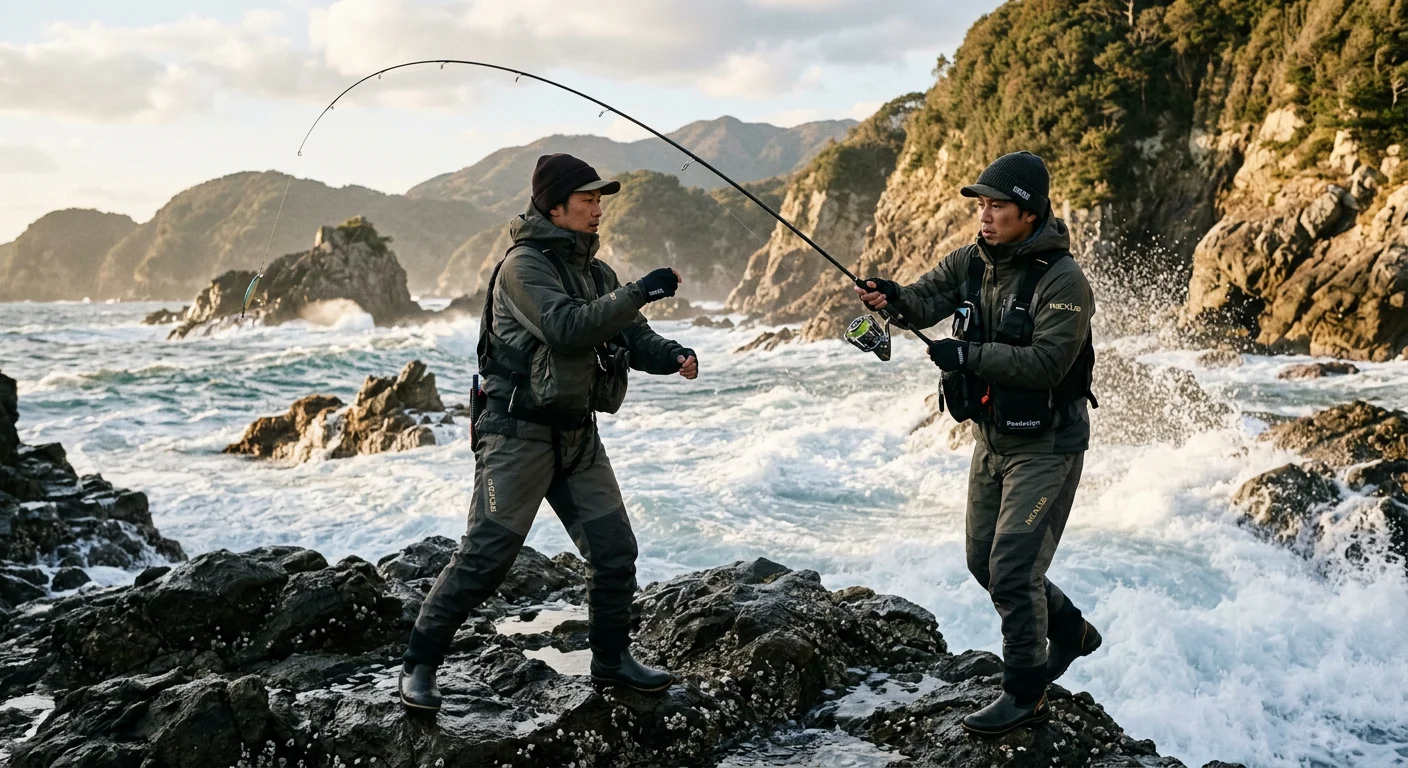
Ryobi's fishing story started in 1942 — before most of the brands on this list existed at all.
Ryobi Seisakusho opened in Hiroshima in 1943. By 1944, the company moved into precision die-casting. Then by the 1960s, it was making spinning reels that became staples in Japanese tackle shops. That's eight decades of manufacturing history behind the brand.
One key point worth knowing: this is Japanese fishing tackle Ryobi — not the American power tools brand. The two are separate companies with no shared connection.
A Brand Rebuilt Around Accessibility
In 2000 , Ryobi sold its fishing division to Johshuya Co., Ltd. In 2008 , Johshuya licensed the brand to Weihai Ryobi International Trading for global manufacturing — Japan excluded. Today, the original Ryobi company plays no role in production or sales.
What stayed is a familiar Japanese fishing identity. You get spinning reels, casting rods, and mid-range reliability — not cutting-edge apparel technology.
Ryobi's gear leans toward practical, accessible accessories within the fishing space. It's not a deep technical clothing line. So if you want Japanese-brand heritage at a mid-range price point — without the Shimano or Daiwa price tag — Ryobi fits that need. You get solid, no-frills fishing gear rooted in a genuine Japanese tackle tradition.
Best for : Traditional freshwater anglers and budget-conscious buyers who value Japanese brand heritage over high-performance fabrics.
How to Choose the Right Japanese Fishing Apparel Brand for Your Fishing Style
Eight brands. Very different purposes. The wrong pick doesn't just waste money — it slows you down on the water.
Here's how to match the brand to what you do.
Match the Brand to Your Fishing Style First
Bass and lure fishing — Shimano, Daiwa, and Jackall cover this ground best. All three build around casting mobility, UPF sun protection, and quick-dry performance. Fish tournaments? Free Knot deserves a look too. Their apparel is built for anglers standing on a deck and throwing all day.
Shore and rock fishing (inshore/磯) — Shimano's waterproof systems are built for this. So is Tackle House, for the angler who wants boutique JDM credibility with every cast. For brutal conditions — spray, exposed reef, sustained swell — mazume builds to a higher protection standard than most brands on this list.
Offshore and boat fishing — Daiwa's three-layer system was built for offshore work. You get high-waterproof shells rated to 28,000–30,000 mm hydrostatic head. Storm hoods. High-bib construction. Running six-hour offshore sessions in serious weather? That's the setup you want.
Freshwater and stream fishing — Foxfire. Full stop. The insect-repellent fabric, UPF 40–50+ protection, and lightweight build target anglers working rivers and mountain streams on foot.
Then Filter by Budget
Budget | Best Options |
|---|---|
$50–150 | Shimano / Daiwa entry-level |
$150–300 | Shimano / Daiwa mid-tier, Foxfire, Free Knot |
$300+ | mazume flagship systems |
A Note on Buying Outside Japan
Most of these brands don't stock apparel through Western retailers. Shimano and Daiwa have regional distributors. Everything else — Jackall, Tackle House, mazume, Foxfire — ships through Japanese platforms like Zenmarket or proxy buyers. Expect to pay 10–25% above Japanese retail once shipping clears.
Check multi-brand retailers like runfishapparel.com first. They pull the selection together and sort out sizing too. Japanese cuts run one size smaller than US equivalents. That trips up a lot of first-time buyers.
Brand Comparison Table: Technical Performance at a Glance
Eight brands. Eight different answers to the same question: what does serious fishing apparel need to do?
The table below skips the brand stories and goes straight to the specs. UV protection, moisture management, waterproofing, price — all lined up side by side. You can see where each brand stands at a glance.
Brand | UPF Rating | Waterproof (mm) | Moisture-Wicking | Best Fishing Style | Price Range (USD) |
|---|---|---|---|---|---|
Shimano | UPF 30–50+ | 10,000–20,000 | ✔ Fast-dry | Shore / Rock / Boat | $60–150 |
Daiwa | UPF 30–50+ | 10,000–30,000 | ✔ Fast-dry | Offshore / Boat | $80–200 |
D-VEC | UPF 30+ | Splash-resistant | ✔ Moderate | Urban / Lure | $70–160 |
Gamakatsu | UPF 30–50+ | — | ✔ Fast-dry | Bass / Shore | $50–120 |
Megabass | UPF 30+ | — | ✔ Moderate | Bass / Lifestyle | $40–80 |
Jackall | UPF 40–50+ | — | ✔ Fast-dry | Bass / Finesse | $60–120 |
Tackle House | UPF 30–50+ | Wind-resistant | ✔ Fast-dry | Shore / Rock | $50–110 |
Ryobi | Standard | — | ✔ Basic | Freshwater / Budget | $30–70 |
Top technical pick : Daiwa — waterproof rating tops out at 28,000–30,000 mm. GORE-TEX options are available too.
Best UV protection : Jackall — UPF 40–50+ holds steady across the full sun shirt line.
Best value : Ryobi — Japanese heritage, solid basics, and the lowest starting price of the group.
Conclusion
Japan builds fishing apparel differently from the rest of the world. After looking at these eight brands, that's clear.
Shimano focuses on precision engineering. Gamakatsu speaks to hardcore anglers. Megabass has built a cult following around craftsmanship. Each brand is different — but they all share one thing: performance that's been tested on real water and refined until nothing is left to cut. That's the Japanese approach. You see it in every seam, fabric choice, and moisture-wicking detail.
Your apparel deserves the same thought you put into your rod, reel, and lure. Use the comparison table above to match a brand to your fishing style. Then gear up from there.For retailers, distributors, or anyone looking for a reliable fishing apparel wholesaler, understanding the design philosophy behind leading Japanese brands can also help when evaluating future sourcing partners.
Out on the water, the right high-performance fishing wear does more than keep you comfortable. It keeps you fishing longer, sharper, and better.
That's the whole point.