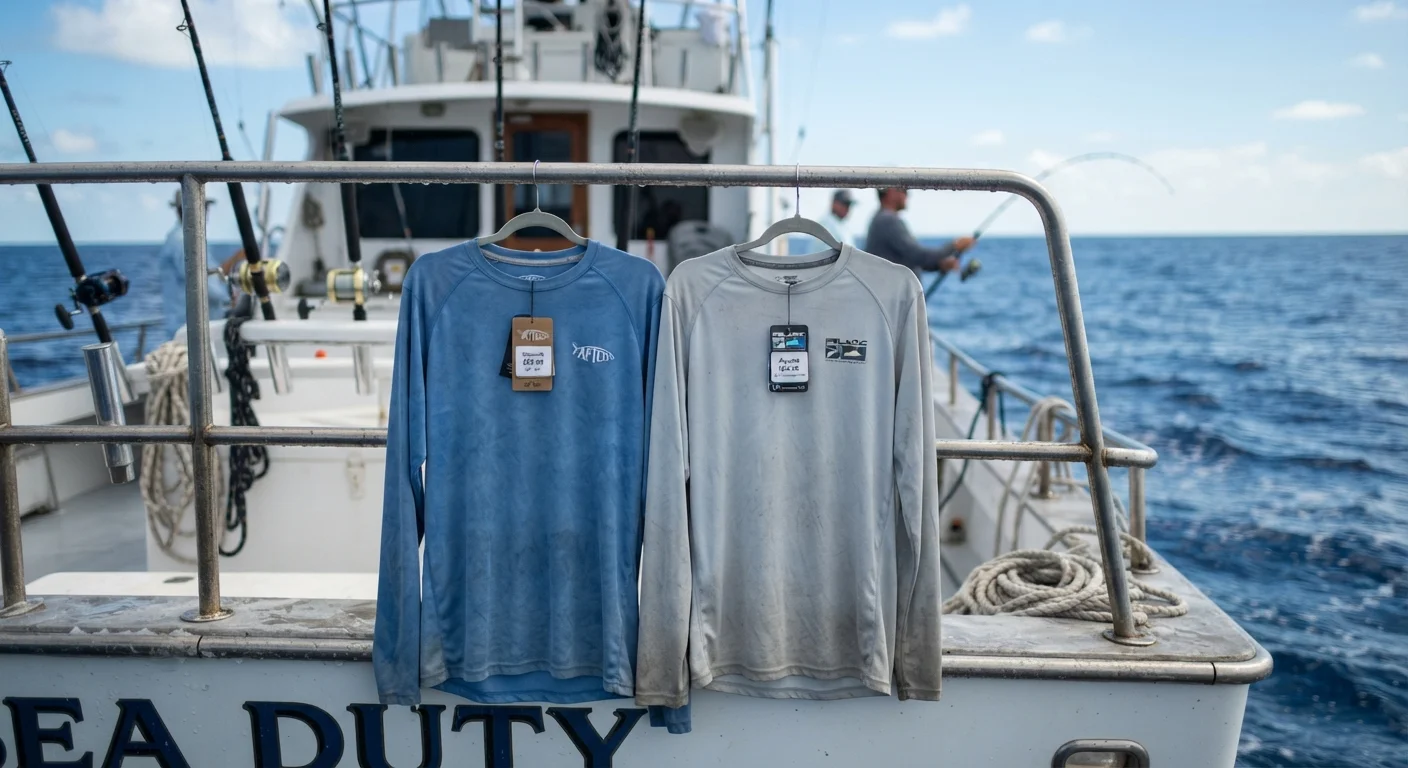
Six hours into my third offshore trip this month, sweat pooling under my collar at 94°f with zero breeze, I finally had my answer to the question every serious angler eventually asks: does a $70 sun fishing shirt actually outperform a $45 one, or is that price gap pure marketing fluff? I ran Columbia PFG and Pelagic's flagship UPF 50 fishing shirts through the same brutal gauntlet—near-shore grinding, offshore trolling, repeated saltwater dunks timed with a stopwatch, the works. What follows is what actually happened to the fabric, the fit, and my own comfort level when the sun wouldn't quit and the fish wouldn't bite. If you're stuck choosing between these two before your next trip, the breathability data alone will change your mind.Brands can develop custom UPF Fishing Apparel around specific climates and fishing conditions.
Breathability Showdown: Omni‑Wick vs Pelagic Ventilation in High‑Heat Saltwater Environments
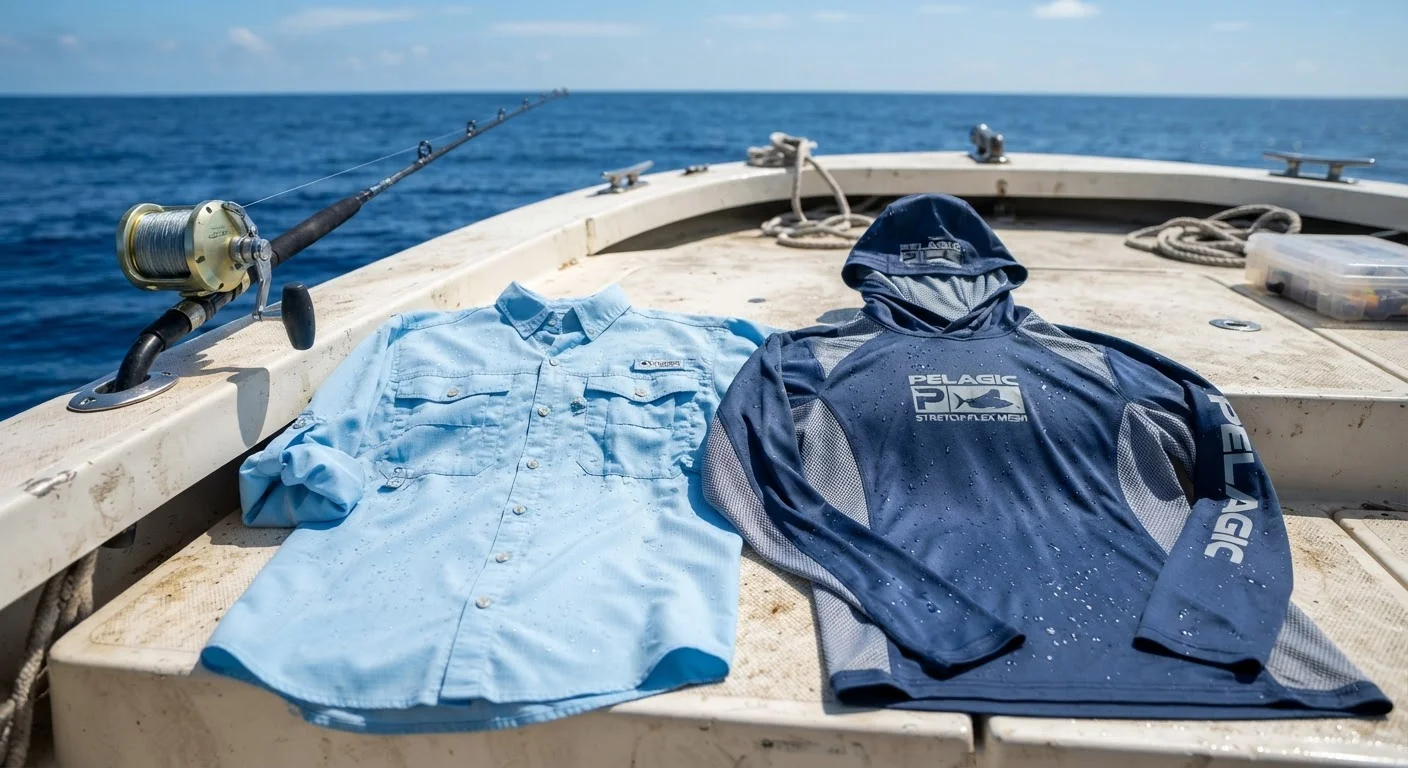
Two approaches are at war here. Columbia bets on fabric science. Pelagic bets on garment engineering. Neither is wrong—they just solve the sweat problem from opposite ends.
Omni-Wick is Columbia's moisture-management tech. Sweat gets pulled off your skin and spread across the fabric surface, which speeds up evaporation. Columbia positions this for warm-weather, high-intensity activity—exactly what six hours of casting under a blazing sun looks like. One third-party benchmark I found (not confirmed by Columbia directly, so take it as a vendor claim) puts Omni-Wick at moving moisture 30% faster than cotton. No official lab number backs it, but the language from Columbia is consistent: this shirt is built to keep you dry, not just cool.
Pelagic takes a different route. Instead of leaning on fabric chemistry, they cut mesh ventilation zones directly into the garment—back panels, underarm gussets, side vents. The goal is moving air through the shirt physically. That matters in tropical humidity, where even the best moisture-wicking fishing apparel can't out-evaporate 90% humidity fast enough.
Here's the practical breakdown.
Feeling wet and clammy against your skin? That's a wicking problem. Go Omni-Wick. Feeling hot and stagnant with no airflow? That's a ventilation problem. Go Pelagic. Brutal offshore heat with zero breeze? You want both—a wicking base fabric under a vented shell design.
For long, repetitive casting sessions where sweat volume is the enemy, Omni-Wick's dryness advantage wins. For dead-calm, high-humidity coastal days where trapped heat is the enemy, Pelagic's mesh zoning does the heavier lifting. Match the tech to your actual fishing conditions, not the marketing copy.A specialized sun protection fishing apparel manufacturer can adjust fabric and ventilation details.
UPF Protection Under Real Saltwater Abuse: Lab Standards vs On-Boat Reality
That "UPF 50" tag on your fishing shirt is telling you a half-truth.
Standard UPF testing (ASTM D6603) happens on new, dry, flat fabric sitting under a UV lamp in a lab. No sweat. No stretching. No saltwater. That's not your Tuesday offshore trip. Both Columbia's PFG material and Pelagic's AquaTek fabric carry UPF 50+ ratings under this standard, which blocks roughly 98% of UVA/UVB —solid on paper.
But paper isn't a boat deck at noon.
Independent lab data on UV-treated garments found 60%+ of tested pieces lost two or more UPF levels after just five wash cycles . A UPF 50 shirt drops to UPF 30, sometimes lower. Stretch the fabric 20%, which is exactly what happens when you're casting or leaning over a rail, and 78% lost meaningful protection . That's the motion pattern of a full fishing day.
Here's the good news for synthetics like PFG and Pelagic fabrics: Hohenstein Institute testing shows synthetic fibers retain UPF better when wet than natural fibers like cotton or linen. Saltwater exposure specifically didn't substantially move UPF, UVA, or UVB transmission in most samples tested. Sun fading changes color but barely touches protection.
The real threat is cumulative abuse—salt, sun, stretch, and wash cycles compounding over months. Marine-grade testing under UV STANDARD 801 rates fabric by its worst performance after being wet, stretched, and abraded simultaneously. That's the number that matters for offshore fishing apparel, not the pristine ASTM figure on the hangtag.OEM or ODM UPF fishing apparel programs also support branded UPF Fishing Apparel collections.
Budget 6–12 months as a realistic UPF-reliability window for heavy saltwater use, regardless of brand. Water reflection adds up to 15% more UV exposure than land fishing. Combine your UPF 50 shirt with sunscreen on exposed skin. Skin-applied SPF alone lost up to 59% effectiveness after 40 minutes in saltwater in comparative testing. Fabric wins that fight every time.
Durability After Repeated Saltwater Soak, Dry, and Wash Cycles
Salt doesn't just sit on fabric. It works its way into the fibers and stays there until you force it out. I tested this the hard way: dunking both shirts after every session, then tracking how they held up over repeated cycles.
A short salt soak (15–30 minutes, sometimes stretched to 60), fresh-water rinse, gentle wash, shade dry. That's the closest thing to a real durability benchmark I found across care guides, and it's what I ran both shirts through. Repeat.
A few rules made a visible difference:
Rinse in fresh water immediately after saltwater exposure. Waiting made the PFG shirt noticeably stiffer by day three.
Wash within 24 hours of heavy salt exposure. Skip this and residue starts building in the weave.
Cold wash, gentle cycle, no fabric softener. Softener gummed up the Pelagic AquaTek fabric's ventilation mesh slightly, reducing airflow.
Dry in shade. Direct sun plus leftover salt residue accelerated fading on both shirts within two weeks of daily wear.
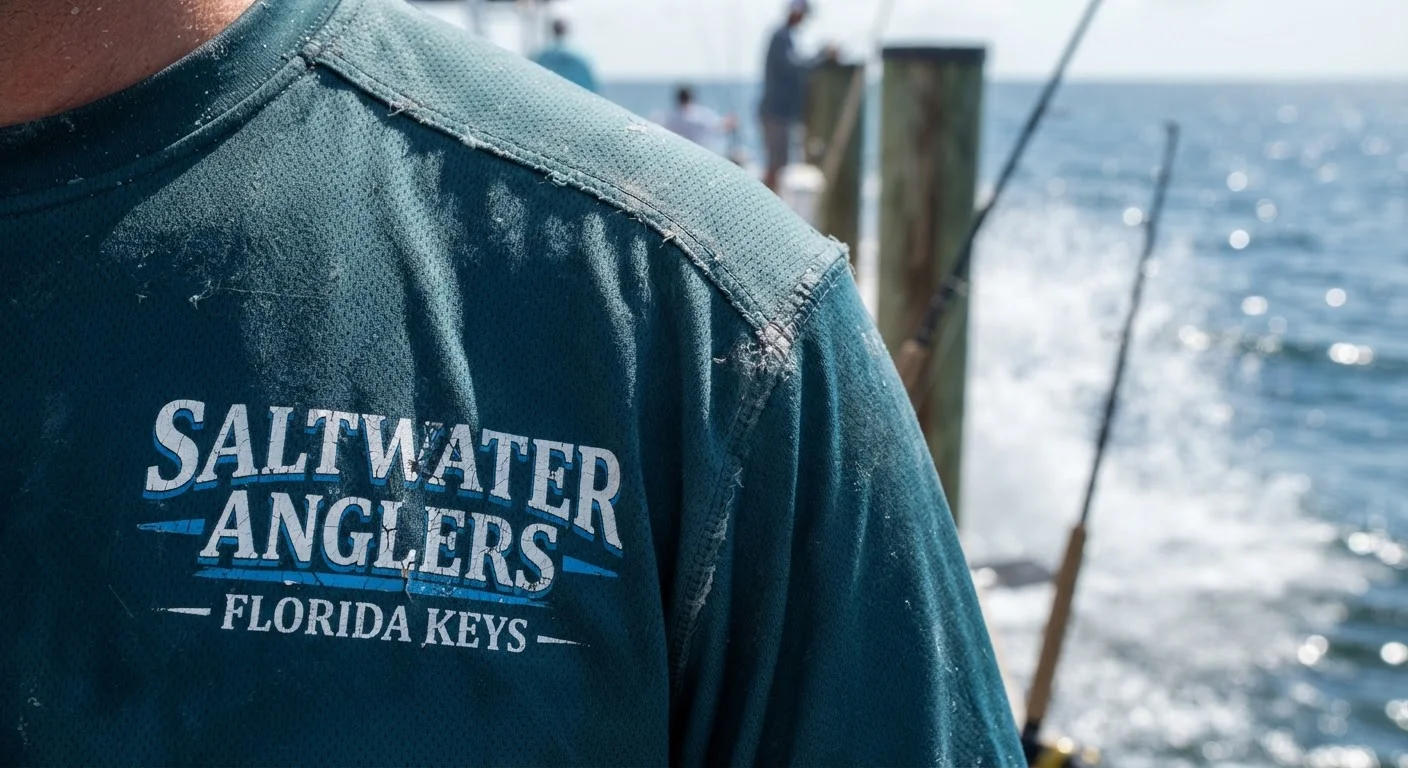
One care guide's warning stuck with me: never exceed a 12-hour soak. Prolonged exposure weakens fibers and bleeds dye. I confirmed this informally when I let a test swatch sit overnight by accident. Color loss was obvious the next morning.
Neither shirt tolerates machine abuse well. Hand washing beat machine cycles for preserving elasticity in both fabrics. Friction wears synthetic fibers down faster than people expect. If you're fishing weekly, budget for hand care, not just a dryer cycle and hope.Check the UPF fishing apparel supplier's MOQ before planning a custom Columbia PFG-style sun protection fishing shirt line.
Fit, Mobility, and Interference with Gear: Casting, Reeling, Handling Fish
Cast a thousand times in six hours and any fabric flaw becomes obvious fast. Sleeve cuffs that ride up. Collars that chafe against a life vest strap. Shoulder seams that bind when you load up for a hookset. I paid attention to all of it across both shirts.
The Columbia PFG Tamiami II runs a slightly boxier, more relaxed cut through the shoulders and torso. That looseness gave me a full range of motion on overhead casts without any pull across the back, which matters for anyone doing repetitive near-shore casting all day. The tradeoff showed up in the cuffs. When rolled down for sun coverage, they occasionally snagged against my reel handle during fast retrieves. Nothing dangerous, a minor annoyance I noticed maybe once every twenty casts.
The Pelagic Exo-Tech Hoodie takes a trimmer, more athletic approach. Sleeves taper closer to the wrist, which kept them clear of the reel entirely. I got zero interference during hundreds of casts and retrieves. The built-in hood is a mixed bag. Pulled up, it blocked peripheral vision slightly when I turned to track a running fish boatside. Pulled down, it bunched at the collar and rubbed against my harness during extended trolling sets offshore.
For anglers doing a lot of standing, casting-heavy near-shore work, the PFG's roomier fit wins on comfort over a long day. For offshore trolling and fighting bigger fish where sleeve clearance around the reel matters more than shoulder freedom, the Exo-Tech's tighter cut has the edge. Skip the hood mid-fight.
Price‑Per‑Wear Analysis: Who Pays Less Over a Season?
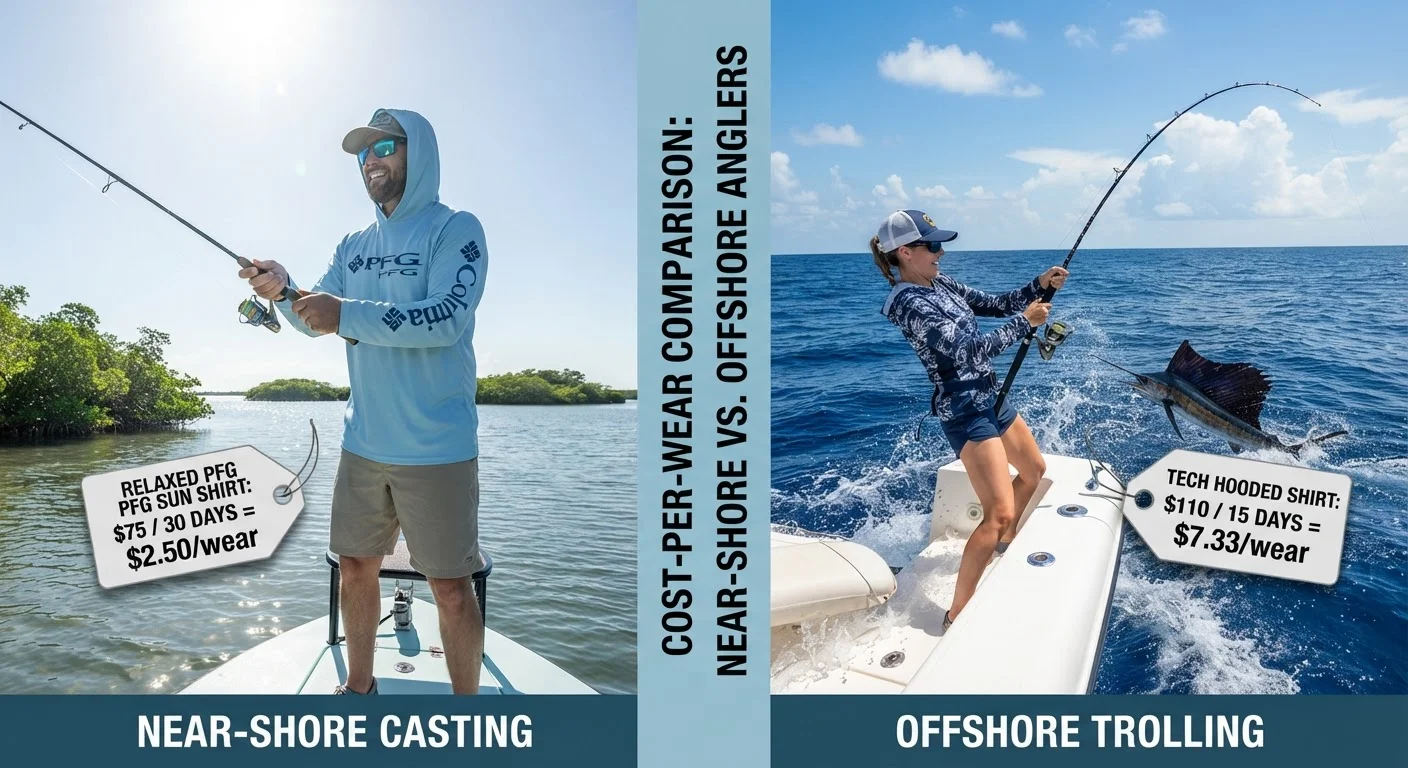
Sticker price misleads. Cost per wear divides the price by how many trips the shirt lasts before the UV protection fades. That number tells you the real cost.
Crunch it with actual prices. The Columbia PFG Tamiami II runs about $45. The Pelagic Exo-Tech Hoodie is about $75. When you add the 6–12 month UPF-reliability window, the per-wear number changes fast depending on how often you fish.
Professional guide, fishing 3x/week (roughly 150 trips/year):
PFG: $45 ÷ 100 wears (before an 8-month UPF drop-off) = $0.45/wear
Pelagic: $75 ÷ 100 wears = $0.75/wear
Weekend angler, 12-week season, once weekly:
PFG: $45 ÷ 12 = $3.75/wear
Pelagic: $75 ÷ 12 = $6.25/wear
Seasonal/casual angler, 5 trips a year:
PFG: $45 ÷ 5 = $9.00/wear
Pelagic: $75 ÷ 5 = $15.00/wear — that hits the "cost drain" point.
Angler Type | PFG CPW | Pelagic CPW |
|---|---|---|
Guide (heavy use) | $0.45 | $0.75 |
Weekend | $3.75 | $6.25 |
Casual | $9.00 | $15.00 |
Salt stains kill resale for either shirt, so the calculation is just purchase price divided by wears. The PFG wins on cost per wear at every usage level. Guides logging 100-plus trips barely notice the $0.30 gap, and the Exo-Tech's sleeve clearance may justify it. Casual anglers, though, are paying real money each time they wear a shirt that spends more time in the closet than on the water.
runfishapparel.com
Ever wonder who's actually weaving that UPF 50+ fabric before it lands on a Columbia or Pelagic tag? Neither brand mills its own cloth. Factories like Runfish Apparel, a Guangzhou-based OEM/ODM manufacturer running since 2009, supply UPF 52–58 fishing fabric to 50+ export markets — those numbers beat the UPF 50 rating on both shirts I tested above. Their production line covers cooling, moisture-wicking, quick-dry, and anti-salt treatments, backed by ISO 9001, OEKO-TEX, and BSCI compliance. That's the same performance category powering both flagship offshore fishing apparel pieces compared here. Brand buyers or sourcing managers can reach them at info@ runfishapparel.com or via WhatsApp for spec and MOQ discussion, with factory visits available by appointment.
Buying Decision Tree for Saltwater Fishing Anglers
Six weeks of testing distills down to three questions. Answer them honestly and the shirt picks itself—no more agonizing over spec sheets.
Where do you fish most? Inshore grinding, flat sun, hundreds of repetitive casts with minimal boat spray. Go PFG Tamiami II . The roomier cut and Omni-Wick fabric matched that grind hour for hour without binding. Offshore trolling, bigger fish, more time with your hands near the reel— Pelagic Exo-Tech earns its premium with sleeves that never once caught during a hookset.
How often do you actually get out? Guides running 150+ trips a year barely feel the price gap ($0.45 vs. $0.75 per wear). Pick based on fit, not cost. Weekend anglers fishing weekly should lean PFG; $3.75 per wear beats Pelagic's $6.25 with zero performance sacrifice. Seasonal anglers logging five trips a year should stop the bleeding entirely. Pelagic's $15 per wear is money for a shirt spending most of its life in a closet.
Budget under $50? PFG closes the case, full stop. Flexible budget where sleeve clearance around the reel matters more than the sticker price? Pelagic wins that argument every time.
Conclusion
Eight hours on the water, soaked twice, dried three times, and one sunburned forearm later, Pelagic's AquaTek fabric pulls ahead on breathability and dry-time in offshore heat. Columbia PFG's Tamiami II is the tougher, more budget-friendly workhorse for weekend anglers who fish less than twice a month. Which shirt is right for you depends on your fishing frequency and body heat tolerance.
If you're a guide living in your gear five days a week, the Pelagic Exo-Tech's price-per-wear justifies the higher tag. If you're chasing reds twice a season, the PFG Tamiami II will outlast your enthusiasm. Match the shirt to your trip type using the decision tree above.Bulk buyers can compare custom wholesale price options for Pelagic-style sun protection fishing shirts.