You've found a factory that makes fishing apparel you're excited about — and then they quote you a sample fee that makes your stomach drop. Is that number fair? Are they padding the margins? Should you push back, or is this just how the industry works?
Here's what most Custom Fishing Apparel suppliers won't tell you upfront: custom fishing apparel sample costs can range from $50 to $800+ per piece. That gap isn't random. Six specific factors drive it — and you have full power to understand them. In many cases, you can control them too.
This guide breaks down what moves the needle on your fishing apparel prototype cost . We cover fabric selection, print complexity, rush surcharges, and design setup fees. Those last two almost never show up in the initial quote — but they will show up on your invoice.
Read through this, and you'll know what you're paying for. More importantly, you'll spot what you shouldn't be.
What Does a Custom Fishing Apparel Sample Actually Cost? (Price Range Overview)
The short answer: somewhere between $90 and $530 for a complete first-sample project. Where you land in that range depends on decisions you make before you contact a Custom Fishing Apparel factory.
Here's a clear breakdown by production region:
Overseas factories (China / Bangladesh)
- Sample fee per piece: $50–$150
- International shipping (DHL/FedEx): $40–$80 per shipment
- Total first sample: $90–$230
Domestic factories (USA / EU)
- Sample fee per piece: $150–$400
- Ground shipping: $15–$30 per shipment
- Total first sample: $165–$430
Those sample fees aren't random. There's real pricing logic behind them. Overseas factories charge 10–50× their bulk unit price — which sits around $2.0–$2.5/pc at volume. That markup covers pattern setup, print file prep, and small-run handling on a single piece. Domestic factories work with a 3–8× multiplier on top of bulk prices that already start at $25–$52/pc for sublimated shirts and complex outerwear.
One number most buyers overlook: modification rounds . A second sample is almost always needed for full-print sublimation designs. That adds another $40–$150 in sample fees plus a fresh shipping charge. Budget for two rounds by default . Your realistic total project cost looks like this:
Overseas, two rounds: ~$230–$270
Domestic, two rounds: ~$360–$530
Here's the good news. Most OEM fishing apparel factories will credit your sample fee against your bulk order once you hit their MOQ threshold — 300–500 pcs for overseas factories, or 25–100 pcs for domestic ones. Get that credit agreement in writing before you pay anything.
Factor 1: Fabric & Material Selection — The Foundation of Sample Pricing
Fabric choice is the single biggest variable in your sample quote. Most buyers don't figure this out until the invoice arrives.
A $90 sample versus a $300 sample — that gap often traces back to one decision made before production starts: which fabric you picked. Here's how the numbers break down across three main material tiers:
Standard Polyester Quick-Dry (130–160 GSM)
- Raw fabric cost: ~$1.50–$2.20/meter
- Per-piece fabric cost (at 2 meters/shirt): ~$2.70–$4.80
- In your sample quote (with factory's 1.5–2× development markup): ~$4–$9/piece
UPF 30–50+ Performance Fabric - Raw fabric cost: ~$2.50–$4.00/meter — a 35–90% premium over standard polyester - Per-piece sample impact: adds $2–$3/piece in raw material alone - Add the development markup on top: the fabric portion climbs to $6–$13/piece - Need a certified UPF 50+ test report ( AATCC 183)? Lab fees run $300–$800/fabric batch. Spread across a standard sample run, that works out to about $0.50–$1.00/piece
Antimicrobial & Stain-Resistant Coatings (silver ion, anti-odor, fish-blood repellent)
- Adds $1.00–$1.50/meter over base polyester
- Per-piece fabric cost in sample quotes: $8–$15/piece
- ISO 20743 or AATCC 100 certification testing: another $200–$600/fabric type
The Hidden MOQ Problem for Tournament Fishing Jerseys
This is exactly where fishing tournament jersey sample budgets blow up fast.
Standard functional fabric MOQs sit at 500–1,000 meters for custom UPF or antimicrobial treatments. Say you're sourcing a 50-piece tournament run. That uses around 100 meters of fabric — well below MOQ. Expect a 20–40% unit price surcharge for that gap. Need a custom color or a new functional treatment? That surcharge can jump to 60%+ , or a flat $300–$500 penalty fee added on top.
Bottom line: stepping up from standard polyester to UPF + antimicrobial fabric can push your custom performance fishing shirt sample cost up by $4–$9/piece on fabric alone. Not a single stitch sewn yet.
Factor 2: Print & Decoration Method — Where Complexity Drives Cost Up Fast
The decoration method on your sample quote deserves more scrutiny than most buyers give it.
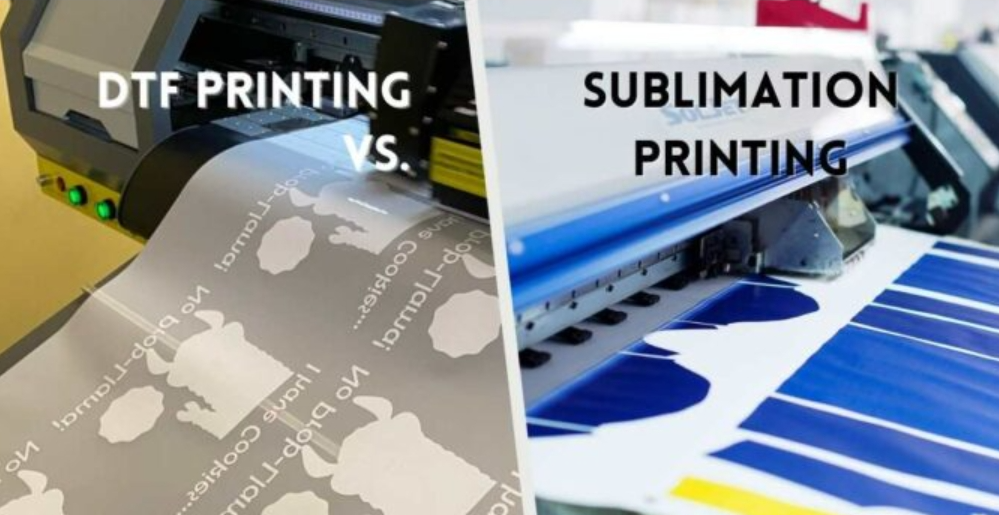
Print complexity doesn't scale with cost in a straight line — it compounds. Going from a single-color chest logo to a full-cover gradient sublimation design won't just double your sample fee. It can multiply it by four or five. Here's what's driving that number.
The cost stack for any decoration job breaks into four layers:
- Direct materials — ink, film, thread
- Setup fees — screen creation, digitizing, file prep, calibration
- Proof/sample fees — color matching, strike-off, approval run
- Labor + scrap allowance — production time plus a 5–10% waste buffer for misprints and jams
On a basic single-color logo sample, setup might run $25 per screen . Add embroidery digitizing and that's another flat $40 per design . That fee hits once — but your first unit carries the full weight of it. That's why your first sample is always the most expensive piece you'll order.
Step up to a full-cover custom fishing tournament jersey with gradient sponsor art. Those setup layers pile on fast. Multiple screens, several rounds of color matching, and proofing steps all add up. Sample pricing can push into the $100–$150+ bracket before a single yard of fabric gets cut.
The rule that saves budgets: cost jumps come from setup count and proofing steps first — not from print area or garment count.
Factor 3: Sample Type & Number of Revision Rounds — The Hidden Cost Multiplier
Most buyers don't realize they're ordering two different kinds of samples. Treating them as the same thing is one of the fastest ways to blow a sampling budget.
Two Sample Types, Two Very Different Price Tags
Fit / Proto Sample — this is your low-cost validation round. You're checking sleeve movement for casting, pocket placement for lure boxes, and whether that collar blocks wind without restricting your swing. Factories use substitute fabrics here. Zippers don't need to be branded. Print placement gets sketched, not perfected.
Typical overseas cost: $80–$200/style (pattern development + sample labor)
Use it for: new structural designs, complex pocket systems, articulated sleeves
Pre-Production / Golden Sample — this is the expensive one. Real fabric. Final zippers. Sublimation placement locked down to exact specs. This piece becomes your factory's production benchmark.
Typical overseas cost: $150–$250/style
That's 1.5–3× a Proto sample
Smart sequencing: Proto first → one revision if needed → Golden sample. That's two to three rounds total, not five.
The Revision Round Math Nobody Shows You
Here's where custom fishing apparel sample costs start to spiral fast. Most overseas factories include two to three revision rounds in their base quote. Go beyond that, and each round adds real money:
Revision Rounds | Additional Cost | Cumulative Total |
|---|---|---|
Base (Proto + Golden) | — | ~$180–$250/style |
+1 major revision | $80–$150 | ~$260–$400 |
+2 major revisions | $160–$300 | ~$340–$550 |
+3 major revisions | $240–$450 | ~$420–$700 |
+4 major revisions | $320–$600 | ~$500–$850 |
Each revision isn't just a sample fee. A pattern maker spends four to eight hours recutting. A sewist loses one to two days rescheduling. The factory reorders fabric in small quantities — and small quantities come with painful MOQ surcharges. The cost compounds — it doesn't just add.
Cut Revision Rounds with a Complete Tech Pack
Submit a complete Tech Pack before the factory touches a single piece of fabric. That one step can cut your average revision rounds by 30–50% . At minimum, yours needs to include:
Measurements: every key point across all sizes (chest, shoulder, sleeve length, hem)
Fabric specs: GSM, composition, waterproof/breathability targets (e.g., ≥8,000mm / ≥5,000g/m²/24h)
Hardware details: zipper grade, buckle model, velcro width, reflective tape position
Print callouts: Pantone references, logo dimensions, placement measurements
Functional notes: "underarm vent zip required," "back pocket must fit a landing net," "cuffs cannot restrict casting motion"
Vague briefs create revision cycles. Revision cycles drive up your fishing apparel prototype cost fast. A solid Tech Pack is the single highest-leverage move in your entire sampling budget.
Factor 4: Order Quantity & MOQ — How Your Bulk Commitment Affects Sample Economics
The math is simple: fewer pieces means higher cost per unit.
Factories set prices around fixed costs — pattern development, print setup, machine calibration. Those costs stay the same whether you order 50 pieces or 500. The number of units just determines how those fixed costs get split.
Standard MOQ benchmarks for fishing apparel:
- Full-sublimation team jerseys (club/custom): 50–100 pcs/style
- Tournament-grade performance sets (premium fabric, complex decoration): 100+ pcs/style
Go below those thresholds and your per-unit cost jumps fast. Here's why, with real numbers:
Scenario | Fixed Costs | Variable Cost | Target Profit | Units | Unit Price |
|---|---|---|---|---|---|
At MOQ (100 pcs) | $500 | $10/pc | $3/pc | 100 | $18/pc |
Below MOQ (60 pcs) | $500 | $10/pc | $3/pc | 60 | ~$21.33/pc |
That's an 18.5% premium — sitting right in the industry's typical 15–25% surcharge range.
Three Hidden Fees That Stack on Top
Low-volume orders don't just raise your per-unit cost. They also trigger extra charges most buyers miss:
Small-batch surcharge: $50–$150/order, covering extra setup changeovers and unscheduled production slots
Fabric waste markup: waste rates jump from a normal 3–5% to 8–10%, adding about $0.50–$1.00/pc
Sample fee forfeiture: order below Custom Fishing Apparel factory MOQ and the sample credit agreement disappears — your $80–$150 sampling investment turns into pure sunk cost
The Sample Credit Equation
Hit the MOQ and your sample fee costs you nothing. Most factories offer two credit structures:
Full offset: sample fee deducted from your first bulk invoice in full
Per-piece offset: $1–$2 credited per unit until the sample fee is recovered
Take a 150-piece tournament jersey order at $12/pc. A $150 sample fee credited back keeps your true per-piece cost at $12 . The sample fee was just a prepayment, shifted forward in time.
Miss the MOQ — say, ordering 40 pieces — and that same $150 sample fee becomes a real added cost. Stack that on top of a 15–25% unit price penalty , and your blended per-piece cost can hit $17.50+ , compared to $12 at full volume.
The leverage is clear: commit to MOQ upfront, get the credit agreement in writing, and your sampling investment rounds to zero.
Factor 5: Shipping, Lead Time & Rush Surcharges — The Costs Most Buyers Forget
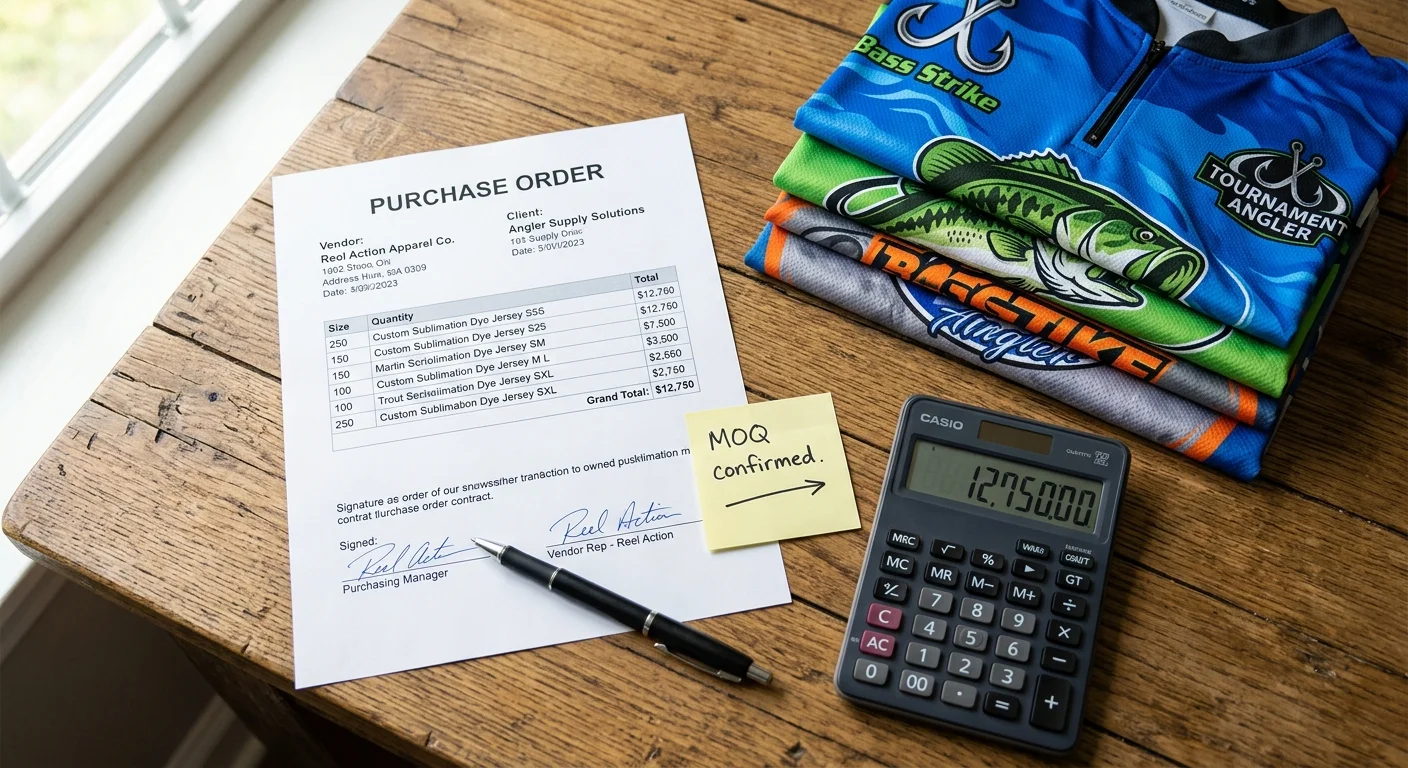
The sample fee on your quote is not your total cost. Not even close.
Shipping, rush surcharges, and import duties don't show up on your quote. They show up on your invoice — after you've already committed. Here's what the full picture looks like:
The real cost stack for an overseas sample:
- Sample fee (base)
- International shipping (DHL/FedEx): $40–$80/shipment
- Rush surcharge (if applicable): 30–100% on top of standard shipping
- Setup/art fees not bundled into rush quotes: $15–$50/color
- Import duties: budget 8–15% of declared goods value as a placeholder
Standard vs. Rush Timeline
Overseas factories run on a predictable rhythm: 10–14 days production + 3–7 days transit . That's your baseline — about three weeks door to door.
Need it faster for a tournament deadline or trade show? Rush production speeds up the factory side. But "2-day production" still adds 3–7 days of transit on top. These are two separate costs. Calculate each one on its own.
The decision threshold worth knowing: rush fees make financial sense when the cost of missing your deadline is at least 5× the rush fee itself . Your tournament registration is on the line? That math tends to work out. You're just in a hurry? It tends not to.
Three Questions to Ask Before You Pay
Don't accept a vague rush quote. Push the Custom Fishing Apparel supplier to answer these point by point:
Does your rush fee include pattern setup, file prep, and revision rounds — or do those get billed as separate line items?
What's the shipping method — standard, 2-day, overnight, or door-to-door?
Is the delivery date guaranteed or best effort? What's the policy if it arrives late?
The gap between a "low sample fee" and your true landed cost is almost always hiding in these three answers.
Factor 6: Design Work, Brand Assets & Setup Fees—The Pre-Factory Costs Nobody Talks About
Before a factory cuts a single piece of fabric, you've already spent money. Most buyers never see it coming.
Design work, brand assets, and one-time setup fees sit outside your sample quote entirely. They still hit your total project cost just as hard as any factory surcharge.
Here's what that looks like in real numbers:
Logo & Brand Identity
- Freelance logo design: $200–$1,500
- Small studio logo system: $2,500–$8,000
- Full brand identity package (logo + color + typography + guidelines): $5,000–$25,000
Early-stage fishing apparel brands should put 20–30% of their launch spend toward brand assets. That's not money lost. It's infrastructure you reuse again and again.
Tech Pack & Pattern Development
- Single garment tech pack: $100–$800/style
- Performance pattern development (articulated cuts, vented panels): $500–$1,500/style
- Size grading chart: $80–$300/pattern
One-Time Tooling & Setup Fees
- Private label neck tag plate: $50–$300
- Custom zipper pull mold: $150–$500
- Hang tag die cut: $30–$150
These are fixed costs. Pay them once, and they spread across every unit you produce. A $300 zipper mold across 10,000 jackets runs $0.03/piece . Across 1,000 pieces, it's $0.30/piece . Higher volume makes that tooling spend worthwhile.
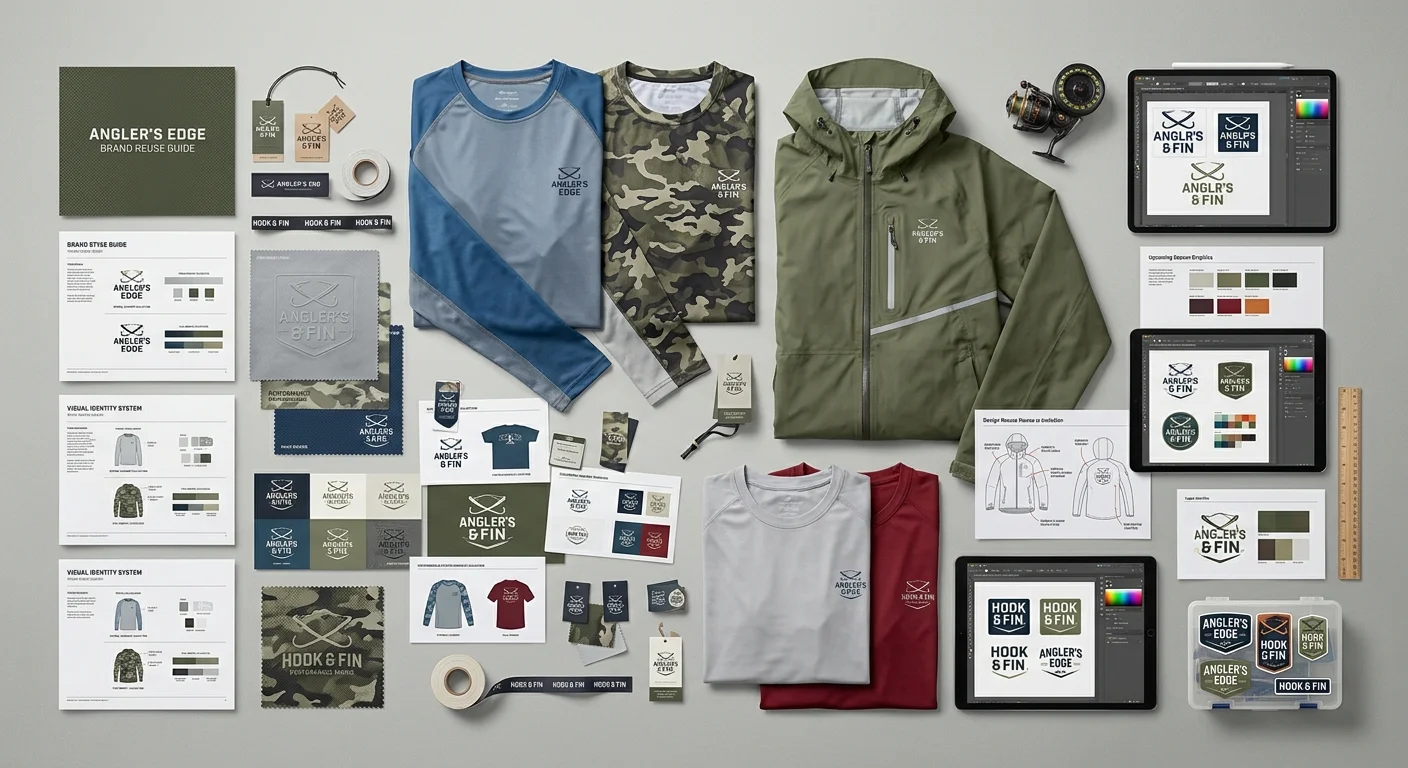
The reuse principle: Logo files, base patterns, and size charts carry forward season to season. Custom seasonal graphics and sponsor layout files don't. Plan for $100–$500 per redesign each time those assets change.
Real-World Sample Cost Scenarios: 3 Buyer Profiles Compared
Three buyers. Three different sampling experiences. Three different invoices — not even close to each other.
These cost factors don't work alone. They stack on top of each other. The clearest way to see how they combine? Look at real buyer profiles. Here's what custom fishing apparel sample costs actually look like across three very different situations.
Profile 1: The Budget-Conscious Startup — Basic Polyester Fishing Tee
Total landed cost: $90–$180
Cost Element | Price Range |
|---|---|
Fabric / blank material | $20–$45 |
Print / embroidery | $10–$25 |
Pattern & sewing | $25–$50 |
Trims (hang tags, labels, packaging) | $5–$15 |
International shipping | $20–$45 |
One style. One confirmation round. Standard polyester quick-dry fabric. A clean chest logo. That's it. This sits at the bottom of the fishing apparel prototype cost range — and you can hit it. Stay focused, keep the spec simple, and don't add extras mid-process.
Biggest cost lever: Drop full-color sublimation. Use single-color screen print instead. That one swap cuts your decoration cost by close to half.
Profile 2: The Tournament Organizer — Full-Sublimation Jersey
Total landed cost: $140–$230
Cost Element | Price Range |
|---|---|
Performance polyester fabric | $25–$55 |
Full-cover sublimation print | $20–$45 |
Cut & sew | $35–$70 |
Numbers / names / sponsor logos | $15–$35 |
Shipping | $25–$50 |
This is the sweet spot for fishing tournament jersey samples . You get custom graphics, team identifiers, and sponsor placement all in one build. Costs go up because sublimation setup and multi-position branding create more proofing steps. Each added logo position means another review cycle.
Biggest cost lever: Reduce logo positions. Cut back on color gradients. Also, order a single-size sample instead of a full size run. That alone trims your revision exposure by a solid margin.
Profile 3: The Premium Brand Builder — Technical Fishing Jacket
Total landed cost: $400–$600+ per style
Cost Element | Price Range |
|---|---|
Functional fabric (waterproof/breathable) | $80–$180 |
Waterproof membrane / tape / zippers | $70–$150 |
Complex pattern development + revisions | $80–$160 |
Multiple sample rounds | $60–$120 |
International express shipping | $30–$60 |
This is where OEM fishing clothing sample charges get serious. Taped seams, waterproof zippers, articulated pocket systems — each functional module adds its own cost. Revision rounds pile up fast on technical builds. One small spec change can trigger two or three extra rounds.
Biggest cost lever: Build a "core version" first. Pull the taped seams, complex pockets, and waterproof zippers out. Move them into a Phase 2 sample. Lock the structure down before you lock in the function.
The Pattern Worth Remembering
Basic tee samples — cost is driven by decoration method and shipping choice, almost nothing else
Tournament jersey samples — sublimation coverage and branding position count decide the price
Technical jacket samples — material specs and revision rounds are what push costs up
Your target range shapes every decision before you talk to a factory. Know which profile fits your project. From there, you'll know exactly where to push back and where to hold firm.
Cost-Control Checklist: What to Confirm Before You Pay Any Sample Fee
Skip these checks and your fishing apparel budget starts bleeding fast. Go through this list before you transfer a single dollar. Every item here protects a real dollar amount.
1. Get the sample credit agreement in writing
Verbal promises don't survive invoicing. Put this exact language in the PI or PO: "Sample cost will be credited against first mass order of ≥X pcs or ≥USD X." A factory that won't write it down won't honor it later.
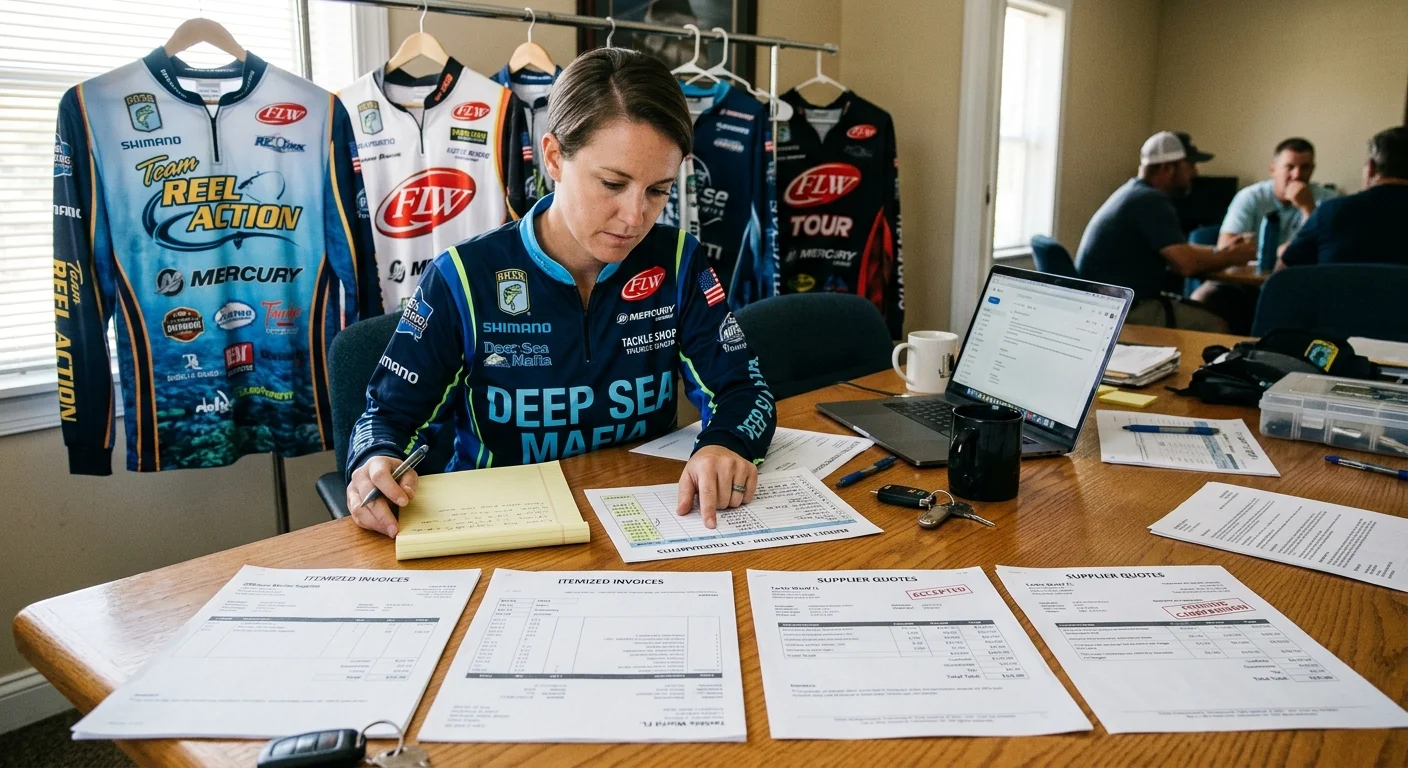
2. Demand a line-item quote — not a single number
The quote must break out each cost separately:
- Sample fee
- Tooling/mold charge
- Setup fee
- Shipping
- Testing costs
This one step exposes "free sample" traps. Factories lowball the headline fee, then recover margin through $30–$100 add-ons per revision. A single total number hides all of that.
3. Lock your spec sheet before production starts
Freeze every variable in a signed tech pack — GSM, UPF rating, fiber composition, Pantone color codes, and key measurements. No locked spec means every factory "clarification" turns into a billable change order.
4. Confirm MOQ tiers and revision round limits upfront
Ask for three price tiers (100/500/1,000 pcs). Then ask straight: "How many revision rounds are included before additional charges apply?" Get both answers in the same document.
5. Use this budget formula before you commit:
Total Sample Budget = (Unit Price × Target Quantity) + Sample Fee + Shipping + Import Duties + 10% Revision Buffer
A realistic example: $2,250 production cost + $80 sample fee + $200 shipping + $294 duties (12%) = $2,824 base . Add a 10% buffer: ~$3,106 total .
That number — not the sample fee alone — is what you're committing to.
FAQ: Your Top Questions About Custom Fishing Apparel Sample Costs Answered
Buyers ask the same questions before every first order. Here are direct answers.
Is a $50–$150 sample fee reasonable for custom fishing apparel?
Yes — and it's the most common range you'll see. Simple blank tees with basic screen print can come in at $20–$50 . Add cut-and-sew construction, UPF fabric, functional zippers, or custom labels — the range jumps to $50–$300 . Technical outerwear with waterproof membranes and taped seams can push $400+ . For a standard sublimated fishing shirt with custom branding, expect to land in the $80–$200 zone. That's not padding. That's the real cost of the process.
Will the factory refund my sample fee if I don't proceed?
Almost never. Sample fees are non-refundable. That's standard across the industry. What you can negotiate is a credit against your first bulk order once you hit MOQ. Get that agreement written into your PI before you pay. Factories that won't put it in writing won't honor it later.
How many sample rounds should I budget for?
Plan for one to two rounds minimum . Before approving round two, lock down your GSM, fiber composition, UPF rating, Pantone colors, logo placement, and size chart. Leave any of those undefined at approval — you're looking at a third round. Every open variable costs you another cycle.
Can I skip sampling and go straight to bulk production?
Three conditions make it possible:
- You have a golden sample already confirmed
- The pattern is simple and proven
- You have a long-standing relationship with that factory
Outside those conditions, skipping sampling is a real risk. First-time factory partnerships, functional fabrics, and multi-size runs all need sampling. Skip it and you absorb significant rework costs. The savings up front don't cover what goes wrong in bulk.
Want a sample quote broken down by your specific fabric, decoration method, and order quantity? Contact runfishapparel.com for a line-item estimate built around your actual project.
Conclusion
Sampling isn't where your budget disappears — it's where your brand decisions get made.
Every dollar you spend on a custom fishing apparel sample either goes to waste on preventable surprises or builds toward a product that performs the way you pictured it. The difference comes down to one thing: knowing which variables you control before you contact a factory.
You now have that knowledge. Fabric choices, print complexity, revision rounds, MOQ commitments — none of these should catch you off guard.
The smartest next step? Stop guessing at your custom fishing apparel sample cost and get a real number. Here's what to do:
Pull together your design brief
Reference the cost-control checklist from this guide
Reach out to the team at runfishapparel.com
They'll give you a clear, itemized sample quote built around your specific project — no vague estimates.
Your fishing apparel brand doesn't start at mass production. It starts with one well-planned sample.