The wrong weave, sewn into the wrong spot on a garment that's about to eat saltwater for breakfast, is wrecking your fishing apparel returns.
You already know woven beats printed for durability. But which weave? Damask woven label? Satin woven label? Taffeta? Twill? Each one behaves differently under salt spray, brutal wash cycles, and months of UV punishment. Picking based on "looks nice on the swatch card" leads to faded logos and unreadable care symbols six washes in.
This is a scenario-by-scenario breakdown of which construction survives which condition, backed by real durability numbers, so you walk into your next custom woven label supplier call knowing what to spec and what to refuse.
Saltwater Exposure: High-Density Damask vs Nylon Taffeta for Marine Fishing Gear
Public data on damask in marine environments just isn't there. Search for salt-spray hours, hydrostatic head numbers, or UV degradation stats specific to damask and you'll come up mostly empty. Damask is a quality fabric, but it hasn't been marine-tested at scale. Betting your saltwater apparel on that is a risk.
Nylon taffeta, on the other hand, has the receipts.
The Numbers That Matter
If your fishing apparel is going anywhere near ocean spray, these are the specs to demand:
Water repellency (AATCC 22) : uncoated taffeta sits at 70–80 mm H₂O. Standard weaves hit 80–90 mm. But with a DWR coating, that jumps to 1200+ mm H₂O.
True waterproof threshold : specify DWR + PU backcoat with hydrostatic head ≥1000 mm (ISO 811). Anything less, and you're selling "water-resistant," not waterproof.
Salt-spray endurance : standard nylon/SBR constructions run 500–720 hours. Premium formulations push 1,000–1,200 hours with 80%+ tensile strength retention still intact.
That's the difference between a label that survives a season of ocean fishing and one that turns to mush after three trips.
The UV Catch
Nylon isn't invincible. It's only moderately UV resistant, and untreated nylon can lose 30–40% of its tensile strength after just 200 hours of direct sun. Pair that with saltwater exposure, and degradation compounds fast.
Specify solution-dyed nylon to fight color bleed, and pair it with UV inhibitors or protective coatings. Without that combo, you're gambling on gear that fades and weakens exactly when your customer needs it most—mid-trip, thirty miles offshore.
Repeated Washing: Satin, Taffeta, and Damask Durability Compared
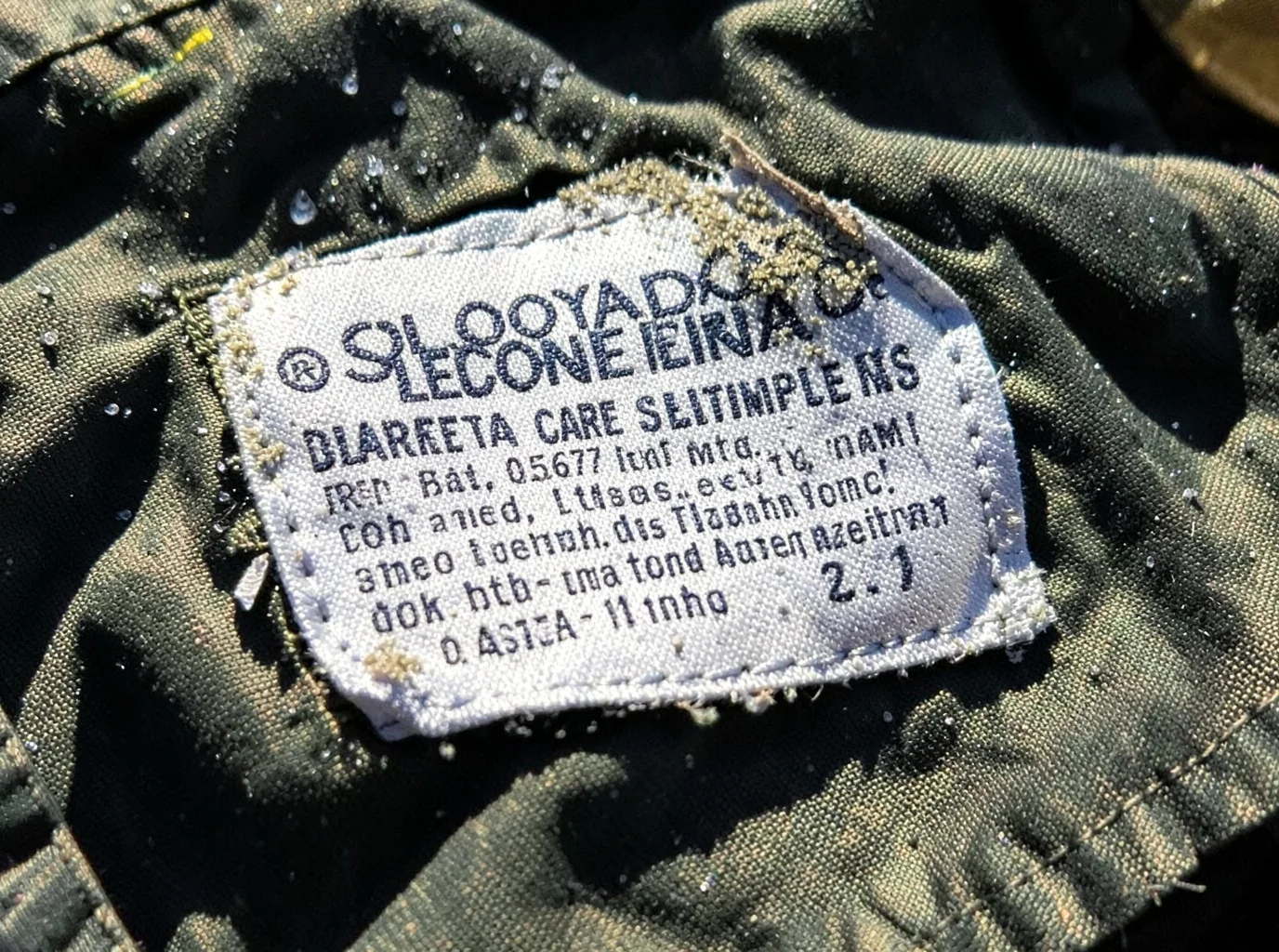
Fishing gear gets washed constantly: brine, fish guts, sunscreen all need rinsing after every trip. That means your care instructions label and wash care symbol label need to survive dozens of cycles without turning into a smudged mystery.
Damask woven labels survive 50-plus wash cycles with excellent durability, making them best for detailed logos and premium branding that needs to stay crisp. Taffeta labels also handle 50-plus washes, but they have a stiffer hand - so they feel less refined against skin but stand up better to machine agitation. Satin labels manage 40-plus washes, with very good durability, but the sheen and fine detail wear faster than the other two.
So for raw wash-cycle endurance, damask and taffeta are roughly equal, and both outlast satin. When it comes to shine retention, satin loses first.
Satin's weakness is cosmetic, not structural. Premium polyester satin can start losing luster after just 15 to 20 machine washes. That's a problem when your inner tag is supposed to look premium against bare skin.
Care matters too. Satin needs cold water, delicate cycle, mild detergent, lowest spin, no tumble heat. Skip that, and you're looking at brittleness and fading long before the label physically falls apart.
Long-Term Sun Exposure: Which Label Construction Retains Logo Color Best
Weave type matters less than yarn treatment when UV is the enemy. Damask, satin, and taffeta are typically polyester-based, and polyester (PET) happens to be one of the most UV-resistant fibers you can specify for outdoor gear tagging.
But not all polyester labels age the same way.
The Lifespan Math
Industry benchmarks give you a real range to plan around:
-Standard polyester construction : 2–3 years before noticeable fading outdoors.
-UV-stable polyester + protective overlaminate : 3–5 years in direct sun.
-Top-coated polyester with UV-blocking layer : 3–10 years, depending on climate.
Climate changes the math fast. A label rated for 1,500 hours under ASTM G154 testing delivers roughly 3 years in tropical, high-UV zones. Think year-round offshore fishing charters. That same label stretches to 4–5 years in temperate climates, and 7+ years somewhere colder, where the adhesive gives out before the color does.
What Actually Fades First
Reds, yellows, and oranges degrade fastest under UV. If your brand colors live in that range, specify UV-stable dyes or fade-resistant pigments upfront, not after your first customer complaint.
Skip standard dye lots. Demand yarn or ink treated for light-fastness. That single spec decision is what separates a logo that's still crisp at year three from one that's chalky, brittle, and unrecognizable by summer's end.
Damask Woven Label: Best for Detailed Fishing Brand Logos and Technical Apparel
Fine print wins arguments. When your brand mark has thin lines, tiny serifs, or a barcode that needs to scan, damask woven label construction is the only weave built to hold that detail. High-density threads pack tight enough to render micro-text legible at 0.5mm, small enough for serial numbers, spec marks, and logos that would blur or bleed on anything looser.
That’s why technical apparel brands lean on damask as their main branding label. You’ll find it on tactical garments, outdoor gear, backpacks, and camping equipment—anywhere durability and sharp branding both matter.
The Feel Factor
Most damask labels run on polyester thread, often 50 denier for suppliers chasing extra-fine detail. This gives you a soft, smooth, subtle texture with a tight weave and a reversible mirror-image back. It’s the label you don’t feel scratching your neck at hour six of a charter.
Sourcing Specs to Know
For sourcing, expect 100 pieces as the minimum order quantity for marketplace listings, going up to 500–1,000 pieces for established fishing apparel suppliers. Pricing ranges from $0.03 to $0.45 per piece at 100 MOQ fishing apparel, $0.06 to $0.08 per piece at 1,000 MOQ for Oeko-Tex-certified high-density polyester, and drops to $0.02 to $0.03 per piece at 5,000 MOQ. Lead time is 2–4 weeks. You get a quote in 24 hours and a pre-production sample in 5–7 business days.
For the best pairing, use damask for the main logo label with a laser-cut or straight-cut border, and pair it with a printed satin label for size, fiber content, and care symbols. Don’t make one label do both jobs.
Satin Woven Label: Best for Soft, Low-Profile Care Information
Nobody wants a scratchy tag rubbing against their neck during a six-hour charter. For care instructions, satin earns its spot as the label your customer never notices.
Satin is a weave and finish, not a fiber. Most satin care labels use 100% polyester, giving you that smooth, shiny face with a low-profile feel against skin. Think neck labels, size labels, wash care symbol labels—anywhere soft matters more than sharp.
Specs to Expect
Wash tolerance : satin holds up to 60°C, lower than some woven labels rated for 90°C.
Common sizes : 3 × 7.5 cm satin rolls, versus 1.5 × 6 cm for standard woven care labels.
MOQ : as low as 30 pieces for extra-large runs, 100 pcs at Labeloom, 500 pcs at Asquith Group.
Pricing : printed satin runs $0.08–$0.25 at 500 units, cheaper than woven's $0.15–$0.45 at the same volume.
Lead time : 15 working days standard, 10 days rush for 2,000+ pieces.
One catch: cut edges can fray lightly unless properly finished. Fine for inner tags. Not fine for anything facing repeated saltwater agitation.
Nylon Taffeta or Twill: Best for Rugged Care Labels on Bibs, Trousers, and Jackets
Side seams and waistbands take more abuse than any other spot on a fishing garment. Care labels live right there, which is why the fabric choice can't be an afterthought.
Nylon taffeta wins this fight. Suppliers build it for outerwear, activewear, and high-friction zones—the same places bibs, trousers, and jackets constantly rub against. One fishing apparel manufacturer clocks it at 80–100 wash cycles with smooth, sharp ink retention throughout.
The Specs Behind the Claim
Weight : 40–60 GSM for jackets and sportswear, or a tighter benchmark of 61±3 g/m²
Thickness : 0.110–0.130 mm
Feel : crisper than standard taffeta, built to survive agitation without fraying
Printing : thermal transfer, letterpress, rotary, silk screen, or offset—all supported
Twill is the alternative when you want a heavier, more textured care instructions label. It's less common for technical wash care symbol labels, but it fits programs already built around textured woven substrates.
Placement matters too. Sew care labels into side seams or neck tape, not flat-stitched centers where friction concentrates fastest.
Separate the Fishing Brand Logo Label From the Care Instructions Label
One label doing two jobs is asking for trouble. Your brand mark identifies the product. Your care label is a compliance document that must stay legible for the product's entire useful life—that’s the standard.
Care labels must give washing or dry-cleaning instructions at minimum. If you're specifying machine wash, you need a water temperature: cold, warm, hot. Customers also need to spot the care label at point of sale without hunting for it.
Use a woven brand label for the logo and a separate sewn-in care label for wash symbols, fiber content, and country of origin. Sew-in labels handle up to 90°C washing. Iron-on versions cap at 30°C. Know the difference before you spec either one.
Fishing Apparel Label Decision Matrix by Garment Type
Different garments fight different battles. A sun shirt fights sweat and skin friction. A rain shell fights salt spray and abrasion. Match the label to the battle, not the other way around.
Garment Type | Outer Label | Care/Inner Label | Notes |
|---|---|---|---|
Sun shirts, rash guards, performance tees | Heat-transfer or tagless print | Polyester satin | Soft against skin, no scratch, no fold-over edges |
Rain jackets, waterproof bibs, wind shells | Woven polyester/nylon, exterior-grade | Permanent sewn care label | Built for abrasion and repeated soaking |
Fishing pants, shorts, waders | TPU or durable woven | Water-resistant care label | TPU flexes with stretch fabric and stays waterproof after dozens of washes |
Base layers, next-to-skin gear | Tagless heat-transfer | Soft printed label | Moisture-resistant, zero irritation |
Insulated outerwear, cold-weather shells | Silicone or woven outer badge | Permanent care label | Survives repeated laundering and weather cycling |
One legal note that trips up a lot of brands: the FTC defines a care label as one that stays legible for the entire useful life of the garment. That rule applies to wearing apparel, but it excludes items covering only the head or hands. So gloves and hats get a pass on formal care labeling. Everything else on this list doesn't.
Keep your full label set consistent across the line: main/brand label, size label, care label, composition label, country-of-origin label, hang tag. Skip one, and you risk compliance as much as durability.
Procurement Specification Sheet for a Durable Fishing Apparel Label
Print this out. Hand it to your supplier. Watch the confusion disappear.
The care label must be permanent, legible for the garment's entire useful life, and easy to spot at point of sale. These are legal minimums, non-negotiable. Skip any of those three, and you're not compliant.
You need at least one safe cleaning method on the label. Washing or dry cleaning. If a method could damage the fabric, add a warning like "Wash with like colors" or "Do not bleach." Say it plainly.
20 wash cycles is the industry standard. 50+ cycles is where premium fishing apparel programs live. One fishing OEM markets both numbers side by side as a durability selling point. Use that as your negotiating floor.
Your RFQ Checklist
Label type: woven, printed satin, heat-transfer, or care tag
Placement: inner neck, side seam, or hem
Wash life: 20-cycle minimum, 50-cycle preferred
Compliance: FTC care labeling, plus ISO or ASTM symbols depending on target market (USA, EU, Australia, Canada, China, Japan)
Fields: fiber content, country of origin, care instructions, size, brand
Packaging: hang tag, barcode, polybag
If your fabric carries UPF50+, spec labels that won't degrade the coating underneath.
Supplier Negotiation Benchmarks for Fishing Brand Label Orders
Numbers win negotiations. Walk into your next supplier call with these benchmarks.
Pricing tiers to demand:
Qty | Woven | Printed |
|---|---|---|
100 pcs | $0.80–1.20 | $0.15–0.30 |
1,000 pcs | $0.25–0.40 | $0.05–0.10 |
2,000+ pcs | $0.04–0.10 | — |
Push for step-down pricing at 100, 500, 1,000, and 2,000+ pieces. Get setup fees ($50–150 woven, $30–80 printed) itemized separately from per-piece cost.
Sampling should take ≤10 working days. Bulk orders should ship within 35 days of approval.
Require these certifications: OEKO-TEX 100, GRS, ISO 9001, BSCI/Sedex, and a UPF 50+ report from SGS or Intertek.
Demand 95%+ on-time delivery, ≤3-hour response time, and a reorder rate above 34% as your reliability proxy. Tie every purchase order to sample approval, in writing.
Approval Test Checklist Before Ordering the Full Fishing Apparel Run
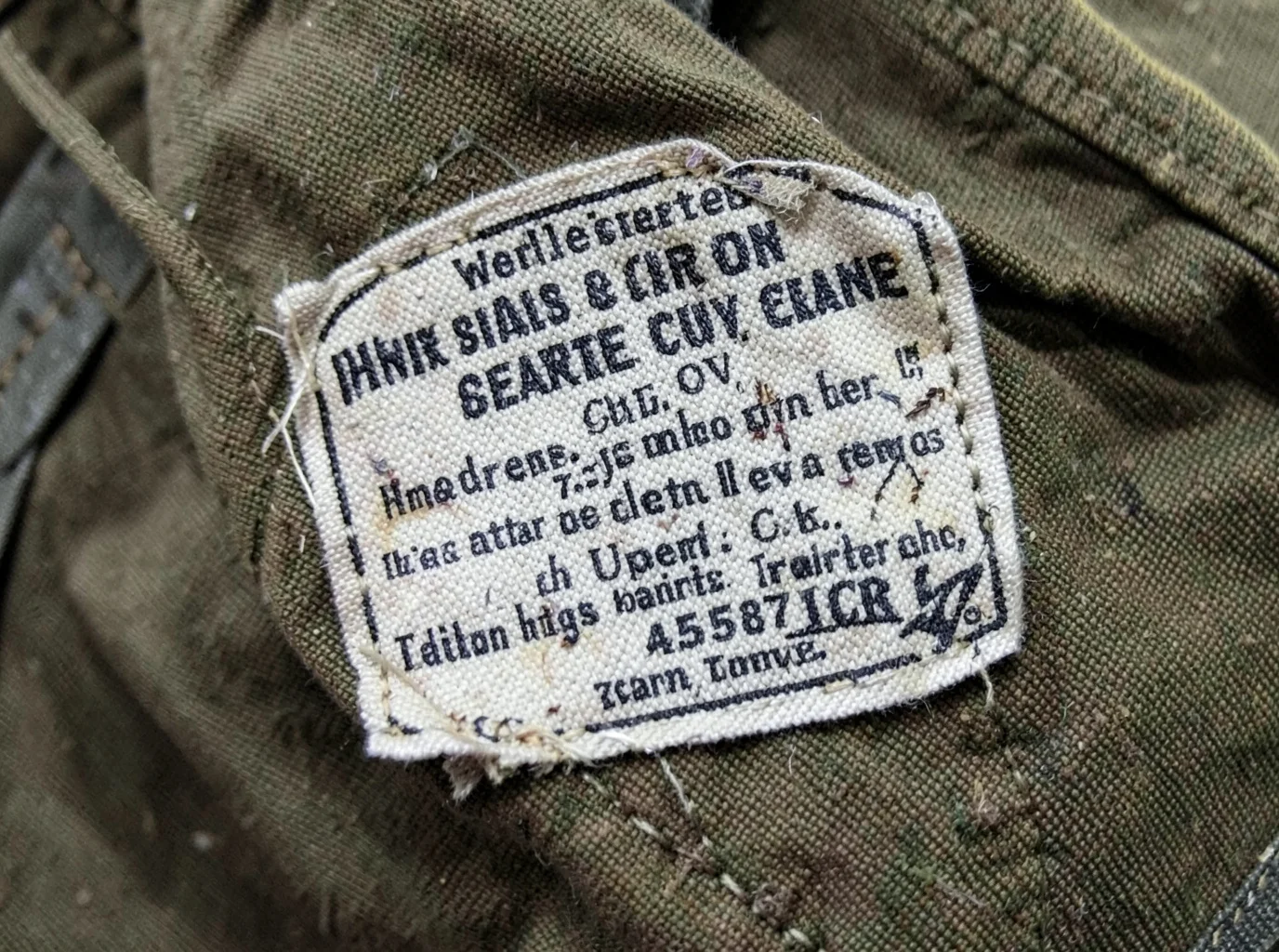
The PP sample is your golden sample. Sign off only when it matches the tech pack, BOM, trims, labels, and construction exactly. Once approved, that's the standard the factory cuts against.
Run these tests before bulk cutting:
Salt exposure : 24-hour immersion in 5% NaCl solution, re-tested after drying
UPF retention : target UPF 60–80 in prototype, staying within 10–15% of that value in production
Color drift : ΔE < 2 versus control
Wash cycles : three full wash-and-dry cycles minimum, checking shrinkage, bleeding, pilling
Seam pull test : manually stress seams, confirm zero popping after laundering
Require Cpk 1.67 minimum on critical dimensions. Get written sign-off from both brand and fishing apparel factory QC. Close every correction note before release.
Conclusion
Salt water doesn't care about your brand aesthetics. Neither does a washing machine running its 200th cycle, or a sun that's determined to bleach your logo into oblivion.
Stop treating "woven label" as one category. A damask woven label carries your logo's fine detail and color depth for the long haul, while a tighter, high-density satin woven label or nylon taffeta handles wash care symbols without cracking, fading, or falling off after wash #40. Separating logo and care functions across two label types reduces returns and builds repeat customers.
Don't guess your way through this decision. Pull the spec sheet and decision matrix from this guide, hand it to your custom woven label fishing apparel supplier, and negotiate exact GSM, weave density, and salt-spray test hours before you approve the bulk fishing apparel run.